Maharishi Mahesh Yogi
 81
81

Maharishi Mahesh Yogi
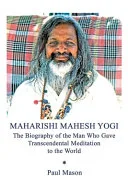
Paul Mason's biography of Maharishi Mahesh Yogi offers a detailed look at the man behind Transcendental Meditation, moving beyond the celebrity endorsements to examine the organizational and philosophical underpinnings of TM's global spread. The work is strongest in its meticulous tracing of Maharishi's early decades and his strategic approach to scientific validation in the 1960s and 70s, presenting a compelling case for his influence on modern wellness culture. A limitation, however, is the somewhat repetitive emphasis on the "only one of its kind" claim for the biography, which, while true for its initial publication, feels less impactful in this revised edition. The passage detailing the presentation of TM in "specifically scientific terms" effectively captures the unique challenge Maharishi faced in bridging Eastern mysticism and Western rationalism. Mason provides a solid, if somewhat uncritical, account of a pivotal figure in 20th-century spirituality.
📝 Description
81
Paul Mason's biography details Maharishi Mahesh Yogi's introduction of Transcendental Meditation to the West.
Paul Mason's "Maharishi Mahesh Yogi" chronicles the life of the yogi who brought Transcendental Meditation (TM) to Western audiences. The book follows Maharishi from the 1950s through the 1960s as TM gained global traction. Mason details how TM was presented using scientific language, a strategy that aided its widespread acceptance.
The work is for those interested in modern spirituality's history, comparative religion, and the West's reception of Eastern philosophies. Readers curious about TM's origins, its spread, and Maharishi's personal story will find it informative. Students of consciousness and those examining the intersection of spirituality and science will gain insight.
Mason places Maharishi's activities in the post-war period, a time of growing interest in Eastern thought. The book considers the 1960s cultural climate, marked by spiritual seeking and counter-cultural shifts. The author highlights the efforts to validate TM scientifically, a method that set it apart from other spiritual movements and attracted notable figures.
This biography fits within the study of modern esoteric movements that gained prominence in the 20th century. It examines how a specific yogic practice, Transcendental Meditation, was adapted and presented to a Western, secularized audience. The book addresses the intersection of Eastern spiritual traditions with Western scientific inquiry and cultural trends, particularly during the post-war era's fascination with alternative philosophies. It situates Maharishi Mahesh Yogi as a key figure in the transmission and popularization of Indian spiritual disciplines.
💡 Why Read This Book?
• Understand the specific strategies Maharishi Mahesh Yogi employed to popularize Transcendental Meditation globally, particularly his emphasis on scientific presentation in the 1960s. • Gain insight into the historical context of TM's emergence, including its reception during the counter-cultural movements of the mid-20th century. • Explore the concept of the "Maharishi Effect" and its intended application for societal well-being, as detailed within the book's narrative.
⭐ Reader Reviews
Honest opinions from readers who have explored this book.
❓ Frequently Asked Questions
What is Transcendental Meditation (TM) as described in Paul Mason's biography?
Transcendental Meditation, as detailed in Paul Mason's "Maharishi Mahesh Yogi," is a specific mantra-based meditation technique introduced by Maharishi in the 1950s. It is presented as a method for achieving deep rest and reducing stress, with an emphasis on scientific explanations for its effects.
When did Maharishi Mahesh Yogi first begin teaching Transcendental Meditation?
Maharishi Mahesh Yogi began teaching Transcendental Meditation in the 1950s. The book by Paul Mason chronicles these early days and the subsequent global popularization of the technique throughout the 1960s.
Did the Beatles really study Transcendental Meditation with Maharishi?
Yes, the book by Paul Mason touches upon the significant influence Maharishi had on popular culture, including the period in the 1960s when The Beatles famously studied Transcendental Meditation with him, contributing to its widespread recognition.
How did Maharishi present TM to a Western, scientific audience?
Paul Mason's biography explains that Maharishi presented TM in specifically scientific terms, aiming to validate its benefits through research and empirical evidence. This approach was crucial for its acceptance in Western societies during the 1960s and beyond.
What is the 'Maharishi Effect' mentioned in the book?
The 'Maharishi Effect,' as explored in Paul Mason's work, refers to Maharishi's concept that a sufficiently large group of people practicing TM together could generate a powerful influence for peace and coherence in the collective consciousness.
Is this the only biography available on Maharishi Mahesh Yogi?
The original blurb for Paul Mason's "Maharishi Mahesh Yogi" states it was the 'ONLY one of its kind' at its initial publication. This revised edition continues to offer a comprehensive account of his life and the spread of TM.
🔮 Key Themes & Symbolism
The Spread of Transcendental Meditation
This theme examines the strategic dissemination of TM, particularly its popularization in the 1960s. Mason details how Maharishi Mahesh Yogi moved from India to the West, establishing centers and attracting followers, including prominent figures. The work explores the organizational efforts, the establishment of scientific research, and the challenges of translating a spiritual practice into a global phenomenon accessible to diverse cultures and belief systems.
Science and Spirituality
A central focus is the deliberate effort to present Transcendental Meditation using scientific language and empirical evidence. The biography details how Maharishi sought to bridge the perceived gap between Eastern mysticism and Western rationalism. This involved encouraging research into the physiological and psychological effects of TM, aiming to validate its benefits in a way that appealed to a skeptical, modern audience and distinguished it from other spiritual movements.
Maharishi's Vision for Global Peace
The book explores Maharishi Mahesh Yogi's overarching vision for societal transformation through meditation. It highlights his concept of the 'Maharishi Effect,' the idea that collective consciousness can be positively influenced by a critical mass of individuals practicing TM. This theme explores his proposals for applying this effect to reduce conflict, promote harmony, and create a more peaceful world.
Biographical Narrative
This theme centers on the life story of Maharishi Mahesh Yogi himself, from his early life and spiritual training to his global travels and leadership. Mason provides an account of his formative years, his relationship with spiritual teachers, and the development of his unique approach to teaching meditation. It offers a personal lens through which to understand the motivations and evolution of the man who became a global spiritual figure.
💬 Memorable Quotes
Direct passages from the work, attributed to the author.
“The presentation of TM in specifically scientific terms.”
— This highlights a key strategy employed by Maharishi Mahesh Yogi: to frame Transcendental Meditation not merely as a spiritual practice but as a technique with measurable, scientific benefits, appealing to a Western, rational mindset.
“The popularization of TM through the 1960's.”
— This signifies an important decade where TM moved from a niche practice to a global movement, significantly influenced by cultural shifts and Maharishi's outreach efforts during this era.
“Maharishi's early days of teachings in the 1950s.”
— This refers to the foundational period when Maharishi began formulating and disseminating his teachings, laying the groundwork for the widespread adoption and institutionalization of Transcendental Meditation that followed.
“The ONLY one of its kind biography.”
— This phrase, emphasized in the original blurb, suggests the book's unique claim to comprehensive coverage of Maharishi's life and the TM movement at the time of its initial publication.
“An expanded, up-to-date illustrated paperback version.”
— This indicates that the current edition offers enhanced content, including visual elements and updated information, building upon the original work to provide a more complete and engaging reading experience.
🌙 Esoteric Significance
Tradition
Maharishi Mahesh Yogi's work, particularly Transcendental Meditation, draws from the Vedanta tradition within Hinduism, specifically Advaita Vedanta's non-dualistic philosophy. However, his presentation departs significantly by framing it within a secular, scientific paradigm rather than a purely religious or devotional one. It can be seen as a modern adaptation of ancient yogic and meditative practices, tailored for Western psychological and physiological understanding, thus creating a unique bridge between Eastern esoteric traditions and contemporary wellness culture.
Symbolism
While TM itself is a technique rather than a symbolic system, Maharishi's broader work often employed symbols of consciousness, order, and effortless action. The concept of the 'Maharishi Effect,' for instance, symbolizes the potential for collective consciousness to influence global harmony. His emphasis on the 'source' of thought aligns with esoteric concepts of divine origin or universal mind, representing a return to fundamental principles of existence, much like the Hermetic axiom 'As Above, So Below' implies a connection between micro and macrocosm.
Modern Relevance
The principles and practices associated with Maharishi Mahesh Yogi continue to influence contemporary wellness, mindfulness, and consciousness research. Modern schools of positive psychology, stress-reduction programs, and even some neurological studies on meditation draw upon the foundations laid by TM's scientific validation efforts. Thinkers and practitioners exploring the intersection of neuroscience and spirituality, or seeking evidence-based techniques for mental well-being, often find resonance with the systematic approach Maharishi pioneered.
👥 Who Should Read This Book
• Individuals interested in the historical development of global spiritual movements, particularly those seeking to understand the rise of Eastern philosophies in the West during the 20th century. • Researchers and students of comparative religion and consciousness studies, who will benefit from the detailed account of TM's origins and its presentation in scientific terms. • Practitioners of meditation or those curious about Transcendental Meditation, offering biographical context and insights into its founder's vision and methods.
📜 Historical Context
Paul Mason's biography of Maharishi Mahesh Yogi emerges from a period of significant cultural and spiritual flux in the mid-20th century. The 1950s and 1960s witnessed a growing Western fascination with Eastern philosophies, partly as a reaction against the materialism perceived in post-war society. Maharishi entered this milieu with Transcendental Meditation, a technique he systematically presented with scientific justifications, a contrast to the more overtly mystical or religious approaches of some contemporaries like Swami Prabhupada, founder of ISKCON, who also gained prominence in the West during this era. The Beatles' endorsement in the late 1960s, detailed in the book, was a watershed moment, catapulting TM into mainstream consciousness and sparking debates about its efficacy and origins. This period also saw increasing academic interest in consciousness studies, providing fertile ground for Maharishi's scientifically framed teachings.
📔 Journal Prompts
Maharishi's early days of teachings in the 1950s.
The presentation of TM in specifically scientific terms.
The popularization of TM through the 1960s.
Maharishi's vision for global peace.
The concept of the 'Maharishi Effect'.
🗂️ Glossary
Transcendental Meditation (TM)
A specific mantra-based meditation technique popularized by Maharishi Mahesh Yogi. It is presented as a method for achieving deep relaxation and reducing stress through effortless mental focusing.
Maharishi Mahesh Yogi
The Indian yogi who founded the Transcendental Meditation (TM) movement. He gained global prominence in the mid-20th century by teaching TM and advocating for its scientific validity and potential for world peace.
The Maharishi Effect
A concept proposed by Maharishi Mahesh Yogi suggesting that a sufficient number of people meditating together can create a field of coherence that positively influences societal well-being and reduces conflict.
Advaita Vedanta
A school of Hindu philosophy emphasizing the oneness of reality, where the individual self (Atman) is identical to the ultimate reality (Brahman). Maharishi's teachings draw from this tradition.
Mantra
In meditation, a word, sound, or phrase repeated to aid concentration. In TM, specific mantras are assigned to individuals by instructors.
Vedanta
Literally 'end of the Vedas,' Vedanta refers to the philosophical and spiritual teachings derived from the Upanishads, forming a major tradition within Hinduism.
Consciousness Studies
An interdisciplinary field that investigates the nature of consciousness, exploring its biological, psychological, philosophical, and even spiritual dimensions.