Transcendental Meditation Technique

 83
83

Transcendental Meditation Technique
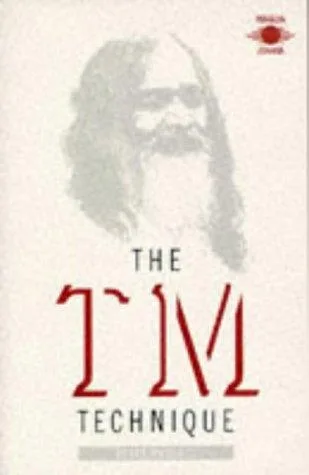
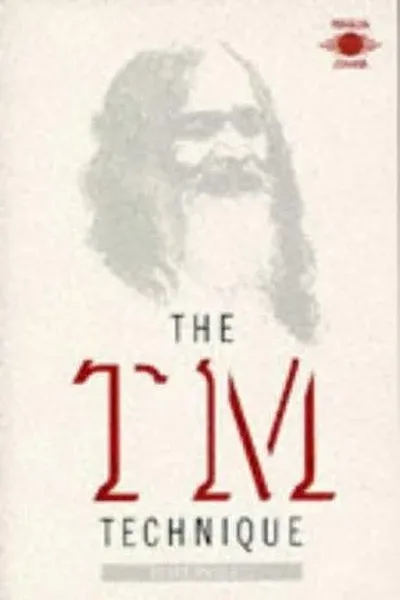
Peter Russell’s 1977 treatise on the Transcendental Meditation technique offers a remarkably clear exposition of Maharishi Mahesh Yogi’s method. Unlike many spiritual texts that rely on allegory or complex philosophy, Russell grounds the practice in a direct, almost instructional, manner. The strength of the book lies in its systematic breakdown of the technique, demystifying the process for the uninitiated. Its limitation, however, is a certain pedagogical dryness; while precise, it sometimes lacks the evocative quality that might inspire deeper personal commitment to the practice. A passage detailing the "effortless transcending" of thought, emphasizing the passive reception of the mantra rather than active control, is particularly effective in its directness. Russell’s work serves as a functional guide to a specific meditative technology. It is a manual for practice, not a philosophical exploration.
📝 Description
83
Peter Russell's 1977 book details Maharishi Mahesh Yogi's Transcendental Meditation.
Peter Russell's "Transcendental Meditation Technique," published in 1977, offers a systematic explanation of Maharishi Mahesh Yogi's mantra meditation method. The book guides readers toward achieving a state of "restful alertness," a balance of deep mental stillness and persistent awareness. It goes beyond a simple introduction, thoroughly describing the mechanics and anticipated outcomes of the TM technique. This work is intended for individuals seeking a structured path to mental quietude and personal growth through meditation. It addresses those experiencing stress, desiring greater mental clarity, or looking into established contemplative practices. The technique's focus on ease may appeal to those who found other meditation styles difficult. Readers interested in the psychological and physiological benefits of deep relaxation will find value here.
The book was released during a period of widespread interest in Eastern spiritual practices in the West. The 1960s and 1970s saw a rise in the popularity of yoga, Zen, and other meditative disciplines, partly due to figures like the Beatles' connection with Maharishi Mahesh Yogi. This era was characterized by an openness to different philosophies and a growing weariness with purely materialistic outlooks. Russell's work fits into this cultural context, presenting a specific, accessible route into a practice gaining public attention.
This book sits within the lineage of Vedic traditions, specifically the Vedanta school from which Transcendental Meditation draws its theoretical basis. Maharishi Mahesh Yogi adapted and presented these ancient teachings for a Western audience in the mid-20th century. The technique's emphasis on a specific sound or mantra as a vehicle for the mind's inward settling connects it to practices found in various yogic and Tantric traditions that utilize sound and consciousness. Russell's exposition makes this particular strand of Indian contemplative science accessible to those outside traditional ashram settings.
💡 Why Read This Book?
• Learn the mechanics of effortless mental settling, a core tenet of the TM technique, allowing you to experience a state of "restful alertness" distinct from ordinary sleep or wakefulness, as detailed in the book's instructional sections. • Understand the role of a specific, personally assigned mantra in facilitating the mind's natural inward movement, a concept central to the practice's efficacy as presented in Russell's 1977 work. • Discover the psychological benefit of "effortless transcending," a key principle that distinguishes this method from concentration-based meditations, potentially leading to stress reduction and enhanced mental clarity.
⭐ Reader Reviews
Honest opinions from readers who have explored this book.
❓ Frequently Asked Questions
What is the primary goal of the Transcendental Meditation Technique as described by Peter Russell?
The primary goal is to achieve a state of "restful alertness" through effortless mental settling, utilizing a specific mantra to allow the mind to naturally transcend thought processes and promote deep relaxation.
When was Peter Russell's book on Transcendental Meditation first published?
Peter Russell's "Transcendental Meditation Technique" was first published in 1977, a period of growing interest in Eastern contemplative practices in the West.
How does Transcendental Meditation differ from other forms of meditation?
It differs by emphasizing "effortless transcending" and the use of a specific mantra, allowing the mind to settle naturally without concentration or control, leading to a state of restful alertness.
Is this book a philosophical treatise or a practical guide?
The book functions primarily as a practical guide, detailing the mechanics and intended effects of the Transcendental Meditation technique, rather than engaging in deep philosophical discourse.
Who is Maharishi Mahesh Yogi in relation to this technique?
Maharishi Mahesh Yogi is the developer of the Transcendental Meditation technique, and Peter Russell's book explains the method he systematized and taught globally.
🔮 Key Themes & Symbolism
Effortless Transcending
The book meticulously details the principle of "effortless transcending," a core part of the TM technique. This concept posits that the mind possesses an inherent capacity to settle inward when provided with a suitable vehicle, such as a mantra. Unlike concentration or contemplation, this method involves a passive allowing, enabling the practitioner to move beyond active thought processes spontaneously. Russell explains how this gentle, natural movement leads to the unique state of restful alertness, distinguishing it from mere relaxation or sleep. The emphasis is on the mind's own intelligence guiding itself towards stillness without force.
Restful Alertness
A central outcome described is the state of "restful alertness." This is presented not as a passive void but as a dynamic equilibrium where the body achieves a profound state of rest, akin to deep sleep, while the mind remains simultaneously awake and aware. Peter Russell elucidates how this unique condition facilitates the body's innate capacity for self-repair and rejuvenation. The book suggests that achieving this state regularly can lead to significant improvements in stress management, cognitive function, and overall well-being, acting as a potent tool for psychological and physiological balance.
The Role of the Mantra
The specific function of the mantra is a critical theme. Russell explains that the mantra is not an object of concentration but a vehicle for the mind's settling process. It is a sound or word, typically of Sanskrit origin, given to the practitioner, which helps to gently disengage the mind from its usual patterns of external thinking. The book emphasizes that the mantra is used easily and naturally, allowing the mind to naturally and effortlessly "transcend" to quieter levels of awareness. The selection and use of the mantra are presented as integral to the technique's efficacy.
Stress Reduction and Well-being
The practical application of the TM technique for stress reduction is a pervasive theme. Russell outlines how the state of "restful alertness" directly counters the physiological effects of chronic stress. By allowing the nervous system to deeply rest and reset, the practice helps to dissolve accumulated stress and fatigue. The book implies that consistent practice can lead to a more resilient, less reactive state of mind, fostering emotional stability and enhancing clarity. This focus on tangible benefits positions the technique as a pragmatic tool for modern life.
💬 Memorable Quotes
Direct passages from the work, attributed to the author.
“The mind has its own natural tendency to settle down.”
— This statement expresses the core philosophy of TM: that the mind, when given the right conditions, will naturally gravitate towards states of greater quietude and clarity without needing to be forced or controlled.
“Transcendental Meditation is an effortless technique.”
— This emphasizes the unique, non-striving nature of the practice. It suggests that the effectiveness of TM lies not in the practitioner's effort, but in the mind's inherent ability to access deeper states of awareness when guided by the technique.
“The body rests deeply while the mind remains alert.”
— This describes the paradoxical state of "restful alertness." It highlights the balanced nature of the experience, where profound physical relaxation coexists with clear mental awareness, differentiating it from sleep or mere rest.
“A mantra is used easily and naturally.”
— This points to the simplicity and intuitive application of the mantra within the TM method. It is not a subject for intense focus but a gentle support for the mind's natural process of settling.
“The practice allows the mind to transcend thought.”
— This conveys the ultimate aim of the technique: to move beyond the surface level of active, discursive thought to experience subtler states of consciousness, leading to profound inner quietude.
🌙 Esoteric Significance
Tradition
While presented in a secular and accessible manner, the Transcendental Meditation technique draws implicitly from ancient Indian contemplative traditions, particularly those rooted in Vedic thought. It can be seen as a modern, systematized distillation of practices aimed at achieving higher states of consciousness. Unlike more overtly ritualistic or devotional paths, TM focuses on a specific psycho-physiological technique. It departs from many traditional yogic paths by emphasizing the absence of effort and the non-necessity of specific philosophical understanding or ethical precepts for its practice, aligning it with a more pragmatic, experiential approach to inner development.
Symbolism
The primary symbolic element is the mantra itself, which, though often presented as a simple sound, carries within its vibrational quality the potential to symbolize the primordial sound or consciousness from which creation arises in some Vedic cosmologies. The concept of "effortless transcending" can be seen as a symbolic movement from the gross to the subtle, from the manifest world of thought to the unmanifest source of awareness. The state of "restful alertness" itself symbolizes a balance or union of opposites – stillness and awareness, rest and energy – mirroring archetypal concepts of cosmic harmony.
Modern Relevance
The principles articulated in Russell's work continue to influence contemporary approaches to mindfulness and stress reduction. While TM remains a distinct practice, its emphasis on effortless awareness and the reduction of mental noise has parallels in modern secular mindfulness programs and cognitive behavioral therapies. Thinkers and practitioners in fields ranging from neuroscience (studying meditation's effects on the brain) to positive psychology (exploring well-being and resilience) often engage with concepts similar to those Russell outlines, though not always directly referencing TM. The technique's enduring appeal lies in its pragmatic focus on tangible benefits for modern life.
👥 Who Should Read This Book
• Individuals seeking a structured, accessible method for managing stress and anxiety, who appreciate a technique that emphasizes natural ease over intense effort. • Students of comparative religion and consciousness studies interested in understanding the practical application of mantra-based meditation within a specific, widely adopted system. • Those exploring personal development and mental clarity who are looking for a scientifically studied practice that aims to enhance cognitive function and promote a sense of inner balance.
📜 Historical Context
Peter Russell's "Transcendental Meditation Technique," released in 1977, arrived during a period of intense Western fascination with Eastern spiritual practices. The 1960s and 70s witnessed a significant cultural influx of yoga, meditation, and Eastern philosophy, spurred by figures like the Beatles’ association with Maharishi Mahesh Yogi. This was a time when Western society was beginning to question established norms and seek alternative avenues for personal growth and spiritual fulfillment. TM, with its promise of effortless mental quietude and stress reduction, offered a concrete, secularizable practice that resonated with many. While Transcendental Meditation gained considerable popularity, it also faced scrutiny. Some critics, particularly within academic psychology and psychiatry, questioned its unique claims and its distinction from other established meditative practices. Contemporaries like Jon Kabat-Zinn were developing secular mindfulness-based stress reduction programs around the same time, offering different but related approaches to similar goals of well-being. Russell’s work, however, focused specifically on articulating the mechanics and benefits of Maharishi’s particular system.
📔 Journal Prompts
The concept of "effortless transcending": what does "effortless" mean in the context of mental discipline for you?
Reflect on the state of "restful alertness": describe a moment in your life when you experienced a similar balance of deep calm and clear awareness.
Consider the role of a specific mantra: how might a simple, repeated sound help quiet a busy mind?
Analyze the "stress reduction" claims: what specific life situations would benefit most from the physiological rest offered by this technique?
Evaluate the "natural tendency to settle down": when have you observed this tendency in nature or in your own mind?
🗂️ Glossary
Mantra
In the context of TM, a specific sound or word, typically of Sanskrit origin, given to the practitioner. It serves as a vehicle for the mind to settle inward effortlessly, rather than an object of concentration.
Effortless Transcending
The core principle of the TM technique, suggesting that the mind can naturally and easily move beyond surface-level thinking to quieter states of awareness without force or concentration.
Restful Alertness
A unique state achieved through TM where the body is deeply relaxed, similar to deep sleep, while the mind remains awake, aware, and internally focused.
Vedic Tradition
An ancient Indo-Aryan tradition originating from the Vedas, the oldest scriptures of Hinduism. It encompasses philosophical, ritualistic, and contemplative practices.
Nervous System
The network of nerves and nerve cells that transmit nerve impulses between parts of the body. TM aims to promote deep rest in the nervous system to counter stress.
Consciousness
The state of being aware of and responsive to one's surroundings; the mind and its state of awareness. TM seeks to explore deeper levels of consciousness.
Physiological
Relating to the branch of biology that deals with the normal functions of living organisms and their parts. TM's benefits are often described in physiological terms.
🔮 Readers Also Liked
Browse all →







More by Peter Russell
All books →

More Free Spiritual Development Books
View all →