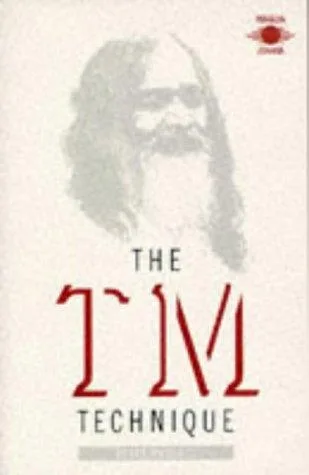
The TM Technique

 82
82

The TM Technique
Peter Russell’s The TM Technique from 1976 is a refreshingly direct manual for a practice that often gets encumbered with spiritual jargon. Russell’s strength lies in his clear, unembellished explanation of the mechanics of Transcendental Meditation. He presents the mantra-based method as a pragmatic tool for mental rejuvenation, stripping away the esoteric layers that sometimes obscure its practical application. A limitation, however, is the book’s inherent focus on the technique itself, offering less exploration into the broader philosophical underpinnings or the diverse psychological outcomes that practitioners might encounter beyond stated benefits. The section detailing the "automatic transcending" process, while informative, could benefit from more nuanced discussion of potential subjective experiences. Nonetheless, for its clarity and focus on the procedural aspects of TM, the book serves as an accessible guide to a widely practiced meditation form.
📝 Description
82
Peter Russell's 1976 book, The TM Technique, explains Transcendental Meditation as a systematic method for rest and awareness.
Published in 1976, Peter Russell's The TM Technique offers a clear explanation of Transcendental Meditation. The book presents TM not as a vague spiritual doctrine, but as a structured practice designed for mental rest and increased self-awareness. Russell details the basic principles, including how mantras are used and the intended effects on the mind and body. He emphasizes that the technique is accessible to anyone willing to practice it regularly. This guide is for those looking for a direct way to approach meditation, especially if they are interested in TM but find its spiritual aspects daunting. It suits the practical individual, a student of consciousness, or anyone dealing with stress who wants a defined method for achieving mental calm.
Readers interested in the psychological and physical advantages of meditation, supported by a consistent practice, will find this book particularly useful. It emerged during a time of growing interest in Eastern spiritual methods in the West. The TM movement, founded by Maharishi Mahesh Yogi, had already gained significant attention. Russell's book joined the literature that introduced meditation practices to a Western audience, appealing to people seeking personal development outside traditional Western religious or psychological approaches.
The TM Technique was published in an era when Eastern spiritual practices, including meditation, saw widespread adoption in the West. Transcendental Meditation, established by Maharishi Mahesh Yogi, became a prominent example of this trend, drawing attention from both the public and notable figures. Peter Russell's book entered this cultural moment, aiming to clarify the method for a Western audience often unfamiliar with its origins. It positioned TM as a practical psychological tool rather than solely a religious or mystical pursuit, aligning with a broader interest in inner development and stress reduction.
💡 Why Read This Book?
• You will learn the specific, step-by-step method for practicing Transcendental Meditation as presented by Peter Russell, understanding the role of the personal mantra and the concept of "automatic transcending. • You can gain insight into the physiological and psychological aims of TM, as described in 1976, differentiating it from other meditation styles by focusing on effortless mental settling. • You will discover the historical context of TM's popularization in the West during the 1970s, seeing how Russell's explanation fit into a broader cultural shift towards Eastern contemplative practices.
⭐ Reader Reviews
Honest opinions from readers who have explored this book.
❓ Frequently Asked Questions
What is the core principle of the TM Technique explained by Peter Russell?
The core principle is the use of a specific mantra, silently repeated, to allow the mind to settle effortlessly into quieter states of awareness, leading to deep rest and mental clarity.
When was Peter Russell's The TM Technique first published?
The TM Technique was first published in 1976, during a period of widespread interest in meditation techniques in Western culture.
Is this book suitable for complete beginners to meditation?
Yes, the book is designed for beginners, offering a clear, practical guide to learning and applying the Transcendental Meditation technique without overly complex theory.
What benefits does the book suggest can be gained from the TM Technique?
The book suggests benefits such as reduced stress, increased mental clarity, enhanced creativity, and a greater sense of inner peace through regular practice.
Does the book provide a mantra for the reader?
No, the book explains that a personal mantra is assigned by a certified TM teacher. It focuses on the principles and method rather than assigning specific mantras.
How does Russell's explanation differ from other meditation guides?
Russell emphasizes the 'effortless' nature of TM, contrasting it with concentration techniques. His focus is on the systematic, accessible method rather than extensive philosophical or spiritual discourse.
🔮 Key Themes & Symbolism
Effortless Transcending
Russell elaborates on the core TM concept of 'effortless transcending,' where the mind naturally settles inward through the silent repetition of a mantra. This isn't about forcing the mind to be still, but rather allowing it to naturally arrive at a state of deep rest. The book positions this as a key differentiator from concentration-based meditation practices that require sustained mental effort. By facilitating this natural withdrawal, the technique aims to provide profound mental and physiological rest, distinct from ordinary relaxation or sleep.
The Role of the Mantra
The mantra is presented as a vehicle for the mind to settle. Russell explains its function not as a word of power or religious significance, but as a sound used for focusing attention in a non-striving way. The assignment of a specific, personal mantra by a qualified instructor is highlighted as crucial to the technique's efficacy. The book emphasizes that the mantra's power lies in its use within the specific TM methodology, allowing practitioners to access deeper levels of consciousness systematically.
Mental Rest and Rejuvenation
A central theme is the TM Technique's capacity for deep mental rest. Russell posits that in our busy lives, the mind rarely experiences true rest, leading to stress and fatigue. The technique aims to provide this restorative break, allowing the nervous system to release accumulated tension. This state of 'restful alertness' is depicted as a foundation for improved well-being, increased energy, and enhanced cognitive function, presenting TM as a practical tool for managing the demands of modern life.
Accessibility and Practicality
Russell consistently frames the TM Technique as an accessible and practical method for anyone. He clarifies the process, breaking it down into understandable steps and emphasizing that no special beliefs or predispositions are required. The book's pragmatic approach aims to appeal to individuals seeking tangible results and a repeatable technique for self-improvement, positioning TM as a tool rather than a complex spiritual path. This focus on usability made the technique appealing during its widespread introduction in the 1970s.
💬 Memorable Quotes
Direct passages from the work, attributed to the author.
“The mantra is a tool for allowing the mind to transcend.”
— This interpretation highlights the functional role of the mantra in the TM technique, as described by Russell: not as an object of worship, but as a specific means to facilitate the mind's natural inward movement.
“Deep rest is essential for mental and physical rejuvenation.”
— This concept, central to Russell's explanation, underscores the purported benefit of TM – providing a profound state of rest that contrasts with ordinary sleep or relaxation, leading to restorative effects.
“Effortlessness is key to accessing deeper states of awareness.”
— This captures Russell's distinction of TM from concentration techniques, emphasizing that the ease with which the mind settles is crucial for achieving the intended state of profound rest.
💡 Key Ideas
Editorial paraphrase of the work's core concepts — not direct quotes.
The mind, when allowed to settle, naturally moves towards quieter states.
This paraphrase captures Russell's emphasis on the inherent tendency of the mind to seek stillness when not actively engaged in effortful thinking, a core part of the TM technique's philosophy.
TM is a systematic technique, not a belief system.
This paraphrase reflects Russell's consistent message that Transcendental Meditation is a practical method that can be learned and applied by anyone, regardless of their personal philosophy or background.
🌙 Esoteric Significance
Tradition
While Peter Russell presents The TM Technique in a largely secular and pragmatic manner, its roots lie within the Vedic traditions of India, specifically drawing from the lineage of Upanishadic thought and Advaita Vedanta. The concept of transcending, or 'turiyatita,' is a core idea in these traditions, referring to a state beyond waking, dreaming, and deep sleep. Russell’s work translates these deep philosophical concepts into a repeatable mental technology, making them accessible without requiring adherence to a specific religious framework. It positions the technique as a method to directly experience these states of consciousness.
Symbolism
The primary 'symbol' in the TM technique is the mantra itself. Although not typically viewed as a symbolic object in the conventional sense, the mantra functions symbolically as a point of focus that allows the mind to disengage from discursive thought. Its specific sound and assigned nature are meant to be uniquely suited to the individual, acting as a key that unlocks deeper levels of awareness. The 'state of transcending' can also be seen as a symbolic representation of ultimate consciousness or pure awareness, a concept that speaks to mystical traditions seeking union with the divine or absolute.
Modern Relevance
The principles outlined in The TM Technique continue to be highly relevant today, particularly within the fields of mindfulness, stress reduction, and performance psychology. Contemporary thinkers and practitioners exploring consciousness, neuroplasticity, and well-being often reference or build upon the foundational ideas of effortless attention and deep rest popularized by TM. Schools of thought focusing on non-dual awareness and contemplative neuroscience frequently engage with the accessible methodology Russell described, viewing it as a practical entry point to altered states of consciousness and enhanced mental functioning.
👥 Who Should Read This Book
• Individuals new to meditation seeking a structured, easy-to-learn technique for stress reduction and mental clarity, as presented in Russell's 1976 guide. • Students of consciousness studies or comparative religion interested in the practical application and historical dissemination of Eastern contemplative practices in the West. • Busy professionals or anyone experiencing high levels of daily stress looking for a repeatable method to achieve deep mental rest and rejuvenation, as explained through the TM Technique.
📜 Historical Context
Peter Russell’s The TM Technique, published in 1976, arrived amidst a surge of interest in Eastern contemplative practices within Western societies. The Transcendental Meditation (TM) movement, spearheaded by Maharishi Mahesh Yogi, had already achieved significant cultural penetration throughout the 1960s and early 70s, attracting prominent figures and widespread media attention. Russell’s book functioned as a clear, accessible manual, explaining the mechanics of the mantra-based meditation technique to a public eager for practical methods of stress reduction and self-improvement. It appeared in a landscape where various schools of thought, from Zen Buddhism to Yoga, were being introduced, but TM distinguished itself through its structured approach and the concept of effortless transcending. The book contributed to the normalization of meditation as a secular practice, distinct from traditional religious or philosophical systems, and engaged with a generation seeking personal growth outside conventional structures.
📔 Journal Prompts
The process of "automatic transcending" as described by Russell.
The specific role of the assigned mantra in facilitating mental settling.
Applying the concept of "effortlessness" to daily challenges outside of meditation.
Reflecting on the contrast between TM's "restful alertness" and ordinary relaxation.
The historical context of TM's introduction to the West in the 1970s.
🗂️ Glossary
Mantra
A specific sound or word, given to a practitioner by a certified teacher, used silently during Transcendental Meditation to help the mind settle into quieter states of awareness.
Transcendental Meditation (TM)
A specific form of mantra meditation developed by Maharishi Mahesh Yogi, characterized by its effortless technique and aim of achieving deep mental rest and self-awareness.
Automatic Transcending
The core principle of TM where the mind, through the use of a mantra, naturally and effortlessly settles down to quieter levels of thought and awareness.
Restful Alertness
A state of deep rest achieved during TM meditation, where the body is deeply relaxed but the mind remains alert and aware, distinct from sleep or mere relaxation.
Effortlessness
The principle in TM that emphasizes a lack of striving or concentration; the technique works best when practiced with ease and without forcing the mind.
Vedic Tradition
An ancient Indian tradition encompassing spiritual, philosophical, and cultural knowledge, from which Transcendental Meditation draws its lineage and core concepts.
Discursive Thought
The normal mode of thinking characterized by a continuous stream of varied thoughts, reasoning, and mental activity, which TM aims to allow to settle.
🔮 Readers Also Liked
Browse all →









More by Peter Russell
All books →

More Free Spiritual Development Books
View all →