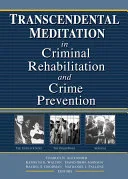
Transcendental Meditation® in Criminal Rehabilitation and Crime Prevention
 72
72

Transcendental Meditation® in Criminal Rehabilitation and Crime Prevention
Walton, Orme-Johnson, and Goodman's investigation into Transcendental Meditation® for criminal rehabilitation offers a compelling, if somewhat specialized, perspective. The book's strength lies in its persistent focus on empirical data and longitudinal studies, presenting a clear case for the technique's efficacy where other methods falter. The authors compellingly argue that addressing the physiological and psychological effects of stress, which they link to criminal behavior, through a simple, standardized technique like TM holds significant promise. One notable area is the detailed explanation of how TM practice influences brain functioning, specifically citing coherence in brainwave patterns as a marker of reduced stress. However, a limitation is the book's inherent bias towards TM; while acknowledging other approaches, it doesn't deeply engage with potential limitations or alternative consciousness-based practices that might yield similar results. The extensive case studies and statistical analyses, particularly those concerning reduced recidivism rates over extended periods, are its most persuasive elements. This work is a crucial read for those invested in the practical application of contemplative science within the justice system.
📝 Description
72
In 2014, Walton, Orme-Johnson, and Goodman proposed Transcendental Meditation for criminal rehabilitation.
This volume examines the Maharishi Transcendental Meditation (TM) technique as an alternative to conventional approaches in criminal justice. The authors argue that TM addresses the root causes of criminal behavior by fostering a shift in consciousness. This internal change, they suggest, reduces stress and anxiety, leading to improved brain function and fewer aggressive tendencies. The book's aim is to demonstrate how these effects can decrease the likelihood of criminal activity and aid in successful societal reintegration.
The work is directed toward a wide audience. This includes criminal justice practitioners looking for new strategies, academic researchers in criminology and psychology, and anyone interested in applying contemplative practices for broader social benefit. It also appeals to TM practitioners curious about its effects beyond individual well-being. The authors build their case on existing research and empirical data, citing studies that followed subjects for up to fifteen years. This evidence was presented to counter the often discouraging long-term results of traditional rehabilitation programs.
The book situates the practice of Transcendental Meditation within a lineage of contemplative traditions that seek to cultivate inner order. While often discussed in terms of personal well-being, its application here extends to societal structures, suggesting that individual transformation can have a direct impact on crime rates. This perspective aligns with esoteric thought that posits a connection between individual consciousness and the collective environment, proposing that shifts in awareness can resolve external problems.
💡 Why Read This Book?
• Understand the scientific underpinnings of how Transcendental Meditation® impacts brain functioning, as detailed in studies spanning up to 15 years, offering a unique physiological explanation for behavioral change. • Explore concrete data from 2014 research indicating significantly lower recidivism rates among offenders practicing TM, providing evidence-based alternatives to conventional rehabilitation. • Gain insight into the Maharishi Transcendental Meditation® technique as a consciousness-based strategy, distinct from psychological therapies, for addressing stress and aggression in offender populations.
⭐ Reader Reviews
Honest opinions from readers who have explored this book.
❓ Frequently Asked Questions
What is the primary goal of using Transcendental Meditation® in criminal rehabilitation according to the book?
The primary goal is to reduce stress and promote inner order through the practice of Transcendental Meditation®, which the authors, including Kenneth G Walton, suggest can lead to a decrease in aggressive tendencies and criminal behavior.
What evidence does the book present for the effectiveness of TM in crime prevention?
The book cites studies conducted over periods of 1 to 15 years, indicating that consciousness-based strategies, specifically TM, have shown positive results in preventing crime and rehabilitating offenders.
Who are the main authors of 'Transcendental Meditation® in Criminal Rehabilitation and Crime Prevention'?
The main authors are Kenneth G Walton, David Orme-Johnson, and Rachel S Goodman. The work was first published in January 2014.
How does this book contrast with traditional rehabilitation methods?
It contrasts by focusing on internal transformation through meditation, rather than solely on external behavioral modification or punitive measures, which the authors argue often yield dismal results.
What is the core philosophy behind applying TM to offenders?
The core philosophy is that improving an individual's state of consciousness by reducing accumulated stress leads to a natural reduction in negative behaviors and an increase in orderly conduct.
Does the book offer practical guidance on teaching TM to offenders?
While the book focuses on the research and philosophy, it implies the efficacy of standardized TM instruction, suggesting it can be taught to offender populations.
🔮 Key Themes & Symbolism
Consciousness as a Factor
The work posits that criminal behavior stems from an internal state of disorder and accumulated stress, rather than purely external factors or moral failing. By cultivating a state of restful alertness through Transcendental Meditation®, individuals can achieve a more orderly, coherent state of consciousness. This internal shift is presented as the fundamental mechanism for reducing aggression and promoting positive behavioral change, offering an esoteric perspective on rehabilitation that prioritizes inner transformation.
Empirical Efficacy of TM
A significant theme is the presentation of empirical data supporting the effectiveness of the Maharishi Transcendental Meditation® technique. The authors meticulously reference studies, some tracking individuals for up to 15 years, to demonstrate reduced recidivism rates and successful reintegration among offenders who practiced TM. This focus on measurable outcomes provides a scientific validation for a practice often perceived as purely spiritual or metaphysical.
Stress Reduction and Brain Function
The book examines the physiological effects of TM, particularly its capacity to reduce the body's accumulated stress. It explores how this stress reduction, facilitated by the technique, leads to improved brain functioning, characterized by increased coherence in brainwave activity. This neurological perspective offers a tangible, scientific basis for understanding how TM can alleviate the internal pressures that may contribute to criminal actions.
Alternative Rehabilitation Paradigm
This work champions a shift in thinking in criminal rehabilitation, moving away from methods with historically poor outcomes. It positions Transcendental Meditation® as a powerful, unique approach that addresses the root causes of offending by transforming consciousness. The book argues that this internal development is key to genuine, lasting reform, offering a holistic and esoteric alternative to conventional justice system interventions.
💬 Memorable Quotes
Direct passages from the work, attributed to the author.
“consciousness-based strategies have proven effective in preventing crime and rehabilitating offenders”
— This statement captures the book's central thesis: that internal shifts in consciousness, cultivated through practices like TM, are a more effective pathway to reducing crime than traditional punitive or therapeutic approaches.
“in contrast to the generally dismal results of most rehabilitation approaches”
— This highlights the authors' critique of conventional methods, framing their proposed TM-based approach as a necessary and evidence-backed alternative to systems that have historically struggled with high recidivism rates.
“employing the Maharishi Transcendental Meditation®”
— This identifies the specific technique at the heart of the proposed solution, grounding the abstract concept of 'consciousness-based strategies' in a defined, established practice.
“studies covering periods of 1-15 years indicate...”
— This points to the long-term, data-driven nature of the research presented, emphasizing the robustness of the evidence supporting TM's efficacy in rehabilitation and crime prevention.
“a powerful, unique approach to offender rehabilitation and crime prevention”
— This positions the TM technique not merely as an adjunct but as a distinct and potent method for addressing criminal behavior, suggesting its novelty and significant potential impact.
🌙 Esoteric Significance
Tradition
While not strictly adhering to a single named lineage like Hermeticism or Kabbalah, this work draws from the broader esoteric tradition of consciousness exploration, particularly as systematized by Maharishi Mahesh Yogi. It aligns with traditions that posit inner transformation as the key to societal change, viewing the mind and its states as fundamental to reality and behavior. The esoteric angle lies in its focus on a subtler, internal mechanism (consciousness) to resolve gross, external problems (crime).
Symbolism
The core 'symbol' is the practice of Transcendental Meditation® itself, representing the attainment of restful alertness or 'pure consciousness.' This state can be seen as symbolizing inner order, balance, and the resolution of internal conflict. The concept of 'stress' reduction acts as a symbolic representation of accumulated negative psychic energy or disorder that manifests as harmful behavior.
Modern Relevance
Contemporary interest in mindfulness, neurofeedback, and evidence-based therapeutic modalities provides fertile ground for this work's ideas. Thinkers and practitioners in positive psychology, trauma-informed care, and even secularized meditation movements can find resonance with the book's emphasis on the mind-body connection and the potential for internal states to influence external actions. Its data-driven approach makes it relevant to modern scientific inquiry into contemplative practices.
👥 Who Should Read This Book
• Criminal justice professionals and policymakers seeking innovative, research-backed strategies for offender rehabilitation and crime prevention that move beyond traditional approaches. • Criminologists and psychologists interested in comparative studies of rehabilitation methods, particularly those exploring the intersection of contemplative practices and behavioral science. • Practitioners and researchers of Transcendental Meditation® curious about its documented applications in addressing complex societal issues like crime and recidivism.
📜 Historical Context
Published in 2014, *Transcendental Meditation® in Criminal Rehabilitation and Crime Prevention* emerged within a broader discourse on correctional reform, where traditional methods often faced scrutiny for their limited success in reducing recidivism. The intellectual climate was ripe for exploring alternative, evidence-based interventions. The authors, including David Orme-Johnson, a noted researcher in the field of TM and psychology, built upon decades of research into the technique's effects on stress and brain functioning. This work directly engaged with criminology by proposing a consciousness-based solution, contrasting sharply with prevailing psychological or sociological models. While not facing overt censorship, the application of TM within such a pragmatic, societal domain represented a departure from its more common association with personal wellness or spiritual development. It sought to bridge the gap between esoteric practices and hard-nosed policy, appearing at a time when neuroscientific findings were increasingly being integrated into discussions on behavior modification.
📔 Journal Prompts
The impact of accumulated stress on criminal behavior, as explored in the context of Transcendental Meditation®.
Evaluating the long-term efficacy data presented regarding TM and recidivism rates.
The concept of consciousness-based strategies versus traditional rehabilitation models.
Personal reflection on the potential for internal states to influence external actions.
Exploring the Maharishi Transcendental Meditation® technique as a tool for societal change.
🗂️ Glossary
Transcendental Meditation®
A specific, mantra-based meditation technique taught by certified instructors, characterized by effortless practice and aimed at producing a state of deep rest and mental clarity.
Consciousness-Based Strategies
Approaches to addressing societal problems, such as crime, that focus on transforming the individual's state of consciousness rather than solely on external behavioral modification.
Recidivism
The tendency of a convicted criminal to reoffend; the rate at which convicted criminals are arrested again after release.
Restful Alertness
A state of deep physiological rest coupled with a clear, alert mind, often described as a unique outcome of practicing Transcendental Meditation®.
Brainwave Coherence
A measure of synchronized activity across different brain regions, often correlated with improved cognitive functioning and reduced stress levels, as studied in TM practitioners.
Offender Rehabilitation
The process of providing individuals convicted of crimes with the support and resources needed to reintegrate into society and reduce the likelihood of future offenses.
Maharishi Mahesh Yogi
The Indian physicist and spiritual teacher who developed and popularized the Transcendental Meditation® technique worldwide.