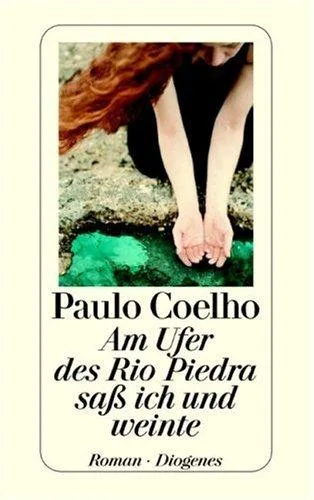
Am Ufer des Rio Piedra saß ich und weinte
 72
72

Am Ufer des Rio Piedra saß ich und weinte
Paulo Coelho's "Am Ufer des Rio Piedra saß ich und weinte" presents a deeply personal account of spiritual re-engagement, framed by the author's walk along the Camino de Santiago. The strength of the work lies in its raw honesty regarding the internal battles faced when reconciling a spiritual calling with life's practicalities and past doubts. Coelho’s depiction of receiving guidance through 'omens' feels particularly authentic, capturing a universal human experience of seeking signs in the mundane. However, the narrative occasionally falters under the weight of its own earnestness, with some passages feeling overly didactic, particularly when detailing theological concepts. The concept of the 'pilgrimage' as both physical and spiritual is compelling, yet the book sometimes leans too heavily on established Catholic doctrine without fully integrating it into a novel exploration. Despite these limitations, the book’s exploration of faith, doubt, and the courage required to follow a spiritual path remains its core appeal. It serves as a compelling testament to the individual's ongoing search for meaning.
📝 Description
72
Paulo Coelho's 1975 novel details his return to Catholicism after exploring other spiritual paths.
Originally published in 1975, "Am Ufer des Rio Piedra saß ich und weinte" recounts Paulo Coelho's personal pilgrimage. The narrative follows his decision to rejoin the Catholic Church after a period of seeking spiritual understanding through less conventional means. This spiritual autobiography, presented as fiction, centers on his journey along the Camino de Santiago, a historic route for religious travelers in Spain.
The book is suited for readers interested in personal narratives of spiritual commitment and the complexities of returning to a faith. It will resonate with those who contemplate comparative religion, the process of personal transformation, and the connection between individual experiences and religious doctrine. Individuals questioning their own life's direction or examining the nature of commitment within a spiritual framework will find it relevant. Those who enjoy introspective narratives and philosophical thought will appreciate its content.
Published in 1975, this work appeared during a time of broad spiritual questioning in the West. While not directly part of the New Age movement, its themes of individual spiritual awakening and challenging established ideas echo the era's search for meaning beyond conventional structures. Coelho's focus on returning to a specific religious tradition, Catholicism, distinguishes it from more blended or esoteric spiritual inquiries common then. The Camino de Santiago, a route with medieval origins, saw renewed interest as a path for personal transformation.
💡 Why Read This Book?
• Gain insight into the spiritual reawakening process by examining Coelho's personal journey and his return to Catholicism, mirroring the historical resurgence of interest in traditional pilgrimage routes like the Camino de Santiago. • Understand the concept of 'Omens' as divine guidance as described by Coelho, offering a framework for interpreting life events through a spiritual lens, a concept he would explore further. • Explore the challenges of reconciling faith with doubt and the courage required to embrace a spiritual destiny, as depicted through the narrative of the pilgrimage to Santiago de Compostela.
⭐ Reader Reviews
Honest opinions from readers who have explored this book.
❓ Frequently Asked Questions
What is the significance of the Rio Piedra in Paulo Coelho's "Am Ufer des Rio Piedra saß ich und weinte"?
The Rio Piedra is a symbolic location along the Camino de Santiago, representing a point of profound spiritual encounter and decision for the protagonist. It's where he confronts his past and recommits to his spiritual path.
When was "Am Ufer des Rio Piedra saß ich und weinte" first published?
The book was first published in 1975. This early work predates many of Coelho's more globally recognized titles.
Is "Am Ufer des Rio Piedra saß ich und weinte" a factual account?
Yes, the book is largely autobiographical, detailing Paulo Coelho's own spiritual journey and pilgrimage along the Camino de Santiago in the early 1970s.
What is the primary religious theme in "Am Ufer des Rio Piedra saß ich und weinte"?
The primary theme is a return to and recommitment to Catholicism, exploring faith, doubt, and the nature of miracles through the protagonist's spiritual quest.
How does this book connect to the Camino de Santiago?
The book's narrative is set against the backdrop of the Camino de Santiago, a historic pilgrimage route in Spain, which serves as the physical and spiritual setting for the protagonist's journey.
What are 'Omens' as presented in this book?
In the context of the book, Omens are signs or synchronicities that guide the protagonist on his spiritual path, suggesting a divine communication with those who are attentive.
🔮 Key Themes & Symbolism
The Spiritual Pilgrimage
The book frames the physical journey along the Camino de Santiago as a profound internal pilgrimage. It illustrates how traversing a physical path can mirror and facilitate an inner quest for spiritual truth and self-understanding. The narrative emphasizes that the true destination is not merely Santiago de Compostela, but a deeper connection with the divine and one's own soul. This concept aligns with historical Christian pilgrimage traditions while also resonating with broader spiritual quests for meaning and transcendence.
Omens and Divine Guidance
A central tenet explored is the concept of 'Omens'—signs from the universe that guide individuals toward their destiny. Coelho portrays these not as mere coincidences but as deliberate communications from a higher power. The protagonist learns to recognize and interpret these signs, which range from subtle synchronicities to more overt events, underscoring the idea that the universe conspires to help those who are open to its messages.
Faith, Doubt, and Recommitment
The work examines the often-turbulent relationship between faith and doubt. The protagonist grapples with past skepticism and spiritual disillusionment, wrestling with the commitment required to return to a traditional religious path, specifically Catholicism. This internal conflict highlights the human struggle to maintain belief in the face of life's uncertainties and the courage it takes to reaffirm one's spiritual convictions.
Love and Miracles
Unconditional love is presented as a powerful force capable of inspiring miracles and facilitating spiritual growth. The narrative suggests that true love, particularly divine love, can overcome obstacles and transform lives. Miracles are not depicted as impossible events but as natural outcomes of faith and divine intervention, accessible to those who believe and are willing to act on their faith.
💬 Memorable Quotes
Direct passages from the work, attributed to the author.
“The pilgrimage is the journey of the soul.”
— This statement captures the book's core message, distinguishing the physical act of walking the Camino de Santiago from the deeper, internal spiritual transformation the protagonist undergoes.
“Omens guide us if we are willing to see them.”
— This highlights the book's recurring theme of divine communication through signs and synchronicities, suggesting that awareness and receptivity are key to receiving spiritual guidance.
“Love is the path to miracles.”
— This concept suggests that the practice of unconditional love, both divine and human, is the conduit through which extraordinary spiritual events and personal transformation can occur.
“The universe conspires to help those who follow their destiny.”
— This interpretation reflects the idea that by aligning with one's true path, often revealed through omens, external forces will support and facilitate the journey.
💡 Key Ideas
Editorial paraphrase of the work's core concepts — not direct quotes.
Doubt is a natural part of faith.
This paraphrase reflects the protagonist's internal struggle, acknowledging that questioning and uncertainty are not antithetical to faith but often integral to its strengthening and deepening.
🌙 Esoteric Significance
Tradition
This work aligns with a tradition of Christian mysticism and pilgrimage narratives, focusing on a personal re-engagement with Catholic doctrine. While not strictly 'esoteric' in the sense of occult secret knowledge, it explores spiritual awakening through personal revelation and direct experience of the divine, a common thread in many mystical traditions. It departs from purely Gnostic or Hermetic approaches by reaffirming a specific, orthodox religious framework.
Symbolism
The Camino de Santiago itself is a potent symbol of the spiritual journey and the path to enlightenment or salvation. The 'Rio Piedra' (Stone River) can symbolize obstacles or the purification process one undergoes. 'Omens' function as symbols of divine providence and interconnectedness, guiding the seeker through life's challenges and toward their true spiritual purpose.
Modern Relevance
Contemporary thinkers and practitioners interested in the intersection of psychology, spirituality, and narrative find relevance in Coelho's exploration of personal myth and spiritual reawakening. His emphasis on omens and destiny continues to resonate with those seeking meaning in everyday occurrences, influencing modern approaches to mindfulness and spiritual guidance outside traditional religious contexts.
👥 Who Should Read This Book
• Individuals interested in Christian mysticism and personal spiritual journeys, particularly those drawn to the historical significance of the Camino de Santiago. • Readers exploring the tension between faith and doubt, seeking narratives that address the challenges of recommitting to a spiritual path after periods of questioning. • Those fascinated by the concept of 'Omens' and seeking to understand how to interpret signs and synchronicities in their own lives for guidance.
📜 Historical Context
Published in 1975, "Am Ufer des Rio Piedra saß ich und weinte" emerged in an era marked by widespread spiritual seeking, often outside established religious institutions. While the counterculture of the 1960s and 70s explored various esoteric paths, Coelho’s work focused on a return to traditional Catholicism via a pilgrimage. This contrasted with more syncretic or New Age spiritualities gaining traction. The resurgence of interest in the Camino de Santiago itself, a medieval pilgrimage route, began in the late 20th century, aligning with a broader cultural fascination with historical practices as sources of meaning. Coelho’s early work on this theme predates his global fame and the full commodification of the pilgrimage route, offering a more personal and introspective perspective. The book reflects a tension between institutional religion and individual spiritual experience, a theme pertinent to many contemporary spiritual seekers.
📔 Journal Prompts
The protagonist's struggle with doubt on the Camino de Santiago.
Interpreting the 'Omens' that appeared during the pilgrimage.
The significance of the Rio Piedra encounter.
Reconciling personal faith with institutional religious practice.
Defining one's own spiritual 'pilgrimage'.
🗂️ Glossary
Camino de Santiago
An ancient network of pilgrimage routes in Europe leading to the shrine of the apostle Saint James the Great in the cathedral of Santiago de Compostela in Galicia, Spain.
Pilgrimage
A journey or search of moral or spiritual significance. Typically, it is a journey to a shrine or other sacred location, undertaken as an act of devotion.
Omens
In this context, signs or indications of future events, interpreted as divine guidance or messages from the universe to the individual on their spiritual path.
Faith
Complete trust or confidence in someone or something, particularly in religious contexts, despite a lack of empirical proof.
Doubt
A feeling of uncertainty or lack of conviction, often experienced in relation to spiritual beliefs or commitments.
Catholicism
The faith and practice of the Catholic Church, a major branch of Christianity, emphasizing the authority of the Pope and the sacraments.
Spiritual Awakening
A process of personal transformation involving a deeper understanding and connection to one's inner self, the divine, or the universe.
🔮 Readers Also Liked
Browse all →









More by Paulo Coelho
All books →





More Free Spiritual Development Books
View all →