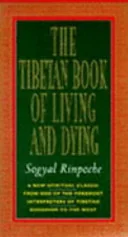
The Tibetan Book of Living and Dying
 78
78

The Tibetan Book of Living and Dying
Sogyal Rinpoche's *The Tibetan Book of Living and Dying* presents the intricate Tibetan Buddhist view of mortality with a clarity that has endeared it to millions. Its strength lies in its accessible distillation of profound teachings, particularly its detailed descriptions of the bardos, the intermediate states after death. The section on the 'bardo of dying' vividly illustrates the dissolution of the physical and mental faculties, offering a structured understanding of what the dying process might entail. However, the book's extensive scope occasionally leads to a less focused narrative, at times feeling more like a collection of teachings than a singular argument. While Rinpoche's personal anecdotes lend warmth, they sometimes overshadow the core philosophical exposition. Despite this, the work remains a significant bridge between ancient Tibetan wisdom and contemporary Western concerns about death and impermanence. It is a valuable, if sometimes diffuse, guide to contemplating life's final passage.
📝 Description
78
First published in 1994, The Tibetan Book of Living and Dying explains the Tibetan Buddhist view on death and dying.
Sogyal Rinpoche's 1994 book aims to clarify the Tibetan Buddhist perspective on death, dying, and the afterlife. It presents death not as an end, but as a transition in consciousness, drawing from ancient Tibetan teachings like the Bardo Thödol. The text details the various stages of consciousness experienced during the dying process and beyond, seeking to demystify these events. It is written for anyone interested in a spiritual or philosophical understanding of death, especially those dealing with loss, working in palliative care, or contemplating their own mortality. People drawn to Eastern philosophies, meditation, and Buddhist practices, or who seek a framework for consciousness beyond the physical, will find relevant material here.
The book discusses the Tibetan concept of the bardo, the interval between death and rebirth. It describes the dissolution of the physical elements and the appearance of clear light, as well as the experiences that follow. The author's intent is to offer guidance and comfort, helping readers face death with greater peace and understanding. This work serves as an accessible introduction to complex Tibetan Buddhist ideas for a Western audience.
This book is rooted in Tibetan Buddhism, a tradition that emerged from the Indian Mahayana tradition and developed unique philosophical and contemplative systems in the Himalayas. Its teachings on death and the intermediate states draw directly from texts like the Bardo Thödol, which are central to Tibetan spiritual practice and understanding of the cycle of rebirth. The book translates these complex ideas for a wider audience, connecting them to practices like meditation and mindfulness that were gaining interest in the West during the 1990s.
💡 Why Read This Book?
• Understand the Tibetan Buddhist concept of the *bardo* (intermediate state) and its implications for consciousness after death, providing a structured framework for contemplating impermanence beyond conventional notions of oblivion. • Learn practical methods for maintaining awareness and compassion during the dying process, directly applicable to palliative care or personal preparation, as outlined in Rinpoche's teachings on *phowa* (transference of consciousness). • Engage with the historical dissemination of Dzogchen teachings to the West, understanding how this 1994 publication became a seminal text for a generation grappling with existential questions.
⭐ Reader Reviews
Honest opinions from readers who have explored this book.
❓ Frequently Asked Questions
What is the primary teaching of The Tibetan Book of Living and Dying?
The book's primary teaching is the Tibetan Buddhist perspective on death and dying, emphasizing that death is a transition, not an end. It explains the stages of consciousness experienced during dying and after death, known as the bardo states, and how understanding these can help both the dying and the living.
Who was Sogyal Rinpoche?
Sogyal Rinpoche was a Tibetan Buddhist lama recognized as a teacher of the Dzogchen tradition. He was instrumental in bringing Tibetan Buddhist teachings to the West, founding the Rigpa organization, and authoring *The Tibetan Book of Living and Dying* in 1994.
What does 'bardo' mean in the context of this book?
In this book, 'bardo' refers to the intermediate state between death and rebirth. The Tibetan tradition identifies several bardos, including the bardo of dying, the bardo of dharmata (reality), and the bardo of becoming (which leads to rebirth), each with distinct experiences and potentials for realization.
How does the book help with caring for the terminally ill?
It provides insights into the dying process from a spiritual perspective, offering guidance on how to be present with the dying, offer comfort, and understand the subtle shifts in consciousness that may occur. This can help caregivers approach the situation with greater wisdom and compassion.
Is this book only for Buddhists?
No, while rooted in Tibetan Buddhism, the book's exploration of death, impermanence, and consciousness has universal appeal. It is written for anyone interested in confronting mortality, seeking spiritual understanding, or supporting loved ones through grief and loss, regardless of their religious background.
When was The Tibetan Book of Living and Dying first published?
The Tibetan Book of Living and Dying was first published in 1994. This timing placed it within a surge of Western interest in Eastern spiritual traditions and contemplative practices.
🔮 Key Themes & Symbolism
The Bardo States
The work extensively details the Tibetan understanding of the *bardo*, or intermediate state, experienced between death and rebirth. It describes distinct phases, including the *chikhai bardo* (the bardo of dying, marked by dissolution), the *chodnyid bardo* (the bardo of the nature of reality, characterized by luminous visions), and the *sipai bardo* (the bardo of becoming, where karmic imprints lead to a new existence). Rinpoche explains how recognizing these states can lead to liberation or a more favorable rebirth.
Preparing for Death
A central theme is the importance of conscious preparation for death, not as a morbid fixation, but as a vital aspect of living fully. The book advocates for cultivating mindfulness, developing compassion, and engaging in spiritual practice, such as meditation and *phowa* (a specific practice for transference of consciousness), throughout life. This preparation aims to ensure that one faces death with clarity and awareness, rather than succumbing to fear and confusion.
The Nature of Mind
Underlying the teachings on death is an exploration of the nature of mind itself. Rinpoche emphasizes the inherent purity and potential for enlightenment within the mind, often obscured by delusion and ignorance. The experiences in the bardo are presented as opportunities to recognize this true nature, particularly the appearance of the 'clear light' at the moment of death, which is considered the mind's fundamental essence.
Compassion and Grief
The book addresses the practical and emotional aspects of death, including how to support the dying and those left behind. It highlights the role of compassion (*karuna*) in alleviating suffering, both for the one who is dying and for the bereaved. By reframing death as a natural process and an opportunity for spiritual growth, it offers solace and guidance for navigating grief with wisdom and equanimity.
💬 Memorable Quotes
Direct passages from the work, attributed to the author.
“Death is not an event that happens to you; it is a process that you go through.”
— This statement reframes mortality from a passive experience to an active, albeit challenging, journey. It suggests that consciousness plays a role in the dying process, aligning with the Tibetan Buddhist view of death as a transition rather than an absolute cessation.
“All the teachings of the Buddhas are contained in the understanding of impermanence.”
— This highlights a foundational Buddhist principle. Recognizing that all phenomena are transient is seen as the key to overcoming attachment, aversion, and delusion, thereby paving the path to spiritual liberation and a clearer understanding of reality.
“When you are dying, you must remember your master, your practice, and your vows.”
— This refers to the importance of maintaining spiritual connection and focus during the critical moments of death. Recalling one's teacher, spiritual path, and commitments is believed to anchor the mind and facilitate a positive transition.
“The bardo is a mirror, reflecting the state of your mind.”
— This metaphorical statement emphasizes how the experiences encountered in the intermediate states after death are not external events but manifestations of one's own accumulated karma, habits, and mental conditioning.
“True compassion is not pity, but the wish for all beings to be free from suffering.”
— This defines compassion in a Buddhist context, distinguishing it from mere sympathy. It points to a universal aspiration for the liberation of all sentient beings from the cycle of suffering (samsara).
🌙 Esoteric Significance
Tradition
The work is firmly rooted in the Nyingma school of Tibetan Buddhism, specifically the Dzogchen tradition, which emphasizes direct realization of the nature of mind. While Dzogchen is a profound spiritual path within Buddhism, its teachings on primordial awareness and the nature of reality share common ground with other esoteric traditions that explore consciousness, liberation, and the dissolution of egoic structures.
Symbolism
Key symbols include the *clear light* (ösel), representing the fundamental, unmanifest nature of mind, often appearing at the moment of death. The *bardo* itself functions symbolically as a liminal space, a threshold where reality is stripped bare, revealing the mind's projections. The *vajra* (dorje), a ritual implement symbolizing indestructibility and skillful means, also appears, representing the unshakeable nature of enlightened awareness.
Modern Relevance
Contemporary thinkers and practitioners in fields ranging from transpersonal psychology to secular mindfulness draw upon the book's insights. Its accessible presentation of death as a spiritual process influences modern palliative care approaches and philosophical discussions on consciousness. Schools like Rigpa, founded by Sogyal Rinpoche, continue to teach these principles, while many individuals use the book as a guide for personal spiritual development and confronting existential questions.
👥 Who Should Read This Book
• Individuals exploring Buddhist philosophy and contemplative practices, seeking a comprehensive introduction to Tibetan teachings on impermanence and the afterlife. • Healthcare professionals, caregivers, and those supporting terminally ill patients or grieving loved ones, who can gain profound perspectives on compassion and the dying process. • Skeptics and seekers interested in alternative frameworks for understanding consciousness, death, and the potential for spiritual realization beyond conventional materialism.
📜 Historical Context
Published in 1994, *The Tibetan Book of Living and Dying* arrived at a key moment for Western engagement with Tibetan Buddhism. The preceding decades had seen figures like the Dalai Lama become prominent global advocates, sparking widespread interest. Rinpoche Sogyal's work aimed to make the complex philosophical and spiritual teachings of the Dzogchen tradition accessible to a secular Western audience, moving beyond the more esoteric focus of texts like the *Bardo Thödol* itself. It emerged during a period when mindfulness and meditation practices were gaining mainstream acceptance, often championed by figures like Jon Kabat-Zinn. While the book was widely praised for its clarity and depth, it also faced scrutiny, particularly concerning Sogyal Rinpoche's later personal conduct, which came to light years after the book's initial success, leading to complex reception and debates within the Buddhist community.
📔 Journal Prompts
The concept of the *bardo* as a mirror for the mind.
Reflecting on the teachings regarding the dissolution of the elements during dying.
The practice of *phowa* and its implications for conscious dying.
Impermanence as the foundation for spiritual practice.
The role of the guru in the transition of death.
🗂️ Glossary
Bardo
An intermediate state, most commonly referring to the period between death and rebirth, but also encompassing states experienced during life, such as deep meditation or dream states.
Dzogchen
The 'Great Perfection' or 'Great Completeness,' a central teaching of the Nyingma school of Tibetan Buddhism, emphasizing direct introduction to the primordial, natural state of awareness.
Phowa
A practice of 'transference of consciousness' in Tibetan Buddhism, intended to direct one's consciousness at the time of death to a pure land or a state of enlightenment.
Dharmata
The true nature of reality; the intrinsic essence of phenomena, often described as luminous, empty, and all-pervading, experienced in a specific bardo state.
Karma
The principle of cause and effect, where volitional actions create future consequences, shaping one's experiences and future rebirths within the cycle of samsara.
Clear Light (Ösel)
The fundamental, luminous, and empty nature of mind, often described as being revealed at the moment of death, representing the ultimate reality.
Samsara
The cycle of birth, death, and rebirth, characterized by suffering and dissatisfaction, driven by ignorance, attachment, and aversion.
This book appears in 1 collection
🔮 Readers Also Liked
Browse all →









From the “Reincarnation” Collection
View all →





More Free Occult Philosophy Books
View all →