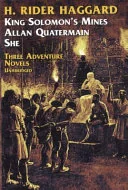
Three Adventure Novels
 78
78

Three Adventure Novels
Henry Rider Haggard’s "Three Adventure Novels" presents a potent distillation of Victorian and Edwardian adventure fiction, where the thrill of exploration meets the whisper of the supernatural. "She" remains a singular creation, Ayesha’s immortal presence a powerful archetype of eternal feminine mystique and dangerous allure. The accompanying tales, "King Solomon's Mines" and "Allan Quatermain," deliver on their promise of sensational fights and perilous escapes, charting expeditions into the unknown with a relentless pace. However, the prose, while effective for its time, can occasionally feel dated, particularly in its characterizations and descriptive passages, sometimes bordering on the simplistic. The inherent datedness of some of its anthropological perspectives is also a notable limitation for a modern reader. Despite these, the sheer imaginative force and the compelling nature of the central myths, especially the enigmatic 'She-who-must-be-obeyed,' make this collection a significant artifact of adventure literature.
This collection is essential for understanding the foundational elements of the lost world genre.
📝 Description
78
Henry Rider Haggard's "She," "King Solomon's Mines," and "Allan Quatermain" collected in the mid-20th century.
"Three Adventure Novels" gathers three of Henry Rider Haggard's most recognized works: "She," "King Solomon's Mines," and "Allan Quatermain." These stories, originally published separately, were brought together in a collected edition around the middle of the twentieth century. They are recognized as significant contributions to the adventure fiction genre. The narratives feature exotic settings, brave main characters, and encounters with mysterious elements, often blending thrilling expeditions with the uncanny. This collection opens a door into a fictional space where myth and reality meet.
Readers interested in tales of exploration, ancient puzzles, and heroic quests will find this compilation engaging. It is suitable for those curious about the roots of modern adventure fiction, the late Victorian and Edwardian fascination with archaeology and lost civilizations, and stories that examine primal female power, hidden worlds, and humanity's position within vast, sometimes dangerous, natural and supernatural environments. Haggard's writing reflects a period of significant imperial expansion and a strong interest in the occult and the exotic.
Haggard's fiction emerged during a time of heightened imperial ambition and a parallel fascination with the occult and the unknown. Late 19th-century archaeological discoveries captured the public's imagination, coinciding with movements like Theosophy, which investigated ancient spiritual systems. These novels tapped into this cultural atmosphere, depicting imagined places that both reflected and challenged contemporary views on geography, race, and the supernatural. The collection's 1951 publication date points to the lasting appeal of these themes.
💡 Why Read This Book?
• Gain insight into the genesis of the 'lost world' genre, exemplified by the 1885 publication of "King Solomon's Mines," and understand its influence on subsequent adventure narratives. • Explore the potent archetype of the 'eternal feminine' as embodied by Ayesha in "She," a concept that continues to echo in modern myth-making and psychological studies. • Experience the raw, unadulterated adventure that defined early 20th-century popular fiction, characterized by perilous journeys and encounters with the extraordinary, as seen in the quests undertaken by Allan Quatermain.
⭐ Reader Reviews
Honest opinions from readers who have explored this book.
❓ Frequently Asked Questions
When were Henry Rider Haggard's "King Solomon's Mines" and "She" originally published?
"King Solomon's Mines" was first published in 1885, and "She" followed in 1887. These original publications predate the collected edition "Three Adventure Novels" by many decades.
What is the primary theme in Henry Rider Haggard's "She"?
The primary theme in "She" is the exploration of the eternal feminine, immortality, and the dangerous allure of absolute power and knowledge, embodied by the enigmatic character Ayesha.
Are "King Solomon's Mines" and "Allan Quatermain" related?
Yes, "King Solomon's Mines" introduces the character Allan Quatermain, who then becomes the titular protagonist of "Allan Quatermain," continuing his adventures and further exploring African landscapes.
What historical period influenced these adventure novels?
These novels were heavily influenced by the late Victorian and Edwardian eras, a time of intense imperial exploration, archaeological discoveries, and a burgeoning interest in ancient civilizations and esoteric philosophies.
Is "Three Adventure Novels" suitable for readers new to adventure fiction?
Absolutely. The collection serves as an excellent introduction to foundational adventure fiction, offering straightforward narratives of discovery, peril, and exotic settings that are highly accessible.
Where do the adventures in "King Solomon's Mines" take place?
The primary setting for "King Solomon's Mines" is a perilous journey into uncharted territory in Africa, in search of a lost mine and a missing person, leading to a hidden, ancient civilization.
🔮 Key Themes & Symbolism
The Lost World Trope
Haggard is a progenitor of the 'lost world' subgenre, wherein unexplored regions of the globe harbor hidden civilizations or prehistoric life. "King Solomon's Mines" presents a journey to a concealed African kingdom, while "She" features a mysterious, ancient civilization in the heart of Africa ruled by the immortal Ayesha. These narratives tap into a Victorian fascination with terra incognita and the possibility of undiscovered societies existing beyond the reach of modern civilization, fueling a sense of wonder and the unknown.
The Eternal Feminine
Central to "She" is the figure of Ayesha, the 'She-who-must-be-obeyed.' She embodies a powerful, immortal feminine force, representing both ultimate wisdom and a terrifying, consuming power. This concept appeals to Jungian archetypes of the anima and the Great Mother, but Haggard presents a unique, often perilous, manifestation. Ayesha is a figure of immense charisma and authority, a ruler whose existence challenges mortality and conventional notions of womanhood, drawing characters into her potent, often destructive, orbit.
Quest for Knowledge and Riches
The novels are driven by quests, whether for the legendary mines of King Solomon, the secret to eternal life, or the recovery of a lost loved one. This pursuit of hidden treasures, both material and esoteric, propels the protagonists through dangerous landscapes and moral quandaries. The allure of ancient knowledge and untold riches serves as a powerful motivator, reflecting a broader cultural interest in archaeology and the uncovering of forgotten histories and empires during the period of their original writing.
Primal Forces and Civilization
Haggard’s narratives often contrast the veneer of modern civilization with primal, untamed forces, both in nature and within human nature itself. The exotic settings are not merely backdrops but active participants in the drama, filled with danger and ancient power. Characters are frequently tested, stripped of their civilized trappings, and forced to confront their basic instincts and courage. This exploration of humanity's relationship with the wild and the ancient speaks to a tension between progress and the enduring power of the primitive.
💬 Memorable Quotes
Direct passages from the work, attributed to the author.
“She is divine, and She is Evil.”
— This concise statement captures the dual nature of Ayesha in "She." She represents a supernatural, almost god-like power, yet this power is intertwined with a dangerous, potentially corrupting influence, reflecting her immense, untamed authority and the perilous consequences of her immortality.
“We had come to the end of the world, and there was no more world to come.”
— This reflects the sense of ultimate discovery and isolation experienced by the explorers. It signifies reaching a place beyond the known map, a frontier where the familiar rules of existence no longer apply, underscoring the profound nature of their geographical and existential journey.
“For ages She has lived in this hollow of the earth, and for ages She has ruled.”
— This highlights Ayesha's immense antiquity and absolute dominion within her hidden realm. It speaks to her agelessness and the deep, almost geological, roots of her power, emphasizing her status as an ancient, immortal ruler whose reign predates recorded history.
“The greatest of all the lost treasures of the world.”
— This phrase, likely associated with the legend of King Solomon's Mines, captures the essence of the treasure hunt narrative. It conveys the immense value and mythical status of the prize, driving the characters' dangerous quest and embodying the allure of uncovering forgotten riches.
“A land where the ancient races still held sway.”
— This interpretation points to the concept of hidden civilizations and peoples existing in isolation. It suggests a world where ancient traditions and powers persist, untouched by modern progress, a recurring theme in Haggard's adventure fiction that fuels the sense of mystery and discovery.
🌙 Esoteric Significance
Tradition
Haggard's work, particularly "She," appeals to themes found in Gnostic and Neoplatonic traditions concerning hidden knowledge, immortal beings, and the duality of creation. The figure of Ayesha can be seen as an embodiment of Sophia (wisdom) in her more terrifying, potent aspect, or a primal feminine deity similar to concepts in ancient mystery cults. While not explicitly occult, the novels tap into a collective unconscious fascination with ancient powers, hidden realms, and spiritual mysteries that characterized the late 19th-century occult revival.
Symbolism
The 'lost city' or hidden kingdom, such as the civilization within "King Solomon's Mines" or Ayesha's domain in "She," symbolizes the subconscious mind or a higher plane of existence, accessible only through perilous journeys. Ayesha herself is a potent symbol of the eternal feminine, representing both life-giving maternal power and destructive, consuming primal force. The journey itself often symbolizes spiritual initiation, requiring courage, sacrifice, and a confrontation with the shadow self to attain hidden truths or treasures.
Modern Relevance
Contemporary explorations of archetypal psychology, particularly Jungian analysis, find elements of Haggard's Ayesha in discussions of the anima and powerful feminine figures. The 'lost world' trope continues to be a staple in fantasy and adventure fiction. Furthermore, the idea of ancient wisdom and hidden spiritual lineages, explored implicitly in Haggard's work, remains a core interest for various modern esoteric practitioners and scholars of comparative religion.
👥 Who Should Read This Book
• Explorers of early adventure fiction seeking the roots of the 'lost world' genre, who will appreciate the foundational narratives laid by "King Solomon's Mines" and "Allan Quatermain." • Readers interested in archetypal psychology and mythology, particularly those drawn to potent representations of the eternal feminine, as masterfully depicted in "She." • Students of late Victorian culture and its fascination with empire, archaeology, and the occult, who will find Haggard's works a compelling reflection of the era's imaginative landscape.
📜 Historical Context
Henry Rider Haggard penned "King Solomon's Mines" (1885) and "She" (1887) during a period of intense British imperial expansion and a concurrent surge in popular interest in archaeology and the occult. The late Victorian era was fascinated by discoveries in Egypt and Mesopotamia, fueling imaginations about lost civilizations and hidden treasures. Concurrently, esoteric movements like Theosophy, founded by Helena Blavatsky in 1875, explored ancient wisdom and spiritual hierarchies, mirroring the hidden realms Haggard depicted. His contemporary, Arthur Conan Doyle, also explored spiritualism. Haggard's work tapped into this zeitgeist, offering thrilling narratives of adventure that blended exploration with elements of myth and the supernatural. Reception was overwhelmingly positive, with "King Solomon's Mines" becoming an instant bestseller, establishing Haggard as a leading voice in adventure fiction and influencing countless writers.
📔 Journal Prompts
Ayesha's duality: divine and evil. Reflect on this paradox.
The allure of lost civilizations. What does this suggest about human desire?
Quatermain's courage in the face of the unknown. What drives such bravery?
The concept of an immortal being. Explore its implications.
The journey into uncharted territory. What inner landscapes does it represent?
🗂️ Glossary
Ayesha
The central, immortal antagonist/protagonist of "She." Also known as 'She-who-must-be-obeyed,' she is a powerful, ancient sorceress who rules over a lost civilization in Africa, embodying both immense wisdom and dangerous allure.
Kôr
The mystical, hidden city in Africa where Ayesha resides and rules. It represents a lost civilization, a place of ancient power and mystery, shielded from the outside world.
Lij-es-a-Lij
A title held by the ruler of Kôr, signifying ultimate authority. In "She," this title is synonymous with Ayesha, emphasizing her supreme and ancient dominion over her people and realm.
Uthlan-ga
A term referring to the ancient civilization or kingdom in "King Solomon's Mines." It signifies a lost, highly advanced society hidden within Africa, possessing unique customs and a long history.
The Pillar of Fire
A mystical element in "She," representing a source of immense power and life-giving, yet also dangerous, energy. It is intrinsically linked to Ayesha's immortality and the secrets of Kôr.
Kukuanaland
The name of the fictional kingdom in "King Solomon's Mines," a hidden land in Africa ruled by a powerful king and rumored to hold King Solomon's legendary treasure.
The Great White
A title or concept associated with the supreme ruler or deity within Kukuanaland in "King Solomon's Mines," representing ultimate authority and divine right.
This book appears in 1 collection
🔮 Readers Also Liked
Browse all →









From the “Reincarnation” Collection
View all →








More Free Occult Philosophy Books
View all →