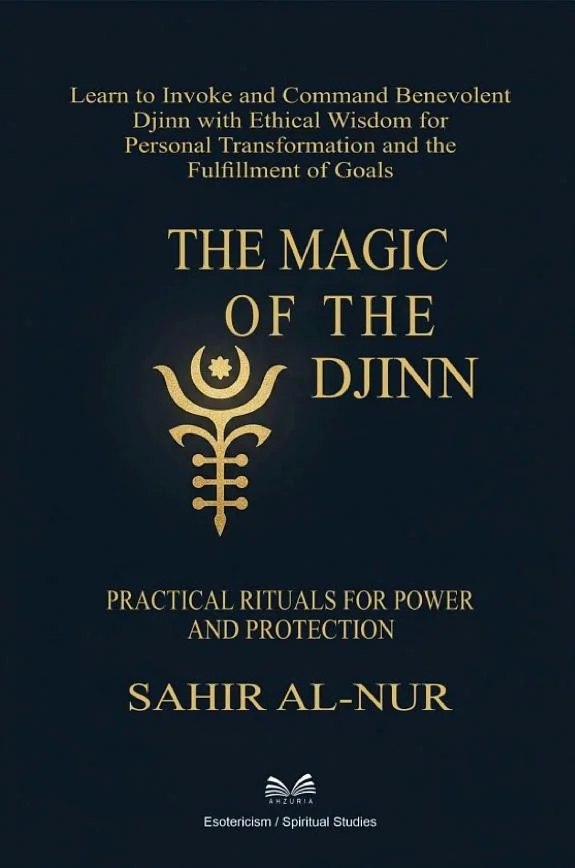
The Magic Of The Djinn
 80
80

The Magic Of The Djinn
Sahir Al-nur and Luiz Santos’ "The Magic Of The Djinn" tackles a subject often mired in sensationalism and fear. The authors make a laudable effort to present the Djinn within their authentic esoteric context, moving past simplistic folklore. Their reliance on texts like the Shams al-Ma arif lends historical weight, grounding the rituals in established traditions rather than speculative fantasy. The chapter detailing the 'Five Names of the Djinn' offers a particularly concrete and actionable piece of lore. However, the book occasionally struggles to balance its practical ritualistic instruction with the necessary theoretical depth. While it aims for ethical engagement, some readers might find the directness of the ritualistic demands less nuanced than the introductory philosophical sections suggest. Still, for those seeking a structured, ethically-minded introduction to Djinnic magic rooted in historical sources, this work provides a valuable, if sometimes stark, roadmap.
📝 Description
80
Sahir Al-nur and Luiz Santos' "The Magic Of The Djinn" details practical engagement with elemental fire beings.
This volume offers a practical guide to interacting with the Djinn, entities traditionally tied to elemental fire within Arabic occult traditions. It moves past sensationalized myths to lay out ethical guidelines and ritual methods for developing respectful relationships with these beings. The authors emphasize seeing the Djinn not as simple supernatural oddities, but as capable spiritual companions.
The book is for serious students of esoteric paths, especially those focused on Arabic magic and elemental spirituality. It serves practitioners aiming to broaden their magical practices beyond Western occult systems and connect with a different kind of spiritual entity. Those with a background in comparative mysticism or demonology, looking for a more balanced, less antagonistic viewpoint on Djinnic entities, will find it beneficial.
The book draws on historical Arabic esoteric texts, notably referencing the foundational work of Shams al-Ma arif. It positions its practices within a lineage that predates modern Western occult revivals, drawing from traditions that were more integrated into scholarly and spiritual discourse during their flourishing periods. This work provides a contrast to the often demonized depictions found in post-colonial or Orientalist literature, presenting a more historical and nuanced perspective.
💡 Why Read This Book?
• Gain practical methods for ethical engagement with Djinn, moving beyond superstition, as detailed in the ritualistic sections informed by traditions akin to those found in the Shams al-Ma arif. • Understand the Djinn as subtle fire elementals with distinct hierarchies and natures, a perspective often obscured in Western occult literature. • Learn specific invocations and protection techniques derived from historical Arabic esoteric practices, offering unique tools for advanced practitioners.
⭐ Reader Reviews
Honest opinions from readers who have explored this book.
❓ Frequently Asked Questions
What is the primary historical text referenced in 'The Magic Of The Djinn'?
The book frequently references the Shams al-Ma arif, a seminal work attributed to Ahmad al-Buni. This text is a cornerstone of Arabic occult sciences, covering topics from talismans to the invocation of spiritual entities.
Are the Djinn presented as evil entities in this book?
No, the book explicitly distinguishes between benevolent and malevolent Djinn, advocating for ethical interaction with the former. It emphasizes respect and clear intent, moving away from purely negative portrayals.
What kind of rituals are described in 'The Magic Of The Djinn'?
The book outlines practical rituals for understanding, communication, and building alliances with Djinn. These are presented within an ethical framework and draw upon historical esoteric traditions.
What is the significance of 'subtle fire' in relation to the Djinn?
The concept of 'subtle fire' refers to the elemental nature of the Djinn, distinguishing them from physical fire. This esoteric understanding is crucial for approaching them appropriately within the magical system presented.
Is this book suitable for beginners in occult studies?
While it provides foundational concepts, the book is best suited for those with some existing background in esoteric traditions or a serious interest in Arabic magic. It requires a disciplined approach to ritual.
What is the origin of the authors' approach to Djinnic magic?
The approach is rooted in historical Arabic esoteric traditions and scholarship, drawing inspiration and methodology from foundational texts and practices within that lineage.
🔮 Key Themes & Symbolism
Djinnic Nature and Hierarchy
The work meticulously details the Djinn as beings composed of 'subtle fire,' differentiating them from folklore's often crude depictions. It explores their inherent natures, spiritual origins, and hierarchical structures, drawing parallels with ancient elemental theories. Understanding these distinctions is presented as paramount for any practitioner seeking to establish contact, moving beyond simplistic notions of 'spirits' to a more nuanced classification of entities within the occult cosmos.
Ethical Ritualistic Engagement
A central theme is the necessity of an ethical framework when working with Djinn. The book stresses mutual respect, clear intent, and the avoidance of exploitation or coercion. Rituals are designed not for domination but for building respectful spiritual alliances. This ethical stance is crucial for reading through the subtle energies involved and ensuring a balanced, safe practice, distinguishing it from purely power-seeking magical endeavors.
Arabic Esoteric Lineages
The book grounds its practices firmly within the rich tradition of Arabic esoteric sciences. It highlights influences from foundational texts such as the Shams al-Ma arif, positioning the Djinn within a specific cultural and spiritual milieu. This connection to historical Arabic occultism provides a distinct flavor and methodology, offering practitioners an alternative to predominantly Western Hermetic or ceremonial magic systems.
Practical Application and Protection
Beyond theoretical understanding, the book offers concrete ritualistic techniques. These include methods for invocation, communication, and crucially, protection. The emphasis on protection underscores the potency of the entities discussed and the need for preparedness. Practitioners are guided to develop the necessary spiritual defenses and discernment to engage safely and effectively with the Djinnic realm.
💬 Memorable Quotes
Direct passages from the work, attributed to the author.
“The Djinn are beings of subtle fire, distinct from the elementals of earth, air, and water.”
— This statement establishes the fundamental nature of the Djinn within the book's framework, highlighting their fiery essence and separating them from more commonly discussed elemental spirits. It sets the stage for understanding their unique properties and interactions.
“Respect is the a core part of any successful alliance with the unseen.”
— This emphasizes the ethical approach required in the book. It suggests that power or knowledge alone is insufficient; a foundation of mutual regard is essential for establishing and maintaining contact with Djinnic entities.
“Discernment is paramount: not all Djinn seek benevolent interaction.”
— This highlights a critical aspect of practical Djinn magic. It warns practitioners about the diverse nature of Djinn and the importance of recognizing potentially harmful influences before engaging in ritual.
“The rituals herein are gateways, not tools of subjugation.”
— This clarifies the book's intent regarding its ritualistic content. It frames the practices as means of access and connection, rather than methods for commanding or controlling Djinn, reinforcing the theme of ethical engagement.
“Shams al-Ma arif provides a foundational map for navigating Djinnic energies.”
— This citation points to the historical and textual roots of the book's teachings. It indicates that the methods presented are not novel inventions but are informed by established grimoires within Arabic occult traditions.
🌙 Esoteric Significance
Tradition
This work significantly engages with the esoteric lineage of Arabic occultism, often termed 'Ilm al-Huruf' (Science of Letters) or 'Ilm al-Simat' (Science of Talismans). It departs from purely philosophical or theological interpretations of the Djinn, focusing instead on practical interaction rooted in classical Arabic grimoires. While distinct from Western Hermeticism, it shares a universal esoteric concern with understanding and interacting with non-human intelligence and elemental forces.
Symbolism
Central symbols include 'subtle fire,' representing the Djinn's elemental nature and distinct from gross physical flame. Geometric patterns and specific Arabic letters, often found in talismans derived from works like the Shams al-Ma arif, are implied as crucial symbolic keys for invocation and warding. The concept of 'names' (Asma) is also symbolically potent, representing the power inherent in true knowledge and correct pronunciation.
Modern Relevance
Contemporary practitioners of comparative occultism and those seeking non-Western magical systems find value in this work. Thinkers interested in animistic approaches to spirituality and researchers exploring the historical development of magical practices beyond Europe draw upon its insights. It offers a counter-narrative to reductionist views of Djinn and provides practical, ethically-grounded methods for those exploring elemental and spiritual correspondences.
👥 Who Should Read This Book
• Advanced occult practitioners seeking to broaden their understanding beyond Western magical systems and explore elemental spirits from Arabic traditions. • Students of comparative religion and mysticism interested in the historical and practical aspects of Djinn lore as presented in original esoteric contexts. • Ritualists focused on ethical spirit-work who wish to learn structured methods for respectful interaction with non-human intelligences.
📜 Historical Context
Published in 2025, "The Magic Of The Djinn" emerges in an era where interest in esoteric traditions is resurgent, often seeking alternatives to the dominant Western Hermetic paradigms. Its approach is deeply rooted in the Arabic occult sciences, a field often overlooked or misrepresented in contemporary magical literature. The work directly engages with the legacy of texts like the Shams al-Ma arif, attributed to Ahmad al-Buni (fl. c. 1225), a scholar whose influence on Islamic magic and mysticism is profound. This grounding situates the book within a lineage distinct from, though sometimes overlapping with, Kabbalistic or Grimoiric traditions more prevalent in Europe. The reception of such works historically varied; while al-Buni's writings were widely studied, later interpretations, especially during colonial periods, often demonized or exoticized these practices. This book seeks to reclaim and present a more authentic, ethically-conscious perspective on Djinnic magic, offering a scholarly yet practical engagement with a tradition that has endured for centuries.
📔 Journal Prompts
The concept of 'subtle fire' as the Djinn's essence: initial impressions and associations.
Reflecting on the ethical principles for interacting with Djinnic beings.
Identifying personal biases regarding spiritual entities based on cultural narratives.
Mapping the hierarchy of Djinnic beings as presented versus other spiritual frameworks known.
Considering the practical application of protective rituals before engaging unseen forces.
🗂️ Glossary
Djinn
Beings traditionally described in Arabic lore as created from smokeless fire. They possess free will and inhabit a realm parallel to the human world, capable of interaction.
Subtle Fire
An esoteric concept referring to the elemental essence of the Djinn, distinct from physical combustion. It denotes their energetic and spiritual composition.
Shams al-Ma arif
A seminal medieval Arabic text attributed to Ahmad al-Buni, considered a foundational work in Islamic occult sciences, covering talismans, divination, and spirit invocation.
Ritual
A prescribed set of actions, words, or ceremonies performed for a specific magical or spiritual purpose, in this context, for interacting with Djinn.
Esoteric
Relating to or accessible only by a select group of people initiated into special knowledge; pertaining to inner, hidden meanings.
Invocation
The act of calling upon a spiritual entity or force, often through specific prayers, incantations, or rituals, for assistance or communication.
Benevolent Djinn
Djinn that are presented as potentially helpful or benign, with whom ethical and respectful interaction is possible and encouraged within the book's framework.
This book appears in 1 collection
🔮 Readers Also Liked
Browse all →








From the “Djinn” Collection
View all →







More Free Occult Philosophy Books
View all →