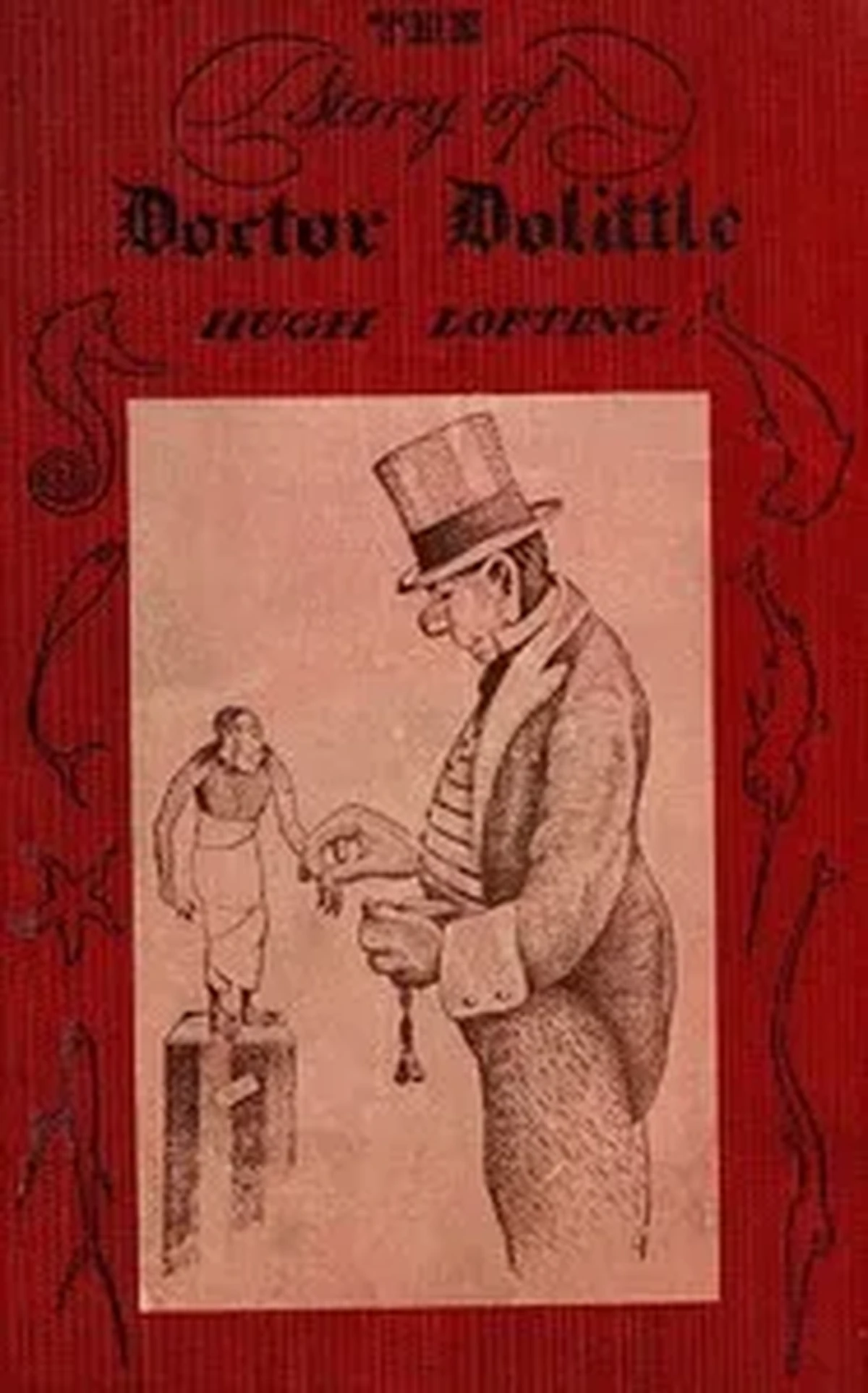
The Story of Doctor Dolittle
 75
75

The Story of Doctor Dolittle
Lofting's "The Story of Doctor Dolittle" presents an endearing, if occasionally quaint, exploration of interspecies communication. The strength lies in its charming premise and the Doctor's unwavering dedication to his animal companions, a stark contrast to the societal norms of 1920. The narrative unfolds with a gentle pacing, allowing the reader to absorb Dolittle's unique world. However, some modern readers might find the depiction of certain characters and the straightforward moralizing a bit dated. The passage where Dolittle negotiates with Polynesia the parrot for medical advice, while whimsical, highlights the book's foundational concept of animal intelligence. Ultimately, it's a work that offers a sweet, imaginative escape with a core message of empathy.
📝 Description
75
Hugh Lofting's 1920 book introduces a doctor who learns to speak with animals.
First published in 1920, "The Story of Doctor Dolittle" follows a physician who abandons his practice of treating human ailments to converse with animals. Lofting, who began writing these stories in letters to children during World War I, created a world where communication between species is central to the plot. The narrative follows Doctor Dolittle as he acquires the languages of various creatures, from household pets to more exotic fauna, and embarks on voyages that challenge his unique abilities.
This work appeals to those interested in early 20th-century children's literature and stories that focus on empathy and unconventional communication. It addresses themes of animal welfare and interspecies understanding, making it accessible for young readers. Older readers might find value in its historical context and the development of children's literature, noting how concepts of empathy were conveyed in the post-World War I period.
While not overtly esoteric, the book touches on themes that resonate with certain esoteric traditions. The ability to communicate with animals aligns with concepts found in animism and shamanic practices, where the natural world is seen as imbued with spirit and accessible through specialized understanding. Doctor Dolittle's dedication to learning these 'languages' can be viewed as a form of spiritual discipline, seeking connection and wisdom beyond the human sphere. The narrative suggests a hidden order in nature and a potential for humans to reintegrate with it through deep listening and respect.
💡 Why Read This Book?
• Gain insight into early 20th-century perspectives on animal communication, as demonstrated by Doctor Dolittle's specific methods for learning animal languages, offering a unique historical lens. • Experience a narrative that champions empathy and understanding across species, particularly evident in the chapter detailing Dolittle's voyage to Puddleby-on-the-Marsh to aid his animal friends. • Discover a foundational text in children's literature that predates modern environmentalism, showing how early authors like Hugh Lofting envisioned human-animal relationships.
⭐ Reader Reviews
Honest opinions from readers who have explored this book.
❓ Frequently Asked Questions
When was The Story of Doctor Dolittle first published?
The Story of Doctor Dolittle was first published in 1920, marking its debut in the landscape of early 20th-century children's literature.
What is the main premise of The Story of Doctor Dolittle?
The book's central premise is that a kind-hearted doctor learns to speak and understand the languages of animals, choosing their company over human patients.
Who is the author of The Story of Doctor Dolittle?
The author is Hugh Lofting, an English writer who created the beloved character of Doctor Dolittle.
What inspired Hugh Lofting to write about Doctor Dolittle?
Lofting began writing the stories as letters to his children during World War I, wanting to create a gentle, imaginative escape from the realities of wartime.
Are there any specific animals Doctor Dolittle communicates with?
Yes, Doctor Dolittle communicates with a wide array of animals, including his trusted companions like Polynesia the parrot, Jip the dog, and Chee-Chee the monkey.
What is the overall tone of The Story of Doctor Dolittle?
The tone is generally whimsical, adventurous, and warm, focusing on themes of kindness, curiosity, and the importance of understanding all living creatures.
🔮 Key Themes & Symbolism
Interspecies Communication
The narrative hinges on Doctor Dolittle's unique ability to converse with animals. This isn't presented as magic, but as a learned skill, requiring dedication and a deep respect for animal intelligence. Lofting meticulously details how Dolittle acquires different animal languages, from the squawk of the parrot to the bark of the dog. This theme challenges anthropocentric views, suggesting that understanding and communication are possible across biological divides, fostering a more inclusive worldview.
Empathy and Compassion
Doctor Dolittle's decision to abandon human medicine for animal care stems from a profound sense of empathy. He recognizes the suffering and needs of creatures often overlooked by society. His journey is a evidence of the power of compassion, showing how extending kindness beyond one's own species can lead to extraordinary experiences and understanding. The book implicitly argues that true healing involves acknowledging the sentience of all beings.
The Natural World
Lofting's work places significant emphasis on the natural world and its inhabitants. The adventures often involve Doctor Dolittle venturing into different environments to assist animals, highlighting the richness and complexity of their lives. This focus serves as an early precursor to modern environmentalist thought, advocating for a harmonious coexistence between humans and nature rather than exploitation. The book celebrates the intrinsic value of animal life and their habitats.
Societal Rejection and Belonging
Doctor Dolittle is often portrayed as an outsider in human society, his peculiar skills and interests making him an object of ridicule or misunderstanding. He finds true belonging and purpose among his animal companions. This theme explores the idea that societal norms can be restrictive and that true fulfillment may lie in pursuing one's authentic passions, even if they deviate from the conventional path.
💬 Memorable Quotes
Direct passages from the work, attributed to the author.
““But the animals didn’t care about that. They knew that the Doctor was their friend.””
— This simple statement expresses the core relationship between Doctor Dolittle and his animal companions. It highlights that genuine connection and trust are built on actions and shared understanding, not on societal status or superficial appearances.
““He had always been fond of animals,” it is said.”
— This understated observation serves as the foundation for Dolittle's entire character arc. It suggests that his extraordinary abilities stem not from a sudden magical event, but from a long-held, genuine affection and curiosity towards the animal kingdom.
““When I carried the parrot on my shoulder I could not help but think of the days when I was a boy.””
— Interpretation: This reflection connects Dolittle's present abilities with his past, hinting at a childlike wonder and innocence that underpins his unique communication skills. It suggests a return to a more fundamental, less jaded way of perceiving the world.
“The work explores the idea that animals possess distinct languages and personalities.”
— Interpretation: Rather than viewing animals as mere instinct-driven creatures, Lofting imbues them with individual voices and complex social structures, validating their sentience and the potential for meaningful interspecies dialogue.
“Doctor Dolittle's journey involves learning the specific sounds and meanings of animal speech.”
— Interpretation: This highlights the intellectual and dedicated nature of Dolittle's skill. It's not simply intuition, but a rigorous process of observation and learning, akin to human linguistic study, applied to the non-human world.
🌙 Esoteric Significance
Tradition
While not explicitly aligned with a single esoteric tradition, Doctor Dolittle's work can be seen as resonating with animistic beliefs and certain interpretations within Hermeticism that emphasize the interconnectedness of all life and the potential for understanding hidden correspondences. His ability to communicate with animals aligns with the Hermetic principle of "As Above, So Below," suggesting a universal language or consciousness binding different forms of existence. It departs from more structured magical systems by focusing on natural empathy rather than arcane rituals.
Symbolism
The parrot, Polynesia, often serves as a wise elder or mentor figure, symbolizing ancient knowledge and the continuity of communication across generations. Doctor Dolittle himself can be seen as an archetype of the compassionate healer, one who bridges the gap between the human and animal kingdoms, representing a more holistic approach to well-being. The act of learning animal languages symbolizes the shedding of human-centric perspectives and the embrace of a broader, more inclusive understanding of sentience.
Modern Relevance
Contemporary movements in animal rights, interspecies communication research, and eco-philosophy draw inspiration from Lofting's foundational narrative. Thinkers and practitioners exploring non-human consciousness and advocating for greater animal welfare often reference the Doctor Dolittle archetype as an early imaginative precursor to their work. His story continues to inform discussions about empathy, ethical treatment of animals, and the potential for deeper connection with the natural world in an era of ecological concern.
👥 Who Should Read This Book
• Young readers aged 6-10 encountering themes of empathy and animal welfare for the first time, who will appreciate the straightforward narrative and charming characters like Polynesia the parrot. • Parents and educators seeking literature that promotes kindness, curiosity, and understanding of the natural world, providing a gentle introduction to cross-species relationships. • Adult readers interested in the history of children's literature and early 20th-century perspectives on human-animal interaction, offering a glimpse into a different literary era.
📜 Historical Context
Published in 1920, "The Story of Doctor Dolittle" emerged from the aftermath of World War I, a period grappling with immense loss and a desire for escapism. Children's literature was seeing a rise in imaginative narratives, partly as a response to the grim realities faced by young readers. Lofting's creation offered a world of wonder and kindness, a stark contrast to the war-torn Europe of the time. While not directly engaging with major intellectual currents like psychoanalysis or burgeoning modernist literature, the book tapped into a growing sentiment of anthropomorphism and a burgeoning interest in animal welfare. Its reception was notably positive, leading to a series of sequels that cemented Doctor Dolittle as a literary figure. The work existed alongside, but distinct from, the more overtly allegorical or socially critical children's stories that also characterized the era.
📔 Journal Prompts
Doctor Dolittle's unique linguistic skills with animals.
The significance of Polynesia the parrot as a guide.
Reflect on the challenges Doctor Dolittle faced in human society.
Consider the concept of 'animal languages' as presented in the book.
Analyze the motivations behind Doctor Dolittle's career change.
🗂️ Glossary
Puddleby-on-the-Marsh
The fictional home village of Doctor Dolittle, serving as the primary setting for many of his early adventures and interactions with local animals.
Polynesia
A wise and elderly parrot who is one of Doctor Dolittle's first and most important animal companions, often acting as a teacher of animal languages.
Jip
Doctor Dolittle's loyal dog, who possesses a keen sense of smell and plays a significant role in many of the Doctor's escapades.
Chee-Chee
A monkey who becomes one of Doctor Dolittle's close companions, often accompanying him on his travels and providing assistance.
Animal Languages
The ability, cultivated by Doctor Dolittle, to understand and speak the distinct languages of various animal species, forming the core of his unique practice.
The Pushmi-pullyu
A rare and unusual creature Doctor Dolittle encounters, notable for having a head at each end of its body, symbolizing the exotic and the extraordinary in the animal kingdom.
The Maggot Pie
A type of pie mentioned in the book, often associated with Doctor Dolittle's simple, albeit sometimes peculiar, culinary habits.
🔮 Readers Also Liked
Browse all →








More by Hugh Lofting
All books →


More Free Occult Philosophy Books
View all →