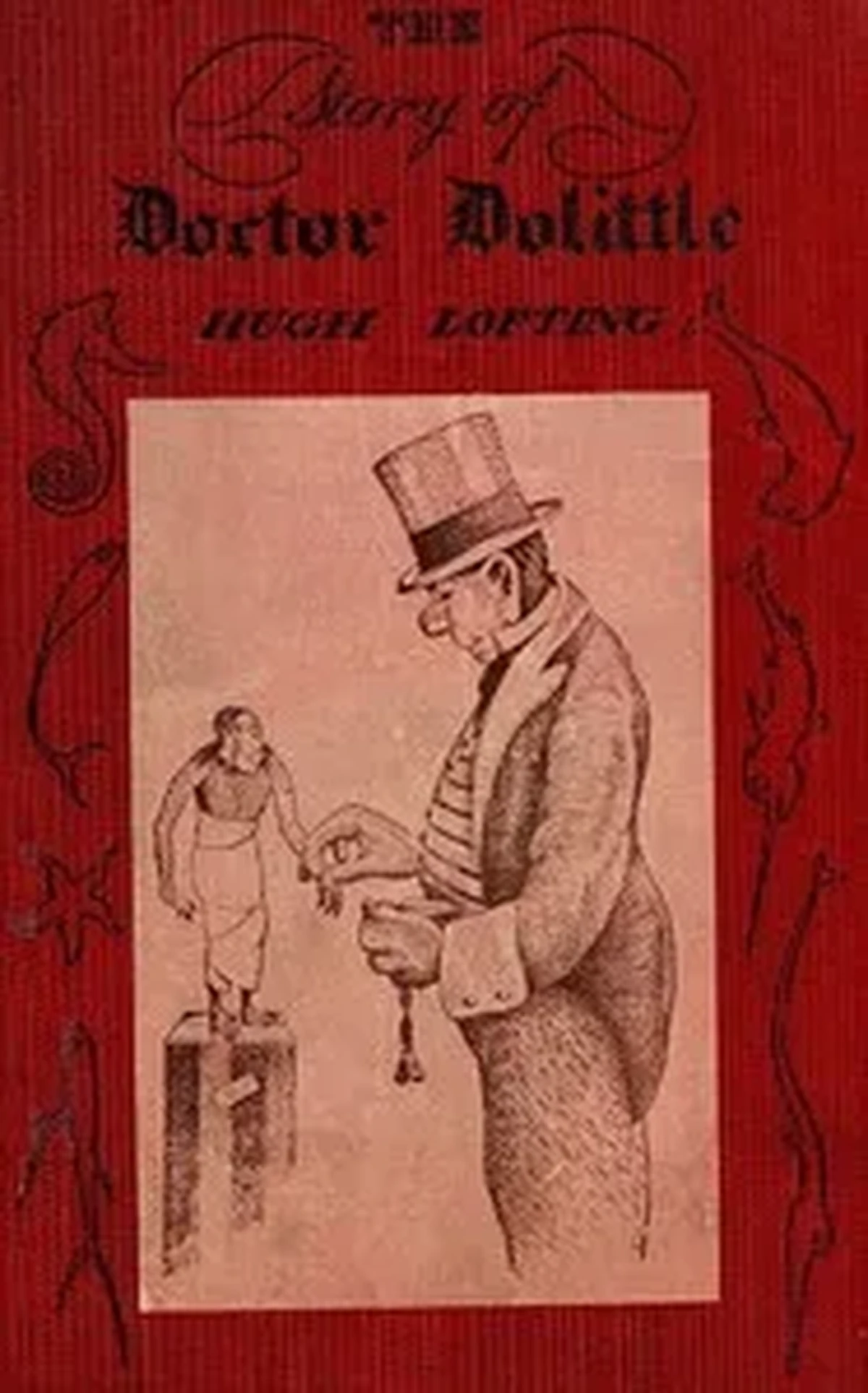
The Story of Doctor Dolittle
 72
72

The Story of Doctor Dolittle
Lofting's "The Story of Doctor Dolittle" presents a singular vision of a man who prioritizes the well-being of creatures over societal convention. The initial premise—a doctor abandoning human practice for animal languages—is inherently charming and sets the stage for the book's enduring appeal. The work shines brightest in its depiction of Dolittle's earnest, if sometimes clumsy, attempts at interspecies diplomacy, particularly his efforts to understand the plight of the Pushmi-Pullyu. However, the episodic nature of the early adventures can occasionally feel less like a cohesive narrative and more like a series of charming vignettes. The character of Polynesia, the parrot, serves as an early, memorable example of Dolittle's unique linguistic abilities. Despite its occasional structural looseness, the book remains a delightful exploration of empathy and communication across species barriers.
📝 Description
72
Hugh Lofting published "The Story of Doctor Dolittle" in 1920, detailing a doctor who speaks with animals.
First released in 1920, Hugh Lofting's "The Story of Doctor Dolittle" follows a physician who abandons human patients to communicate with creatures. Motivated by genuine empathy, Dolittle learns the languages of many animals, leading to extraordinary travels and difficult situations.
This book appeals to readers who enjoy imaginative stories and unique main characters. It suits those interested in early 20th-century children's books that touch on themes of understanding and communication between species. Dolittle's commitment to kindness and his rejection of conventional society will resonate with many.
Published after World War I, the book contrasted with the more straightforward moral tales common then. Lofting's creation led to many sequels and adaptations, becoming an important development in animal-focused stories for young readers.
While not overtly esoteric, "The Story of Doctor Dolittle" taps into a tradition of viewing animal consciousness and communication as a valid subject for serious consideration. Dolittle's ability to understand animals, presented as a learned skill rather than magic, reflects a burgeoning interest in empirical observation of the natural world and a questioning of anthropocentric viewpoints. The narrative implicitly suggests a deeper, non-verbal understanding that transcends human social constructs, aligning with a broader esoteric interest in hidden connections and alternative forms of knowledge.
💡 Why Read This Book?
• Learn about the development of animal communication as a narrative device, inspired by early 20th-century interest in linguistics and ethology, exemplified by Doctor Dolittle's conversations with Polynesia the parrot. • Experience a unique portrayal of a protagonist choosing a life of unconventional service, directly contrasting with the societal expectations of physicians in the 1920s, as seen in his move to Puddleby-on-the-Marsh. • Discover the foundational narrative of a character who became a touchstone for understanding animal perspectives, a concept explored through his interactions with the Great Sea Lion.
⭐ Reader Reviews
Honest opinions from readers who have explored this book.
❓ Frequently Asked Questions
When was "The Story of Doctor Dolittle" first published?
The original publication date for "The Story of Doctor Dolittle" was 1920, marking its debut as a unique contribution to children's literature that year.
What is the main character's profession before he speaks to animals?
Doctor Dolittle is a physician who primarily treats human patients before dedicating himself to understanding and treating animals.
What is the name of the parrot who teaches Doctor Dolittle animal languages?
The wise parrot who instructs Doctor Dolittle in the languages of birds and other creatures is named Polynesia.
Where does Doctor Dolittle live when the story begins?
Doctor Dolittle resides in the small English village of Puddleby-on-the-Marsh at the outset of his unique career.
What kind of animal is the Pushmi-Pullyu?
The Pushmi-Pullyu is a rare and exotic creature with two heads and two horns, known for its distinct appearance and the challenge it presents to Doctor Dolittle.
What significant event influences Doctor Dolittle's career change?
Doctor Dolittle's increasing disinterest in treating human patients and his growing fascination with animal communication are the primary drivers of his career shift.
🔮 Key Themes & Symbolism
Interspecies Communication
The core of "The Story of Doctor Dolittle" lies in the radical concept of a human successfully learning and utilizing animal languages. This isn't depicted as mere mimicry but as genuine comprehension, allowing for complex interactions and problem-solving. Doctor Dolittle's conversations with Polynesia the parrot and his efforts to understand the plight of the Pushmi-Pullyu exemplify this theme. It challenges anthropocentric views by suggesting a shared, albeit different, form of consciousness and communication across species, a significant theme in early 20th-century literature exploring animal welfare.
Social Alienation and Belonging
Doctor Dolittle's unique abilities and interests lead him to become something of an outcast in the human world. His decision to leave his practice in Puddleby-on-the-Marsh and live amongst animals highlights a profound sense of alienation from conventional society. He finds true companionship and understanding with his animal patients, suggesting that belonging is not dictated by human social structures but by shared empathy and mutual respect, a concept explored through his relationships with Jip the dog and Chee-Chee the monkey.
The Nature of Expertise
Lofting questions the established definitions of expertise through Doctor Dolittle. While human medicine is presented as a learned skill, Dolittle's true mastery lies in his dedication to understanding the natural world and its inhabitants. His diagnostic abilities extend beyond human anatomy to encompass animal physiology and psychology, as demonstrated when he diagnoses the ailments of various creatures. This theme challenges the reader to consider broader definitions of knowledge and the value of specialized, unconventional wisdom.
Voyage and Discovery
The narrative structure often propels Doctor Dolittle on extensive voyages, both by sea and land, in pursuit of knowledge or to aid distant animal communities. These journeys, such as his expedition to the island of the "Giant Spiders," are not merely backdrops but integral to the plot, forcing Dolittle to confront new challenges and expand his understanding of the world. This motif reflects a broader literary trend of the era that embraced exploration and the discovery of the unknown.
💬 Memorable Quotes
Direct passages from the work, attributed to the author.
“If a man is not a doctor, and cannot talk to mice, why should he want to live in a doctor's house?”
— This thought, attributed to Doctor Dolittle, reflects his growing detachment from human society and his embrace of his unique calling. It signifies his decision to align his living situation with his true passion and abilities, rather than societal expectations.
“The Great Sea Lion said that he had a lot of young ones to look after.”
— This simple statement from the book emphasizes the universal parental drive across species. It serves as a concrete example of the empathy Doctor Dolittle fosters, recognizing the responsibilities and familial bonds that exist within the animal kingdom.
“The Pushmi-Pullyu was a creature which had two heads and two separate tails.”
— This description of the Pushmi-Pullyu, a creature unique to the story, underscores the imaginative scope of Lofting's world-building. It presents an animal so unusual that it requires Dolittle's specific skills and dedication to understand its needs.
“Doctor Dolittle was very fond of animals.”
— This is a foundational statement of the book. It's a simple yet profound declaration that underpins the entire narrative, explaining Dolittle's motivations and his radical departure from traditional medical practice.
💡 Key Ideas
Editorial paraphrase of the work's core concepts — not direct quotes.
The parrot said that if you don't know a thing, you've got to learn it.
This paraphrased concept highlights the core philosophy of Doctor Dolittle's approach. It underscores the idea that true knowledge comes from a willingness to learn and an open mind, particularly when faced with the unfamiliar, such as animal languages.
🌙 Esoteric Significance
Tradition
While not explicitly aligning with a single esoteric tradition, "The Story of Doctor Dolittle" shares thematic resonance with certain Hermetic and Theosophical ideals prevalent in the early 20th century. The emphasis on understanding the 'language' of nature and the belief in a universal form of communication echo Theosophical notions of spiritual evolution and the interconnectedness of all beings. Doctor Dolittle's intuitive grasp of animal communication can be seen as a form of natural magic or innate wisdom, aligning with Hermetic principles of correspondence and the hidden sympathies between all parts of the cosmos.
Symbolism
The parrot, Polynesia, serves as a significant symbol of ancient wisdom and the transmission of knowledge, mirroring the role of oracles or divine messengers in various traditions. Doctor Dolittle's medical bag, initially for human patients, transforms into a tool for animal healing, symbolizing a shift from conventional, anthropocentric healing to a more holistic, nature-aligned practice. The diverse array of animals themselves—from the common Jip to the exotic Pushmi-Pullyu—represent the vast spectrum of life and the universal principle of suffering and the need for compassion across all forms.
Modern Relevance
Contemporary animal communication practitioners and interspecies communication researchers often cite Doctor Dolittle as a foundational fictional precursor to their work. The book's enduring popularity continues to inspire interest in animal welfare, ethical treatment, and the possibility of deeper connections with the natural world. Its themes are relevant to modern discussions in ecopsychology and animal-assisted therapy, emphasizing empathy and understanding as vital components of healing and well-being for both humans and animals.
👥 Who Should Read This Book
• Aspiring linguists and communication theorists interested in fictional explorations of language acquisition and interspecies dialogue, particularly those who appreciate early 20th-century narrative styles. • Readers drawn to narratives of unconventional protagonists who forge their own paths, such as those interested in figures who deviate from societal norms for a greater purpose. • Students and enthusiasts of children's literature history who wish to understand foundational works that shaped animal-centric storytelling and explored themes of empathy in the early 1900s.
📜 Historical Context
Published in 1920, "The Story of Doctor Dolittle" emerged in the wake of World War I, a period marked by a profound societal introspection and a burgeoning interest in pacifist ideals and the natural world. Children's literature was undergoing a transformation, with authors like Beatrix Potter and A.A. Milne also exploring animal characters, though often with different narrative aims. Lofting's work stood out for its direct engagement with animal communication as a serious, albeit whimsical, endeavor. The book's success, which led to a long series, was notable. Contemporary reception often highlighted its originality and charm. While not directly engaging with a competing school of thought in the same way a philosophical text might, its gentle anthropomorphism and focus on empathy offered a counterpoint to more utilitarian views of animals prevalent at the time. Hugh Lofting himself was an expatriate Irishman living in America during the war, and the book's themes of understanding and bridging divides resonated with the era's desire for connection.
📔 Journal Prompts
Doctor Dolittle's decision to learn animal languages, starting with Polynesia.
The concept of the Pushmi-Pullyu as a unique creature requiring specialized care.
Doctor Dolittle's departure from his human practice in Puddleby-on-the-Marsh.
The role of Jip the dog in Doctor Dolittle's early animal interactions.
The implications of understanding the 'language' of the Great Sea Lion.
🗂️ Glossary
Puddleby-on-the-Marsh
The fictional English village where Doctor Dolittle initially practices medicine before dedicating himself fully to animal communication and care.
Polynesia
A wise, elderly parrot who serves as Doctor Dolittle's first and most significant teacher in the languages of animals, particularly birds.
Pushmi-Pullyu
A rare, exotic creature with two heads, two tails, and four legs, known for its unique appearance and the challenge it presents to Doctor Dolittle's diagnostic skills.
Great Sea Lion
A large marine mammal Doctor Dolittle encounters, representing the broader animal kingdom and its diverse needs and concerns that require his attention.
Jip
Doctor Dolittle's loyal dog, who is one of his earliest animal companions and demonstrates understanding of his master's intentions and speech.
Animal Linguistics
The fictional ability of Doctor Dolittle to understand, speak, and interpret the languages of various animal species, forming the central premise of his medical practice.
Chee-Chee
A monkey who becomes one of Doctor Dolittle's animal companions, showcasing the range of creatures he interacts with and cares for.
🔮 Readers Also Liked
Browse all →








More by Hugh Lofting
All books →


More Free Occult Philosophy Books
View all →