The Tao of money
 76
76

The Tao of money
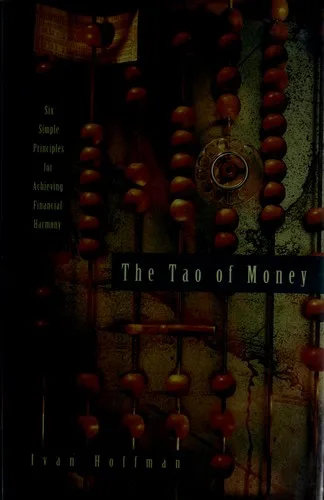
Ivan Hoffman’s "The Tao of Money" offers a refreshingly unconventional perspective on personal finance, viewing it through the prism of Taoist philosophy. Its signal strength lies in its ability to reframe money not as a source of stress, but as a natural energetic flow to be understood and harmonized with. Hoffman argues compellingly for the application of concepts like wu wei to financial decision-making, a notion that challenges the aggressive, hyper-active approach often championed in financial advice. However, the book’s esoteric nature can also be its limitation; readers seeking concrete, actionable investment strategies will be disappointed. The core thesis, while elegant, sometimes lacks the granular detail needed to bridge the gap between ancient wisdom and modern market complexities. A particularly insightful passage discusses the "emptiness" of a bank account not as a deficit, but as potential, a space for new energy to enter. Ultimately, "The Tao of Money" serves as a profound philosophical companion to one's financial life, rather than a practical manual.
📝 Description
76
Ivan Hoffman published "The Tao of Money" in 1994, connecting Eastern philosophy and financial practice.
Ivan Hoffman's 1994 book, "The Tao of Money," bridges Eastern philosophical principles with Western financial realities. It is not a typical investment guide. Instead, the book uses Taoist concepts like wu wei (effortless action) and the balance of yin and yang to frame how people engage with money. Hoffman aims to shift the reader's perspective from financial anxiety and acquisitiveness toward a state of equilibrium and mindful participation.
The work is suited for individuals who feel alienated by or overwhelmed in their financial lives, especially those open to alternative worldviews. Readers familiar with Eastern thought, particularly Taoism, will find it useful for integrating these ideas into everyday financial matters. Those curious about the deeper, energetic aspects of wealth and material existence will discover much to consider. It speaks to the individual who understands that true abundance encompasses more than just financial statements.
Emerging in the mid-1990s, "The Tao of Money" entered a period where Western interest in Eastern spirituality was growing. It offered a philosophical counterpoint to the prevailing fast-money culture of the dot-com era. The book draws parallels with thinkers who introduced Eastern ideas to Western audiences, implicitly critiquing materialistic economic viewpoints. Hoffman's approach aligns with a broader search for meaning beyond conventional materialism, suggesting that financial well-being is connected to natural principles and inner harmony.
💡 Why Read This Book?
• Gain a unique perspective on financial harmony by understanding "money as energy," a concept central to Hoffman’s work, which offers a counterbalance to purely materialistic views of wealth. • Learn to apply the Taoist principle of "wu wei" to your financial decisions, enabling you to act with greater intention and less effort when faced with market fluctuations or personal spending choices. • Discover the significance of "financial flow" and how aligning with natural economic cycles, as explored in the book, can foster a sense of ease and abundance beyond conventional metrics.
⭐ Reader Reviews
Honest opinions from readers who have explored this book.
❓ Frequently Asked Questions
What is the core philosophy behind "The Tao of Money"?
The core philosophy integrates Taoist principles like wu wei and yin/yang with financial management, viewing money as an energetic flow rather than a static entity. It emphasizes balance and natural alignment over aggressive pursuit.
When was "The Tao of Money" first published?
"The Tao of Money" was first published in 1994, positioning it within a period of growing interest in alternative spiritual and self-help philosophies in the West.
Does the book offer specific investment advice?
No, "The Tao of Money" does not provide specific investment advice or stock tips. Its focus is on a philosophical and energetic approach to one's relationship with money.
Who is the intended audience for this book?
The book is intended for individuals seeking a deeper, more balanced relationship with their finances, particularly those interested in Eastern philosophies and alternative perspectives on wealth.
How does "The Tao of Money" differ from standard financial guides?
It differs by prioritizing inner harmony and understanding natural energetic flows over technical analysis and aggressive accumulation strategies, drawing heavily on Taoist concepts.
What is 'wu wei' in the context of this book?
'Wu wei' in "The Tao of Money" refers to the principle of effortless action or non-forcing, applied to financial decisions to encourage a more natural and balanced approach rather than constant, often counterproductive, intervention.
🔮 Key Themes & Symbolism
Money as Energetic Flow
Hoffman presents money not as a mere symbol or commodity, but as a form of dynamic energy. This perspective encourages readers to observe its movement, understand its ebb and flow, and recognize that hoarding or excessive grasping can impede its natural circulation. The book suggests that by understanding this energetic nature, one can cultivate a more harmonious relationship with wealth, allowing it to move freely and sustainably in and out of one's life, mirroring the principles of natural systems.
Wu Wei in Finance
The principle of 'wu wei,' often translated as non-action or effortless action, is a core part of the book's financial philosophy. Hoffman applies this concept to suggest that instead of constantly striving, manipulating, or forcing financial outcomes, individuals should learn to act in alignment with natural currents. This doesn't mean passivity, but rather a mindful, strategic approach that avoids unnecessary struggle and recognizes the power of opportune, unforced movement, allowing for greater efficiency and less stress.
Balance of Yin and Yang
Applying the Taoist concept of yin and yang, the book explores the complementary and interdependent nature of financial activities. Aspects like earning and spending, saving and investing, risk and security are presented not as opposing forces, but as necessary counterparts that require balance for a healthy financial life. Maintaining this equilibrium is crucial for stability and growth, preventing an overemphasis on one aspect that could destabilize the entire system.
Inner Abundance
Beyond external wealth, Hoffman emphasizes the importance of cultivating an inner sense of abundance. This perspective suggests that true financial well-being is rooted in one's internal state, mindset, and relationship with scarcity or plenty. By fostering contentment and a balanced perspective, individuals can transcend the anxieties often associated with money, leading to a more peaceful and ultimately more prosperous existence, regardless of external financial metrics.
💬 Memorable Quotes
Direct passages from the work, attributed to the author.
“Money is not a thing, but a movement.”
— This statement captures the book's core idea that wealth should be viewed dynamically, like a river, rather than statically, like a pile of stones. It implies that understanding and participating in this movement is key to financial well-being.
“To grasp at money is to strangle it.”
— This highlights the negative consequences of excessive desire and control over finances. The interpretation suggests that a tight grip prevents the natural flow and circulation essential for sustained prosperity, akin to a gardener who suffocates a plant by holding it too firmly.
“The emptiness of the account is the potential for its filling.”
— This interpretation focuses on reframing perceived financial deficits. It suggests that an empty account isn't a failure but a necessary space or precursor for new financial energy and opportunities to enter.
“Balance the giving and the receiving.”
— This pithy advice, derived from the yin/yang theme, points to the necessity of equilibrium in financial transactions. It implies that a healthy financial life requires both outflow (spending, investing) and inflow (earning, receiving).
💡 Key Ideas
Editorial paraphrase of the work's core concepts — not direct quotes.
When you act in accordance with the Tao, money flows to you effortlessly.
This paraphrase suggests that aligning one's financial actions with natural principles and a state of wu wei naturally attracts abundance, rather than through forceful effort or manipulation.
🌙 Esoteric Significance
Tradition
The work draws heavily from Taoism, a major tradition of Chinese philosophy and religion. It adapts core Taoist concepts like 'wu wei' (effortless action), 'yin and yang' (complementary opposites), and the idea of 'flow' to the domain of personal finance. Hoffman's approach departs from strictly devotional or meditative interpretations of Taoism, instead applying its principles to practical, material concerns, thus creating a bridge between spiritual philosophy and everyday economic life.
Symbolism
A key symbol is the 'river,' representing the dynamic, flowing nature of money and financial energy. The concept of 'emptiness' (associated with the Taoist void) is also symbolically important, signifying not lack, but potential and space for abundance to enter. The interplay of 'yin' (receptive, passive) and 'yang' (active, assertive) energies in financial dealings serves as a symbolic framework for achieving balance.
Modern Relevance
In an era increasingly focused on mindfulness, conscious consumerism, and the energetic aspects of wealth, Hoffman's work finds continued relevance. Thinkers and practitioners in fields like spiritual finance, conscious capitalism, and those exploring the psychological impacts of money often cite or echo his ideas. His emphasis on 'money as energy' appeals to modern concepts of vibrational wealth and the Law of Attraction, albeit framed through a more grounded, philosophical lens.
👥 Who Should Read This Book
• Individuals feeling stressed or disconnected from their finances: You will learn to reframe money as an energetic flow, reducing anxiety and fostering a sense of harmony. • Students of Eastern philosophies, particularly Taoism: You will discover a practical application of core principles like 'wu wei' and 'yin/yang' to a tangible aspect of modern life. • Seekers of holistic well-being: You will gain insights into how inner balance and a mindful approach to material concerns can contribute to overall abundance and peace.
📜 Historical Context
Published in 1994, Ivan Hoffman's "The Tao of Money" emerged during a period of significant economic expansion in the West, marked by the burgeoning dot-com era and a general cultural fascination with wealth accumulation. While mainstream financial literature focused on aggressive investment strategies and market speculation, Hoffman's work offered a counter-narrative rooted in Eastern philosophical traditions, particularly Taoism. This approach implicitly challenged the materialistic underpinnings of Western capitalism, aligning with a broader cultural trend of seeking spiritual meaning and alternative lifestyles. His work can be seen as a contemporary echo of earlier popularizers of Eastern thought like Alan Watts, who sought to bridge Eastern and Western perspectives. Unlike contemporaries solely focused on market mechanics, Hoffman engaged with the energetic and philosophical dimensions of finance, creating a unique niche for esoteric thought within personal finance discussions.
📔 Journal Prompts
The concept of 'money as energy' in your daily life.
Applying 'wu wei' to a recent financial decision.
The interplay of 'yin' and 'yang' in your spending habits.
Identifying 'financial flow' in your current economic situation.
Cultivating a sense of inner abundance despite external circumstances.
🗂️ Glossary
Wu Wei
A central Taoist concept often translated as 'non-action' or 'effortless action.' In the context of the book, it refers to acting in alignment with natural principles, without force or unnecessary struggle, particularly in financial matters.
Financial Flow
The book's term for the dynamic, energetic movement of money in and out of one's life. Understanding and harmonizing with this flow is presented as key to financial well-being.
Yin and Yang
Fundamental Taoist principles representing complementary, interconnected opposites. Applied to finance, they illustrate the need for balance between seemingly opposing activities like earning/spending or saving/investing.
Money as Energy
The core idea that money is not a static object but a form of dynamic energy that circulates. This perspective shifts focus from accumulation to participation and harmony with its movement.
Inner Abundance
A state of contentment and sufficiency cultivated internally, independent of external financial metrics. It is presented as a foundation for true financial well-being.
Tao
The fundamental principle of the universe in Taoism, often translated as 'The Way.' It represents the natural order and underlying reality that governs all existence.
Grasping
In the book's context, this refers to an excessive, forceful, and often anxious desire to acquire or control money, which is seen as detrimental to its natural flow.
🔮 Readers Also Liked
Browse all →







More Free Occult Philosophy Books
View all →