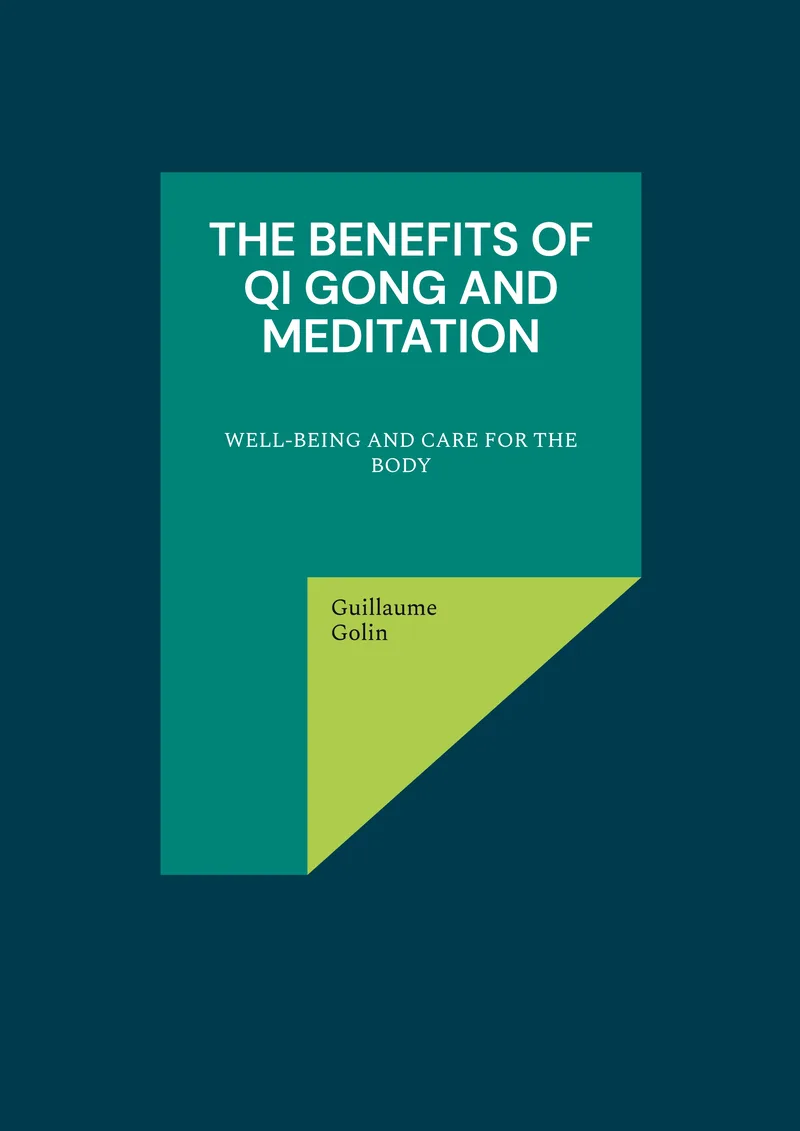
The benefits of Qi Gong and meditation
 82
82

The benefits of Qi Gong and meditation
Guillaume Golin's "The benefits of Qi Gong and meditation" offers a refreshingly direct approach to practices often shrouded in mystique. Golin’s strength lies in his unvarnished pragmatism, grounded in personal experience with multiple sclerosis since at least 2016. He avoids esoteric jargon, focusing instead on the "hands-on" benefits for bodily care and health stabilization. The passage detailing how Qi Gong helped him maintain his life without significant disability is particularly compelling, serving as a powerful testament to the book's central thesis. However, the work's conciseness, while intended as a strength, sometimes leaves the reader wishing for slightly more depth in explaining the mechanisms behind Qi Gong's effects. The historical context, while present, could be expanded to better situate these practices within their broader philosophical traditions. Nevertheless, for those seeking a straightforward, actionable guide to improving well-being, Golin’s booklet provides a valuable, no-nonsense starting point.
📝 Description
82
Guillaume Golin's 2026 booklet, 'The benefits of Qi Gong and meditation,' offers a direct approach to health improvement.
This work by Guillaume Golin, published on March 18, 2026, aims to make Qi Gong and meditation accessible for daily life. It focuses on the practical gains in physical and mental health achievable through consistent practice. The author stresses a straightforward, 'hands-on' method to understand these disciplines, emphasizing their immediate positive effects. The central idea is that diligent self-care, applied through these exercises, unlocks better well-being.
It is written for people wanting simple ways to boost their health and manage stress. The book serves as a clear starting point for newcomers to Qi Gong and meditation. Golin also draws on his experience managing multiple sclerosis, suggesting its value for those dealing with chronic conditions who seek stability and a good quality of life. The book appeals to individuals searching for practical health strategies.
Qi Gong and meditation have deep historical roots in Chinese culture, with origins stretching back millennia. Qi Gong, or 'energy work,' developed from traditional Chinese medicine, martial arts, and Taoist philosophy. Meditation, a practice found across many global spiritual traditions like Buddhism and Hinduism, has long been central to contemplative life. Golin's book connects these ancient practices to modern health concerns, aiming to make their time-tested benefits relevant for contemporary readers.
💡 Why Read This Book?
• You will learn practical, "hands-on" techniques for improving your health, directly applicable from the methods discussed by Guillaume Golin, drawing from his personal journey since at least 2016. • You will understand how consistent "care given to our body" through Qi Gong and meditation can lead to stabilization of physical conditions, as Golin illustrates with his experience managing multiple sclerosis. • You will gain a concise overview of the direct positive effects of these practices on well-being, making it an accessible starting point compared to denser philosophical texts.
⭐ Reader Reviews
Honest opinions from readers who have explored this book.
❓ Frequently Asked Questions
What specific health benefits does Qi Gong offer according to Guillaume Golin's booklet?
Guillaume Golin's "The benefits of Qi Gong and meditation" highlights stabilization of physical conditions and enhanced overall well-being. The author uses his personal experience with multiple sclerosis, which he has managed since at least 2016, as a primary example of these benefits.
How does the book approach the practice of Qi Gong and meditation?
The booklet adopts a pragmatic and "hands-on" approach, emphasizing direct, observable positive effects on health. It focuses on "care given to our body" as the core principle for achieving benefits through consistent practice.
Is "The benefits of Qi Gong and meditation" suitable for beginners?
Yes, the book is designed to be concise and pragmatic, making it an accessible introduction for beginners. It aims to highlight the positive effects of Qi Gong and meditation without overwhelming the reader with complex theory.
What is the publication date of Guillaume Golin's book?
The book "The benefits of Qi Gong and meditation" was first published on March 18, 2026. This recent publication date situates its advice within a modern context.
Does the author share personal experiences in the book?
Yes, Guillaume Golin shares his personal experience managing a neurological condition, multiple sclerosis, for over ten years. He explains how Qi Gong and meditation helped him stabilize his condition.
What does the author mean by 'care given to our body'?
In the context of the book, 'care given to our body' refers to the intentional, consistent practice of Qi Gong and meditation. It signifies a proactive approach to health and well-being through these disciplines.
🔮 Key Themes & Symbolism
Pragmatic Well-being
This theme centers on the direct, tangible improvements in health and vitality achieved through consistent practice. Golin's work underscores that Qi Gong and meditation are not abstract philosophies but practical tools. The emphasis on "care given to our body" suggests a proactive, self-administered approach to wellness. The book aims to explain these ancient practices, presenting them as accessible methods for anyone seeking to enhance their physical and mental state, particularly highlighting stabilization for those with chronic conditions.
Mind-Body Connection
The book highlights the integral link between mental focus and physical health. By engaging in Qi Gong's gentle movements and meditation's focused awareness, practitioners cultivate a deeper understanding and control over their bodily functions. This connection is presented as the mechanism through which conditions can be stabilized and overall well-being enhanced. Golin's personal narrative serves as a compelling illustration of how intentional mental states and physical disciplines can profoundly impact one's life, even amidst significant health challenges.
Personal Health Stabilization
A core focus is the potential for Qi Gong and meditation to aid in stabilizing challenging health conditions. Golin draws directly from his ten-year experience living with multiple sclerosis, illustrating how these practices helped him maintain his quality of life without significant disability. This personal testimony provides a concrete example of the book's central argument: that consistent engagement with these disciplines can lead to tangible improvements and a greater sense of control over one's physical state.
Accessible Practice
The work prioritizes being "hands-on" and concise, making it highly accessible to a broad audience. Golin avoids overly academic or esoteric language, aiming instead for clarity and immediate applicability. This approach is designed to empower individuals to begin practicing Qi Gong and meditation effectively, emphasizing that significant benefits can be derived from simple, consistent effort. The booklet serves as an encouraging entry point for those new to these disciplines.
💬 Memorable Quotes
Direct passages from the work, attributed to the author.
“The practice of Qi Gong and meditation has helped me stabilize my condition and continue my life without real disability.”
— This statement, stemming from the author's personal experience with multiple sclerosis, powerfully underscores the book's central thesis. It highlights the practical, life-altering potential of these disciplines for managing chronic health issues and maintaining a high quality of life.
“Above all, it aims to be pragmatic, concise, and "hands-on", in order to emphasize the positive effects of Qi Gong and meditation on our health.”
— This highlights the author's intentional design for the booklet. It signals a focus on actionable advice and immediate results, distinguishing it from more theoretical or complex texts on the subject.
“Having lived with a neurological condition for more than ten years (multiple sclerosis),...”
— This provides crucial context for the author's perspective, lending credibility and personal weight to his discussion of Qi Gong and meditation's benefits for health stabilization.
“care given to our body”
— This phrase captures the book's philosophy, suggesting that dedicated practice of Qi Gong and meditation is a fundamental aspect of maintaining and improving one's physical and mental health.
💡 Key Ideas
Editorial paraphrase of the work's core concepts — not direct quotes.
This booklet was written to highlight the benefits of Qi Gong and meditation for everyone's well-being through "care given to our body".
This quote defines the book's core purpose and philosophy. It frames Qi Gong and meditation as acts of self-care, emphasizing a direct, proactive approach to health that benefits all individuals seeking improved well-being.
🌙 Esoteric Significance
Tradition
While Qi Gong is deeply rooted in Taoist traditions and its philosophy of cultivating and balancing vital energy (Qi), and meditation is a central to Buddhist and Hindu contemplative paths, Golin's work situates these practices within a modern, secular framework of physical and mental well-being. It departs from purely spiritual or mystical interpretations, emphasizing the physiological and psychological benefits that align with contemporary health science, making it a bridge between ancient esoteric practices and modern wellness trends.
Symbolism
The concept of 'Qi' itself is central, representing the vital life force that flows through all things. In Qi Gong, the practice aims to cultivate, harmonize, and direct this energy. The 'body' is viewed not just as a physical structure but as an energetic system. While Golin's text is pragmatic, the underlying symbolism of energy flow and internal balance is inherent to Qi Gong, reflecting an esoteric understanding of health as a dynamic energetic state rather than mere absence of disease.
Modern Relevance
Golin's work appeals to contemporary interest in mindfulness-based stress reduction (MBSR) and somatic therapies. Thinkers and practitioners in fields like integrative medicine and therapeutic movement modalities frequently draw upon the principles of Qi Gong and meditation for their documented benefits. The book's emphasis on self-care and accessible techniques aligns with modern wellness movements that empower individuals to take active roles in managing their health, bridging ancient practices with current health-conscious lifestyles.
👥 Who Should Read This Book
• Individuals seeking practical, accessible methods to improve their physical and mental health, particularly those new to Qi Gong and meditation, will find a clear, "hands-on" guide. • People managing chronic health conditions, like the author who lives with multiple sclerosis, can find inspiration and practical approaches to stabilization and enhanced quality of life. • Wellness practitioners and students of mind-body disciplines looking for straightforward explanations of the benefits of Qi Gong and meditation will appreciate the concise, benefit-focused narrative.
📜 Historical Context
Guillaume Golin's "The benefits of Qi Gong and meditation," first published in 2026, arrives in an era where interest in holistic health and mind-body practices is significant, yet the specific integration of Qi Gong and meditation for chronic condition management remains a focused niche. While Qi Gong itself has ancient roots in China, evolving from Taoist philosophy and traditional medicine over millennia, its popularization in the West gained momentum throughout the 20th century, particularly after figures like Dr. Yang Jwing-Ming brought more systematic teachings to wider audiences from the 1980s onwards. This book’s pragmatic, "hands-on" approach distinguishes it from earlier, more philosophically dense texts. It bypasses extensive historical or spiritual exegesis to focus on direct health outcomes. Unlike the widespread adoption of yoga, which had seen considerable Western engagement by the mid-20th century, Qi Gong’s structured presentation for specific therapeutic benefits, as Golin offers, is a more recent development in its global reception.
📔 Journal Prompts
Reflect on the concept of "care given to our body" as presented by Golin.
How has the stabilization of your own physical condition been influenced by intentional practices?
Consider the "hands-on" nature of Qi Gong and meditation: what is one small step you can take today?
Analyze the author's experience with multiple sclerosis and its connection to Qi Gong and meditation.
Explore the pragmatic benefits of consistent practice in your personal well-being journey.
🗂️ Glossary
Qi Gong
An ancient Chinese practice involving coordinated deep breathing, meditation, and movement. It is traditionally used for health, spirituality, and martial arts training, aiming to cultivate and balance vital life energy (Qi).
Meditation
A practice where an individual uses a technique – such as mindfulness, or focusing the mind on a particular object, thought, or activity – to train attention and awareness, and achieve a mentally clear and emotionally calm and stable state.
Qi
In traditional Chinese culture, Qi (or Chi) is considered the vital life force or energy that flows through all living things. Its balance and smooth flow are believed to be essential for good health.
Well-being
The state of being comfortable, healthy, or happy. In the context of the book, it encompasses physical health, mental clarity, and emotional balance achieved through practices like Qi Gong and meditation.
Neurological condition
A disorder of the nervous system. The author specifically mentions multiple sclerosis, a chronic disease affecting the central nervous system, as an example of a condition that can be managed.
Hands-on
Practical and direct. In this context, it refers to the book's approach of providing actionable techniques and focusing on immediate, observable benefits rather than abstract theory.
Stabilize
To make or become steady, stable, or balanced. The author uses this term to describe how Qi Gong and meditation helped manage his neurological condition.


![Bidayah al-Hikmah (Arab-English) [The Elements of Islamic Metaphysics]](/img/thumb/bidayah-al-hikmah-arab-english-the-elements-of-islamic-metaphysics-allama-muhammad-husayn-tabatabai.webp)