City of Ashes
 73
73

City of Ashes
Clare’s City of Ashes moves with a relentless pace, picking up threads from its predecessor to weave a more intricate plot. The introduction of the Seelie Court and its manipulative Queen, alongside the escalating threat posed by Valentine, adds layers of political intrigue to the supernatural conflict. However, the romantic entanglements, particularly the fraught relationship between Clary and Jace, occasionally overshadow the broader narrative stakes. While the world-building remains a strong point, the sheer volume of lore introduced can sometimes feel overwhelming, demanding close attention from the reader. The passage detailing the intricate hierarchy and laws of the Clave, while crucial for understanding the Shadowhunter society, slows the momentum. Despite these points, the book successfully propels the series forward, deepening character relationships and expanding the central conflict. The ending sets a compelling stage for the next installment. It's a solid, if sometimes overstuffed, continuation.
📝 Description
73
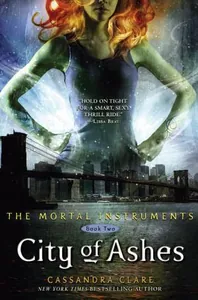
Cassandra Clare's City of Ashes, published in 2008, continues the Mortal Instruments saga with heightened stakes for Clary Fray.
In City of Ashes, the second novel in Cassandra Clare's Mortal Instruments series, Clary Fray finds herself deeper within the hidden world of Shadowhunters. The year is 2008, and the narrative picks up after the events of City of Bones, with Clary struggling to understand her emerging powers and her family's complex history. The Shadowhunters, a race of Nephilim tasked with protecting the human world from demons, face internal division and threats from Valentine Morgenstern. He is a dangerous figure from their past who seeks powerful artifacts.
The story unfolds in New York City, which becomes a backdrop for the conflict between these supernatural factions. Clary's personal journey is central as she navigates her new reality and her connections to the Shadowhunter world. The governing body, known as the Clave, must contend with both external dangers and internal unrest, all while Valentine's plans threaten the fragile peace.
Published in 2008, City of Ashes taps into the young adult urban fantasy genre that gained significant traction in the late 2000s. It blends elements of demonology and angelology, drawing from established lore surrounding angelic/demonic hierarchies and their interaction with the human plane. The series' approach to Shadowhunters as a lineage of Nephilim, a term with biblical roots signifying a fallen race or offspring of divine beings, situates it within a tradition of occult fiction that reinterprets religious or mythological figures for contemporary narratives.
💡 Why Read This Book?
• You will gain a deeper understanding of the Nephilim's internal governance and the complex hierarchy of the Clave, as depicted in the political machinations surrounding the Council's decisions in City of Ashes. • You will experience the unique challenges faced by Clary Fray as she navigates the moral gray areas of her world, particularly her evolving relationship with Jace and the ethical dilemmas presented by their lineage. • You will encounter the esoteric concepts of the Mortal Instruments and their significance within the Shadowhunter society, understanding their power and the danger they represent as central plot devices.
⭐ Reader Reviews
Honest opinions from readers who have explored this book.
❓ Frequently Asked Questions
What are the Mortal Instruments mentioned in City of Ashes?
The Mortal Instruments are three ancient, powerful artifacts created by the Archangel Raziel: the Mortal Sword, the Mortal Cup, and the Mortal Mirror. They are central to the Shadowhunter world and are sought after by antagonists like Valentine Morgenstern in City of Ashes.
Who is Valentine Morgenstern in Cassandra Clare's City of Ashes?
Valentine Morgenstern is the primary antagonist in City of Ashes and the overarching series. He is a powerful, rogue Shadowhunter seeking to purify the Shadowhunter race and control the Mortal Instruments, posing a significant threat to both Shadowhunters and demons.
What is the Clave in the context of City of Ashes?
The Clave is the governing body of the Shadowhunters, akin to a ruling council or parliament. It enforces laws, makes decisions for the Shadowhunter community, and convenes when major threats or internal disputes arise, as seen in City of Ashes.
When was City of Ashes first published?
City of Ashes, the second book in The Mortal Instruments series by Cassandra Clare, was first published in 2008.
What role does the Seelie Court play in City of Ashes?
The Seelie Court, ruled by the Seelie Queen, is a realm of powerful fae beings. In City of Ashes, their allegiance is sought by both Clary and Valentine, and their unpredictable nature and ancient magic introduce a significant, often dangerous, political element.
How does Clary Fray's character develop in City of Ashes?
In City of Ashes, Clary grapples with her newfound Shadowhunter abilities and her complex family history. She becomes more assertive, questioning the Clave's authority and making difficult choices regarding her relationships and her role in the fight against Valentine.
🔮 Key Themes & Symbolism
Lineage and Identity
City of Ashes deeply explores the concept of inherited destiny versus personal choice, particularly through Clary Fray's struggle with her lineage. As she discovers her family's complex and often dark history, she must reconcile her identity with the expectations and prejudices of the Shadowhunter world. The book questions whether one's bloodline dictates their nature or if individuals can forge their own path, independent of their ancestry. This theme is central to Clary's development as she navigates her powers and her relationships with characters like Jace and Simon, who represent different facets of her evolving identity.
The Nature of Power
The narrative in City of Ashes is driven by the pursuit and application of power, both mundane and supernatural. The Mortal Instruments—the Cup, Sword, and Mirror—represent ultimate power, capable of reshaping the world, making their retrieval a primary objective for the antagonist, Valentine. Simultaneously, characters grapple with their own burgeoning abilities. Clary's powers develop unpredictably, forcing her to confront the responsibility that comes with them. The book examines how power corrupts, how it can be wielded for good or ill, and the moral compromises individuals make when seeking or possessing it within the Shadowhunter society.
Belonging and Betrayal
Within the insular world of the Shadowhunters, the concept of belonging is paramount, yet often fraught with peril. Clary seeks a place where she truly fits, torn between the mundane world and the hidden society of demon hunters. This quest for belonging is complicated by themes of betrayal, as characters discover hidden allegiances and familial secrets that shatter their trust. The Seelie Court, with its fickle loyalties, exemplifies this theme, showcasing how alliances can shift and trust can be a dangerous commodity. The book highlights the emotional toll of navigating these complex social dynamics and the search for genuine connection.
The Mundane and the Supernatural
City of Ashes continues to delineate the separation between the ordinary world and the hidden supernatural realm inhabited by Shadowhunters, demons, and fae. The narrative hinges on the Shadowhunters' role as protectors, tasked with keeping the veil between these worlds intact. However, the lines blur as supernatural events increasingly impact the mundane world, and characters like Clary, who straddle both, must reconcile these two realities. The book explores the tension between secrecy and revelation, and the consequences that arise when the hidden world intrudes upon the everyday lives of humans.
💬 Memorable Quotes
Direct passages from the work, attributed to the author.
“It is not a sin to feel anything. It is a sin to hurt others.”
— This sentiment underscores a moral philosophy focused on action rather than emotion. It suggests that internal feelings, even negative ones, are not inherently wrong, but the outward expression of those feelings that cause harm to others is where true transgression lies.
“We are not what we do, but who we are.”
— This interpretation emphasizes the distinction between an individual's actions and their fundamental identity. It suggests that true selfhood is rooted in character and inherent being, rather than solely defined by one's deeds, especially in a world where actions can be dictated by circumstance.
“Love is a dangerous weapon.”
— This concept frames love not as a gentle emotion, but as a potent force with the capacity for immense good or terrible destruction. In the context of the story, it suggests that powerful romantic feelings can lead characters to take extreme actions, for better or worse.
“The Clave is not always right.”
— This statement challenges the absolute authority of the Shadowhunter governing body. It implies that the Clave's decisions can be flawed or unjust, encouraging characters and readers to question established power structures and consider alternative perspectives or moral frameworks.
💡 Key Ideas
Editorial paraphrase of the work's core concepts — not direct quotes.
The more you care about someone, the more dangerous they are to you.
This quote captures the inherent vulnerability that arises from deep emotional connection, particularly in a world rife with conflict and betrayal. It highlights how love and attachment can become liabilities, making individuals susceptible to harm or manipulation by those they hold dear.
🌙 Esoteric Significance
Tradition
While not explicitly rooted in a single historical esoteric tradition, City of Ashes draws heavily from Western esotericism, particularly themes found in Gnosticism and Angelology. The concept of the Nephilim, fallen angels or giants in Judeo-Christian lore, forms the basis of the Shadowhunters' identity. Their struggle against demons echoes Gnostic dualism, the battle between spiritual purity and material corruption. The series also incorporates elements reminiscent of Theosophical ideas regarding hidden spiritual hierarchies and ancient lineages. Clare synthesizes these disparate mystical concepts into a cohesive, accessible narrative framework for a young adult audience.
Symbolism
The series employs potent symbols. The 'Stele,' a wand-like instrument used to draw runes, symbolizes the power to invoke angelic protection and enhance Shadowhunter abilities, representing inscribed divine will or power. Runes themselves, akin to sigils, are visual representations of magical intent, drawing on ancient traditions of symbolic language. The Mortal Instruments—the Cup, Sword, and Mirror—function as archetypal symbols of ultimate power, creation, and truth, respectively, echoing powerful artifacts found in various mythologies and alchemical traditions, representing control over life, judgment, and perception.
Modern Relevance
City of Ashes and the broader Mortal Instruments series continue to influence contemporary urban fantasy and YA literature. Modern practitioners of esoteric studies may find the accessible introduction to concepts like angelic intervention, demonology, and symbolic magic intriguing. The series' exploration of hidden societies and the idea of a secret war between good and evil speaks to modern occult interests in secret orders and spiritual battles. Thinkers and writers in the 'new age' and urban fantasy spheres often reference Clare's work for its engaging blend of action, romance, and esoteric themes, demonstrating its lasting impact on how mystical concepts are presented to a mainstream audience.
👥 Who Should Read This Book
• Young adults and teens interested in urban fantasy who enjoy fast-paced plots, supernatural creatures, and romantic subplots. • Readers seeking a continuation of the Shadowhunter saga after reading City of Bones, looking to further explore the complex relationships and escalating conflicts. • Fans of lore-heavy series who appreciate intricate world-building, with detailed explanations of a unique supernatural society and its history.
📜 Historical Context
Published in 2008, City of Ashes emerged as a significant entry in the burgeoning young adult urban fantasy wave, a genre that gained considerable traction throughout the late 2000s. This period saw a surge in novels blending supernatural elements with adolescent concerns, following the immense success of titles like Stephenie Meyer's Twilight series. Cassandra Clare's work distinguished itself by focusing on a more complex, lore-heavy mythology centered on the Nephilim, or Shadowhunters, a race of demon hunters. Unlike some contemporaries that leaned heavily into paranormal romance tropes, Clare's series, initiated with City of Bones in 2007, presented a more action-oriented narrative with intricate world-building and a darker, more intricate take on Good versus Evil. The series' reception was strong, quickly establishing a dedicated fanbase and contributing to the genre's expansion beyond vampire and werewolf narratives. The intricate lore and the blend of angelic and demonic influences placed it within a broader esoteric current in popular fiction, albeit one filtered through a YA lens.
📔 Journal Prompts
The Shadowhunter's reliance on runes and their power. Consider the nature of symbols as conduits for energy.
Clary's complicated feelings for Jace and Simon. Reflect on how relationships can create internal conflict.
Valentine Morgenstern's motivations. Analyze the justifications for extreme actions in pursuit of a goal.
The Clave's authority and the concept of rebellion. Explore when established rules should be challenged.
The hidden world of Shadowhunters coexisting with the mundane. Ponder the unseen forces that might influence daily life.
🗂️ Glossary
Shadowhunters (Nephilim)
Human-angelic hybrids who hunt demons and protect the mundane world. They possess enhanced abilities and follow a strict code.
Runes
Sacred symbols drawn on skin with a Stele, granting Shadowhunters magical abilities like invisibility, healing, or strength.
Stele
A rod-like tool used by Shadowhunters to draw runes on themselves or others, acting as a conduit for angelic power.
The Clave
The governing body of the Shadowhunters, responsible for laws, trials, and major decisions within their society.
Mundanes
Ordinary humans who are unaware of the existence of demons and Shadowhunters.
Demons
Supernatural entities that prey on humans and are the primary targets of the Shadowhunters.
Seelie Court
The realm and inhabitants of the powerful fae, known for their capricious nature and ancient magic, ruled by the Seelie Queen.
🔮 Readers Also Liked
Browse all →








More by Cassandra Clare
All books →
More Free Occult Philosophy Books
View all →