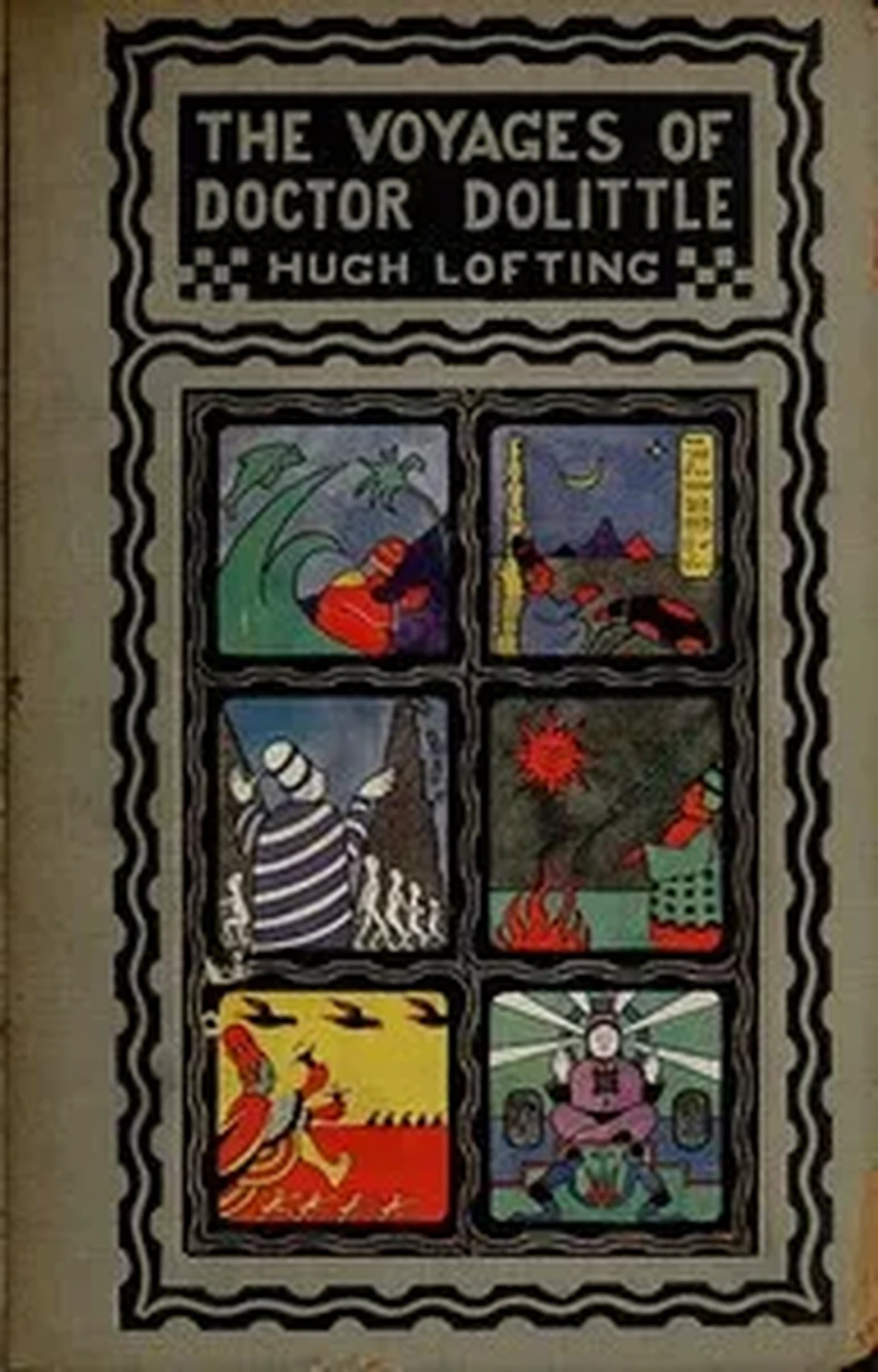
The Voyages of Doctor Dolittle
 83
83

The Voyages of Doctor Dolittle
Hugh Lofting’s The Voyages of Doctor Dolittle continues the peculiar yet endearing adventures of its titular physician, venturing into a more expansive world of animal diplomacy. The strength of this installment lies in its sheer inventiveness; the island of Spidermonkey and its inhabitants are conceived with a child’s boundless imagination, yet carry a surprising weight. Doctor Dolittle’s unwavering dedication to understanding creatures, even those as seemingly alien as the Great Gray Barnacle Goose, is a consistent charm. However, the episodic nature of the voyage, while offering variety, can sometimes feel a little meandering, lacking the focused urgency of a singular quest. A particularly striking moment involves Dolittle’s attempts to broker peace between warring island factions, a scenario rendered with both humor and an underlying seriousness about conflict resolution. The book ultimately offers a gentle, if occasionally rambling, exploration of empathy across species barriers.
📝 Description
83
Published in 1922, The Voyages of Doctor Dolittle follows the physician who talks to animals on a journey to the Mediterranean.
This 1922 novel continues the adventures of Doctor Dolittle, the physician known for his ability to communicate with animals. Following his earlier successes, Dolittle travels to the Mediterranean Sea and the fictional island of Spidermonkey. The story expands on his communication skills, showcasing his interactions with a wide range of creatures, from common birds to octopuses. His goal is to understand and assist them, deepening his connection with the non-human world.
The book appeals to readers who enjoy imaginative tales, especially those with a love for animals and exploration. It is suitable for younger readers drawn to wonder, as well as adults who appreciate allegorical storytelling and a gentle approach to complex ideas. Those interested in early 20th-century children's literature and its evolving depiction of nature will find it particularly engaging. The narrative offers a contrast to the anxieties of the post-World War I era, focusing instead on empathy and understanding.
While published in 1922, a period with growing interest in spiritualism, Lofting's work grounds its fantastical elements in a secular empathy for animals. It presents interspecies communication not as a mystical phenomenon but as a natural capacity that fosters understanding and healing. The book suggests that true knowledge comes from listening to diverse voices, regardless of their form, highlighting a practical, compassionate approach to connecting with other beings.
💡 Why Read This Book?
• You will gain a unique perspective on empathy by witnessing Doctor Dolittle's direct communication with creatures like the pushmi-pullyu, understanding how non-human viewpoints can inform human action. • You will experience the spirit of early 20th-century adventure literature through the detailed descriptions of the Mediterranean voyage and the discovery of the fictional island of Spidermonkey. • You will encounter a nuanced portrayal of leadership and problem-solving as Doctor Dolittle navigates complex disputes between animal communities, demonstrating a practical application of interspecies understanding.
⭐ Reader Reviews
Honest opinions from readers who have explored this book.
❓ Frequently Asked Questions
When was The Voyages of Doctor Dolittle first published?
The Voyages of Doctor Dolittle was first published in 1922, continuing the adventures of the beloved animal doctor after his initial introduction.
What is the primary setting for the latter half of the book?
A significant portion of the book takes place on the fictional island of Spidermonkey, a location Doctor Dolittle travels to in search of a cure.
What is Doctor Dolittle's special ability?
Doctor Dolittle possesses the unique ability to understand and speak with a vast array of animals, a skill central to all his adventures.
Who is the author of The Voyages of Doctor Dolittle?
The author is Hugh Lofting, who first introduced Doctor Dolittle in his earlier work, The Story of Doctor Dolittle.
What kind of creatures does Doctor Dolittle interact with?
He interacts with a wide variety, including domestic animals, birds, and more exotic creatures such as octopuses and the unique pushmi-pullyu.
Does the book explore any serious themes?
Yes, despite its whimsical tone, the book touches upon themes of conflict resolution, responsibility, and the importance of listening to all voices.
🔮 Key Themes & Symbolism
Interspecies Communication as Healing
The work posits that genuine understanding and the ability to heal, both physically and socially, are contingent upon direct communication with non-human entities. Doctor Dolittle's ability to converse with creatures allows him to diagnose ailments, mediate disputes, and foster cooperation where humans alone would fail. This theme extends beyond simple translation, suggesting a deeper, almost empathetic resonance that bridges the gap between species, highlighting a form of wisdom accessible only through attentiveness to the natural world.
The Ethics of Exploration
Doctor Dolittle's voyages are not mere adventures but expeditions driven by a sense of duty and a desire to mend rather than exploit. Whether seeking a cure for a tropical disease or resolving conflicts between animal communities, his actions are guided by a moral compass. The narrative implicitly critiques colonialist tendencies by portraying the Doctor as a compassionate emissary rather than a conqueror, emphasizing respect for the autonomy and cultures of the places and peoples—animal or otherwise—he encounters.
The Wisdom of the Natural World
Lofting imbues the animal characters with distinct personalities and practical knowledge, suggesting that the natural world holds insights often overlooked by humans. From the navigational skills of seafaring birds to the territorial complexities of island fauna, Doctor Dolittle learns as much from his animal companions as they benefit from his medical expertise. This theme champions a holistic worldview where human intellect is enhanced, not superseded, by the inherent wisdom found in nature's diverse inhabitants.
The Burden of Unique Gifts
Doctor Dolittle's extraordinary gift of animal speech is presented not just as a marvel but as a responsibility. He is often drawn into difficult situations because only he can bridge the communication gap. The narrative explores the isolation that can accompany such unique talents, as well as the personal cost of constantly acting as an intermediary. This highlights the internal struggles of a protagonist whose abilities demand constant engagement with the world's problems.
💬 Memorable Quotes
Direct passages from the work, attributed to the author.
“The pushmi-pullyu can tell you about the past and the future.”
— This refers to the unique dual-headed creature, symbolizing a holistic perception of time and existence, hinting at a consciousness that transcends linear experience.
“When the Doctor had finished his work, he went to the edge of the rocks and looked out at the sea.”
— This simple action signifies Dolittle's contemplation and his connection to the vastness of the world, a recurring motif of his reflective nature amidst his adventures.
“The Great Gray Barnacle Goose is a very sensible bird.”
— This highlights the book's consistent theme of attributing intelligence and unique perspectives to animals, challenging human-centric views of wisdom.
“He had to go to the Mediterranean.”
— This establishes the narrative's impetus for travel and exploration, setting the stage for the Doctor's encounters with new lands and diverse species.
“The monkeys were the most troublesome.”
— This points to the challenges inherent in understanding different species, even for the Doctor, and the specific difficulties posed by primate behavior.
🌙 Esoteric Significance
Tradition
While not overtly mystical, the work aligns with certain naturalistic and animistic traditions that recognize inherent consciousness and wisdom in the non-human world. It echoes principles found in Theosophy's respect for all life forms and the idea of universal kinship, albeit expressed through a secular, pedagogical lens rather than explicit spiritual doctrine. Dolittle’s approach suggests an intuitive, almost psychic, connection to animals, bypassing conventional human barriers.
Symbolism
The pushmi-pullyu, with its two heads and singular body, can symbolize duality, the union of opposites, or a complete understanding encompassing past and future. Doctor Dolittle himself acts as a mediator, a bridge between the human and animal kingdoms, representing the potential for humanity to achieve greater harmony with nature through empathy and communication. The sea voyages themselves symbolize a journey into the subconscious or the exploration of unknown domains of knowledge.
Modern Relevance
Contemporary eco-philosophy and animal rights movements find resonance in Dolittle's advocacy for animal welfare and his fundamental belief in their capacity for complex thought and emotion. Thinkers in ecopsychology and those exploring interspecies communication technologies or ethical frameworks for human-animal interaction often reference the foundational ideas presented in Lofting's work, seeing it as an early, albeit fictional, exploration of vital contemporary concerns.
👥 Who Should Read This Book
• Aspiring naturalists and animal behaviorists seeking imaginative frameworks for understanding interspecies dynamics. • Readers interested in early 20th-century children's literature who want to explore narratives that challenged anthropocentric viewpoints. • Individuals drawn to stories of adventure and exploration with a strong ethical and compassionate undercurrent.
📜 Historical Context
Published in 1922, The Voyages of Doctor Dolittle arrived in a post-World War I landscape where children's literature was beginning to diversify. Hugh Lofting's creation offered a distinct voice, moving away from moralistic tales towards imaginative empathy. While authors like A.A. Milne were also creating beloved characters, Dolittle’s focus on animal communication and interspecies relations was relatively novel for the time. The book’s success saw it translated into numerous languages, demonstrating an international appeal for its gentle philosophy. Critically, it was received with widespread acclaim, solidifying Dolittle's place in literary history, though some later critics would examine its portrayal of colonial themes with a more modern lens, a discussion that continues regarding works from this period.
📔 Journal Prompts
Doctor Dolittle's ability to speak with animals, as exemplified by his interactions with the Great Gray Barnacle Goose.
The island of Spidermonkey as a microcosm of interspecies governance.
The pushmi-pullyu's unique nature and its implications for understanding time.
The challenges Doctor Dolittle faces when mediating disputes between different animal groups.
The contrast between Doctor Dolittle's approach to exploration and traditional colonial endeavors.
🗂️ Glossary
Pushmi-pullyu
A rare, mythical creature with a head at each end of its body, capable of moving in both directions simultaneously. It represents a unique form of existence and perception.
Spidermonkey Island
A fictional island nation encountered by Doctor Dolittle during his Mediterranean voyages, populated by various animal species with their own societies and conflicts.
Great Gray Barnacle Goose
A large, wise goose character Doctor Dolittle encounters, representing the intelligent and often overlooked wisdom found in avian species.
The Jiccy Bird
A bird known for its distinctive cry, often associated with specific geographical locations or events within the narrative.
Chee-Chee
Doctor Dolittle's loyal monkey companion, often involved in the Doctor's adventures and serving as a key assistant.
Mud Grub
A type of food or creature mentioned in the context of animal diets or habitats within the book's world.
The Land of.'”
A phrase indicating a place or region of unknown or significant repute, often serving as a destination for Doctor Dolittle's travels.
🔮 Readers Also Liked
Browse all →









More by Hugh Lofting
All books →


More Free Occult Philosophy Books
View all →