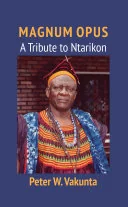
Magnum Opus: A Tribute to Ntarikon
 76
76

Magnum Opus: A Tribute to Ntarikon
W. Vakunta’s "Magnum Opus: A Tribute to Ntarikon" does not shy away from its purpose: to bear witness to a specific moment of political repression. The long poem’s strength lies in its directness, its unflinching gaze upon the events of May 26, 1990, at Ntarikon Park. The author effectively conveys the despair felt by members of the Social Democratic Front amidst the perceived heavy-handedness of the Cameroon Peoples Democratic Movement. However, the poem's tightly focused narrative, while powerful, sometimes risks becoming overly specific, potentially alienating readers unfamiliar with the granular details of Cameroonian politics. A passage describing the "deplorable moments lived by members of the Social Democratic Front" vividly illustrates the raw emotion, but the lack of broader symbolic interpretation within that moment can leave one wanting. Ultimately, "Magnum Opus" serves as a potent, if narrowly aimed, piece of political art.
📝 Description
76
W. Vakunta's 2017 poem "Magnum Opus" critiques political oppression through a specific 1990 protest.
Published in 2017, "Magnum Opus: A Tribute to Ntarikon" is a long poem that addresses political oppression and social injustice. The work centers on the May 26, 1990, confrontation at Ntarikon Park, an event involving members of the Social Democratic Front (SDF). This historical incident serves as the primary focus for the author's lament and critique of the political climate in Cameroon.
The poem directly references the political situation within the Republic of Cameroon, highlighting the dominance of the Cameroon Peoples Democratic Movement (CPDM) and the challenges faced by opposition groups like the SDF. The date of the confrontation marks a significant moment of protest and the state's reaction, which shapes the poem's urgent tone and its indictment of the ruling party's actions. The title "Magnum Opus," usually denoting a great achievement, is employed ironically here to frame the poem as a testament to suffering and resistance.
While not strictly adhering to Western esoteric traditions, "Magnum Opus" engages with themes of societal critique and artistic expression as a form of spiritual or intellectual resistance. The poem's use of a historical event to comment on broader issues of power and suffering aligns with certain hermetic principles of understanding the microcosm (specific event) to illuminate the macrocosm (societal dynamics). The ironic title suggests a critique of grand narratives, a common practice in post-colonial literature seeking to deconstruct dominant ideologies. Its focus on lament and resistance positions it within a lineage of works using art to process collective trauma and challenge oppressive structures.
💡 Why Read This Book?
• Understand the specific political dissent surrounding the May 26, 1990, Ntarikon Park incident, gaining insight into the historical tensions within Cameroon. • Experience the emotional weight of social dystopia as depicted through Vakunta's critique of the ruling CPDM party's actions. • Appreciate how poetry can serve as a direct indictment of political status quo, offering a unique artistic response to state power.
⭐ Reader Reviews
Honest opinions from readers who have explored this book.
❓ Frequently Asked Questions
What is the main subject of "Magnum Opus: A Tribute to Ntarikon"?
The poem is a critique of the political status quo in Cameroon, focusing on the events at Ntarikon Park on May 26, 1990, and the struggles of the Social Democratic Front (SDF).
Who is W. Vakunta and when was this book published?
W. Vakunta is the author of "Magnum Opus: A Tribute to Ntarikon," which was first published on March 2, 2017. The author's background is primarily in literature and social commentary.
What does the title "Magnum Opus" refer to in this context?
In this poem, "Magnum Opus" is used ironically. It typically means a great work, but here it signifies the poem itself as a profound, albeit sorrowful, artistic testament to suffering and resistance against political oppression.
What historical event is central to the poem?
The poem centers on the events that transpired at Ntarikon Park on May 26, 1990, involving members of the Social Democratic Front (SDF) and the prevailing political atmosphere in Cameroon.
What is the author's stance on the political situation in Cameroon?
The author presents a scathing indictment of the ruling Cameroon Peoples Democratic Movement (CPDM), highlighting social dystopia and the mistreatment of opposition members.
What literary style does "Magnum Opus: A Tribute to Ntarikon" employ?
The work is a long poem that functions as a political critique, characterized by its direct address and emotional expression of despair and helplessness.
🔮 Key Themes & Symbolism
Political Dystopia and Repression
The poem vividly portrays a society suffering under authoritarian rule, where the state apparatus, represented by the Cameroon Peoples Democratic Movement (CPDM), actively suppresses dissent. Vakunta details the "deplorable moments" experienced by members of the Social Democratic Front (SDF) at Ntarikon Park on May 26, 1990, illustrating a palpable sense of helplessness. This theme critiques not just a specific regime but the broader mechanisms of political oppression and their impact on the populace, creating a range of social dystopia.
Poetry as Political Witness
"Major work: A Tribute to Ntarikon" positions poetry as a crucial medium for bearing witness to historical injustices and political struggles. The long poem format allows for an extended lament and critique, serving as an artistic act of defiance against a dominant political narrative. By focusing on a singular, impactful event, Vakunta elevates the personal experiences of suffering into a public testament, demonstrating art's capacity to challenge and document the realities of political power and its abuses.
The Weight of Helplessness
A core emotional thread running through the poem is the profound sense of despair and helplessness experienced by those marginalized or oppressed by the political system. The events of May 26, 1990, are presented not merely as a political confrontation but as a moment that stripped individuals of agency. Vakunta's work explores how this pervasive feeling of powerlessness can shape collective consciousness and artistic expression, making the poem itself an articulation of that very struggle.
💬 Memorable Quotes
Direct passages from the work, attributed to the author.
“The ruling party, the Cameroon Peoples Democratic Movement (CPDM), rides roughshod over the populace.”
— This directly states the poem's central political critique, accusing the CPDM of oppressive and careless governance that disregards the welfare of ordinary citizens.
“One cannot read this poem without feeling the despair and helplessness experienced by members of the SDF.”
— This interpretation emphasizes the emotional impact of the work, suggesting that the poem effectively conveys the profound negative feelings of those targeted by political actions.
“Major work: A Tribute to Ntarikon serves as a proof of suffering and resistance.”
— This interpretation frames the poem's title ironically, suggesting that the 'great work' is an artistic memorial to hardship and the enduring spirit of those who oppose oppression.
💡 Key Ideas
Editorial paraphrase of the work's core concepts — not direct quotes.
Vakunta cries out poignantly against social dystopia and the deplorable moments lived by members of the Social Democratic Front at Ntarikon Park on May 26, 1990.
This paraphrase highlights the poem's function as a lament and an indictment, specifically referencing the historical event and the author's emotional response to societal breakdown.
The poem is a scathing indictment of the political status quo in the Republic of Cameroon.
This paraphrased statement underscores the poem's critical and accusatory tone towards the existing political order in Cameroon, making its purpose clear.
🌙 Esoteric Significance
Tradition
While "Major work: A Tribute to Ntarikon" is primarily a work of political poetry, its title invokes the alchemical concept of the 'Great Work.' In esoteric traditions, the Major work signifies a process of transformation, perfection, and spiritual attainment. Vakunta appears to use this term ironically, framing his poem as a profound, albeit sorrowful, artistic 'work' that grapples with societal corruption rather than spiritual enlightenment. It departs from traditional esoteric goals by focusing on the material and political realm, using the 'opus' as a lament for a broken society.
Symbolism
The title "Major work" itself is symbolic, recontextualizing a term of ultimate creation and perfection into an artistic proof of suffering and political failure. Ntarikon Park, as a specific locale, becomes a symbol of confrontation and oppression, a site where hopes for democratic expression were met with 'deplorable moments.' The 'social dystopia' described represents a perversion of societal ideals, a world where the promised 'great work' of governance has instead led to widespread despair.
Modern Relevance
In contemporary discourse, works that directly link artistic creation to political critique remain highly relevant. "Major work: A Tribute to Ntarikon" speaks to modern movements advocating for social justice and accountability, particularly in regions where political freedoms are contested. Thinkers and activists who explore the role of art in dissent, or who analyze the performative aspects of political power and resistance, might find Vakunta's poem a compelling case study of how poetic expression can serve as a potent form of political witness.
👥 Who Should Read This Book
• Students of African literature interested in the intersection of poetry and political commentary, particularly regarding Cameroonian socio-political history. • Readers seeking direct critiques of authoritarianism and state-sponsored oppression, who appreciate art that confronts difficult truths. • Scholars of political science and sociology examining how artistic expression functions as a form of social protest and historical documentation.
📜 Historical Context
Published in 2017, "Major work: A Tribute to Ntarikon" emerged during a period of continued political tension in Cameroon. The work directly confronts the legacy and ongoing influence of the Cameroon Peoples Democratic Movement (CPDM), which has dominated the nation's political landscape for decades. The poem's specific focus on the May 26, 1990, events at Ntarikon Park situates it within the history of opposition movements, particularly the Social Democratic Front (SDF), and their confrontations with state power. This date is significant as it marked a critical moment for nascent opposition gatherings. While literary criticism concerning Vakunta's work is not widely documented in international academic circles, the poem's subject matter aligns with broader trends in African literature that use artistic expression to critique authoritarianism and advocate for democratic reform, a tradition seen in contemporaries like Ken Saro-Wiwa's writings, though their styles and specific contexts differ.
📔 Journal Prompts
The "social dystopia" described in relation to Ntarikon Park.
The author's use of the term "Major work" in this context.
The "deplorable moments" experienced by the SDF members.
The function of poetry as a "scathing indictment" of the political status quo.
Feelings of "despair and helplessness" evoked by the poem's narrative.
🗂️ Glossary
Major work
Latin for "Great Work." In alchemy, it refers to the process of creating the philosopher's stone and achieving spiritual perfection. Here, used ironically to denote the poem as a profound artistic statement on suffering.
Ntarikon Park
A specific location in Cameroon where a significant political confrontation involving the Social Democratic Front (SDF) occurred on May 26, 1990.
Social Dystopia
A state of society characterized by widespread unhappiness, injustice, and oppression, often resulting from political or economic failures.
Cameroon Peoples Democratic Movement (CPDM)
The ruling political party in the Republic of Cameroon, often criticized for its long-standing dominance and alleged authoritarian practices.
Social Democratic Front (SDF)
A prominent opposition political party in Cameroon, known for advocating for democratic reforms and frequently facing state opposition.
Long poem
A poem that is lengthy, often narrative or epic in scope, allowing for detailed development of themes, characters, and events, as seen in Vakunta's work.
Indictment
A formal accusation or strong denunciation of a practice or policy, serving as a formal charge or strong criticism.
This book appears in 1 collection
🔮 Readers Also Liked
Browse all →









From the “Magnum Opus” Collection
View all →








More Free Occult Philosophy Books
View all →