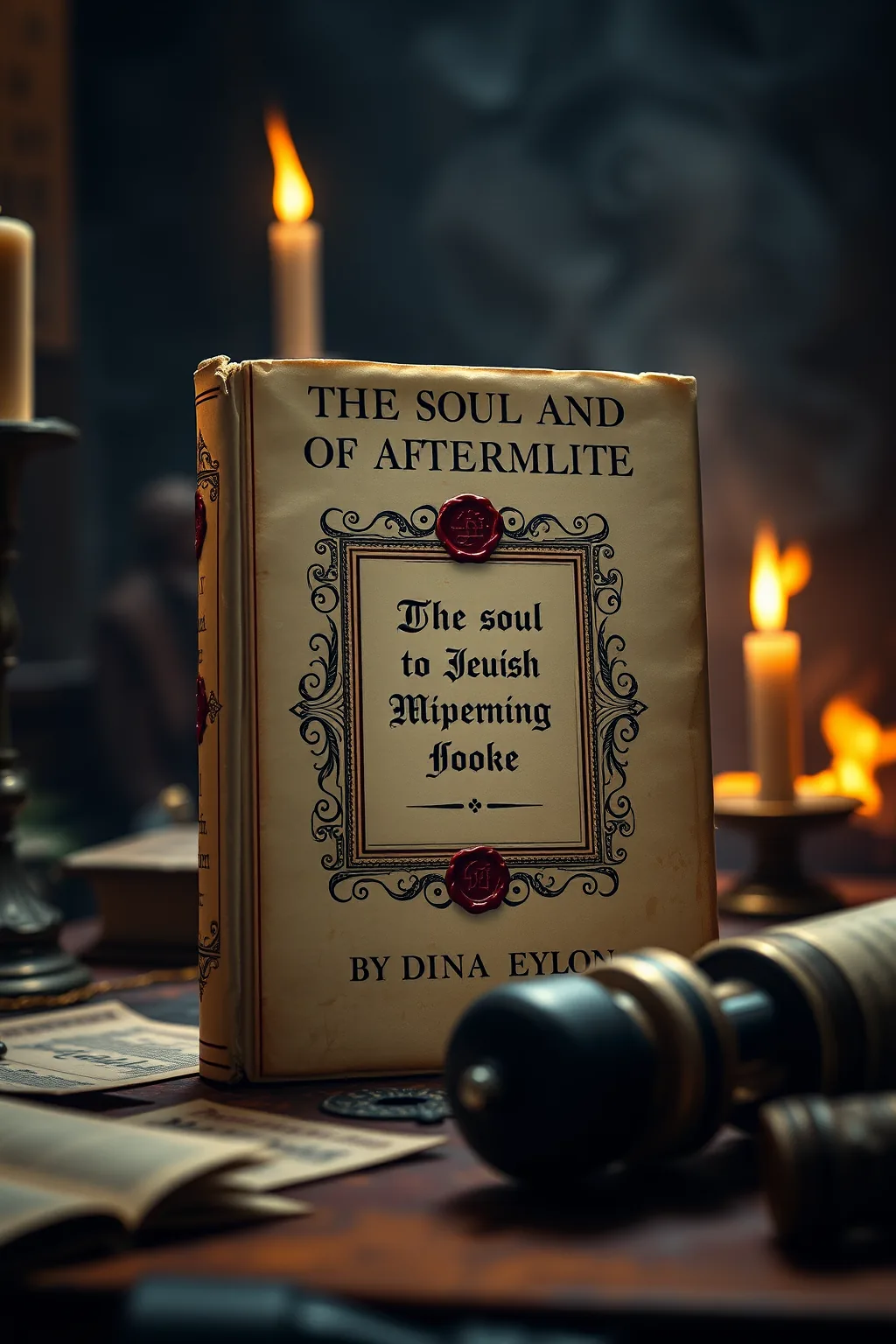
The soul and afterlife in Jewish mysticism and gnosticism
 61
61

The soul and afterlife in Jewish mysticism and gnosticism


A masterful synthesis that illuminates the often-obscured pathways of Jewish mysticism and Gnosticism concerning the soul's fate. Dina Eylon expertly navigates the complex theological landscapes, offering incisive comparisons that reveal shared esoteric currents and distinct philosophical divergences. The book is a beacon for those seeking deeper comprehension of transmigration, divine judgment, and the soul's return to its celestial source. Its strength lies in its scholarly rigor combined with an accessible prose that speaks directly to the earnest seeker. Highly recommended for students of comparative mysticism and anyone drawn to the profound questions of existence and consciousness.
📝 Description
61
Dina Eylon's 2008 book examines the soul and afterlife in Jewish mysticism and Gnosticism.
This study compares Jewish mystical and Gnostic beliefs about the soul's journey and the afterlife. Eylon analyzes texts from both traditions, highlighting their shared concepts and significant differences. She details ideas on divine emanations, the structure of the cosmos, and the soul's ultimate fate. The book aims to illuminate the philosophical foundations of these schools of thought.
It offers a perspective for those interested in comparative religion and esoteric studies. Eylon's work provides a detailed look at how these traditions understood human existence and the spiritual world. The research seeks to clarify the complex doctrines concerning the soul's relationship with the divine and its passage beyond earthly life.
This book sits within the study of Western esotericism, specifically focusing on two major streams: Kabbalah and Gnosticism. Kabbalah, the esoteric tradition of Judaism, developed complex theories about the divine, creation, and the human soul, often expressed through mystical interpretation of scripture. Gnosticism, a diverse set of religious movements prominent in the early centuries CE, posited a radical dualism and the necessity of gnosis (knowledge) for salvation, often involving intricate cosmologies and a journey of the soul to escape a flawed material world. Eylon's work bridges these traditions, exploring how both conceptualized the soul's nature and its ultimate destiny.
💡 Why Read This Book?
For those yearning to understand the soul's eternal journey, this book offers unparalleled insight into Jewish mystical traditions and Gnosticism. It unlocks hidden symbolic languages and philosophical frameworks, providing a profound perspective on life, death, and rebirth. Ideal for spiritual seekers, academic researchers, and practitioners of esoteric arts who wish to deepen their understanding of ancient wisdom concerning the afterlife.
⭐ Reader Reviews
Honest opinions from readers who have explored this book.
❓ Frequently Asked Questions
What is the primary focus of this book?
The book primarily focuses on the concepts of the soul and the afterlife as understood within Jewish mysticism (Kabbalah) and Gnosticism, exploring their intricate connections and divergences.
Is this book suitable for beginners?
While academically rigorous, the book strives for clarity, making it accessible to dedicated beginners interested in esoteric traditions. Prior familiarity with mysticism can enhance the reading experience.
What are the key differences between the Jewish mystical and Gnostic views on the soul?
The book elucidates how Jewish mysticism often emphasizes the soul's divine spark and its journey of tikkun (rectification), while Gnosticism frequently views the soul as a divine fragment trapped in a material world, seeking liberation.
Does the book discuss reincarnation?
Yes, the book delves into the concept of transmigration of souls, a significant theme in certain interpretations of Jewish mysticism and Gnosticism, exploring its nuances and implications for the afterlife.
What kind of knowledge does this book aim to reveal?
It aims to reveal esoteric knowledge concerning the soul's structure, its descent and ascent, the nature of the spiritual realms, and the ultimate purpose of existence as understood through these ancient wisdom traditions.
🔮 Key Themes & Symbolism
The Soul's Cosmic Journey
This theme examines the intricate pathways the soul is believed to traverse after physical death. It examines Kabbalistic concepts like the ascent through the celestial spheres (Heikhalot literature) and Gnostic notions of the soul's fall from the divine Pleroma and its subsequent struggle to return. The exploration includes the symbolic language used to describe these stages, the challenges encountered, and the ultimate reunion with the divine source, highlighting the soul's inherent connection to the cosmic order and its potential for transcendence.
Gnostic Dualism vs. Kabbalistic Unity
A central focus is the comparative analysis of Gnostic dualism, often positing a stark separation between the spiritual and material realms, and the Kabbalistic emphasis on divine unity (Ein Sof) and the interconnectedness of all creation. The book explores how these differing worldviews shape their respective doctrines of the soul, its entrapment or divine essence, and its path to salvation or rectification. Understanding this contrast is crucial for appreciating the unique spiritual philosophies and practices that emerged from each tradition.
Symbolism of the Afterlife and Resurrection
This theme deciphers the rich symbolic language employed by both traditions to articulate the nature of the afterlife, divine judgment, and the concept of resurrection. It investigates the meaning behind various celestial realms, angelic hierarchies, demonic forces, and the transformative processes the soul undergoes. The book illuminates how these symbols serve not merely as allegories but as keys to understanding the spiritual mechanics of existence and the ultimate destiny of the human spirit within the grand cosmic narrative.
💬 Memorable Quotes
Direct passages from the work, attributed to the author.
“The soul is a divine spark yearning for its celestial home.”
— This expresses the Gnostic view of the soul's origin and its inherent desire to escape material limitations and return to its divine source.
“Through the gates of understanding, the soul ascends to higher realms.”
— This speaks to the Kabbalistic emphasis on intellectual and spiritual ascent, where knowledge and divine contemplation are pathways to higher spiritual states.
“The material world is a veil, obscuring the true nature of reality.”
— A core tenet of Gnosticism, highlighting the illusory nature of the physical realm and the need to pierce through it to grasp divine truth.
“In the breath of the divine, all souls find their ultimate echo.”
— This suggests a pantheistic or panentheistic understanding, where the divine permeates all existence, and individual souls are reflections or emanations of this universal spirit.
“The journey beyond is not an end, but a profound transformation.”
— This emphasizes the continuous nature of spiritual evolution, suggesting that the afterlife is a stage of ongoing development rather than a static destination.
🌙 Esoteric Significance
Tradition
This work is deeply rooted in the esoteric traditions of Kabbalah and Gnosticism, two powerful systems of mystical thought that explore the hidden dimensions of reality. It examines their shared preoccupations with the divine, the cosmos, and the ultimate fate of the human soul, offering a comparative lens that reveals the intricate web of spiritual knowledge developed within these ancient lineages.
Symbolism
The book unpacks the profound symbolism integral to both Kabbalistic and Gnostic thought. It explores concepts like the Sefirot (divine emanations), the Tree of Life, the Pleroma (divine fullness), and the Demiurge, interpreting their roles in shaping the understanding of the soul's journey, its entrapment, and its potential for liberation or return to the divine.
Modern Relevance
In an age seeking deeper meaning and spiritual grounding, this book offers timeless wisdom. It provides a framework for understanding consciousness, the nature of reality, and the perennial human quest for transcendence. The exploration of soul and afterlife appeals to contemporary spiritual seekers, offering clear insights into personal growth, existential questions, and the interconnectedness of all life.
👥 Who Should Read This Book
This volume is a treasure for dedicated seekers of esoteric knowledge, offering clear insights into the soul's nature and its journey beyond the veil. Scholars of comparative religion and mysticism will find its rigorous analysis and comparative approach invaluable. Practitioners of contemplative and mystical disciplines will discover new perspectives and symbolic keys to deepen their understanding and practice. Even those new to these traditions, but possessing a sincere thirst for spiritual wisdom, will find this book an clear guide into the profound mysteries of existence.
📜 Historical Context
This book emerges from a body of intellectual and spiritual ferment, drawing upon traditions that flourished from late antiquity through the medieval period. Jewish mysticism, particularly Kabbalah, gained significant momentum with texts like the Zohar emerging in the 13th century, offering complex cosmological frameworks and mystical interpretations of scripture. Concurrently, Gnosticism, with its diverse schools and esoteric teachings, presented a compelling alternative spiritual path, often challenging established religious orthodoxies. The era was marked by intense philosophical inquiry into the nature of God, the cosmos, the human soul, and the pathways to salvation or enlightenment. Eylon's work bridges these central traditions, clear their shared concerns and unique insights into humanity's relationship with the divine and the mysteries of existence beyond the mortal coil.
📔 Journal Prompts
Reflect on your personal understanding of the soul's nature and its connection to the divine. How does it align with or differ from the concepts presented in the book?
Consider the symbolism of ascent and descent in spiritual traditions. Where have you experienced these movements in your own life, and what did they signify?
What does the concept of 'liberation' or 'rectification' mean to you in the context of your spiritual journey?
Explore the idea of the material world as a 'veil.' What aspects of your life might be obscuring a deeper spiritual reality?
Imagine the soul's journey after death. What are your hopes, fears, and beliefs regarding this unknown territory, and how do they relate to the ideas discussed?
🗂️ Glossary
Ein Sof
A Kabbalistic term referring to the infinite, unknowable, absolute Godhead, the primordial source of all existence before any manifestation or emanation.
Pleroma
A Gnostic concept representing the spiritual totality or fullness of God, a area of divine beings and emanations from which the material world is believed to have fallen or been created imperfectly.
Sefirot
In Kabbalah, the ten divine emanations or attributes through which God interacts with and manifests in the universe, often depicted as a Tree of Life.
Demiurge
In Gnosticism, a subordinate creator deity, often seen as ignorant or malevolent, responsible for the flawed material world, distinct from the true, supreme God.
Tikkun
A Hebrew term in Kabbalah meaning 'rectification' or 'restoration.' It refers to the cosmic task of mending the brokenness of creation and restoring harmony between the divine and the material realms.
This book appears in 1 collection
🔮 Readers Also Liked
Browse all →








From the “Kabbalah” Collection
View all →








More Free Kabbalah & Jewish Mysticism Books
View all →