Selections
 64
64

Selections


Ophelia Vance (Mystical Literature Reviewer) — Philo of Alexandria's 'Selections' is a cornerstone for anyone delving into the esoteric roots of Western spirituality. This collection masterfully showcases Philo's allegorical genius, transforming biblical narratives into profound metaphysical explorations. Readers will find illuminating insights into divine immutability, the cosmic dance of creation, and the eternal battle between virtue and vice, all encoded within ancient stories. The lucid prose, even in translation, guides the serious student through complex philosophical arguments. This is not light reading; it is a rich tapestry for scholars, mystics, and practitioners seeking to understand the foundational thought that shaped later Kabbalistic and Gnostic traditions. An indispensable addition to the esoteric library.
📝 Description
64
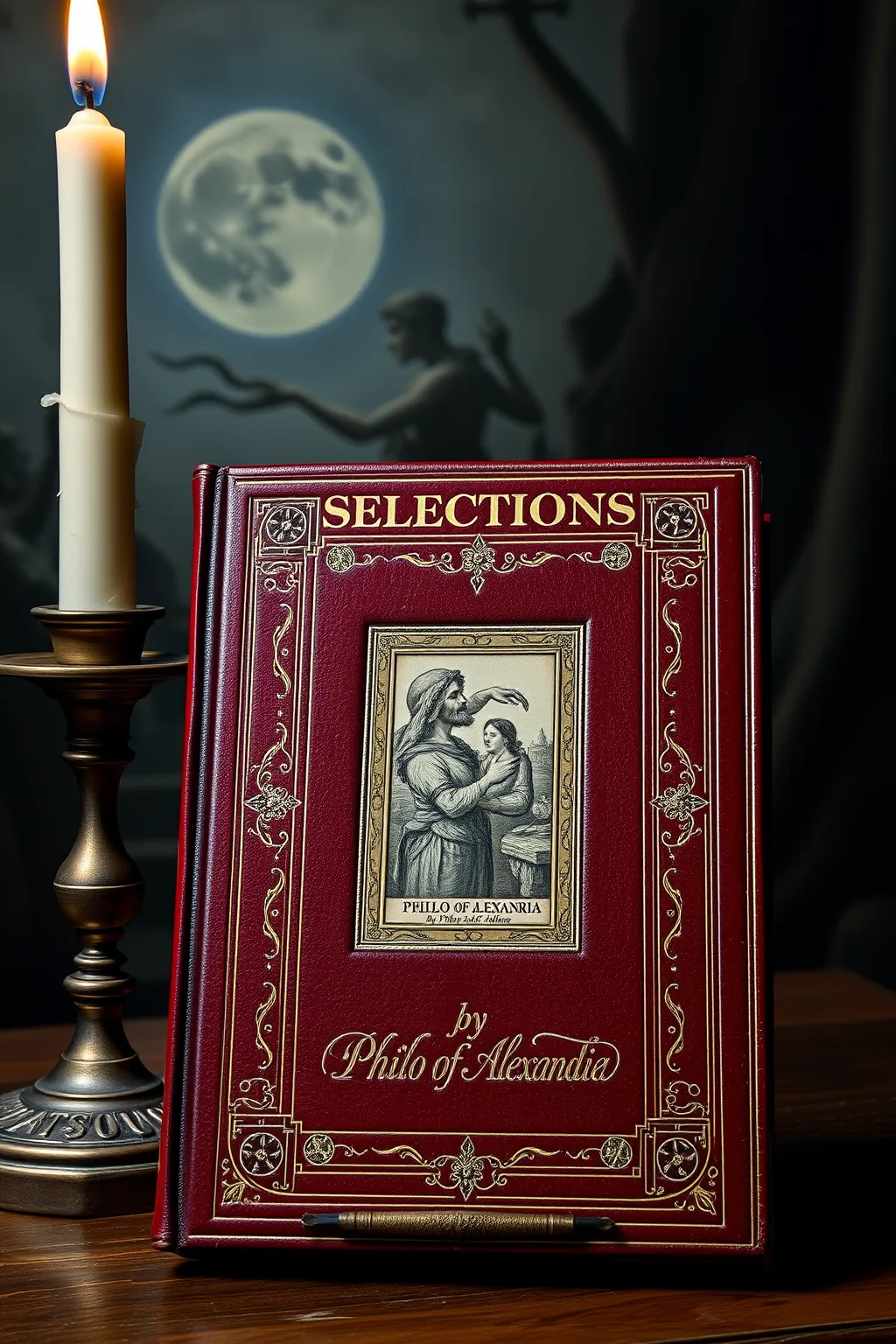
Philo of Alexandria's 'Selections' presents allegorical interpretations of biblical narratives.
This collection gathers key writings by Philo of Alexandria, a Hellenistic Jewish philosopher. He interpreted the Hebrew Bible not literally, but as a symbolic text rich with deeper meaning. Philo used complex allegorical methods to bridge the gap between the physical world and the divine. His work sought to reveal hidden truths about the universe and the human spirit through these symbolic readings.
Readers will encounter Philo's analysis of biblical figures and events, such as the cherubim and the story of Cain and Abel. He treated these narratives as representations of cosmic principles and the eternal struggle between opposing forces. The collection highlights Philo's focus on the unchanging nature of God. This approach offered a way to understand scripture as a source of spiritual revelation, influencing subsequent mystical thought.
Philo's work stands as a bridge between classical Greek philosophy and Jewish mysticism. He adapted Platonic ideas and Stoic logic to interpret biblical texts, creating a unique system of allegorical exegesis. This method of reading scripture for hidden, spiritual meanings was crucial for later esoteric traditions. His philosophical framework informed the development of Gnostic thought and early Kabbalistic ideas, establishing a precedent for symbolic interpretation that sought divine knowledge beyond the literal word.
💡 Why Read This Book?
Uncover the allegorical keys to ancient wisdom and unlock hidden spiritual meanings within familiar biblical narratives. Philo of Alexandria offers a profound philosophical framework for understanding the divine and the cosmos, essential for seekers of Kabbalah, Jewish mysticism, and ancient philosophy. This collection is a gateway to the esoteric traditions that shaped Western thought.
⭐ Reader Reviews
Honest opinions from readers who have explored this book.
❓ Frequently Asked Questions
What is the primary method Philo uses in these 'Selections'?
Philo primarily employs allegorical interpretation, viewing biblical narratives and figures as symbolic representations of deeper philosophical and spiritual truths about God, the cosmos, and the human soul.
How do these texts relate to Kabbalah?
Philo's work predates classical Kabbalah but laid crucial groundwork for its development by establishing a sophisticated system of symbolic interpretation and exploring concepts of divine emanation and the Logos.
Who would benefit most from reading these selections?
Scholars of ancient philosophy and religion, students of Jewish mysticism, and spiritual seekers interested in the allegorical interpretation of scripture will find immense value in this collection.
Are these complete works of Philo?
No, this collection presents 'Selections,' meaning curated passages chosen for their relevance to mystical and philosophical themes, rather than a comprehensive body of his complete writings.
What is the 'Logos' according to Philo?
Philo's Logos is a complex concept representing the divine reason, the mediating principle between God and the world, often seen as God's firstborn son or an intermediary divine power.
🔮 Key Themes & Symbolism
The Divine Logos and Cosmic Order
Philo's concept of the Logos is central to understanding his cosmology. This divine intermediary, often equated with divine reason or wisdom, acts as the bridge between the transcendent, unknowable God and the created universe. Through intricate allegorical readings, Philo reveals how the Logos structures and governs all existence, imbuing the world with order and meaning. This theme explores the divine blueprint of reality, the manifestation of God's will, and the inherent intelligibility of the cosmos, offering a profound perspective on divine immanence and transcendence that resonates deeply with mystical traditions.
Allegory as a Path to Divine Knowledge
This collection highlights Philo's masterful use of allegory as a tool for spiritual enlightenment. He posits that sacred texts are not merely historical accounts but contain profound symbolic layers meant to be deciphered by the discerning mind. By reinterpreting narratives such as the story of Cain and Abel or the presence of cherubim, Philo guides readers beyond the literal surface to grasp deeper ethical, metaphysical, and theological truths. This approach underscores the idea that true understanding of the divine requires moving beyond empirical observation to engage with the symbolic language of the universe and scripture.
The Archetypal Struggle: Good vs. Evil
Philo's 'Selections' explores the perennial conflict between good and evil, often personified through the biblical figures of Cain and Abel. He interprets their actions and lineage not just as historical events but as cosmic archetypes representing the eternal struggle within the soul and the universe. This theme explores the nature of vice, the consequences of straying from the divine path, and the persistent allure of the material world over spiritual ascent. Understanding this dichotomy is presented as crucial for the soul's purification and its journey towards divine communion.
💬 Memorable Quotes
Direct passages from the work, attributed to the author.
“The cherubim are guardians of the sacred mysteries.”
— This highlights the symbolic role of cherubim as celestial beings who protect and reveal profound, hidden spiritual knowledge, accessible only to those initiated into deeper understanding.
“Cain's offerings were rejected, while Abel's were accepted.”
— This represents the fundamental difference between offerings made with impure intent or from a materialistic perspective versus those presented with sincere devotion and spiritual purity.
“The wicked man tends to overpower the good.”
— This acknowledges the temporal challenges and apparent dominance of negative forces in the world, yet implies a divine justice that will ultimately prevail.
“The immutability of God is the bedrock of reality.”
— This emphasizes the unchanging, eternal nature of the Divine as the source of all stability and order in a constantly shifting material existence.
“True posterity is spiritual, not merely biological.”
— This suggests that the lasting legacy and true continuation of lineage lie in spiritual growth and adherence to divine principles, rather than solely in physical offspring.
🌙 Esoteric Significance
Tradition
Philo's work is foundational to the development of Western esoteric traditions, particularly Jewish mysticism (which would evolve into Kabbalah) and Gnosticism. He established a robust allegorical method that allowed for the hidden, mystical interpretation of scripture. His exploration of the Logos as a divine intermediary and his emphasis on the soul's journey towards God provided a conceptual language for understanding divine emanation and the ascent of consciousness, crucial elements in later mystical systems.
Symbolism
Key symbols in Philo's work include the Cherubim, representing divine knowledge and the guardianship of sacred truths; the contrasting figures of Cain and Abel, symbolizing the archetypal struggle between the material/carnal and the spiritual/devoted; and the concept of the 'immutability of God,' signifying the eternal, unchanging divine essence as the ultimate reality. His allegorical interpretations reveal these symbols not as mere narrative elements but as profound cosmological and psychological principles.
Modern Relevance
Philo's 'Selections' offers enduring relevance for contemporary seekers by providing a timeless method for uncovering deeper meaning in texts and life itself. His allegorical approach encourages critical thinking and spiritual discernment, applicable to any sacred or philosophical tradition. In an era often dominated by literalism, Philo's work reminds us of the power of symbolism and metaphor to connect us to transcendent realities, offering useful insights into the nature of divinity, the human condition, and the quest for spiritual understanding.
👥 Who Should Read This Book
This collection is important for scholars of ancient philosophy and religion seeking to understand the intellectual field of Hellenistic Judaism. Spiritual seekers and practitioners interested in the origins of Jewish mysticism and Kabbalah will find Philo's allegorical method informative. Beginners to esoteric thought can approach these 'Selections' as an accessible entry point into complex metaphysical ideas, while advanced practitioners will appreciate the depth and foundational nature of his insights into divine wisdom and cosmic order.
📜 Historical Context
Philo of Alexandria (c. 20 BCE – c. 50 CE) lived during an important era of Hellenistic Judaism, a period of intense cultural and intellectual exchange between Jewish traditions and Greek philosophy. Alexandria, a vibrant center of learning, provided the fertile ground for Philo to synthesize these seemingly disparate worlds. He was deeply engaged with both the Hebrew Bible and the philosophical schools of Stoicism, Platonism, and Aristotelianism. His work emerged as a sophisticated apologetic, defending Judaism to a Greco-Roman audience while simultaneously developing a profound inner spiritual exegesis for Jewish adherents. This intellectual milieu allowed him to forge a unique hermeneutical approach, paving the way for later mystical and theological developments, significantly influencing early Christian thought and laying conceptual groundwork for Kabbalistic ideas centuries later.
📔 Journal Prompts
Reflect on a modern-day 'Cain and Abel' scenario you have witnessed or experienced. What underlying spiritual or philosophical principles were at play?
How can the concept of the 'immutability of God' provide solace or grounding in a world of constant change and uncertainty?
Consider a biblical story or a personal experience that you believe holds a deeper, symbolic meaning. What might that meaning be, and how does Philo's allegorical method help reveal it?
Explore the idea of the 'Logos' in your own spiritual or philosophical framework. How does this concept of divine reason or mediation manifest in your understanding of the universe?
What sacred texts or narratives in your life could benefit from a deeper, allegorical interpretation? What hidden truths might they hold?
🗂️ Glossary
Logos
In Philo's philosophy, the divine reason, the mediating principle between God and the world, often seen as God's firstborn son or an intermediary divine power that structures creation.
Allegory
A literary device where characters, events, or settings represent abstract ideas or moral qualities, used by Philo to interpret scripture for deeper spiritual and philosophical meaning.
Cherubim
Angelic beings often depicted as guardians of sacred spaces or divine mysteries in biblical texts, interpreted by Philo as symbols of divine knowledge and protection.
Immutability
The quality of being unchanging or unalterable, which Philo attributes to God, emphasizing the Divine's eternal and constant nature as a source of cosmic stability.
Hellenistic Judaism
The period and cultural movement where Jewish traditions interacted extensively with Greek culture and philosophy, particularly prevalent in cities like Alexandria.
This book appears in 1 collection
🔮 Readers Also Liked
Browse all →






From the “Kabbalah” Collection
View all →







More Free Kabbalah & Jewish Mysticism Books
View all →