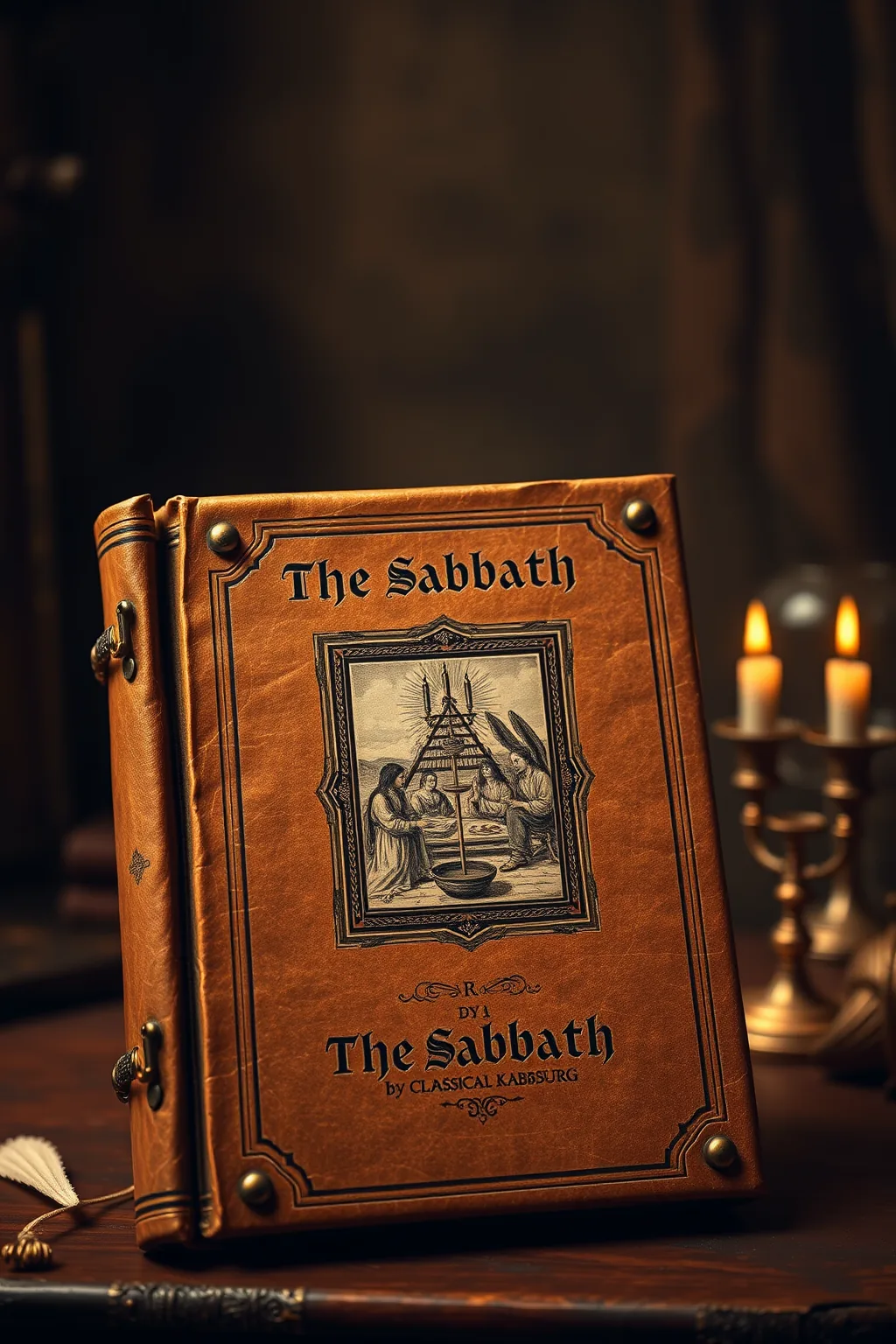
The Sabbath in the Classical Kabbalah
 61
61

The Sabbath in the Classical Kabbalah


Ophelia Vance (Mystical Literature Reviewer) — 'The Sabbath in the Classical Kabbalah' by Elliot K. Ginsburg is a luminous exposition of Shabbat's esoteric significance within the classical Kabbalistic tradition. Ginsburg masterfully navigates complex theological concepts, revealing the Sabbath as a pivotal axis of divine immanence and spiritual transformation. His analysis of scriptural and mystical texts offers profound insights into the Sabbath's role in cosmic order and human redemption. This book is a scholarly triumph, essential for anyone seeking to grasp the deeper, hidden dimensions of Jewish mysticism. It is particularly valuable for advanced students and serious practitioners of Kabbalah, offering a sophisticated yet accessible exploration of this sacred day's profound mysteries.
📝 Description
61
Elliot K. Ginsburg's 1989 book examines the Sabbath within classical Kabbalistic literature.
In 'The Sabbath in the Classical Kabbalah,' Elliot K. Ginsburg analyzes how Jewish mystics understood the Shabbat. He moves beyond the ritualistic aspects to uncover the symbolic and philosophical layers present in key Kabbalistic texts. Ginsburg shows how the Sabbath was seen not just as a day of rest but as a cosmic event, a gateway to understanding divine presence.
The book deciphers the esoteric meanings associated with Shabbat in classical Kabbalah. It connects the observance to broader themes of creation, spiritual ascent, and the manifestation of the divine within time. Ginsburg's work illuminates the intricate cosmology that elevates the Sabbath to a sacred space for mystical experience. He presents the Sabbath as a potent symbol within this mystical tradition.
This work situates the Sabbath within the specific interpretive framework of classical Kabbalah, primarily from the Zoharic period and its immediate antecedents. It focuses on the mystical exegesis of Shabbat, treating it as a central theme that reveals deeper spiritual realities. Ginsburg investigates how Kabbalistic authors conceptualized Shabbat not merely as a commandment but as a profound theological and cosmological locus, a point where the earthly and divine realms intersect.
💡 Why Read This Book?
Uncover the profound mystical dimensions of Shabbat, transcending ritual to embrace cosmic significance. This book reveals hidden Kabbalistic symbolism, offering a unique lens through which to understand creation, divine presence, and spiritual ascent. Ideal for seekers of esoteric knowledge, scholars of Jewish mysticism, and practitioners desiring a deeper connection to the sacred rhythm of the week.
⭐ Reader Reviews
Honest opinions from readers who have explored this book.
❓ Frequently Asked Questions
What is the primary focus of this book?
The primary focus is the esoteric and mystical interpretation of the Sabbath (Shabbat) within the framework of classical Kabbalah, exploring its theological, cosmological, and spiritual significance.
Who is Elliot K. Ginsburg?
Elliot K. Ginsburg is a respected scholar specializing in Jewish mysticism and Kabbalah, known for his insightful and rigorous academic work on these subjects.
Is this book suitable for beginners?
While academically rigorous, the book is accessible to dedicated beginners with an interest in Kabbalah. However, prior familiarity with basic Jewish concepts or mysticism will enhance comprehension.
What are the main Kabbalistic concepts discussed?
Key concepts include the Sefirot, divine emanations, the Malkhut (Shekhinah), the cosmic significance of Shabbat, and the spiritual ascent associated with observing the day.
How does this book relate to practical Kabbalah?
It provides the foundational theoretical and mystical understanding of Shabbat, which can inform and deepen the practical observance and meditative aspects for practitioners.
🔮 Key Themes & Symbolism
Shabbat as Cosmic Sanctuary
This theme studies the Kabbalistic understanding of Shabbat not merely as a day of rest, but as a divinely ordained cosmic sanctuary. It explores how Shabbat mirrors the divine act of creation, establishing a sacred temporal space where the universe attains its ultimate harmony and perfection. Ginsburg elucidates how the observance of Shabbat connects the individual to this cosmic order, offering a glimpse into the divine blueprint and the inherent sanctity of existence. The Sabbath becomes a microcosm of the divine presence, a moment to synchronize with the celestial rhythms and experience a profound sense of peace and spiritual renewal.
The Divine Presence (Shekhinah) and Shabbat
Central to this theme is the Kabbalistic concept of the Shekhinah, the immanent aspect of God's presence. The book explores how the Sabbath is a time when the Shekhinah is particularly palpable and accessible. Ginsburg examines the mystical union (Yichud) between God and the Shekhinah on Shabbat, and how human observance facilitates this divine embrace. The Sabbath eve, in particular, is depicted as a bridal chamber where the soul can commune with the Divine Presence, experiencing ecstatic union and receiving spiritual illumination. This theme highlights the deeply intimate and personal connection possible through dedicated Shabbat observance.
Symbolism of Shabbat in Kabbalistic Texts
This theme focuses on the body of symbols embedded within Kabbalistic literature that define the Sabbath experience. Ginsburg dissects allegorical interpretations of Shabbat's rituals, such as the lighting of candles, the challah bread, and Kiddush (sanctification), revealing their deeper mystical meanings. These symbols are presented not as mere observances, but as keys to unlocking hidden spiritual realities, representing stages of spiritual ascent, divine attributes, and the reunification of scattered sparks of divinity. Understanding this symbolic language is crucial for grasping the profound esoteric dimensions of Shabbat's observance.
💬 Memorable Quotes
Direct passages from the work, attributed to the author.
“In the silence of Shabbat, the cosmos whispers its secrets.”
— This evokes the contemplative atmosphere of Shabbat, suggesting that stillness allows one to perceive the hidden, mystical truths of the universe.
“The Shekhinah descends more fully on the Sabbath eve.”
— This highlights a key Kabbalistic belief about the intensified presence of God's immanent aspect during Shabbat, inviting deep spiritual communion.
“Each commandment of Shabbat is a rung on the ladder of ascent.”
— This emphasizes the spiritual work involved in observing Shabbat, framing each ritual as a step towards higher consciousness and divine proximity.
“Time itself becomes sacred, a vessel for the divine.”
— This points to the profound shift in perception that Shabbat offers, where temporal experience is imbued with eternal significance and divine presence.
💡 Key Ideas
Editorial paraphrase of the work's core concepts — not direct quotes.
The Sabbath is not merely a day of rest, but a gateway to the divine.
This quote expresses the book's core thesis, emphasizing Shabbat's transformative potential beyond its literal meaning, positioning it as a portal for spiritual connection.
🌙 Esoteric Significance
Tradition
This work is deeply rooted in the tradition of Classical Kabbalah, particularly the Lurianic and Zoharic schools. It explores how these mystical frameworks interpret the Sabbath not just as a religious observance but as a fundamental cosmic principle, a manifestation of divine unity and a critical juncture for spiritual communion and the rectification of the cosmos.
Symbolism
The book uncovers the profound symbolism associated with Shabbat in Kabbalistic thought. This includes the Sabbath as a bride (Kallah), representing the Shekhinah; the bread (Challah) symbolizing divine sustenance; and the wine (Kiddush) representing spiritual intoxication and union. These symbols are not mere representations but active conduits for experiencing divine presence and cosmic harmony.
Modern Relevance
In a fast-paced, secularized world, 'The Sabbath in the Classical Kabbalah' offers a compelling counter-narrative by highlighting the profound potential for spiritual renewal and deep connection inherent in the Sabbath. It provides a framework for understanding and practicing Shabbat as a conscious act of spiritual engagement, offering solace, meaning, and a pathway to deeper self-understanding and cosmic awareness for contemporary seekers.
👥 Who Should Read This Book
This book is a treasure for serious students of Jewish mysticism and Kabbalah, offering advanced insights into a central aspect of Jewish spiritual life. Scholars seeking a deeper academic understanding of Shabbat's theological and cosmological significance will find Ginsburg's meticulous research invaluable. For practitioners of Kabbalah, this work provides a profound conceptual foundation for their contemplative practices, enriching their experience of Shabbat. Even dedicated beginners with a strong interest in esoteric Judaism will find much to illuminate their path, though some foundational knowledge is recommended.
📜 Historical Context
Written during a period of intense scholarly interest in Jewish mysticism, 'The Sabbath in the Classical Kabbalah' emerges from a rich academic tradition that sought to understand and disseminate the complex teachings of Kabbalah. The late 20th century saw a burgeoning global appreciation for esoteric traditions, with scholars like Ginsburg playing a central role in making these ancient texts accessible and relevant. The book's focus on classical Kabbalah, particularly the Zoharic tradition and its antecedents, places it within a lineage of critical engagement with foundational Kabbalistic works. This era provided fertile ground for re-examining the spiritual and philosophical dimensions of Jewish practice, moving beyond purely historical or textual analysis to explore the lived, mystical experience.
📔 Journal Prompts
How does the concept of Shabbat as a 'cosmic sanctuary' resonate with your personal sense of sacred space or time?
Reflect on a moment when you felt a profound sense of divine presence. How does this relate to the Kabbalistic idea of the Shekhinah on Shabbat?
What symbols from your own life or cultural background hold deep spiritual meaning for you, similar to the Kabbalistic symbols of Shabbat?
Consider the idea of 'time becoming sacred.' How can you consciously imbue your own weekdays with a greater sense of sacredness?
If Shabbat is a 'gateway to the divine,' what intentions or preparations would best position you to walk through that gateway?
🗂️ Glossary
Kabbalah
A system of Jewish mysticism that explores the divine nature and the creation of the universe through esoteric interpretations of the Torah and symbolic meditations.
Shabbat
The Jewish Sabbath, observed from Friday sunset to Saturday sunset, as a day of rest, spiritual reflection, and communion with God.
Shekhinah
The immanent aspect of the divine presence of God, often understood as the feminine, nurturing, and indwelling presence.
Sefirot
Ten divine emanations or attributes through which God manifests and interacts with the created universe in Kabbalistic cosmology.
Yichud
A Kabbalistic concept referring to a mystical union or spiritual intimacy, often between God and the Shekhinah, or between the practitioner and the divine.
This book appears in 1 collection
🔮 Readers Also Liked
Browse all →









From the “Kabbalah” Collection
View all →









More Free Kabbalah & Jewish Mysticism Books
View all →