Tragedy of the Templars

 72
72

Tragedy of the Templars
Michael Haag’s "Tragedy of the Templars" offers a critical examination of the Templar mythos, moving past sensationalism to dissect the historical roots of their enduring mystique. Haag excels in tracing the evolution of the Templar legend from the order's 12th-century origins through its violent suppression in the early 14th century and into the subsequent centuries of esoteric interpretation. A particular strength is the meticulous dissection of the accusations brought against the Templars by Philip IV of France, highlighting the political machinations involved. However, the work sometimes struggles to maintain a consistent focus, occasionally drifting into tangents that, while interesting, dilute the central argument about the 'tragedy' of their historical fate versus their mythic afterlife. The book effectively demonstrates how historical events become malleable in the hands of legend-makers. Ultimately, Haag provides a sober, well-researched account that challenges uncritical acceptance of Templar lore.
📝 Description
72
Michael Haag's 2014 book revisits the historical narrative and enduring mystique of the Knights Templar.
Published in 2014, Michael Haag's "Tragedy of the Templars" examines the historical account and lasting allure of the Knights Templar. The book moves past simple chronicles to look at the persistent legends and esoteric interpretations that have attached themselves to this medieval military order. It scrutinizes the accusations of heresy and idolatry leveled against the Templars and the order's dissolution in the early 14th century, particularly the trials begun by Philip IV of France.
The narrative unfolds against the backdrop of the late medieval period, a time of significant religious and political upheaval in Europe. The suppression of the Templars in 1312, following their arrest in 1307, was a major event, showing the power of secular rulers over influential religious orders. Haag revisits this period, considering the political motives of Philip IV and Pope Clement V. The book also acknowledges the growing body of literature from the 18th century onward that began to attribute secret knowledge and mystical purposes to the Templars, often connecting them to Freemasonry and Gnosticism.
Haag's work engages with the persistent esoteric traditions surrounding the Knights Templar, which gained traction from the 18th century. These traditions often link the order to secret knowledge, Gnosticism, and Freemasonry, suggesting a survival or hidden influence beyond their historical suppression. The book examines how these mystical interpretations developed and became attached to the historical events of the Templars' downfall, placing it within the broader study of Western esotericism and the construction of secret society narratives.
💡 Why Read This Book?
• Understand the historical reality versus the legend of the Knights Templar, learning how their 1312 dissolution by Pope Clement V fueled centuries of speculation. • Gain insight into the political machinations of Philip IV of France and his role in the Templars' downfall, appreciating the historical context of their accusations. • Explore the evolution of esoteric interpretations of the Templars, seeing how they became archetypes in later mystical traditions beyond their medieval function.
⭐ Reader Reviews
Honest opinions from readers who have explored this book.
❓ Frequently Asked Questions
When were the Knights Templar officially suppressed?
The Knights Templar were officially suppressed by Pope Clement V in 1312, following a series of arrests and trials initiated in 1307 under the direction of King Philip IV of France.
What were the main accusations against the Templars?
The Templars faced accusations of heresy, idolatry (worshiping an idol named Baphomet), spitting on the cross, and engaging in homosexual rites. These charges were largely fabricated or exaggerated for political ends.
How did the Templars influence later esoteric traditions?
After their suppression, the Templars became figures of myth, associated with secret knowledge, Gnosticism, and later, Freemasonry. Their alleged survival and hidden wisdom became central themes in various occult movements.
Who was responsible for initiating the crackdown on the Templars?
King Philip IV of France was the primary instigator of the crackdown on the Templars, driven by his need for money and desire to consolidate royal power.
What is the significance of the year 1307 in Templar history?
The year 1307 is significant because it marks the date, October 13th, when King Philip IV of France ordered the mass arrest of Templars throughout his kingdom, initiating the trials that led to their dissolution.
Does 'Tragedy of the Templars' present the Templars as a genuine secret society?
Michael Haag's work aims to critically examine the historical narrative and the subsequent esoteric interpretations, rather than presenting the Templars as a definitively proven secret society in the modern sense.
🔮 Key Themes & Symbolism
The Templar Mythos
This theme centers on how the historical Knights Templar, a powerful medieval military order, transformed into figures of legend and conspiracy after their suppression in 1312. Haag explores the shift from their documented roles as crusaders and financiers to their later association with secret knowledge, Gnosticism, and Freemasonry. The work examines the fertile ground provided by their wealth, secrecy, and dramatic downfall for the creation of enduring narratives that far outstrip their historical reality.
Accusations and Heresy
A core concept is the nature of the accusations leveled against the Templars, particularly by Philip IV of France starting in 1307. Haag scrutinizes charges of heresy, blasphemy, and idolatry (like the supposed worship of Baphomet), positioning them within the political and religious climate of the era. This theme explores how accusations of heresy were wielded as tools of power and how the 'heretical' label became a catalyst for the order's destruction and subsequent mystique.
Power, Politics, and Suppression
This theme examines the interplay between secular power, papal authority, and the Templars' immense influence. The book details how King Philip IV's financial desperation and political ambitions led to the orchestrated crackdown on the order. It highlights the controversial dissolution in 1312 by Pope Clement V, illustrating how political expediency could override established religious structures and leading to the 'tragedy' of their dissolution.
Esoteric Legacy and Symbolism
The work traces the Templars' adoption into various esoteric traditions. It investigates how their history and purported secrets became symbolic of lost wisdom, spiritual initiation, and hidden lineages. This theme explores the connections drawn between the Templars and groups like the Rosicrucians and Freemasons, analyzing the symbolic weight they carry in Western esotericism as archetypes of a hidden, ancient knowledge.
💬 Memorable Quotes
Direct passages from the work, attributed to the author.
“The accusations against the Templars were a political fabrication.”
— This interpretation suggests that the charges of heresy and blasphemy leveled against the Knights Templar, particularly after their arrests in 1307, were not based on genuine wrongdoing but were manufactured by King Philip IV of France to seize their wealth and power.
“The Templars' end in 1312 marked a beginning for their legend.”
— This highlights the paradoxical nature of the Templars' suppression. While their historical order was dissolved, their dramatic demise and the mysteries surrounding them provided fertile ground for myth-making, leading to their 'rebirth' in esoteric traditions and popular imagination.
“Philip IV desired the Templars' wealth and sought to dismantle their power.”
— This statement points to the tangible motivations behind the crackdown initiated by the French king. It emphasizes that the dissolution of the Templar Order was driven by economic and political considerations rather than legitimate religious concerns.
“The myth of the Templars overshadowed their historical reality.”
— This reflects on how the enduring legends, conspiracies, and esoteric interpretations associated with the Knights Templar have often eclipsed or distorted the factual history of their military and financial activities during the Crusades and medieval period.
“Baphomet became a symbol linked to Templar heresy.”
— This refers to the infamous idol, Baphomet, which was central to the accusations of blasphemy and idolatry during the Templar trials starting in 1307. The association, though historically dubious, became a potent element in the lore surrounding their alleged secret rites.
🌙 Esoteric Significance
Tradition
The work engages with the Western esoteric tradition, particularly its fascination with medieval chivalric orders and perceived secret societies. While not strictly a manual of a specific lineage, it examines how the Templars became archetypes within Hermeticism, Gnosticism, and especially Freemasonry. Haag positions the Templar narrative as a key component in the construction of esoteric histories that seek ancient origins and hidden streams of wisdom, often contrasting with mainstream religious and historical accounts.
Symbolism
Key symbols explored include the Templar Cross, representing both their martial identity and later esoteric affiliations, and the enigmatic figure of Baphomet, which became a focal point for accusations of heresy and secret rites during their suppression. The 'lost treasure' or 'hidden knowledge' attributed to the Templars also functions symbolically, representing a secret spiritual or initiatory tradition that adherents believe was passed down through clandestine channels following the order's demise.
Modern Relevance
The Templar narrative continues to resonate in contemporary esoteric thought and popular culture. Modern groups, from certain Masonic rites (like the Knights Templar degrees) to New Age interpretations and conspiracy theories, draw upon the legend. Thinkers exploring secret history, alternative spiritualities, and the psychology of myth often reference the Templars as a potent symbol of hidden power, persecuted wisdom, and enduring mystery in the modern spiritual landscape.
👥 Who Should Read This Book
• Researchers of medieval history seeking to understand the historical context of the Knights Templar's suppression in 1312 and the political forces at play. • Enthusiasts of Western esotericism interested in tracing the origins of myths surrounding secret societies and their influence on traditions like Freemasonry. • Readers curious about how historical events, like the 1307 arrests, become foundational elements for enduring conspiracy theories and occult lore.
📜 Historical Context
Published in 2014, Michael Haag's "Tragedy of the Templars" engages with a long-standing historical debate that gained significant traction from the 18th century onwards. The medieval period itself, particularly the era of the Crusades and the subsequent political consolidation in Europe, forms the initial backdrop. The critical turning point was the orchestrated suppression of the Knights Templar, beginning with mass arrests on Friday, October 13, 1307, and culminating in their official dissolution by Pope Clement V in 1312. This event was a dramatic assertion of royal power by Philip IV of France over a formidable international order. Contemporaries like Dante Alighieri, though not directly addressing the Templars' fate, lived in an era grappling with the evolving relationship between church and state. Later, figures such as the Comte de Saint-Germain and various Masonic writers in the 18th and 19th centuries would actively combine the Templars into esoteric lineages, often placing them in opposition to established religious orthodoxy and presenting them as custodians of secret knowledge.
📔 Journal Prompts
The political motivations behind Philip IV's actions against the Templars.
The evolution of the Baphomet accusation from 1307 to modern interpretations.
The Templars' role as archetypes of lost knowledge in esoteric traditions.
How historical suppression can fuel enduring legends.
Comparing the 1312 dissolution narrative with later esoteric claims.
🗂️ Glossary
Knights Templar
A Catholic military order founded around 1119, active during the Crusades, known for its military prowess, financial activities, and eventual suppression in the early 14th century.
Philip IV of France
King of France from 1285 to 1314, known for his consolidation of royal power and his instrumental role in initiating the suppression and trials of the Knights Templar starting in 1307.
Pope Clement V
The Pope who, under pressure from Philip IV, officially dissolved the Knights Templar in 1312, marking the end of the order's historical existence.
Baphomet
A symbolic figure, often depicted as a goat-headed idol, which became a central element in the accusations of heresy and blasphemy during the trials of the Knights Templar beginning in 1307.
Heresy
A belief or theory that is strongly at variance with established beliefs or conventions, particularly the dogma of a church. In the context of the Templars, it was a charge used to justify their persecution.
Esotericism
Belief systems, practices, and traditions that are concerned with 'inner' knowledge or spiritual realization, often contrasted with exoteric (outward, public) doctrines.
Freemasonry
A fraternal organization that emerged in the late 16th to early 17th centuries, whose lore often incorporates elements from chivalric orders and medieval guilds, including significant Templar themes.
🔮 Readers Also Liked
Browse all →








More by Michael Haag
All books →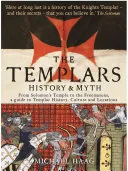


More Free Occult Philosophy Books
View all →