The I Ching and you
 75
75

The I Ching and you
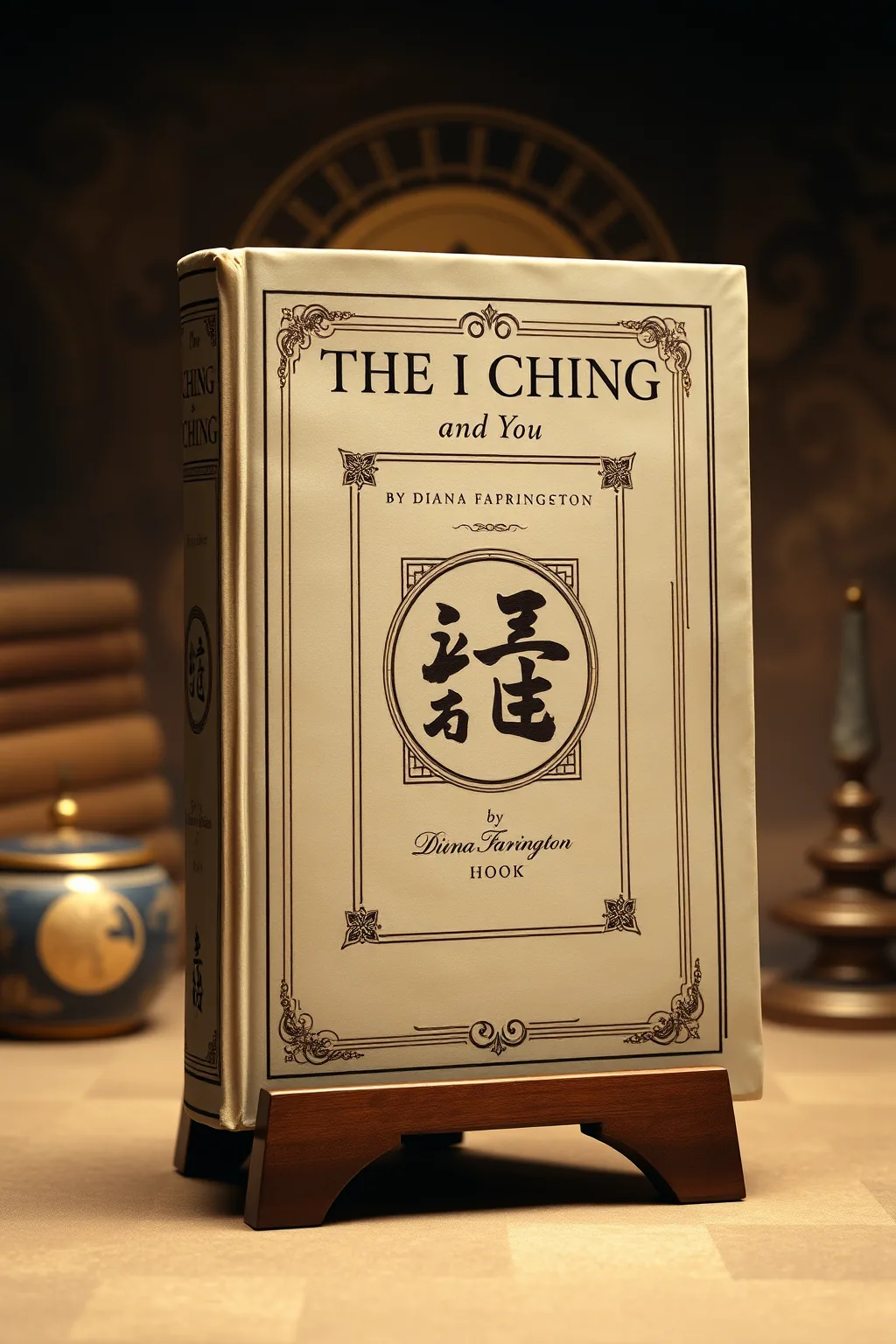
Diana Ffarington Hook's "The I Ching and You" attempts a challenging task: making the profound complexities of the Book of Changes accessible to a contemporary Western reader. The book's strength lies in its methodical breakdown of the hexagram structure, moving from the binary lines to the thirty-two trigrams and then the sixty-four hexagrams. Hook avoids the sensationalism that often plagues such guides, presenting the I Ching as a tool for introspection rather than mere fortune-telling. However, the work sometimes feels overly didactic, sacrificing the poetic and intuitive spirit of the oracle for a more academic, step-by-step approach. The section on the "King Wen sequence" offers a particularly concrete way to understand the hexagrams' progression, but could benefit from deeper exploration of the symbolic narratives within each hexagram. Overall, it's a functional introduction, though it may leave seasoned practitioners seeking more nuance.
📝 Description
75
Diana Ffarington Hook's 1988 book guides Westerners through the I Ching.
The I Ching and You aims to make the ancient Chinese oracle accessible to a Western readership. Hook breaks down the hexagram system and its philosophical basis, demystifying the process of consulting the Book of Changes for personal and spiritual guidance. The book presents the hexagrams not just as tools for divination, but as a framework for understanding universal patterns and human experience.
This work is for individuals interested in Eastern philosophy and divination, especially those new to the I Ching. It suits readers seeking practical methods for self-reflection and decision-making within an established esoteric system. Those curious about how ancient wisdom traditions can inform modern life will find value here. It will also appeal to students of comparative religion or those interested in Jungian psychology's exploration of archetypes.
Published in 1988, this book arrived during a period of heightened Western interest in Eastern spiritual traditions. It follows a trend of making complex philosophies like the I Ching understandable to a new audience. The work draws on earlier interpretations, seeking to connect traditional Chinese thought with the modern spiritual seeker. It acknowledges the psychological dimensions explored by figures like Carl Jung.
💡 Why Read This Book?
• Gain practical methods for interpreting the I Ching's sixty-four hexagrams, moving beyond rote memorization to understanding their symbolic language, as presented in Hook's structured approach. • Learn to apply the I Ching's principles to personal decision-making by understanding how the binary system of yin and yang lines builds into complex hexagrams, offering guidance for contemporary challenges. • Explore the historical context of the I Ching's Western reception, appreciating its role alongside other esoteric traditions that gained traction in the late 20th century, as detailed in the book's background.
⭐ Reader Reviews
Honest opinions from readers who have explored this book.
❓ Frequently Asked Questions
What is the I Ching and how does "The I Ching and You" explain it?
The I Ching, or Book of Changes, is an ancient Chinese divination text. Hook's book explains it as a system of sixty-four hexagrams, each formed by six yin (broken) or yang (unbroken) lines, used for self-reflection and guidance on life's situations.
When was "The I Ching and You" first published?
"The I Ching and You" by Diana Ffarington Hook was first published in 1988, placing it within a period of increased Western interest in Eastern esoteric traditions.
Is "The I Ching and You" suitable for beginners?
Yes, the book is designed for those new to the I Ching, offering a structured approach to understanding its hexagrams and their meanings, making it accessible for beginners interested in divination and philosophy.
What are the core components of the I Ching system as described by Hook?
Hook details the foundational elements: the yin and yang lines, the trigrams formed by three lines, and the sixty-four hexagrams created by combining two trigrams. She also covers associated judgments and imagery.
Does the book discuss the philosophical underpinnings of the I Ching?
Yes, the work explores the philosophical aspects, presenting the I Ching not just as a divinatory tool but as a framework for understanding cosmic patterns and human experience, rooted in Taoist principles.
What is the King Wen sequence mentioned in relation to the I Ching?
The King Wen sequence is a specific ordering of the sixty-four hexagrams, traditionally attributed to King Wen. Hook's book explores this sequence as a way to understand the progression and interrelation of the hexagrams.
🔮 Key Themes & Symbolism
Hexagram Structure and Interpretation
The book meticulously details the construction of the I Ching's hexagrams, starting with the fundamental yin (broken) and yang (unbroken) lines. It explains how these combine to form trigrams and subsequently the sixty-four hexagrams. Hook emphasizes understanding the specific 'judgment' and 'image' associated with each hexagram, positioning them as keys to unlocking the oracle's counsel for specific situations. The approach stresses methodical analysis of the hexagram's components to derive practical insights.
Divination as Self-Reflection
Central to Hook's interpretation is the I Ching's function as a mirror for the querent's inner state and external circumstances. The work advocates for using the oracle not for predicting fixed futures but for gaining awareness of present dynamics and potential outcomes. By consulting the hexagrams, readers are encouraged to foster a more conscious relationship with their decisions, understanding the underlying currents influencing their path.
Bridging Eastern and Western Thought
Published in 1988, "The I Ching and You" reflects a broader cultural interest in integrating Eastern wisdom traditions into Western life. Hook's work aims to translate the abstract philosophical concepts of the I Ching, rooted in Taoism, into a framework understandable to a Western audience. It positions the oracle as a tool that can inform personal growth and spiritual inquiry, fitting into the esoteric field of the late 20th century.
The King Wen Sequence
The book engages with the traditional ordering of the sixty-four hexagrams known as the King Wen sequence. This method presents a narrative flow, suggesting a cyclical progression and interconnectedness among the hexagrams. Hook uses this sequence to illustrate how one hexagram may evolve into another, providing a dynamic perspective on change and transformation, and offering a deeper understanding of the oracle's evolving wisdom.
💬 Memorable Quotes
Direct passages from the work, attributed to the author.
“The sixty-four hexagrams are not arbitrary symbols but represent fundamental patterns of change.”
— This statement highlights the core premise of the I Ching as presented by Hook: that the oracle's structure reflects universal dynamics. It suggests that understanding these patterns can offer clear insights into the nature of reality and personal circumstances.
“Consulting the I Ching is an act of dialogue with the deeper self and the cosmic order.”
— This interpretation emphasizes the introspective and spiritual nature of using the I Ching. It frames the practice as a conversation, encouraging self-awareness and a connection to larger universal forces rather than simple fortune-telling.
“Each line within a hexagram possesses its own significance, contributing to the overall message.”
— This points to the detailed nature of I Ching interpretation. It suggests that a comprehensive understanding requires examining not just the complete hexagram but also the specific meaning and position of each individual yin or yang line.
“The I Ching offers guidance, not rigid predictions; it illuminates possibilities.”
— This captures the book's approach to divination, framing it as a tool for empowerment and informed choice. The emphasis is on understanding potential paths and making conscious decisions, rather than passively receiving predetermined outcomes.
“Understanding the trigrams is essential for grasping the complexity of the hexagrams.”
— This highlights the foundational importance of the trigrams (three-line figures) in the I Ching system. Hook suggests that mastering these simpler elements is a necessary prerequisite for comprehending the more complex sixty-four hexagrams.
🌙 Esoteric Significance
Tradition
The I Ching is a foundational text within Taoist philosophy, but its influence extends across various East Asian spiritual and philosophical traditions. Hook's work bridges this to Western esoteric interests, particularly those exploring divination, synchronicity, and archetypal psychology, influenced by Jung. It fits within a broader late 20th-century trend of Western esotericism seeking to incorporate and reinterpret Eastern systems.
Symbolism
Key symbols include the yin (broken) and yang (unbroken) lines, representing dualistic forces fundamental to Taoist cosmology. These combine to form trigrams (e.g., Heaven, Earth, Fire, Water) and ultimately the sixty-four hexagrams, each carrying unique imagery and judgments that symbolize specific archetypal situations and transformations.
Modern Relevance
Contemporary practitioners of Western esoteric traditions, particularly those interested in divination, comparative mythology, and archetypal psychology, continue to draw on the I Ching. Its principles of change, balance, and interconnectedness remain relevant in fields like mindfulness, coaching, and systems thinking, with Hook's work offering a foundational entry point.
👥 Who Should Read This Book
• Individuals new to the I Ching seeking a clear, structured introduction to its hexagram system and methods of consultation. • Students of comparative religion or philosophy interested in the practical application of ancient Chinese wisdom in modern life. • Seekers of personal insight and decision-making tools who are drawn to esoteric practices beyond Western traditions.
📜 Historical Context
Diana Ffarington Hook's "The I Ching and You" emerged in 1988, a period marked by a surge in Western engagement with Eastern philosophies and esoteric practices. Following the counter-cultural movements of the 1960s and 70s, and influenced by Carl Jung's explorations of the I Ching's psychological archetypes, many authors sought to make ancient texts accessible. The book arrived during a time when works on Tarot, astrology, and various forms of divination were popular. It positioned itself within this milieu, offering a structured approach to the I Ching that contrasted with more mystical or purely academic translations. While figures like Richard Wilhelm had introduced the I Ching earlier in the century, the late 80s saw a demand for more practical, self-help oriented guides. The book likely found an audience among those exploring alternative spiritual paths, seeking tools for personal growth and insight beyond conventional Western thought.
📔 Journal Prompts
The concept of yin and yang lines within a hexagram.
The symbolic imagery of a specific hexagram encountered during a reading.
How the King Wen sequence illustrates the flow of change.
The application of a hexagram's judgment to a current life situation.
The relationship between the I Ching's counsel and personal intuition.
🗂️ Glossary
I Ching
Literally 'Book of Changes,' an ancient Chinese text used for divination and as a philosophical guide, consisting of sixty-four hexagrams.
Hexagram
A figure composed of six stacked horizontal lines, each line being either solid (yang) or broken (yin). There are sixty-four unique hexagrams.
Trigram
A figure composed of three stacked horizontal lines, either solid or broken. There are eight basic trigrams, which combine to form the hexagrams.
Yin
In the I Ching, represented by a broken line (-- --). It symbolizes passive, receptive, dark, and feminine energies.
Yang
In the I Ching, represented by a solid line (------). It symbolizes active, creative, light, and masculine energies.
Judgment
The textual commentary associated with each hexagram, offering advice or a general assessment of the situation represented.
King Wen Sequence
A traditional ordering of the sixty-four hexagrams, believed to show a progression or cycle of change and development.
🔮 Readers Also Liked
Browse all →








More by Diana Ffarington Hook
All books →




More Free Occult Philosophy Books
View all →