The Gnostic Gospels Ultimate Collection - LARGE PRINT

 77
77

The Gnostic Gospels Ultimate Collection - LARGE PRINT
Rush Nilson’s "The Gnostic Gospels Ultimate Collection - LARGE PRINT" offers an extensive compilation that genuinely expands the reader's understanding of early Christian diversity. The sheer breadth of texts, over thirty in total, is its most significant asset, bringing together voices often relegated to footnotes or apocrypha. I found the inclusion of The Gospel of Mary particularly compelling, offering a perspective on discipleship and spiritual authority that is notably absent from the canonical texts. The scholarly precision mentioned in the blurb is evident in the selection and presentation, allowing for a direct engagement with these ancient writings. However, the 'large print' aspect, while beneficial for accessibility, sometimes feels like the primary innovation rather than a deeper scholarly contribution. A more robust introductory apparatus, perhaps offering more detailed textual analysis or comparative notes between texts, would have elevated this collection from a substantial anthology to an indispensable scholarly tool. Nevertheless, for readers seeking direct access to a wide array of Gnostic and apocryphal Gospels, this collection provides a valuable and comprehensive resource.
📝 Description
77
Rush Nilson's "The Gnostic Gospels Ultimate Collection" gathers over thirty Gnostic and apocryphal texts.
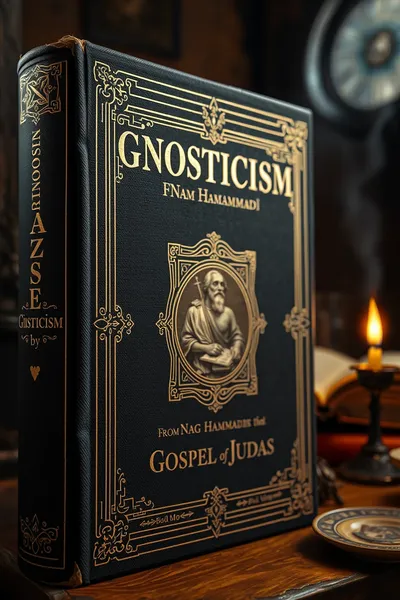
This volume compiles more than thirty Gnostic and apocryphal texts, aiming to bring early Christian writings outside the standard canon to a wider audience. It includes works like The Gospel of Mary, The Gospel of Thomas, and The Gospel of Judas, giving readers direct access to theological ideas and stories that were often suppressed. These texts offer a different perspective on the early Christian movement and its development.
The collection is intended for anyone interested in early Christian heterodox literature. Its large-print format ensures comfortable reading for all users. Scholars, students of religion, and those curious about the historical Jesus and the varied beliefs of early Christianity will find this compilation valuable. It allows engagement with primary sources that exist beyond the New Testament.
The texts originate from the 2nd and 3rd centuries CE, a period of significant theological discussion and scripture formation. As the New Testament canon was being finalized, many other Gospels, Acts, and apocalypses circulated, presenting alternative views on Jesus' teachings and identity. Works such as the Gospel of Thomas contain sayings of Jesus that contrast with or add to those in the canonical Gospels, revealing a vibrant intellectual and spiritual environment.
These texts belong to the Gnostic tradition, a diverse set of early Christian and philosophical movements active in the 2nd and 3rd centuries. Gnosticism generally emphasizes gnosis, a direct, intuitive knowledge of the divine, as the path to liberation from the material world. Gnostics often viewed the creator god of the Old Testament as a lesser, ignorant being, distinct from the true, transcendent God. They saw humanity as containing a divine spark trapped within the material body, needing awakening through spiritual knowledge to return to its divine origin. This collection provides primary source material for understanding these complex theological and cosmological ideas.
💡 Why Read This Book?
• Gain direct access to over thirty Gnostic and apocryphal texts, including the Gospel of Mary, allowing for a firsthand encounter with early Christian perspectives beyond the New Testament canon, as presented in this 2025 collection. • Understand the historical context of the 2nd and 3rd centuries CE by engaging with alternative Christian narratives that competed with proto-orthodox doctrines, revealing the dynamic intellectual landscape of nascent Christianity. • Explore Gnostic concepts such as Sophia and gnosis through primary sources like The Gospel of Thomas, offering a unique lens on spiritual knowledge and salvation distinct from later dogmatic formulations.
⭐ Reader Reviews
Honest opinions from readers who have explored this book.
❓ Frequently Asked Questions
What specific Gnostic Gospels are included in this collection?
This collection features over thirty Gnostic and apocryphal texts, prominently including The Gospel of Mary, The Gospel of Thomas, and The Gospel of Judas, among many others, offering a broad spectrum of early Christian writings.
Is this book suitable for academic study?
Yes, the collection's scholarly precision in presenting over thirty Gnostic and apocryphal texts makes it a valuable resource for academic study of early Christianity and comparative religion.
What is the main advantage of the 'LARGE PRINT' edition?
The 'LARGE PRINT' format is specifically designed to enhance readability, making the extensive collection of over thirty Gnostic and apocryphal texts more accessible to a wider audience, including those who prefer or require larger font sizes.
When was the first edition of this collection published?
The first publication date for this compilation by Rush Nilson is listed as October 26, 2025.
What is 'gnosis' as referenced in Gnostic texts?
Gnosis refers to spiritual knowledge or insight, often understood in Gnostic traditions as a direct, intuitive understanding of divine truths, essential for salvation and liberation from the material world.
Are these texts considered canonical by mainstream Christianity?
No, the Gnostic and apocryphal texts included in this collection are generally not part of the accepted canon of mainstream Christian denominations, representing alternative theological streams from early Christianity.
🔮 Key Themes & Symbolism
Alternative Christologies
The collection examines various portrayals of Jesus Christ that diverge from orthodox interpretations. Texts like The Gospel of Thomas present Jesus primarily as a dispenser of esoteric sayings, emphasizing intellectual and spiritual understanding rather than a purely salvific sacrifice. This challenges the traditional dual nature of Christ, offering insights into how early communities perceived his divine and human roles differently, reflecting a more fluid understanding of the divine in the 2nd century CE.
The Role of Sophia
Several texts within the Gnostic tradition, often featured in such collections, place significant emphasis on Sophia, or Wisdom. Her fall and subsequent desire to create or emanate beings without a higher spiritual partner is a common motif. This narrative explains the origin of the material world and the entrapment of divine sparks within it. The Gospel of Mary, for instance, features Mary Magdalene as a recipient of special revelations from the Savior, positioning her as a key figure in understanding these complex cosmological schemes.
Gnosis and Salvation
A central theme across many Gnostic writings is the concept of gnosis, or direct spiritual knowledge. Salvation is not achieved through faith or works alone, but through acquiring this liberating insight into one's true divine origin and the nature of reality. This collection allows readers to trace the development of this idea, seeing how texts like The Gospel of Judas present Judas Iscariot not as a betrayer, but as a privileged confidant who understood Jesus' true mission, a narrative deeply tied to the pursuit of gnosis.
Dualism and the Material World
Many of the included texts operate within a dualistic framework, positing a fundamental opposition between the spiritual realm (good, true) and the material realm (flawed, illusory). The creator God of the Old Testament is often depicted as an inferior, ignorant demiurge. This perspective provides a framework for understanding suffering and evil as inherent to the material existence, from which the divine spark within humanity seeks escape through gnosis, a perspective prevalent in the 2nd and 3rd centuries.
💬 Memorable Quotes
Direct passages from the work, attributed to the author.
“Let him who seeks not cease seeking until he finds. When he finds, he will be troubled. When he is troubled, he will marvel, and he will reign over all.”
— This saying, often attributed to the Gospel of Thomas, captures the Gnostic pursuit of knowledge. It suggests that the path to spiritual enlightenment is arduous and transformative, involving initial distress before achieving a state of elevated understanding and authority over oneself and circumstances.
“And the savior answered and said to my brethren: 'What is it that has been hidden from you, that you have asked me and I have revealed it to you?'”
— This highlights the savior's role as a revealer of hidden truths in Gnostic thought. The emphasis is on secrets and divine knowledge that are specifically imparted to a select group, underscoring the importance of special revelation and direct instruction in achieving salvation.
“He who has not known the world has not known anything. But he who has known the world has found the body, and this [body] is against me.”
— This paradoxical statement from the Gospel of Thomas suggests a complex relationship with the material world. While knowledge of the world is necessary, it is also presented as an obstacle or adversary to the spiritual self, reflecting the Gnostic tension between embodiment and transcendence.
“But Judas said, 'I know who you are and from where you have come. You have come from the immortal field of Pleroma, and I am not worthy to anyone among us who is not worthy of you.'”
— This interpretation of Judas's role, found in texts like the Gospel of Judas, reframes him as one who possesses clear insights into Jesus's true divine nature and origin, distinguishing him from those who misunderstand or reject him. It aligns with Gnostic themes of hidden knowledge and spiritual discernment.
💡 Key Ideas
Editorial paraphrase of the work's core concepts — not direct quotes.
Jesus said, 'Simon Peter said to him: Mary is worthy of this, because you love her more than all the women. Tell her what we do not know, so that we may not exist.'
This passage from the Gospel of Mary highlights the special relationship between Jesus and Mary Magdalene, and her perceived spiritual authority. It suggests she possesses knowledge or insights that the male disciples lack, positioning her as a crucial conduit for divine revelation within early Christian communities.
🌙 Esoteric Significance
Tradition
This collection directly engages with the Gnostic tradition, a diverse set of religious movements prominent in the early centuries CE, often considered a precursor to or parallel stream within esoteric Christianity. It departs from later esoteric systems like Hermeticism or Kabbalah by focusing on specific interpretations of Jesus Christ and early Christian cosmology, emphasizing divine knowledge (gnosis) as the primary path to liberation from a flawed material existence.
Symbolism
Key symbols include Sophia (Wisdom), often depicted as a fallen divine being whose emanations lead to the creation of the material world and the entrapment of spirit. The Pleroma represents the fullness of the divine realm, the ultimate origin from which beings like Christ descend. The 'spark' of the divine within humanity symbolizes the trapped divine essence, seeking release through gnosis, a motif central to understanding the Gnostic view of the human condition.
Modern Relevance
Contemporary esoteric thinkers and spiritual seekers continue to draw inspiration from Gnostic texts. Modern interpretations often focus on the psychological and philosophical implications of Gnostic dualism, the emphasis on inner knowing, and the figure of Mary Magdalene as an empowered spiritual teacher. Schools of thought exploring consciousness, alternative spirituality, and even certain branches of Jungian psychology find resonance in the Gnostic quest for self-knowledge and liberation from mundane constraints.
👥 Who Should Read This Book
• Students of comparative religion and early Christianity: This collection offers direct access to over thirty primary texts that illuminate the diversity of belief systems present in the 2nd and 3rd centuries CE, beyond the canonical scriptures. • Seekers of alternative spiritual narratives: Individuals interested in esoteric traditions and non-orthodox interpretations of religious history will find profound explorations of gnosis, dualism, and unique Christologies. • Readers requiring accessible texts: The large-print format makes this extensive anthology of Gnostic and apocryphal Gospels particularly suitable for those who benefit from larger font sizes for comfortable and extended reading.
📜 Historical Context
The Gnostic Gospels Ultimate Collection emerges from a period of intense intellectual and spiritual ferment in the 2nd and 3rd centuries CE. As Christianity began to solidify its doctrines and canon, a diverse array of alternative interpretations flourished. These texts represent a spectrum of beliefs that often challenged the emerging proto-orthodox consensus. Key figures like Irenaeus of Lyons, writing around 170 CE, actively debated and denounced many Gnostic ideas, highlighting the contentious reception of these writings. This era also saw the rise of influential Christian thinkers such as Valentinus, whose Gnostic system profoundly shaped theological discourse. The circulation of these Gospels alongside canonical scriptures demonstrates a vibrant, contested landscape where different understandings of Christ, salvation, and the nature of reality vied for influence, a stark contrast to the more uniform Christianity that would later prevail.
📔 Journal Prompts
The concept of Sophia's fall and its consequences.
Jesus's sayings in The Gospel of Thomas and their implications for inner authority.
Mary Magdalene's role as a recipient of divine revelation.
The meaning of gnosis as presented in these diverse texts.
The dualistic worldview and its impact on understanding the material world.
🗂️ Glossary
Gnosis
Greek for 'knowledge,' referring in Gnostic contexts to intuitive, spiritual knowledge or insight essential for salvation and liberation from the material world.
Apocrypha
Texts, typically religious, that are not part of the accepted canon of scripture but are often considered to have historical or theological value.
Demiurge
In Gnosticism, a lesser divine being, often identified with the God of the Old Testament, who created the material universe, which is seen as flawed or evil.
Pleroma
The totality of divine powers and emanations, the spiritual fullness or realm from which God and spiritual beings originate in Gnostic cosmology.
Sophia
Greek for 'Wisdom,' a key figure in Gnostic cosmology, often depicted as a divine being whose fall or error led to the creation of the material world.
Apophthegmata
Short, pithy sayings or maxims, particularly those attributed to Jesus in texts like the Gospel of Thomas.
Aeon
In Gnostic cosmology, a divine being or power that emanates from the supreme God and plays a role in the creation and spiritual order of the universe.
This book appears in 1 collection
🔮 Readers Also Liked
Browse all →

![The Byrhtferth's Manuscript (MS 17) † Saint John’s College † Oxford † [1111]](/img/thumb/the-byrhtferth-s-manuscript-ms-17-saint-john-s-college-oxford-1111-the-monk-byrhtferth.webp)







From the “Gnostic Gospels” Collection
View all →








More Free Sacred Texts & Gnosticism Books
View all →