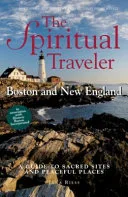
The Spiritual Traveler
 76
76

The Spiritual Traveler
Jana Riess's The Spiritual Traveler, originally published in 2002, offers a remarkably thorough guide to New England's spiritual geography. Its strength lies in its sheer scope, cataloging not just major denominations but also smaller, less visible communities and retreat centers. The inclusion of introductory chapters on regional spiritual history and sacred architecture elevates it beyond a mere listing. However, as with any directory, its utility is inherently tied to the accuracy of its information, which may require updates given the passage of time. A particularly useful section details the architectural differences between a Quaker meeting house and a Buddhist stupa, offering immediate visual cues for identification. It serves as a solid foundational resource for exploring the area's faith landscape.
📝 Description
76
Published in 2002, The Spiritual Traveler maps New England's sacred sites and faith communities.
This guidebook serves as a directory for locating sacred sites and religious communities throughout New England. First released in 2002, it meticulously lists hundreds of diverse locations. These include Christian churches, Jewish synagogues, Islamic mosques, Quaker meeting houses, Buddhist centers, Hindu temples, Sikh gurdwaras, and various retreat centers. The book offers practical information for individuals seeking to visit or engage with these spiritual centers.
Beyond its directory function, The Spiritual Traveler places these sites within the broader spiritual history of New England. Introductory chapters examine the evolution of faith in the region, from early Puritan settlements to present-day traditions. An overview of architectural styles defining sacred spaces is also included, offering readers a richer appreciation of each location's historical and cultural significance.
The resource is useful for spiritual seekers, interfaith advocates, researchers, and tourists interested in the religious life of New England. Whether one seeks a quiet place for contemplation, a specific house of worship, or an understanding of regional faith traditions, this book provides necessary details. It aims to guide readers beyond common tourist paths into the heart of community spiritual life.
While not overtly esoteric in the sense of occult or mystical traditions, The Spiritual Traveler engages with the broader spiritual currents that inform how individuals seek meaning and connection. It acknowledges a spectrum of religious practices and philosophies, fostering an appreciation for religious pluralism in a specific geographic area. By highlighting sacred architecture and promoting spiritual tourism, the book implicitly supports the idea that physical spaces and intentional travel can be avenues for personal growth and interfaith understanding, encouraging respectful exploration of diverse traditions.
💡 Why Read This Book?
• Gain practical knowledge for visiting over 100 specific types of religious sites in New England, from churches to Buddhist meditation centers, as detailed in the directory sections. • Understand the historical roots of New England's diverse faith traditions, learning how early settlements shaped the region's spiritual development, as explored in the introductory chapters. • Appreciate the visual language of sacred architecture, learning to identify distinct styles and their significance across various traditions, as illuminated by the book's architectural overview.
⭐ Reader Reviews
Honest opinions from readers who have explored this book.
❓ Frequently Asked Questions
What is the primary purpose of The Spiritual Traveler?
The Spiritual Traveler serves as a comprehensive guidebook to hundreds of religious sites and communities across New England, facilitating exploration and understanding of the region's diverse spiritual landscape.
What types of religious institutions are included in the book?
The book covers a wide array of institutions, including churches, synagogues, mosques, meeting houses, Buddhist meditation centers, Hindu temples, Sikh gurdwaras, and various retreat centers from different faith traditions.
Does the book provide historical context for New England's spirituality?
Yes, introductory chapters in The Spiritual Traveler recount New England's spiritual history and offer an overview of its many faith traditions.
Are there illustrations in The Spiritual Traveler?
Yes, the book features approximately 100 illustrations, likely showcasing the sacred architecture and sites it describes, enhancing the reader's visual understanding.
Who would benefit most from using this guidebook?
Spiritual seekers, interfaith advocates, researchers, and tourists interested in exploring the religious heritage and contemporary spiritual communities of New England would find this book particularly useful.
When was The Spiritual Traveler first published?
The Spiritual Traveler was first published in 2002, offering a snapshot of New England's religious landscape at the turn of the millennium.
🔮 Key Themes & Symbolism
Religious Pluralism in New England
The book meticulously documents the diverse religious fabric of New England, showcasing a wide spectrum of faiths from established denominations to newer spiritual communities. It moves beyond a singular narrative of Puritan heritage to embrace the multitude of traditions now present, including Islam, Buddhism, and Sikhism, highlighting the region as a microcosm of broader interfaith dialogue and coexistence.
Sacred Architecture as Text
The Spiritual Traveler emphasizes that sacred architecture is not merely structural but a profound expression of theological belief and communal identity. By describing and illustrating various styles—from the steeple of a Puritan church to the dome of a mosque or the spire of a Buddhist temple—the book invites readers to 'read' the buildings and understand the spiritual principles they embody.
Spiritual Pilgrimage and Exploration
This work frames the act of visiting religious sites as a form of spiritual travel or pilgrimage, accessible to individuals of all backgrounds. It empowers readers to actively seek out places of worship and contemplation, fostering a sense of curiosity and respect for different traditions, and encouraging personal discovery through engagement with sacred spaces.
Regional Religious History
The book provides a historical framework for understanding the evolution of religious life in New England, tracing its development from colonial times to the present day. This context helps readers appreciate how historical events and migration patterns have shaped the current religious landscape, offering a deeper comprehension of the sites listed.
💬 Memorable Quotes
Direct passages from the work, attributed to the author.
“The book introduces hundreds of churches, synagogues, mosques, meeting houses, Buddhist meditation centers, Hindu and Sikh temples, as well as retreat centers of all religious traditions.”
— This direct statement from the original blurb effectively expresses the book's core function: to serve as an exhaustive catalog for seekers wishing to locate and engage with a vast array of spiritual communities across New England.
“Introductory chapters recount New England's spiritual history.”
— This indicates that the guidebook offers more than just a directory; it provides essential historical context, helping readers understand the origins and development of the diverse faith traditions present in the region.
“Introductory chapters... offer an overview of its many faith traditions.”
— This suggests the book aims to educate readers about the beliefs and practices of various religions found in New England, fostering interfaith understanding and appreciation beyond simple location identification.
“Introductory chapters... explain its sacred architecture.”
— This highlights a key feature: the book guides readers to interpret the physical spaces of worship, understanding how design and structure reflect the theology and cultural context of different religious traditions.
“100 illustrations.”
— This detail promises a visually rich experience, suggesting that the book utilizes imagery to document and showcase the diverse sacred sites and architectural styles discussed, aiding in identification and appreciation.
🌙 Esoteric Significance
Tradition
While not strictly adhering to a single esoteric lineage like Hermeticism or Theosophy, The Spiritual Traveler aligns with the broader esoteric interest in sacred geography and the energetic significance of place. It echoes traditions that view the physical world as imbued with spiritual meaning, encouraging a form of pilgrimage that seeks connection beyond the mundane. It departs from purely doctrinal or mystical approaches by grounding esoteric principles in accessible, real-world locations.
Symbolism
The book implicitly engages with the symbolism of sacred architecture. A church steeple can symbolize aspiration towards the divine, a mosque's mihrab indicates the direction of Mecca (qibla), and a Buddhist stupa represents the enlightened mind. By detailing these structures, the book encourages a recognition of universal symbolic languages that transcend specific doctrines, allowing for a deeper, cross-traditional apprehension of spiritual intent.
Modern Relevance
Contemporary movements focusing on spiritual tourism, interfaith dialogue, and the search for 'third spaces' for contemplation draw directly from the ethos of The Spiritual Traveler. Thinkers and practitioners involved in urban spirituality, contemplative practices, and the mapping of liminal or sacred spaces in secular contexts find value in its foundational approach to identifying and appreciating sites of spiritual resonance.
👥 Who Should Read This Book
['• Seekers of spiritual connection: Individuals looking for quiet places for prayer, meditation, or reflection in New England will find practical guidance to locate suitable churches, temples, mosques, and retreat centers.', "• Students of comparative religion: Researchers and academics interested in the historical and contemporary distribution of faith traditions across New England will benefit from the book's comprehensive catalog and contextual information.", "• Interfaith advocates and participants: Those involved in building bridges between different religious communities can use this guide to understand and visit the diverse places of worship that constitute the region's spiritual landscape."]
📜 Historical Context
Published in 2002, Jana Riess's The Spiritual Traveler emerged during a period of increasing interest in both spirituality and place-based exploration. The early 2000s saw a growing awareness of religious diversity in the United States, spurred by demographic shifts and greater academic focus on comparative religion and sociology of religion. This book arrived as a practical tool for individuals seeking to engage with this diversity firsthand, moving beyond abstract study. It stood apart from broader travel guides by focusing specifically on the sacred landscape. While not facing overt censorship, its niche appeal meant it occupied a space distinct from mainstream bestsellers, serving a dedicated audience interested in the intersection of geography, history, and faith. Its meticulous cataloging implicitly countered any monolithic view of New England's spiritual heritage, offering a counter-narrative to simplified historical accounts.
📔 Journal Prompts
The concept of sacred architecture as a narrative: How do the descriptions of specific buildings in The Spiritual Traveler inform your understanding of their respective traditions?
New England's spiritual history: Reflect on the evolution of faith traditions in the region as presented in the book's introductory chapters.
The practice of spiritual travel: How might visiting a listed mosque or meeting house alter your perspective compared to visiting a familiar church?
Interfaith discovery: Identify one unfamiliar faith tradition mentioned in the directory and consider what draws you to learn more about its physical places of worship.
Personal pilgrimage planning: Using the guide's information, map out a potential day trip to visit two different types of sacred sites listed for a specific New England county.
🗂️ Glossary
Meeting House
A building primarily used by Quakers (Religious Society of Friends) for worship and community gatherings. Characterized by simplicity and a focus on silent contemplation or spoken ministry.
Synagogue
A Jewish house of prayer, study, and community assembly. Often contains a Torah ark, a bimah (reading platform), and seating for congregants.
Mosque
An Islamic place of worship. Characterized by features such as a mihrab (niche indicating the qibla, or direction of Mecca), a minbar (pulpit), and often a dome and minarets.
Temple
A general term for a place of worship, often used for Hindu, Buddhist, Sikh, or ancient pagan traditions. Specific architectural features vary widely by religion and region.
Retreat Center
A facility dedicated to providing a quiet environment for individuals or groups to engage in spiritual practices, meditation, reflection, or focused study away from daily life.
Sacred Architecture
The design and construction of buildings and spaces intended for religious or spiritual activities, embodying theological principles, symbolism, and communal identity.
Faith Traditions
Broad systems of religious belief and practice, encompassing distinct doctrines, rituals, ethical codes, and community structures, such as Christianity, Judaism, Islam, Buddhism, etc.