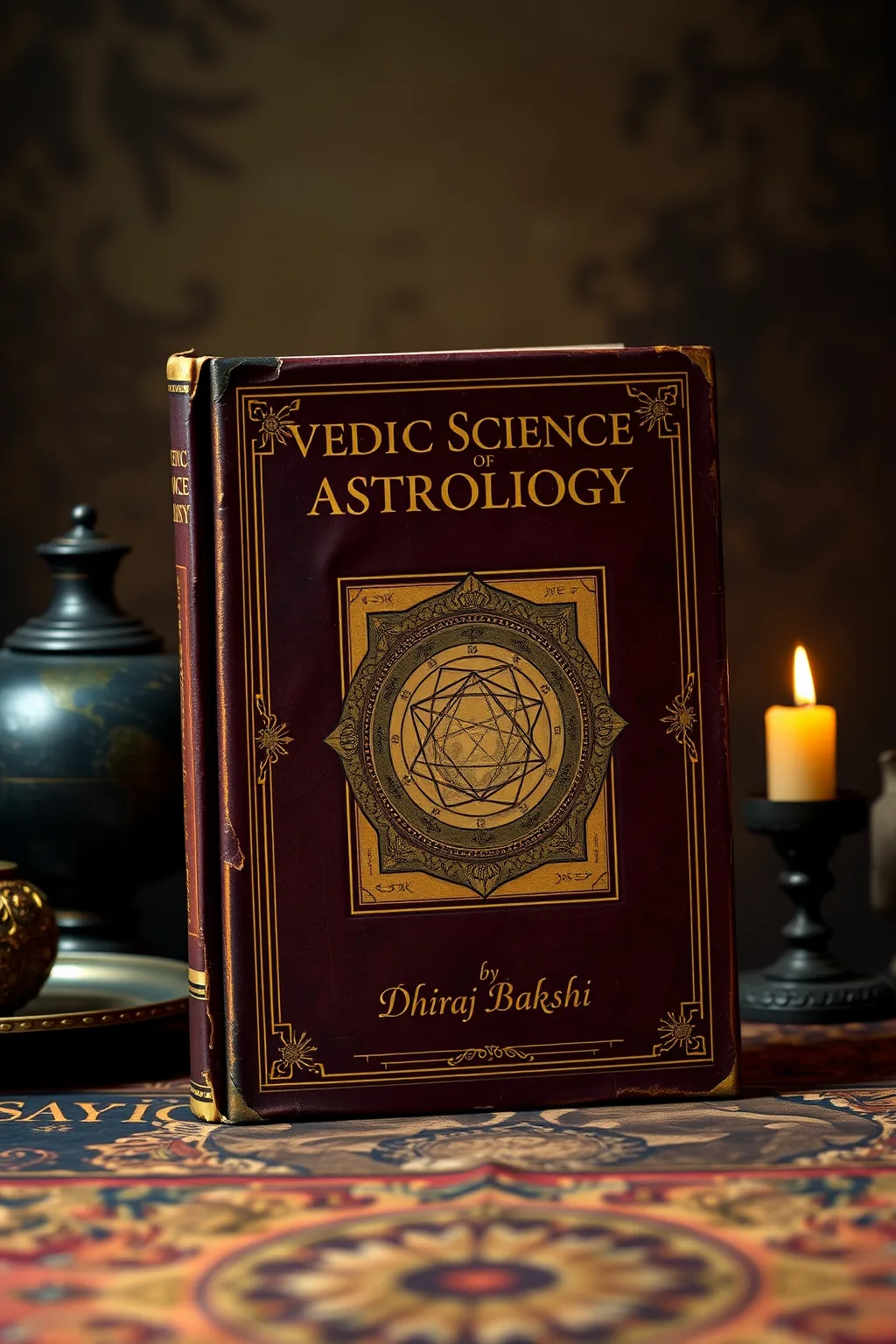
Vedic Science of Astrology
 61
61

Vedic Science of Astrology


Ophelia Vance, Mystical Literature Reviewer: Dhiraj Bakshi's 'Vedic Science of Astrology' is a luminous beacon for those seeking to understand the profound depths of Jyotisha. Bakshi masterfully demystifies this ancient art, presenting its intricate principles with clarity and an undeniable spiritual resonance. He doesn't just explain techniques; he reveals the soul of astrology, its connection to dharma, karma, and cosmic consciousness. The book’s strength lies in its balanced approach, offering both foundational knowledge for beginners and nuanced insights for seasoned practitioners. It’s an essential read for anyone drawn to the hidden wisdom of the stars and the transformative power of celestial mapping. This is not just a book; it's a sacred text for the modern spiritual explorer.
📝 Description
61
Dhiraj Bakshi's "Vedic Science of Astrology" deciphers the celestial influence on human destiny.
This book examines Jyotisha, the traditional Vedic system of astrology. Dhiraj Bakshi details the mechanics of planetary movements and their perceived effects on human lives. The text covers the interpretation of Vedic astrological charts, the meaning of planetary transits, and the underlying philosophy that links individual existence to the cosmos.
It aims to illuminate the cyclical nature of time and the concept of karma as reflected in celestial patterns. The author suggests that understanding these connections can lead to spiritual growth through astrological alignment. The book is intended for those seriously studying astrology, practicing its principles, or seeking academic knowledge of the subject.
Jyotisha, or Vedic astrology, is a component of the Vedas, ancient Indian scriptures. It posits a connection between celestial bodies and earthly events, including human personality and destiny. This system is not merely predictive but also a tool for understanding dharma (duty) and karma, aiming to guide individuals toward spiritual realization. Its philosophical underpinnings are deeply rooted in Hindu cosmology and the concept of a universal order governed by divine laws.
💡 Why Read This Book?
Uncover the profound cosmic blueprint etched in your birth chart. This book offers a unique lens into destiny, karma, and spiritual growth through the ancient wisdom of Vedic astrology. Ideal for sincere seekers, dedicated practitioners, and scholars yearning to connect with the universe's subtle language and unlock profound self-understanding.
⭐ Reader Reviews
Honest opinions from readers who have explored this book.
❓ Frequently Asked Questions
What is Vedic Astrology?
Vedic Astrology, or Jyotisha, is an ancient Indian system of celestial interpretation that uses planetary positions at the time of birth to understand an individual's destiny, personality, and life path. It is deeply intertwined with Vedic philosophy and spiritual principles.
How does Vedic Astrology differ from Western Astrology?
The primary difference lies in the zodiac used: Vedic Astrology uses the sidereal zodiac, which accounts for the precession of the equinoxes, while Western Astrology typically uses the tropical zodiac. Vedic astrology also places a greater emphasis on planetary periods (dashas) and yogas (planetary combinations).
Can this book help me understand my destiny?
Absolutely. The book guides you through interpreting your birth chart (kundali) to reveal karmic patterns, strengths, challenges, and potential life directions, empowering you to navigate your path with greater awareness and intention.
Is this book suitable for beginners?
Yes, Dhiraj Bakshi presents the complex concepts of Vedic Astrology in an accessible manner, making it suitable for beginners while also offering depth for those with prior knowledge. It provides a solid foundation for understanding the celestial sciences.
What are 'dashas' in Vedic Astrology?
'Dashas' are planetary periods that represent the unfolding of karmic influences throughout a person's life. The Vimshottari Dasha system, commonly used in Vedic Astrology, divides a lifetime into major and minor planetary periods, indicating the timing of events and experiences.
🔮 Key Themes & Symbolism
The Cosmic Blueprint of Karma
This book explores the profound concept of karma as imprinted upon the celestial sphere at the moment of birth. It explores how planetary configurations in the natal chart are not mere predictions but a reflection of past actions and the energetic blueprint shaping future experiences. Bakshi elucidates the intricate relationship between the cosmos and individual destiny, suggesting that understanding this blueprint offers a path to conscious living, fulfilling one's dharma, and navigating life's challenges with wisdom and grace. The text emphasizes that the stars incline, but do not compel, offering agency in the face of cosmic currents.
Jyotisha as a Spiritual Path
Beyond mere fortune-telling, Vedic Astrology is presented as a sacred science and a profound spiritual discipline. Bakshi illuminates how Jyotisha serves as a tool for self-realization, offering insights into one's soul's journey and evolutionary trajectory. The book explores the use of astrological knowledge to align with cosmic rhythms, understand divine timing, and cultivate spiritual awareness. It posits that by comprehending the celestial influences, individuals can foster greater harmony with the universe, leading to inner peace, purpose, and a deeper connection to the divine presence within and around them.
Symbolism and Celestial Language
The core of Vedic Astrology lies in its wide range of symbolism. Dhiraj Bakshi masterfully deciphers the esoteric language of planets, signs, houses, and yogas, revealing their multi-layered meanings. Each celestial body and astrological element is imbued with profound symbolic significance, representing archetypal energies and cosmic principles. The book guides the reader to interpret these symbols not just as abstract concepts but as living forces that influence consciousness and manifest in the material world, fostering a deeper appreciation for the intricate and divinely orchestrated symphony of the cosmos.
💬 Memorable Quotes
Direct passages from the work, attributed to the author.
“To know the heavens is to know thyself.”
— This aphorism highlights the introspective power of astrology, implying that by studying the cosmic order, we gain a deeper understanding of our own inner nature and place within the universe.
“Every transit is a whisper from the divine.”
— This suggests that celestial movements are not random events but meaningful communications from a higher power, offering guidance, opportunities, or lessons for spiritual growth.
“The chart is a map, not a prison.”
— This emphasizes agency and potential within astrology, presenting the birth chart as a guide to navigate life's terrain, rather than a fixed destiny that cannot be altered.
“Jyotisha reveals the sacred dance of cause and effect.”
— This points to the karmic underpinnings of Vedic Astrology, illustrating how the celestial patterns reflect the intricate web of actions and their consequences that shape our existence.
💡 Key Ideas
Editorial paraphrase of the work's core concepts — not direct quotes.
The stars are the silent scribes of our soul's journey.
This quote captures the essence of Vedic Astrology as a divine record of our karmic path, suggesting that celestial arrangements hold useful insights into our past, present, and future spiritual evolution.
🌙 Esoteric Significance
Tradition
Vedic Astrology is an integral part of the ancient Indian Vedic tradition, a comprehensive system of knowledge encompassing spirituality, philosophy, science, and art. Within this tradition, Jyotisha is considered one of the 'Vedangas' or limbs of the Vedas, essential for understanding and applying Vedic wisdom. It is deeply rooted in concepts of Dharma (righteous duty), Karma (action and consequence), and Moksha (liberation), viewing the celestial bodies as divine manifestations and instruments of cosmic law that guide individuals towards spiritual enlightenment.
Symbolism
The symbolism in Vedic Astrology is rich and multi-layered. Planets represent archetypal energies and divine forces (grahas). Zodiac signs symbolize fundamental qualities and life expressions. Houses denote specific areas of life and experience. Nakshatras (lunar mansions) offer finer divisions of the zodiac, each with its own deity and symbolism, providing deeper insights into karmic patterns and subtle influences. The interplay of these elements creates a complex symbolic language that, when deciphered, reveals the intricate set of an individual's life and their connection to the universal consciousness.
Modern Relevance
In contemporary times, Vedic Astrology offers a profound framework for working through the complexities of modern life. It provides tools for self-awareness, helping individuals understand their unique strengths, challenges, and life purpose. Its emphasis on karma and spiritual growth offers a meaningful perspective on destiny and free will, empowering individuals to make conscious choices. Furthermore, its holistic approach encourages a deeper connection to nature and the cosmos, fostering a sense of interconnectedness and purpose in an often fragmented world, making it a valuable resource for personal development and spiritual seeking.
👥 Who Should Read This Book
This comprehensive guide to Vedic Astrology is essential for aspiring astrologers seeking to master Jyotisha's profound principles and techniques. Spiritual seekers will find it important for understanding their karmic blueprint, life purpose, and the celestial influences guiding their journey. Scholars of comparative religion and ancient wisdom traditions will appreciate its historical context and philosophical depth. Practitioners of other astrological systems will benefit from the unique sidereal perspective and the nuanced interpretations offered, enriching their understanding of the celestial dance and its impact on human consciousness.
📜 Historical Context
Vedic Astrology, or Jyotisha, emerged from the ancient Vedic civilization of India, with its roots stretching back over 5,000 years. Developed within the milieu of the Vedas, the foundational scriptures of Hinduism, it was deeply intertwined with astronomy, mathematics, and philosophical inquiry. The system was meticulously codified over centuries by sage-astronomers who sought to understand the cosmic order and its influence on human life and societal cycles. Jyotisha was not merely a predictive tool but an integral part of a holistic worldview, guiding rituals, auspicious timings (muhurta), and personal conduct. Its influence permeated various aspects of Indian culture, from governance and agriculture to medicine and personal decision-making. The transmission of this knowledge was primarily through oral traditions and manuscript compilations, preserving its esoteric nature and intricate methodologies.
📔 Journal Prompts
Reflect on a significant life event and consider how its timing might have been indicated by planetary movements in your birth chart.
What archetypal energy do you feel most strongly connected to, and how does this relate to your ascendant or Sun sign in Vedic Astrology?
Explore a recurring challenge in your life. How might the principles of karma and planetary influences, as described in this book, offer a new perspective?
Consider the concept of 'muhurta' (auspicious timing). How could applying this principle enhance your daily life or significant endeavors?
How does your understanding of the cosmos shift after exploring the symbolic language of Vedic Astrology? Journal your evolving worldview.
🗂️ Glossary
Jyotisha
The ancient Indian science of Vedic Astrology, derived from Sanskrit words meaning 'light' and 'body' or 'science of celestial bodies'.
Graha
A planet in Vedic Astrology, considered a divine force or celestial influencer that impacts human life and destiny. There are nine primary Grahas.
Rashi
A zodiac sign in Vedic Astrology. There are twelve Rashis, each with distinct characteristics and energies, similar to Western astrology.
Bhava
A house in a Vedic astrological chart, representing a specific area of life such as career, relationships, family, or spirituality.
Nakshatra
A lunar mansion or star constellation in Vedic Astrology. There are 27 Nakshatras, offering a more detailed and nuanced layer of astrological interpretation.
This book appears in 2 collections
🔮 Readers Also Liked
Browse all →

![[ Stephen Arroyo] Astrology](/img/thumb/stephen-arroyo-astrology.webp)





More by Dhiraj Bakshi
All books →



From the “Astrology” Collection
View all →







![Bayer, George ( 1936) Do Sunspots Control Business [ 1 P.]](/img/thumb/bayer-george-1936-do-sunspots-control-business-1-p.webp)
More Free Astrology & Cosmology Books
View all →
![Mrs. Davis, (no. 7.) Crown Court, Little Poultney Street, Wardour Street, Soho, ... name and clock face on the door. Who has studied the occult sciences under the most learned sages after many years studious application; answers all adimssable [sic] questions in astrology, ... 1780](/img/thumb/mrs-davis-no-7-crown-court-little-poultney-street-wardour-street-soho-name-and-clock-face-on-the-door-who-has-studied-the-occult-sciences-under-the-most-learned-sages-after-many-years-studious-applica.webp)