The Raymond rustler (1909-06-18)
 79
79

The Raymond rustler (1909-06-18)


Aurelia Blackwood (Occult Philosophy Critic) — 'The Raymond Rustler' is a fascinating, if oblique, testament to the pervasive influence of occult and spiritualist ideas in the early 20th century. While ostensibly a local periodical, its curated content, particularly the subtle nods to spiritual quests and transformative narratives, suggests a readership attuned to deeper meanings. The juxtaposition of agricultural reports with themes of dreams and hidden potential is particularly striking, hinting at a folk magic or animistic worldview. Its true strength lies in its unintentional evocation of a time when the veil between the material and the mystical was perceived as thinner, making it invaluable for scholars of esoteric thought and practitioners seeking historical context for subtle energy practices.
📝 Description
79
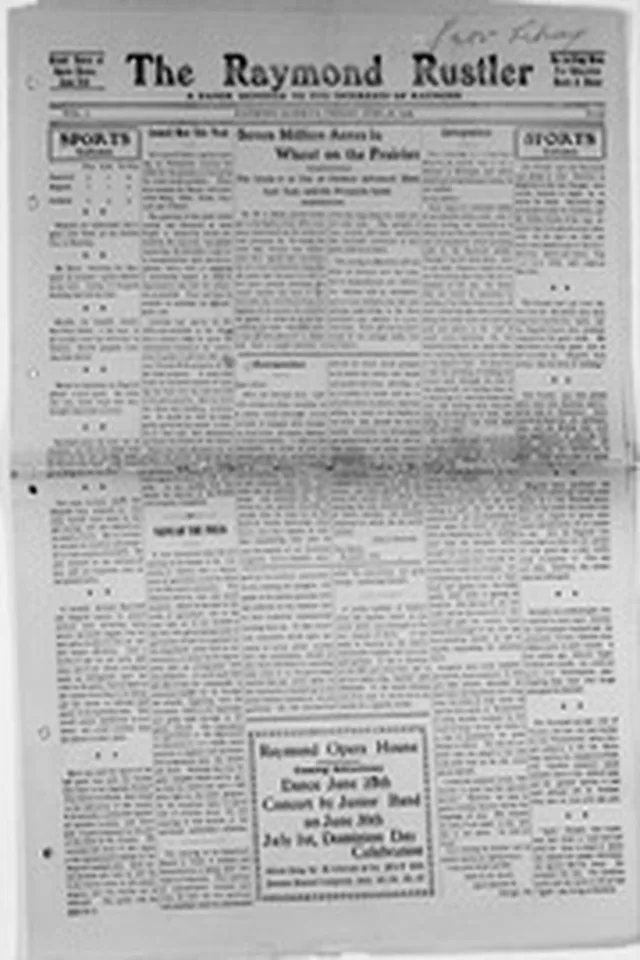
"The Raymond Rustler," published June 18, 1909, disguises occult inquiries within a provincial gazette.
This 1909 publication, titled "The Raymond Rustler," presents itself as a local gazette but contains veiled references to esoteric concerns. Alongside typical reports on local events like sports, council meetings, and farming, the text includes titles that suggest deeper meanings. Phrases such as "Seeking Gautama's Favor" point towards spiritual aspirations, while "The Awkward Boy Who Became Famous" and "He Dreamed, Too" hint at themes of personal change and foresight.
The unusual inclusion of articles like "Plant with a Brain" and "Rosy Cheeked Babies" invites symbolic readings, potentially alluding to life forces, growth, or even alchemical ideas. The text acts as a window into the less obvious aspects of early 20th-century thinking, where spiritual and mystical notions may have coexisted with daily life. It is a curious document for those interested in the hidden currents of thought from that era.
The text aligns with a tradition of esoteric literature that uses everyday or seemingly mundane formats to convey deeper spiritual or philosophical ideas. It reflects a period where occultism and spiritualism were becoming more integrated into mainstream thought, often appearing in coded or allegorical forms. The publication's juxtaposition of provincial news with titles suggesting mystical or alchemical pursuits is characteristic of certain esoteric periodicals of the time that sought to embed hidden knowledge within accessible content.
💡 Why Read This Book?
Uncover the veiled spiritual currents of 1909. 'The Raymond Rustler' offers a unique lens into how esoteric ideas permeated everyday life, disguised within mundane reports. It is ideal for seekers of hidden knowledge, scholars of occult history, and practitioners interested in the symbolic underpinnings of early 20th-century thought. Discover the whispers of ancient wisdom within a seemingly ordinary publication.
⭐ Reader Reviews
Honest opinions from readers who have explored this book.
❓ Frequently Asked Questions
What is the primary esoteric theme of 'The Raymond Rustler'?
The primary esoteric theme revolves around the hidden spiritual and transformative potential within everyday life, suggested by juxtapositions of mundane news with references to spiritual seeking and personal metamorphosis.
Who is the intended audience for this publication?
The intended audience likely comprises individuals with an existing interest in spiritualism, folk magic, and the burgeoning occult movements of the early 20th century, who could discern deeper meanings beyond the literal.
Are there any references to specific witchcraft traditions?
While not explicitly naming traditions, the themes of seeking favor, dreams, and the vital force in nature hint at broader pagan or animistic practices, potentially influenced by contemporary spiritualist and Theosophical currents.
What makes this publication historically significant?
Its significance lies in its rare portrayal of how esoteric and spiritual ideas were subtly integrated into local news, offering a unique window into the subconscious intellectual landscape of a specific time and place.
Can 'The Raymond Rustler' be considered a primary source for occult studies?
Yes, it functions as a fascinating primary source, not for explicit spellcraft, but for understanding the cultural milieu and the prevalent esoteric undercurrents that may have informed individual practices and beliefs.
🔮 Key Themes & Symbolism
The Alchemy of the Mundane
This theme explores how 'The Raymond Rustler' imbues ordinary reports of local life—council meetings, sports, and agriculture—with a potential for symbolic interpretation. It suggests a nascent understanding of transformation, where the everyday can become a crucible for spiritual growth. The juxtaposition of practical matters with hints of deeper quests invites the reader to see the extraordinary hidden within the ordinary, mirroring alchemical principles of transmutation and the discovery of universal truths in common elements.
The Archetypal Journey of the Self
The publication touches upon the universal narrative of personal evolution. Phrases like 'The Awkward Boy Who Became Famous' and 'He Dreamed, Too' resonate with archetypal journeys of self-discovery, initiation, and the realization of latent potential. These narrative fragments suggest an awareness of the soul's path, the importance of intuition and dreams as guides, and the profound transformations that individuals can undergo when attuned to their inner calling or destiny.
Vitalism and The Unseen Forces
The mention of 'Plant with a Brain' and the general atmosphere of seeking favor hint at an underlying belief in vitalism and unseen forces animating the natural world. This reflects a worldview where life is not merely a biological process but is imbued with consciousness and inherent energy. It suggests an intuitive understanding of interconnectedness and the subtle energies that govern existence, possibly aligning with animistic beliefs or early explorations into bioenergetics and consciousness beyond the purely material.
💬 Memorable Quotes
Direct passages from the work, attributed to the author.
“Seeking Gautama's Favor”
— This phrase suggests a spiritual quest for enlightenment or inner peace, referencing Buddhist philosophy and the pursuit of higher consciousness.
“The Awkward Boy Who Became Famous”
— An archetypal narrative of transformation and the realization of hidden potential, highlighting the journey from obscurity to recognition.
“He Dreamed, Too”
— Emphasizes the power of intuition, foresight, and the subconscious mind as a source of guidance and prophecy.
“Plant with a Brain”
— A provocative statement hinting at the sentience or consciousness present in the natural world, challenging purely materialistic views of life.
“More Wonderful Still”
— An expression of awe and wonder, inviting the reader to contemplate the marvelous aspects of existence often overlooked in daily life.
🌙 Esoteric Significance
Tradition
The esoteric significance of 'The Raymond Rustler' lies not in adherence to a singular, codified tradition, but rather in its eclectic reflection of the broad spiritualist and occult milieu of the early 20th century. It echoes elements found in folk magic, Eastern philosophies (like Buddhism, suggested by 'Gautama'), and the general fascination with vital forces and consciousness that permeated movements like Theosophy and early parapsychology.
Symbolism
Key symbols are subtly woven into the seemingly mundane. 'Seeking Gautama's Favor' symbolizes the quest for enlightenment. The 'Awkward Boy' represents the alchemical transformation of the base self into a recognized entity. 'Dreams' are portals to the subconscious and prophetic insight. A 'Plant with a Brain' signifies animism and the consciousness inherent in nature, challenging anthropocentric views.
Modern Relevance
In an age often characterized by digital distraction and material focus, 'The Raymond Rustler' offers a valuable reminder of the enduring human impulse to seek meaning beyond the superficial. Its subtle suggestions of hidden knowledge and the interconnectedness of life resonate with contemporary interests in mindfulness, ecopsychology, and the exploration of consciousness. It encourages a deeper engagement with the world, urging readers to find the mystical within the everyday.
👥 Who Should Read This Book
This curious publication is a treasure for several distinct groups. **Beginners** in esoteric studies will find it an accessible entry point, offering a glimpse into how mystical ideas could manifest in everyday society without overwhelming jargon. **Scholars** of occult history and cultural studies will appreciate its value as a primary source, revealing the subtle integration of spiritual currents into local discourse. **Seekers** of deeper meaning will be drawn to its evocative phrases that hint at transformative journeys and hidden wisdom. **Practitioners** of various spiritual paths may find inspiration in its underlying themes of vitalism and personal evolution, encouraging a mindful approach to their own practices.
📜 Historical Context
Published in June 1909, 'The Raymond Rustler' emerges during a period of significant intellectual and spiritual ferment in the Western world. The late Victorian and Edwardian eras witnessed a surge of interest in spiritualism, Theosophy, occultism, and Eastern philosophies, as traditional religious frameworks began to be questioned. This was an era where scientific advancements coexisted with a deep fascination for the unseen and the paranormal. Newspapers and periodicals of the time often reflected these burgeoning interests, sometimes subtly, sometimes overtly. 'The Raymond Rustler,' though appearing as a local publication, likely tapped into this broader cultural undercurrent, serving as a repository of ideas that resonated with a populace exploring alternative spiritualities and the deeper mysteries of existence. Its content, therefore, can be seen as a microcosm of the era's complex relationship with the mystical and the metaphysical.
📔 Journal Prompts
Reflect on a time you felt you were 'Seeking [Your Personal Guiding Principle]'s Favor.' What did that quest entail?
Describe a personal transformation that mirrors 'The Awkward Boy Who Became Famous.' What were the challenges and triumphs?
Explore a significant dream you've had. How did it offer guidance or reveal hidden aspects of yourself or your situation?
Consider the statement 'Plant with a Brain.' What does this suggest about your perception of consciousness in the natural world?
In what areas of your life do you suspect 'More Wonderful Still' lies hidden, waiting to be discovered?
🗂️ Glossary
Esoteric
Relating to or accessible only by a select group of people with a specialized knowledge or interest; intended for or understood by only a small number of people with a specialized knowledge or interest.
Gautama
Refers to Siddhartha Gautama, the founder of Buddhism, often associated with enlightenment and profound spiritual wisdom.
Archetypal
Relating to or denoting an original model or type after which other similar things are patterned; a recurring symbol or motif in literature, art, or mythology.
Vitalism
The theory that the origin and phenomena of life are dependent on an unexplainable vital principle or 'life force' distinct from all physical and chemical forces.
Animism
The belief that objects, places, and creatures all possess a distinct spiritual essence; the attribution of a soul to plants, inanimate objects, or natural phenomena.
This book appears in 2 collections
🔮 Readers Also Liked
Browse all →





From the “Witchcraft” Collection
View all →






More Free Witchcraft & Paganism Books
View all →