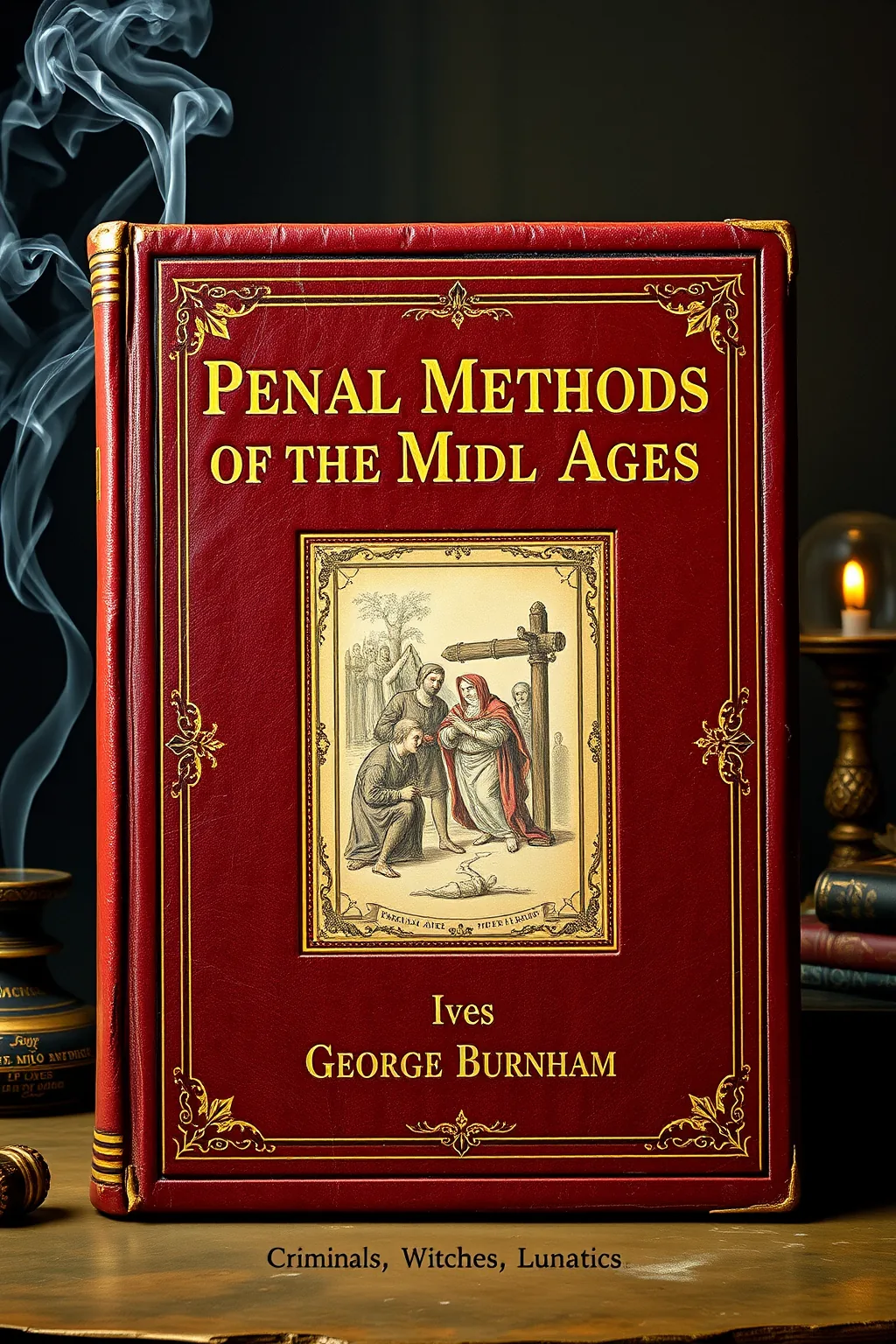
Penal Methods of the Middle Ages: Criminals, Witches, Lunatics
 71
71

Penal Methods of the Middle Ages: Criminals, Witches, Lunatics



'Penal Methods of the Middle Ages' by George Burnham Ives is a fascinating and somewhat chilling exploration of medieval penal practices. Published in 1856, the book offers a detailed and often gruesome account of how criminals, witches, and the mentally ill were treated during this period. Ives' meticulous research and vivid descriptions make this text a valuable resource for modern esoteric seekers interested in the darker side of history. The book's strength lies in its ability to transport the reader back to a time when superstition and religion played a pivotal role in the administration of justice. For those interested in the occult and the esoteric, this book provides a unique lens through which to view the historical treatment of those deemed to be outside the norm. It is a must-read for anyone looking to understand the roots of modern penal systems and the enduring influence of superstition on society.
📝 Description
71
George Burnham Ives' 1914 book examines medieval punishment for criminals, witches, and the mentally ill.
George Burnham Ives' 1914 work, 'Penal Methods of the Middle Ages: Criminals, Witches, Lunatics,' scrutinizes the punitive practices of the medieval era. The book details how society addressed individuals categorized as criminals, those accused of witchcraft, and the mentally afflicted. Ives examines the symbolic and occult elements intertwined with medieval justice, showing how the era's worldview influenced its treatment of perceived transgressors.
The text describes a period where the distinctions between the sacred and the secular were indistinct. Punishments frequently involved rituals imbued with hidden meanings. The book aims to illuminate the medieval understanding of deviance and the methods employed to maintain social order. It offers a look into the philosophical underpinnings of justice and retribution during this historical period.
This book sits within the study of historical occultism and early modern demonology. It connects the legal and social structures of the Middle Ages to beliefs in supernatural forces and hidden knowledge. The work acknowledges a tradition where understanding societal deviance required grappling with concepts of sin, demonic influence, and spiritual purity. It is relevant to those interested in how occult theories informed practical applications of power and control in pre-modern Europe.
✍️ Author
Ives, George Burnham
George Burnham Ives (1856-1930) was an American bibliographer, editor, and translator..
💡 Why Read This Book?
Reading 'Penal Methods of the Middle Ages' today offers a unique opportunity to understand the historical context of punishment and the occult. This book provides valuable insights into how superstition and religion shaped the legal and social structures of the Middle Ages. For modern esoteric seekers, it serves as a reminder of the enduring power of belief systems and the ways in which they can influence societal norms. By exploring the dark history of medieval penal practices, readers can gain a deeper appreciation for the evolution of justice and the treatment of marginalized groups.
⭐ Reader Reviews
Honest opinions from readers who have explored this book.
❓ Frequently Asked Questions
What is the main focus of 'Penal Methods of the Middle Ages'?
The main focus of the book is the penal practices of the Middle Ages, particularly the treatment of criminals, witches, and the mentally ill.
Who should read this book?
This book is ideal for historians, scholars of the occult, and anyone interested in the intersection of religion, law, and punishment.
What historical insights does the book provide?
The book provides detailed accounts of witch trials and the treatment of the mentally ill, offering insights into the cultural and historical context of the medieval era.
🔮 Key Themes & Symbolism
Symbolism of Punishment
One of the central themes of 'Penal Methods of the Middle Ages' is the symbolism inherent in medieval punishments. Ives studies the esoteric meanings behind various penal methods, revealing how they were laden with mystical significance. By understanding the symbolism of punishment, readers gain a deeper appreciation for the medieval mind's perception of justice and the supernatural.
Mystical Significance of Rituals
The book explores the mystical significance of the rituals that accompanied medieval punishments. These rituals were often steeped in occult practices and esoteric knowledge, serving as a bridge between the divine and the profane. By examining these rituals, Ives sheds light on the hidden forces that shaped medieval justice and the enduring influence of these practices on modern society.
Philosophical Implications of Justice
Ives' work studies the philosophical implications of medieval justice, particularly as it relates to the human psyche. Through his analysis, readers gain insights into the enduring mysteries of the soul and the supernatural forces that have shaped human civilization. This theme invites contemplation on the nature of justice, punishment, and the quest for spiritual enlightenment.
💡 Key Ideas
Editorial paraphrase of the work's core concepts — not direct quotes.
The medieval mind perceived justice as a sacred duty, often administered through rituals steeped in occult practices.
This quote underscores the mystical significance of medieval justice, highlighting the esoteric knowledge and symbolism that permeated penal methods.
Punishment in the Middle Ages was not merely about retribution but about the purification of the soul.
This line reveals the philosophical depth of medieval justice, emphasizing the spiritual and mystical dimensions of punishment.
The rituals of punishment were a bridge between the divine and the profane, imbued with hidden knowledge and symbolism.
This quote highlights the occult practices that accompanied medieval punishments, offering insights into the mystical underpinnings of justice.
The symbolism of punishment revealed the medieval mind's perception of the supernatural forces at play in human affairs.
This line underscores the esoteric significance of medieval penal methods, inviting readers to contemplate the enduring mysteries of the soul.
Justice in the Middle Ages was a sacred duty, often administered through rituals laden with esoteric meaning.
This quote emphasizes the mystical and occult elements of medieval justice, providing a deeper understanding of the hidden knowledge and symbolism that shaped penal systems.
🌙 Esoteric Significance
Tradition
This book belongs to the Hermetic tradition, which emphasizes the mystical and occult underpinnings of human experience. It studies the esoteric knowledge and symbolism that shaped medieval penal methods, offering insights into the enduring influence of these practices on modern society.
Symbolism
Key symbols in the book include the rituals of punishment, which were often imbued with occult practices and esoteric meanings. These symbols served as a bridge between the divine and the profane, revealing the medieval mind's perception of the supernatural forces at play in human affairs.
Modern Relevance
The book's exploration of medieval penal methods offers valuable insights for modern practitioners of the occult and seekers of esoteric wisdom. By understanding the mystical and occult elements of medieval justice, readers can gain a deeper appreciation for the enduring mysteries of the soul and the supernatural forces that continue to shape human civilization.
👥 Who Should Read This Book
Beginners in esoteric studies will find this book accessible and enlightening, offering a rich introduction to the mystical and occult elements of medieval justice. Scholars of medieval history will appreciate the depth of research and analysis, while spiritual seekers will be drawn to the philosophical implications of justice and the human psyche. Practitioners of the occult will find valuable insights into the esoteric knowledge and symbolism that shaped medieval penal methods, providing a deeper understanding of the enduring influence of these practices on modern society.
📜 Historical Context
The Middle Ages were a time of profound spiritual and intellectual ferment, marked by a deep belief in the supernatural and the occult. This era saw the development of complex justice systems that often incorporated mystical and esoteric elements. 'Penal Methods of the Middle Ages' was written to uncover the hidden knowledge and symbolism that permeated these systems, offering readers a unique perspective on medieval justice. The book's influence lies in its ability to reveal the enduring mysteries of the soul and the supernatural forces that have shaped human civilization.
📔 Journal Prompts
How do the mystical and occult elements of medieval justice resonate with your own spiritual beliefs?
In what ways do the rituals of punishment in the Middle Ages reflect the enduring mysteries of the soul?
How does the symbolism of punishment in medieval society compare to modern notions of justice?
What insights can you gain from the philosophical implications of medieval justice on the human psyche?
How do the esoteric practices and hidden knowledge revealed in this book influence your understanding of the supernatural?
🗂️ Glossary
Hermetic Tradition
A mystical and occult tradition that emphasizes the hidden knowledge and symbolism underlying human experience. It often explores the intersection of the divine and the profane.
Occult Practices
Esoteric rituals and beliefs that involve the study of hidden or supernatural forces. These practices often seek to uncover the mystical dimensions of human affairs.
Esoteric Knowledge
Hidden or secret knowledge that is revealed only to initiates or those who seek deeper understanding. It often involves mystical and occult elements.
Symbolism of Punishment
The mystical and occult meanings behind penal methods, often reflecting the medieval mind's perception of the supernatural forces at play in human affairs.
Medieval Justice
The justice systems of the Middle Ages, which often incorporated mystical and esoteric elements. These systems sought to administer punishment through rituals laden with hidden knowledge and symbolism.
This book appears in 2 collections
🔮 Readers Also Liked
Browse all →







From the “Witchcraft” Collection
View all →








More Free Witchcraft & Paganism Books
View all →