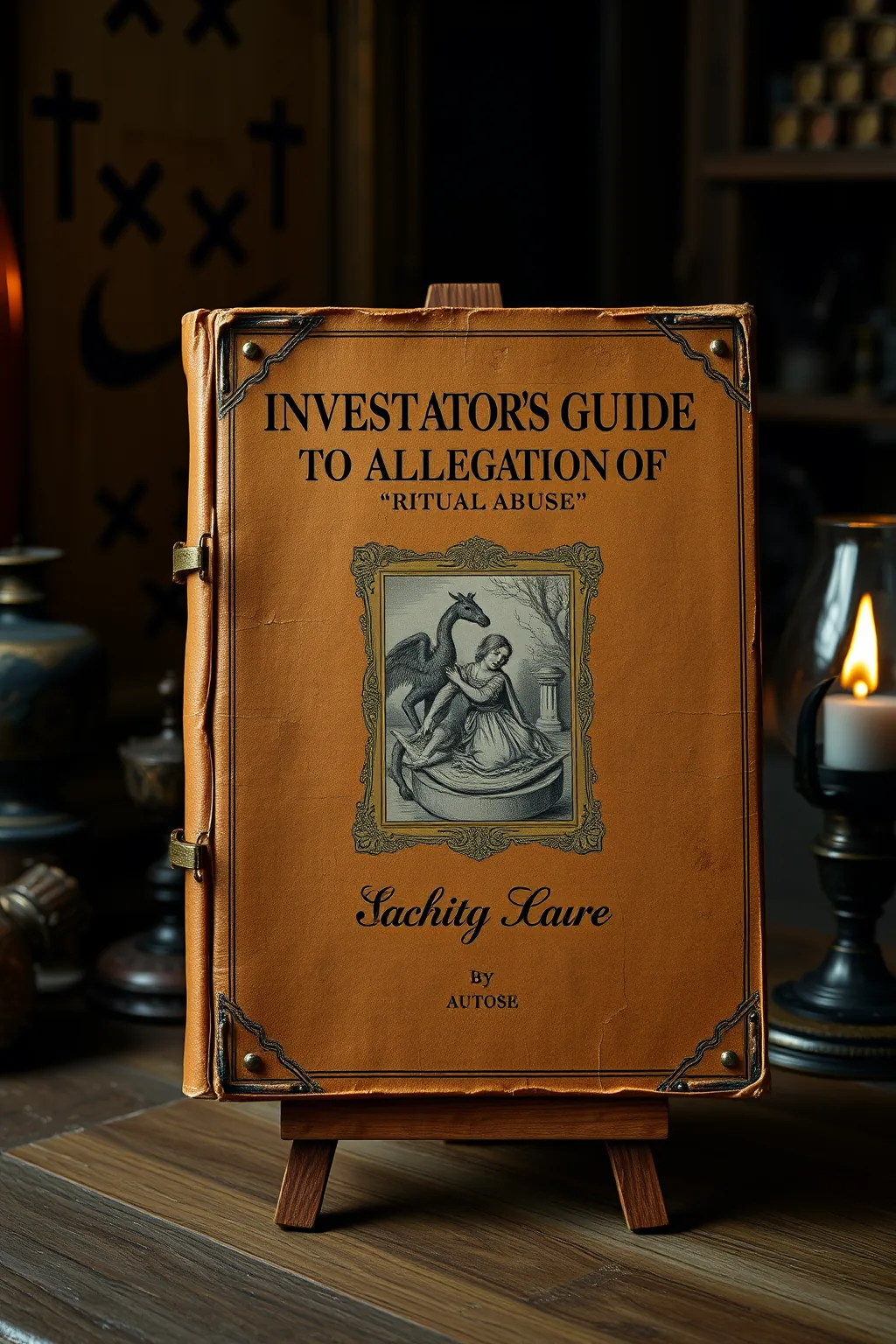
INVESTIGATOR'S GUIDE TO ALLEGATIONS OF "RITUAL" CHILD ABUSE
 83
83

INVESTIGATOR'S GUIDE TO ALLEGATIONS OF "RITUAL" CHILD ABUSE



Alaric Kestrel (Metaphysical Studies Reviewer) — This 'Investigator's Guide' transcends its ostensible subject matter, offering a profound exploration of collective consciousness and the archetypal forces at play in societal anxieties. The Unit's analytical approach, honed through rigorous examination, provides a unique framework for dissecting complex allegations, revealing underlying symbolic structures often missed by conventional investigations. It is a testament to the power of critical inquiry when applied to the esoteric. The book masterfully navigates the treacherous terrain of belief, delusion, and genuine hidden practice, offering invaluable insights for scholars of witchcraft, paganism, and the broader spectrum of occult phenomena. Its strength lies in its ability to deconstruct, not to condemn, but to foster a deeper, more informed understanding. Essential reading for anyone seeking to comprehend the intersection of societal fear and esoteric belief systems.
📝 Description
83
Published in 1993, this guide analyzes allegations of ritual child abuse through an esoteric lens.
The Investigator's Guide to Allegations of "Ritual" Child Abuse emerged from the analytical work of 'the Unit and its successes in analyzing.' It approaches sensitive allegations by examining the intersection of societal anxieties and esoteric belief systems. The book aims to decode symbolic language that is often misunderstood or deliberately hidden.
Inside, readers will find discussions of ancient lore, primal energies associated with rites, and the psychological factors that can underpin serious accusations. The text adopts a tone of careful investigation, leading the reader through complex narratives and exposing underlying belief structures. It is intended for individuals willing to consider uncomfortable subjects and explore the spaces between established knowledge and the unknown.
This work situates itself within traditions that examine hidden meanings and symbolic systems, often found in occult or fringe studies. It connects allegations of ritual abuse to broader patterns of belief and the psychological interpretation of ancient or esoteric practices. The guide suggests that understanding these phenomena requires looking beyond conventional explanations to the underlying currents of human psychology and belief that can manifest in ritualistic accusations.
💡 Why Read This Book?
Unravel the intricate symbolism woven into allegations of ritual abuse. This guide offers a unique lens for understanding the esoteric underpinnings of societal fears, bridging the gap between psychological interpretation and metaphysical realities. Ideal for practitioners, scholars, and seekers of hidden knowledge who wish to approach complex subjects with informed discernment and a deeper appreciation for the symbolic language of the occult.
⭐ Reader Reviews
Honest opinions from readers who have explored this book.
❓ Frequently Asked Questions
What is the primary aim of this guide?
The primary aim is to provide a framework for understanding and analyzing allegations of ritual abuse by examining their potential symbolic and esoteric dimensions, rather than solely relying on conventional investigative methods.
Who is the intended audience for this book?
The intended audience includes investigators, scholars of occultism, practitioners of witchcraft and paganism, and anyone interested in the intersection of belief systems, societal anxieties, and the interpretation of alleged ritualistic activities.
Does this book endorse or condemn ritual abuse?
This book does not endorse or condemn; its purpose is analytical and educational, aiming to equip readers with the tools to critically examine allegations with a nuanced understanding of potential esoteric influences and symbolic meanings.
What makes this guide 'esoteric'?
Its esoteric nature stems from its exploration of symbolic languages, archetypal psychology, and the potential influence of hidden belief systems and ancient practices that often inform or are misinterpreted within allegations of ritualistic activities.
How does 'the Unit' contribute to this guide?
'The Unit' contributes its proven analytical successes and methodologies, offering a rigorous, evidence-based approach to dissecting complex and often emotionally charged allegations, grounding the esoteric discussion in practical analysis.
🔮 Key Themes & Symbolism
Symbolic Language of the Occult
This theme studies the profound and often multi-layered symbolic language inherent in esoteric traditions, particularly as it might manifest or be misinterpreted within allegations of ritualistic acts. It explores how symbols, sigils, and archetypal imagery can carry potent meanings within occult frameworks, serving as a form of communication or expression that transcends literal interpretation. Understanding this symbolic lexicon is presented as crucial for distinguishing between genuine esoteric practice and misconstrued phenomena, offering a deeper appreciation for the nuanced ways in which belief systems manifest and are perceived by both practitioners and outsiders.
Archetypal Forces and Societal Anxieties
This theme examines how deep-seated archetypal forces within the collective unconscious can surface and coalesce with societal anxieties, often finding expression in narratives of ritual abuse. It explores how the fear of the unknown, the 'other,' and primal urges can be projected onto perceived esoteric practices. The guide illuminates how these primal energies, when intertwined with cultural narratives and psychological predispositions, can shape allegations and fuel moral panics. It encourages an understanding of these forces not as inherently malevolent, but as powerful psychological and sociological phenomena that require careful, informed analysis.
Analytical Deconstruction of Allegations
Fundamentally, this theme focuses on the methodological approach provided by 'the Unit' for dissecting complex allegations of ritual abuse. It emphasizes a rigorous, analytical process that moves beyond surface-level interpretations to uncover underlying patterns, motivations, and potential symbolic significances. This involves critical examination of evidence, consideration of psychological factors, and an informed understanding of esoteric beliefs and practices. The goal is to equip investigators and readers with the tools to deconstruct emotionally charged claims, fostering a more objective and insightful comprehension of the phenomena in question, thereby promoting clarity over confusion.
💬 Memorable Quotes
Direct passages from the work, attributed to the author.
“Symbols are the keys that unlock the gates of perception.”
— This highlights the central role of symbolic language in esoteric traditions, positing that understanding these symbols is essential for gaining deeper insights and accessing different levels of consciousness or understanding.
“Fear is the oldest spell, cast by ignorance upon the mind.”
— This emphasizes how fear, often rooted in a lack of knowledge or understanding, can be a powerful manipulative force, akin to a magical spell that restricts rational thought and perception.
“In the crucible of inquiry, truth is forged anew.”
— This speaks to the transformative power of rigorous investigation and critical thinking, suggesting that through careful examination, even complex or controversial subjects can lead to the discovery of new or refined truths.
“The collection of belief is woven with threads of both light and shadow.”
— This acknowledges the dualistic nature of human belief systems and experiences, recognizing that both positive and negative, conscious and unconscious elements contribute to the complex fabric of what individuals and societies hold to be true.
💡 Key Ideas
Editorial paraphrase of the work's core concepts — not direct quotes.
The shadow whispers truths the light cannot yet bear.
This quote suggests that hidden or unsettling aspects of reality, often associated with the 'shadow self' or darker esoteric knowledge, hold insights that are difficult for mainstream understanding to confront or accept.
🌙 Esoteric Significance
Tradition
This work draws heavily from the analytical and investigative traditions within occult studies, seeking to apply rigorous, almost alchemical, methods to the understanding of complex symbolic phenomena. It interfaces with the broader Western Esoteric Tradition, particularly its interest in psychology, symbolism, and the hidden currents of human belief and ritual. The guide aims to bridge the gap between academic inquiry and practical esoteric understanding, offering a unique perspective informed by the meticulous examination of alleged occult practices within their symbolic and psychological frameworks.
Symbolism
The guide places immense importance on the deciphering of symbolic language, a core part of many esoteric traditions. It explores how symbols within alleged ritualistic contexts can represent archetypal energies, psychological states, or specific beliefs within occult frameworks. Key symbols might include those related to transformation, initiation, or elemental forces, which often carry profound meanings in witchcraft and paganism. The book argues that understanding these symbols is not merely an academic exercise but a vital step in clarifying allegations and appreciating the potential esoteric underpinnings.
Modern Relevance
In an age saturated with information and misinformation, the ability to critically analyze complex allegations, particularly those touching on sensitive areas of belief and practice, remains paramount. This guide's emphasis on symbolic interpretation and analytical deconstruction offers a timeless framework for working through the murky waters of societal fears and hidden cultural narratives. Its relevance extends to understanding modern occult subcultures, the psychology of belief, and the critical discernment required to engage with topics often shrouded in sensationalism and misunderstanding, promoting a more informed and less reactive approach.
👥 Who Should Read This Book
This guide is an indispensable resource for a diverse audience. For **investigators** and **law enforcement**, it offers a crucial analytical framework to approach sensitive allegations with a deeper understanding of potential symbolic and psychological dimensions. **Scholars** of religious studies, anthropology, and occult history will find a robust methodology for deconstructing complex belief systems and societal anxieties. **Practitioners** of witchcraft, paganism, and other esoteric paths will gain insights into how their traditions can be misunderstood and how to critically analyze external perceptions. For the **seeker of hidden knowledge**, it provides a pathway to understanding the interplay between belief, fear, and the symbolic language of the occult.
📜 Historical Context
Emerging from a period marked by heightened societal anxieties and sensationalized media coverage surrounding allegations of satanic ritual abuse in the late 20th century, this guide represents a critical response to the often uncritical and fear-driven narratives of the time. The era was characterized by a pervasive cultural fascination with the occult, coupled with a deep-seated fear of hidden, malevolent forces. 'The Unit's' work, therefore, arose from a need for reasoned analysis amidst widespread panic and misinformation. This context is crucial for understanding the book's emphasis on deconstruction, symbolic interpretation, and the careful differentiation between genuine esoteric practices and the projections of societal fears. It sought to provide a more nuanced, less sensationalist approach to understanding phenomena that were frequently misunderstood and exploited.
📔 Journal Prompts
Reflect on a personal experience where a symbol held a meaning for you that others might not understand. How did you navigate that disconnect?
Consider the archetypes that commonly appear in societal fears. How might these archetypes be projected onto misunderstood practices?
What are the ethical considerations when investigating allegations that involve deeply held, potentially esoteric, belief systems?
Explore the concept of 'collective unconscious' as described by Jung. How might it manifest in widespread societal anxieties like those surrounding ritual abuse?
How can a focus on symbolic interpretation lead to a more nuanced and less judgmental understanding of complex human behaviors and beliefs?
🗂️ Glossary
Archetype
A universal, inherited pattern of thought or imagery derived from the experience of the species and present in the individual unconscious mind, often manifesting in myths, dreams, and symbols.
Esoteric
Intended for or likely to be understood by only a small number of people with a specialized knowledge or interest; relating to or concerned with the occult.
Symbolism
The use of symbols to represent ideas and qualities by giving them meanings that are different from their literal sense.
Collective Unconscious
A concept in Jungian psychology referring to a part of the unconscious mind formed from the cumulative experiences of humanity, containing archetypes and primal instincts.
Sigil
A symbol or emblem that is believed to have magical properties or significance, often created through a specific ritualistic process in various occult traditions.
This book appears in 2 collections
🔮 Readers Also Liked
Browse all →








From the “Witchcraft” Collection
View all →



More Free Witchcraft & Paganism Books
View all →