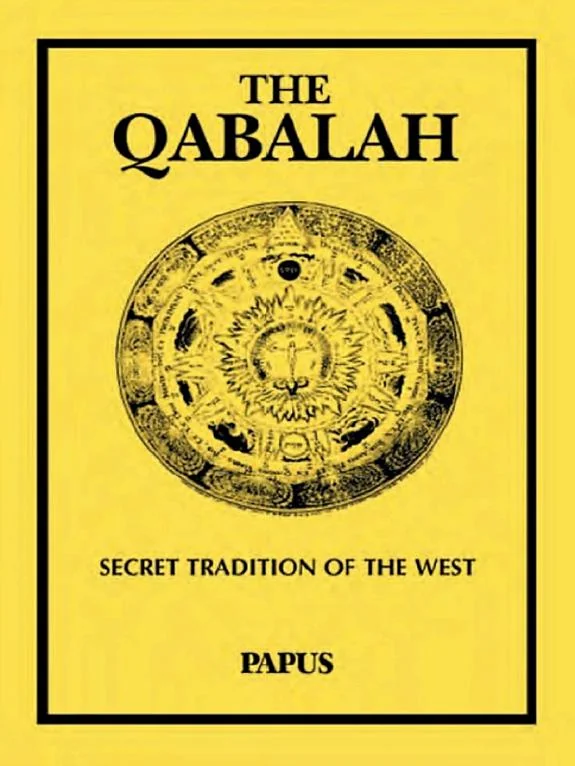
The Qabalah
 71
71

The Qabalah
Papus's "The Qabalah" offers a dense but rewarding immersion into the symbolic architecture of Hebrew mysticism as filtered through the lens of late 19th-century French occultism. Its primary strength lies in the author's ambitious synthesis, particularly his detailed exposition of the twenty-two Hebrew letters and their correspondence with the Major Arcana of the Tarot. This linkage, a cornerstone of modern esoteric Tarot interpretation, is laid out with considerable rigor. However, the text can be challenging for the uninitiated; Papus assumes a certain familiarity with esoteric concepts, and his prose, while scholarly, lacks the accessibility of later commentaries. A notable section is his translation and analysis of the Sepher Yetzirah, providing direct access to a foundational Kabbalistic text within the larger work. The book provides a solid, albeit dense, intellectual framework for understanding the Qabalah's esoteric dimensions.
📝 Description
71
Papus's "The Qabalah" was published in 1892, synthesizing late 19th-century occult thought.
Published in 1892, Papus's "The Qabalah" is a significant work in modern occult studies. It presents a systematic view of Kabbalah, drawing connections between the Hebrew alphabet, Gematria, and the Tarot's Major Arcana. Papus, a key figure in the late 19th-century occult revival, aimed to organize and share esoteric knowledge. His book integrates earlier Kabbalistic ideas with contemporary interpretations, creating a framework for understanding spiritual concepts through Hebrew mysticism and Tarot correspondences.
The text details the relationship between the 22 Hebrew letters and the 22 Major Arcana of the Tarot. It includes a translation and commentary on the Sepher Yetzirah, an early Jewish mystical text. Papus also incorporates Eliphas Lévi's "Ten Lessons on the Qabalah," weaving these elements into a unified system. This system links cosmology, psychology, and divination through the symbolic language of the Qabalah.
This book emerged during a European occult revival around 1892, influenced by figures like Eliphas Lévi and movements such as Theosophy. Papus, also known as Dr. Gérard Encausse, was instrumental in this period, working to systematize and spread esoteric teachings. "The Qabalah" reflects his effort to combine historical Kabbalistic concepts with the esoteric interpretations prevalent at the time. It sought to establish a structured understanding of spiritual matters using Hebrew mysticism and Tarot.
💡 Why Read This Book?
• Gain direct insight into the 22 Hebrew letters and their specific correspondences with the Tarot Major Arcana, as detailed by Papus, moving beyond superficial interpretations. • Understand the Sepher Yetzirah through Papus's translation and commentary, offering a direct link to one of the oldest Kabbalistic texts, first published in 1892. • Study Eliphas Lévi's "Ten Lessons on the Qabalah" as presented by Papus, providing access to a crucial historical exposition of Kabbalistic principles by two key occult figures.
⭐ Reader Reviews
Honest opinions from readers who have explored this book.
❓ Frequently Asked Questions
When was Papus's "The Qabalah" first published?
Papus's "The Qabalah" was first published in 1892, making it a significant work from the late 19th-century occult revival in France.
What is the relationship between the Hebrew alphabet and Tarot in this book?
The book explores the profound connection Papus identified between the 22 letters of the Hebrew alphabet and the 22 trump cards of the Tarot, a key element in esoteric Tarot studies.
Does "The Qabalah" by Papus include translations of other texts?
Yes, it notably contains Papus's complete translation of the Sepher Yetzirah, one of the foundational texts of Kabbalistic mysticism.
Who was Papus, the author of "The Qabalah"?
Papus, whose real name was Dr. Gérard Encausse (1865-1916), was a prominent French occultist and physician instrumental in popularizing esoteric traditions.
What are the main Kabbalistic concepts discussed in Papus's book?
The book covers the Sepher Yetzirah, the twenty-two Hebrew letters, their numerical values (Gematria), and their symbolic links to the Tarot trumps, as synthesized by Papus.
Is this book suitable for beginners in Kabbalah?
While comprehensive, the book assumes some prior familiarity with esoteric concepts. Beginners might find it dense but rewarding for its historical perspective and detailed correspondences.
🔮 Key Themes & Symbolism
Hebrew Alphabet and Tarot
This work meticulously details the correspondence between the 22 letters of the Hebrew alphabet and the 22 trump cards of the Tarot. Papus argues that these correspondences are not arbitrary but form a coherent symbolic language through which the universe and the human soul can be understood. The book guides readers through assigning specific letters and their associated meanings to each Major Arcana, offering a framework for divination and spiritual insight rooted in ancient Hebrew tradition and its later esoteric interpretations.
Sepher Yetzirah Analysis
A significant portion of "The Qabalah" is dedicated to Papus's complete translation and interpretation of the Sepher Yetzirah. This ancient Kabbalistic text, foundational to Jewish mysticism, is presented here within the context of late 19th-century Western esotericism. Papus elucidates its concepts of creation through letters and numbers, linking its cosmological theories to practical occult applications and demonstrating its relevance to practitioners of the Hermetic arts.
Eliphas Lévi's Kabbalistic Lessons
The book incorporates Eliphas Lévi's influential "Ten Lessons on the Qabalah." Papus builds upon Lévi's work, which was central in reintroducing Kabbalistic concepts to a wider occult audience. By including these lessons, Papus provides readers with access to Lévi's seminal ideas on Qabalistic magic, cosmology, and their integration with Western esoteric traditions, positioning his own work as a continuation and expansion of Lévi's legacy.
Gematria and Numerology
Central to Papus's approach is the principle of Gematria, the practice of assigning numerical values to Hebrew letters and words to uncover hidden meanings. The book demonstrates how this numerical symbolism underpins the correspondences between letters, Tarot, and divine concepts. This exploration reveals the intricate mathematical and symbolic structure that Papus believed governs reality, offering a method for deciphering occult truths through numerical relationships.
💬 Memorable Quotes
Direct passages from the work, attributed to the author.
“The twenty-two letters of the Hebrew alphabet correspond to the twenty-two paths of the Kabbalistic Tree of Life.”
— This statement captures Papus's core thesis, linking the structure of the Hebrew alphabet directly to the symbolic map of existence, the Tree of Life, and by extension, the Tarot.
“The Sepher Yetzirah teaches that God created the world through the Hebrew letters.”
— This highlights the creation mythos presented in the Sepher Yetzirah, emphasizing the power of divine language and symbolic forms as the building blocks of reality, a concept Papus explores extensively.
“Each letter possesses a force and a meaning that can be translated into the images of the Tarot.”
— This emphasizes the dynamic, active nature of the Hebrew letters as symbolic keys, capable of unlocking understanding when mapped onto the archetypal imagery of the Tarot cards.
“The Kabbalah provides a science of the divine, accessible through study and contemplation.”
— This suggests that Kabbalistic study is not merely academic but a form of spiritual science, offering a pathway to understanding higher truths through rigorous intellectual and contemplative practice.
“Eliphas Lévi's work laid the groundwork for understanding the magical correspondences of the Hebrew alphabet.”
— This acknowledges Lévi's foundational role in modern esoteric interpretations of Kabbalah, positioning Papus's own contribution as an expansion and practical application of those earlier insights.
🌙 Esoteric Significance
Tradition
This work is deeply rooted in the Western Hermetic and Kabbalistic traditions, synthesizing them with elements of ceremonial magic and esoteric Christianity prevalent in the late 19th century. Papus draws heavily from the Kabbalah as interpreted through a Hermetic lens, particularly influenced by Eliphas Lévi. It departs from purely Jewish theological interpretations by focusing on its application as a symbolic language for spiritual development, divination, and magical practice, aligning it with the broader goals of Western esoteric orders.
Symbolism
Key symbols include the 22 Hebrew letters, each assigned a specific meaning and Tarot correspondence, representing fundamental forces or concepts in creation. The Sepher Yetzirah itself is a symbolic text, detailing creation through divine speech (letters and numbers). The Tree of Life, though not always explicitly diagrammed by Papus, forms the underlying structure through which the paths (letters) connect the spheres (Sephiroth). The Tarot trumps act as visual metaphors for these abstract Kabbalistic principles.
Modern Relevance
Papus's synthesis of Kabbalah and Tarot remains highly relevant for contemporary practitioners of Western esotericism, particularly within Hermetic, Tarot, and occult studies. Modern occultists and magicians often reference his correspondences and structural analyses. Thinkers and groups involved in comparative mysticism and the study of esoteric history also engage with his work to understand the development of occult thought in the late 19th and early 20th centuries.
👥 Who Should Read This Book
• Students of Western Esotericism seeking a comprehensive overview of Kabbalistic principles as synthesized in the late 19th century. • Tarot practitioners interested in the deep symbolic links between the Hebrew alphabet and the Major Arcana, as originally proposed by Papus. • Historians of occultism and comparative religion looking to understand the intellectual currents that shaped modern esoteric movements, particularly the influence of Papus and Eliphas Lévi.
📜 Historical Context
Published in 1892, Papus's "The Qabalah" emerged during a fervent period of occult revival in late 19th-century Europe. This era saw a surge of interest in esoteric traditions, partly as a reaction against prevailing materialism and rationalism, and was significantly shaped by figures like Helena Blavatsky and the Theosophical Society. Papus, himself a key organizer of the French occult revival and a founder of the Martinist Order, sought to synthesize various mystical streams. His work directly engaged with and expanded upon the Kabbalistic interpretations of Eliphas Lévi, who had earlier published his "Dogme et Rituel de la Haute Magie." While Lévi provided foundational concepts, Papus aimed for a more systematic presentation, integrating Qabalah with Tarot and other esoteric systems. The reception was significant within occult circles, solidifying Papus's reputation as a leading authority and influencing subsequent generations of Western esotericists, though it was largely outside the purview of mainstream academia.
📔 Journal Prompts
The correspondence between Hebrew letters and Tarot trumps as presented by Papus.
The role of the Sepher Yetzirah in creation narratives within Kabbalistic thought.
Eliphas Lévi's foundational concepts of Qabalah and their expansion by Papus.
The symbolic meaning attributed to specific Hebrew letters and their Tarot counterparts.
Papus's synthesis of Kabbalah with other esoteric traditions of his era.
🗂️ Glossary
Qabalah
An esoteric system of Jewish mysticism that deals with the nature of God and the universe, often represented through the Tree of Life and symbolic correspondences.
Sepher Yetzirah
An early Kabbalistic text considered foundational, describing the creation of the universe through Hebrew letters, numbers, and the Tree of Life.
Gematria
A method of Kabbalistic interpretation that assigns numerical values to Hebrew letters to find hidden meanings in words and phrases.
Hebrew Alphabet
The alphabet consisting of 22 consonant letters, each with symbolic and numerical significance in Kabbalistic and esoteric traditions.
Tarot Trumps
The 22 Major Arcana cards of the Tarot deck, often seen as archetypal symbols representing stages of a spiritual journey or fundamental forces.
Eliphas Lévi
A highly influential French occultist (1810-1875) whose writings on magic and Kabbalah formed a basis for much of late 19th and early 20th-century esotericism.
Papus (Dr. Gérard Encausse)
A prominent French occultist, physician, and author (1865-1916) who played a key role in disseminating Kabbalistic and esoteric knowledge.
This book appears in 1 collection
🔮 Readers Also Liked
Browse all →





From the “Qabalah” Collection
View all →






More Free Kabbalah & Jewish Mysticism Books
View all →