Kabbalah Meditation
 79
79

Kabbalah Meditation
David A. Cooper’s Kabbalah Meditation offers a grounded entry point into a profoundly complex system. Cooper wisely avoids the dense theological and philosophical debates that often bog down Kabbalistic studies, instead focusing on practical application. The strength lies in its clear, step-by-step instructions for meditating on the Tree of Life, particularly its treatment of the sephirot as distinct psychological and spiritual states. A limitation, however, is the occasional simplification of concepts that, while accessible, might overlook the nuanced interpretations found in classical Kabbalistic texts like the Zohar. The section detailing the meditative journey through the paths between sephirot provides a concrete example of the book's experiential focus, translating abstract diagrams into actionable inner work. Ultimately, it serves as a valuable, if introductory, toolkit for those seeking direct engagement with Kabbalistic cosmology.
📝 Description
79
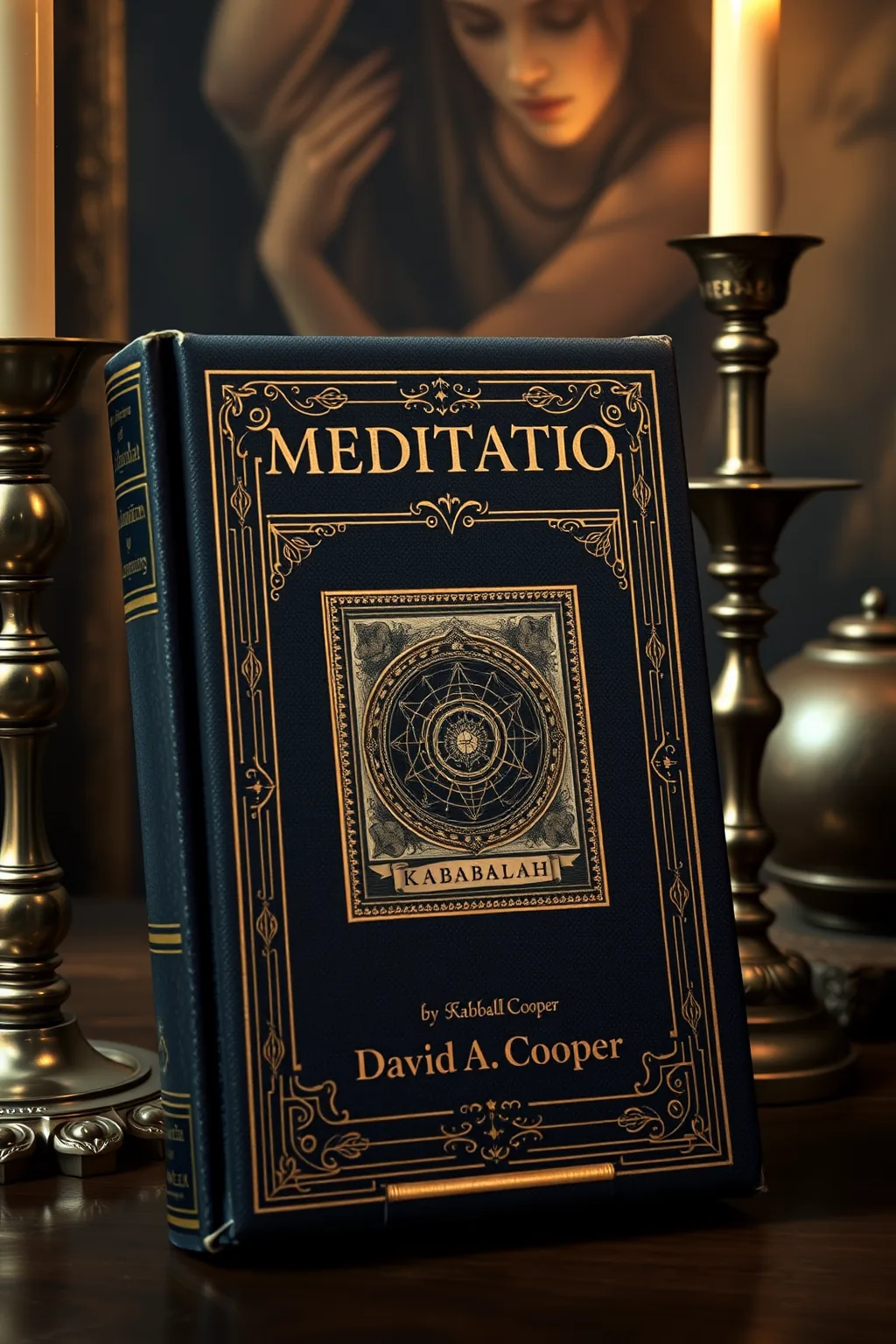
David A. Cooper published Kabbalah Meditation in 2005, detailing meditative practices for Jewish mysticism.
This book presents a structured method for engaging with Kabbalistic teachings through meditation. Cooper aims to make complex Kabbalistic ideas understandable for personal spiritual growth. The work serves as a practical manual, giving techniques to help readers experience the Kabbalistic Tree of Life and its sephirot.
Kabbalah Meditation is for people who want a contemplative way to approach Kabbalistic thought, especially those more interested in direct experience than academic study. It suits meditators, spiritual seekers, and students of esoteric traditions looking to use Kabbalistic principles in their daily lives. While prior knowledge of Kabbalah is not required, an openness to symbolic language and introspection is helpful. The book was published during a time of renewed interest in Western esotericism.
Published in 2005, Cooper's book enters a lineage of practical Kabbalah interpretation. It follows earlier trends in Western esotericism, engaging with interpretations influential in groups like the Hermetic Order of the Golden Dawn. The work connects to a tradition stretching from medieval Kabbalah to modern applications, appearing as digital access to texts and practical guides grew.
💡 Why Read This Book?
• Gain practical techniques for experiencing the Kabbalistic Tree of Life, moving beyond symbolic representation to direct inner awareness, as detailed in the sephirot meditations. • Learn to apply Kabbalistic principles to personal development, understanding concepts like Kether and Malkuth as frameworks for consciousness exploration. • Discover a method for integrating esoteric wisdom into daily life, utilizing the book's guided practices to foster a deeper connection to spiritual realities.
⭐ Reader Reviews
Honest opinions from readers who have explored this book.
❓ Frequently Asked Questions
What is the primary purpose of David A. Cooper's Kabbalah Meditation?
The book's main goal is to provide readers with practical, meditation-based techniques to explore and experience the core concepts of Kabbalah, particularly the Tree of Life, in a personal and experiential way.
Is prior knowledge of Kabbalah required to read this book?
While not strictly mandatory, an openness to symbolic language and introspective practices is beneficial. The book is designed to be accessible, explaining key Kabbalistic ideas for those new to the subject.
What is the Tree of Life in the context of this book?
Cooper presents the Tree of Life as a symbolic map of consciousness and a framework for spiritual development, detailing its ten sephirot and the paths connecting them as focal points for meditation.
How does this book differ from academic studies of Kabbalah?
Unlike purely academic approaches, Kabbalah Meditation emphasizes experiential practice and personal insight, translating complex esoteric doctrines into accessible meditative exercises.
When was Kabbalah Meditation first published?
This work by David A. Cooper was first published in 2005, placing it within a contemporary wave of interest in practical esoteric spirituality.
What are the sephirot mentioned in Kabbalah Meditation?
The sephirot are the ten divine emanations or attributes described in Kabbalah, forming the structure of the Tree of Life. Cooper uses them as the basis for specific meditative practices.
🔮 Key Themes & Symbolism
Experiential Kabbalah
The work champions a hands-on approach to Kabbalah, moving beyond theoretical study to direct inner experience. Cooper guides readers through techniques designed to make the abstract principles of the Tree of Life tangible. This involves detailed meditative exercises focused on the sephirot and the paths, aiming to cultivate a personal, felt understanding of Kabbalistic cosmology and its implications for consciousness.
The Tree of Life as a Psychological Map
Cooper presents the Kabbalistic Tree of Life not merely as a mystical diagram but as a profound model of human consciousness and spiritual development. Each of the ten sephirot is explored as a distinct state of awareness or energetic principle, offering a framework for understanding psychological dynamics and facilitating inner transformation through focused meditation.
Meditative Techniques for Inner Work
The core of the book lies in its practical, guided meditations. These techniques are specifically crafted to help practitioners connect with the archetypal energies of the sephirot and read through the pathways on the Tree of Life. The emphasis is on cultivating specific states of mind and awareness, fostering a direct engagement with the symbolic language of Kabbalah for personal growth.
Bridging Esoteric Traditions
While rooted in Kabbalah, Cooper's approach often bridges with broader esoteric and psychological concepts, making the teachings accessible to a wider audience. The book functions as an entry point, illustrating how ancient mystical systems can be adapted for contemporary spiritual seekers interested in self-discovery and expanded consciousness.
💬 Memorable Quotes
Direct passages from the work, attributed to the author.
“The Tree of Life is a map of consciousness.”
— This concise statement captures Cooper's focus on the practical, psychological application of Kabbalistic symbolism, framing it as a tool for inner exploration rather than purely theological doctrine.
“Each sephirah represents a distinct energetic quality or state of being.”
— This highlights the book's approach to the sephirot, not as abstract divine names, but as accessible experiential states that can be consciously entered and understood through meditation.
“The paths connect the sephirot, representing the journey between states.”
— This emphasizes the dynamic aspect of the Tree of Life, portraying the connections as active pathways for consciousness to traverse, guiding the practitioner's inner journey.
“Meditation allows for direct experience of these Kabbalistic principles.”
— This underscores the book's central thesis: that true understanding of Kabbalah comes not just from reading, but from actively engaging with its symbolic structures through focused contemplative practice.
“Kether is the source, Malkuth is the manifestation.”
— This fundamental Kabbalistic duality is presented as the overarching structure of existence and consciousness, providing a foundational understanding for the meditations that follow.
🌙 Esoteric Significance
Tradition
This work is firmly situated within the Western Esoteric tradition, specifically drawing from Lurianic Kabbalah as popularized and adapted by later mystical and occult movements. It interprets Kabbalistic concepts, such as the Tree of Life and the sephirot, through a lens of practical psychology and consciousness exploration, diverging from purely theological or mystical interpretations found in medieval texts.
Symbolism
The central symbol is the Tree of Life, presented as a map of consciousness and spiritual ascent. The ten sephirot (e.g., Kether, Chokmah, Binah, Tiferet, Malkuth) are key motifs, each representing distinct energetic states or archetypal principles explored through meditation. The paths connecting these sephirot are also significant, symbolizing the stages and transitions in the journey of self-discovery.
Modern Relevance
Cooper's accessible, experiential approach to Kabbalah appeals to contemporary mindfulness practices and psychological exploration. Thinkers and practitioners interested in integrating ancient wisdom traditions with modern self-help and consciousness studies often find his methods valuable. His work provides a bridge for those seeking to engage with Kabbalistic concepts outside of traditional religious or academic frameworks.
👥 Who Should Read This Book
• Students of Western Esotericism seeking a practical, meditative introduction to Kabbalistic concepts like the Tree of Life. • Individuals interested in consciousness studies and psychological exploration who wish to understand symbolic frameworks for inner work. • Meditators and spiritual seekers looking for structured techniques to deepen their contemplative practice using esoteric symbolism.
📜 Historical Context
Published in 2005, David A. Cooper's Kabbalah Meditation arrived during a period of widespread interest in practical spirituality and esoteric traditions. This era saw many Western esoteric schools, including those influenced by the Hermetic Order of the Golden Dawn, making their teachings more accessible. Cooper’s work aligns with a contemporary trend of translating complex mystical systems into user-friendly guides for personal development, contrasting with the more academic or historically focused scholarship of figures like Gershom Scholem from earlier in the 20th century. While not a direct engagement with contemporaries like Philip Berg, whose Kabbalah Centre offered a popular interpretation, Cooper's approach emphasizes a more individual, introspective path to Kabbalistic understanding through meditative practice.
📔 Journal Prompts
The Tree of Life as a map of consciousness: how do its structures reflect your inner landscape?
Reflect on the energetic qualities of Kether and Malkuth in your daily experience.
Describe a meditative journey through one of the paths on the Tree of Life.
How can the sephirot be understood as distinct states of awareness in your life?
What new perspectives on self-understanding emerge from contemplating the Kabbalistic cosmology presented?
🗂️ Glossary
Sephirot
The ten divine emanations or attributes described in Kabbalah, forming the structure of the Tree of Life. Each represents a distinct aspect of the divine and a stage of creation or consciousness.
Tree of Life
A central symbolic diagram in Kabbalah, comprising ten interconnected spheres (sephirot) and twenty-two paths. It is interpreted as a map of creation, consciousness, and the path of spiritual ascent.
Kether
The first Sephirah on the Tree of Life, representing the divine crown, the ultimate source, pure potentiality, and the beginning of emanation.
Malkuth
The tenth and final Sephirah, representing the Kingdom, the physical world, manifestation, and the culmination of divine energy in the material plane.
Paths
The twenty-two lines connecting the Sephirot on the Tree of Life. Each path corresponds to a letter of the Hebrew alphabet and represents a stage or transition in the journey between different levels of consciousness.
Ein Sof
Literally 'Without End' or 'Infinite'. In Kabbalah, it refers to God in His absolute, unknowable essence, beyond all conception or manifestation.
Ayin
Literally 'Nothingness'. Refers to the state of divine potential before creation, the void from which all existence emerges, often associated with Kether or pre-Kether states.
🔮 Readers Also Liked
Browse all →








More by David A. Cooper
All books →



More Free Kabbalah & Jewish Mysticism Books
View all →