The greatest achievement in life
 83
83

The greatest achievement in life


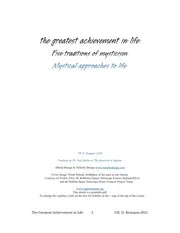
R.D. Krumpos' 'The Greatest Achievement in Life' is a profound exploration of the mystical traditions that have shaped human spirituality for centuries. The book's strength lies in its ability to distill the essence of Buddhist, Christian, Hindu, Kabbalah, and Sufi mysticism into a coherent and accessible narrative. Krumpos' scholarly approach, combined with his deep spiritual insight, makes this text invaluable for modern esoteric seekers. The author's discussions on the similarities and differences among these mystical paths provide a fresh perspective, encouraging readers to see the interconnectedness of all spiritual traditions. For those on a spiritual journey, this book serves as a guiding light, offering practical advice and philosophical depth. It is a must-have for anyone interested in the mystical dimensions of life.
📝 Description
83
R.D. Krumpos's 2012 book connects Buddhist, Christian, Hindu, Kabbalistic, and Sufi mystical traditions.
The Greatest Achievement in Life examines the shared mystical core across several major spiritual paths. R.D. Krumpos identifies common symbolism and philosophical underpinnings that link traditions such as Buddhism, Christianity, Hinduism, Kabbalah, and Sufism. The book aims to show how these diverse systems point toward a unified understanding of ultimate reality and the divine.
Krumpos presents these connections through an introspective lens, suggesting that a deeper awareness of self and the divine is attainable. The work outlines specific mystical approaches to living, offering insights for those seeking a more profound grasp of existence. It focuses on the practical application of these spiritual concepts for personal growth and enlightenment.
This work fits within the comparative mysticism genre, a tradition that seeks to find universal truths and common threads among diverse religious and spiritual systems. It operates on the premise that beneath the varied rituals and doctrines of faiths like Buddhism, Christianity, Hinduism, Kabbalah, and Sufism, there lies a shared esoteric understanding of existence. The book assumes an audience interested in perennial philosophy, the idea that certain spiritual insights are constant and accessible across cultures and time.
✍️ Author
💡 Why Read This Book?
Reading 'The Greatest Achievement in Life' today offers a unique opportunity to explore the mystical dimensions of various religious traditions. This book provides readers with a deeper understanding of the ultimate reality and the interconnectedness of all mystical paths. By delving into the wisdom of Buddhist, Christian, Hindu, Kabbalah, and Sufi mysticism, readers can gain practical insights and spiritual enlightenment. This text is particularly valuable for modern esoteric seekers looking to integrate mystical practices into their daily lives.
⭐ Reader Reviews
Honest opinions from readers who have explored this book.
❓ Frequently Asked Questions
What is the main theme of 'The Greatest Achievement in Life'?
The main theme of the book is the exploration of the ultimate reality through the lens of Buddhist, Christian, Hindu, Kabbalah, and Sufi mysticism. It highlights the similarities and shared principles among these traditions.
Who should read this book?
This book is ideal for spiritual seekers, esoteric practitioners, and anyone interested in the mystical dimensions of human experience. It is also valuable for those looking to deepen their understanding of comparative religion.
What historical context does the book provide?
The book draws from the rich history of Jewish mysticism and comparative religion, offering a historical context that enriches the reader's understanding of the mystical traditions discussed.
🔮 Key Themes & Symbolism
Conscious Oneness
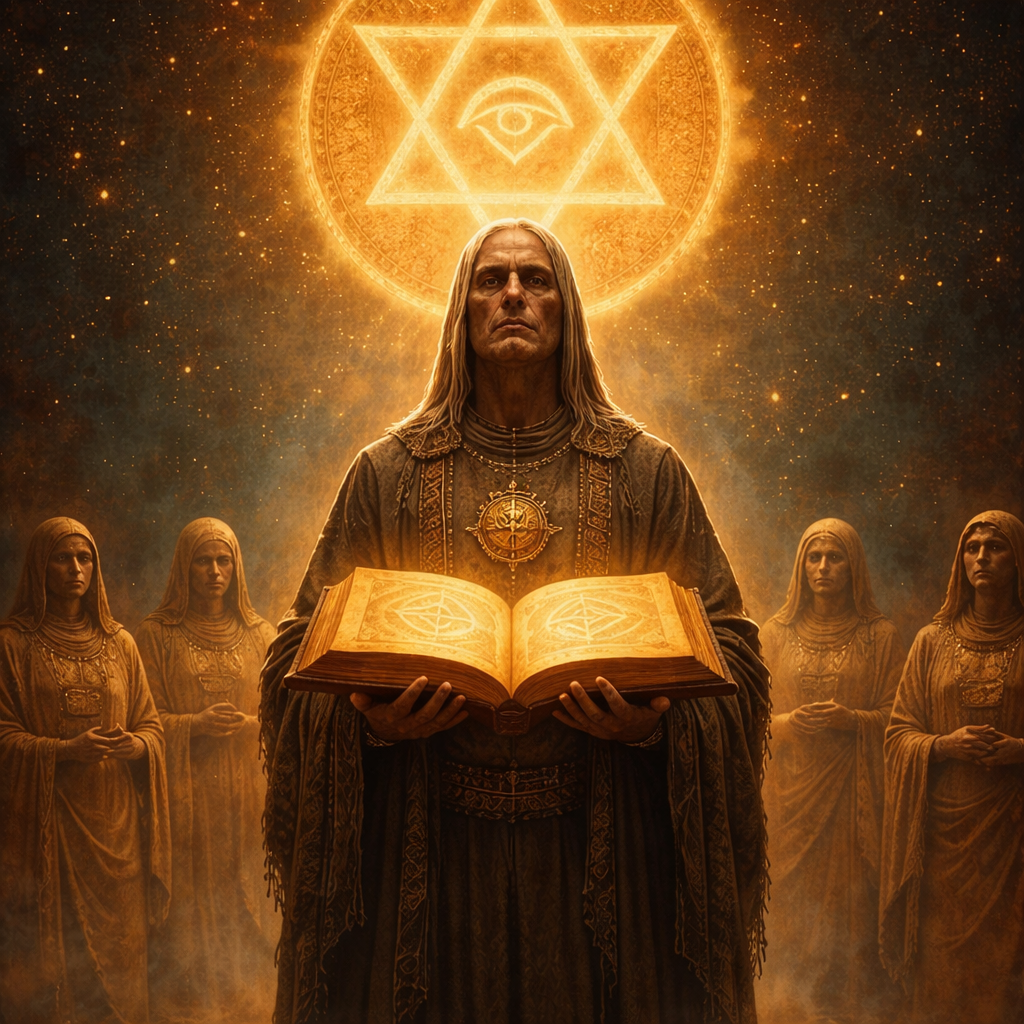
Krumpos looks at the concept of conscious oneness with ultimate reality, a central theme in Buddhist, Christian, Hindu, Kabbalistic, and Sufi mysticism. This theme emphasizes the unity of all existence and the potential for individuals to achieve a state of enlightenment and spiritual connection.
Comparative Mysticism
The book offers a comparative analysis of mystical traditions, highlighting their similarities and differences. This theme provides a broad perspective on the universal quest for spiritual truth and the various paths that lead to it.
Esoteric Symbolism
Krumpos explores the strong symbolism found in mystical traditions, revealing hidden knowledge and ancient wisdom. This theme invites readers to delve deeper into the esoteric aspects of spirituality, uncovering layers of meaning that are often overlooked in mainstream religious practices.
💬 Memorable Quotes
Direct passages from the work, attributed to the author.
“Mysticism reveals the hidden threads that bind all traditions together.”
— Krumpos highlights the interconnectedness of mystical traditions, offering a unified view of spiritual practices.
“The path to ultimate reality is a journey of the heart and mind.”
— Krumpos encourages readers to engage both intellectually and emotionally in their spiritual quest.
💡 Key Ideas
Editorial paraphrase of the work's core concepts — not direct quotes.
The greatest achievement in life is to live in conscious oneness with ultimate reality.
This quote underscores the central theme of the book, emphasizing the quest for spiritual enlightenment.
Symbolism is the language of the soul, speaking in whispers of ancient wisdom.
This quote emphasizes the importance of esoteric symbolism in understanding deeper spiritual truths.
True spiritual achievement is not about belief, but about experience.
This quote emphasizes the experiential nature of mystical practices, focusing on direct spiritual encounters.
🌙 Esoteric Significance
Tradition
This book belongs to the Kabbalistic and Hermetic traditions, which emphasize the pursuit of hidden knowledge and spiritual enlightenment. It draws on the esoteric wisdom of multiple mystical paths to offer a comprehensive view of spiritual achievement.
Symbolism
Key symbols in the book include the Tree of Life from Kabbalah, the mandala from Hinduism, and the enneagram from Sufism. These symbols represent the interconnectedness of all existence and the journey toward spiritual unity.
Modern Relevance
Today, where spiritual seekers often explore multiple traditions, Krumpos' work remains relevant. Modern practitioners use his insights to deepen their understanding of mystical practices and to achieve a more integrated spiritual experience.
👥 Who Should Read This Book
Beginners interested in mystical traditions will find this book accessible and enlightening. Scholars of comparative mysticism will appreciate its comprehensive analysis. Spiritual seekers looking to deepen their practice will benefit from its esoteric insights. Practitioners of Kabbalah, Sufism, Hinduism, Buddhism, and Christianity will find valuable perspectives on their respective traditions.
📜 Historical Context
The Greatest Achievement in Life was written in an era where interest in comparative mysticism was growing. Krumpos' work is significant because it bridges the gap between Eastern and Western spiritual traditions, providing a holistic view of mystical practices. Its influence lies in its ability to inspire readers to seek a deeper understanding of the divine, regardless of their religious background. The book's historical context is one of increasing spiritual ecumenism, where the search for universal truths transcends cultural and religious boundaries.
📔 Journal Prompts
Reflect on your own experiences of spiritual oneness. What moments have felt most connected to ultimate reality?
How do the symbols in your spiritual tradition resonate with those discussed in the book?
Consider the similarities and differences between your mystical practices and those of other traditions.
What role does esoteric knowledge play in your spiritual journey?
How can you integrate the insights from this book into your daily spiritual practice?
🗂️ Glossary
Conscious Oneness
The state of being fully aware of one's unity with ultimate reality.
Comparative Mysticism
The study of mystical traditions across different religions and cultures.
Esoteric Symbolism
Symbols that convey hidden or mystical knowledge.
Kabbalah
A mystical tradition within Judaism that explores the hidden aspects of God and the universe.
Sufism
The mystical branch of Islam that emphasizes direct experience of God.
This book appears in 1 collection
🔮 Readers Also Liked
Browse all →







From the “Kabbalah” Collection
View all →




More Free Kabbalah & Jewish Mysticism Books
View all →