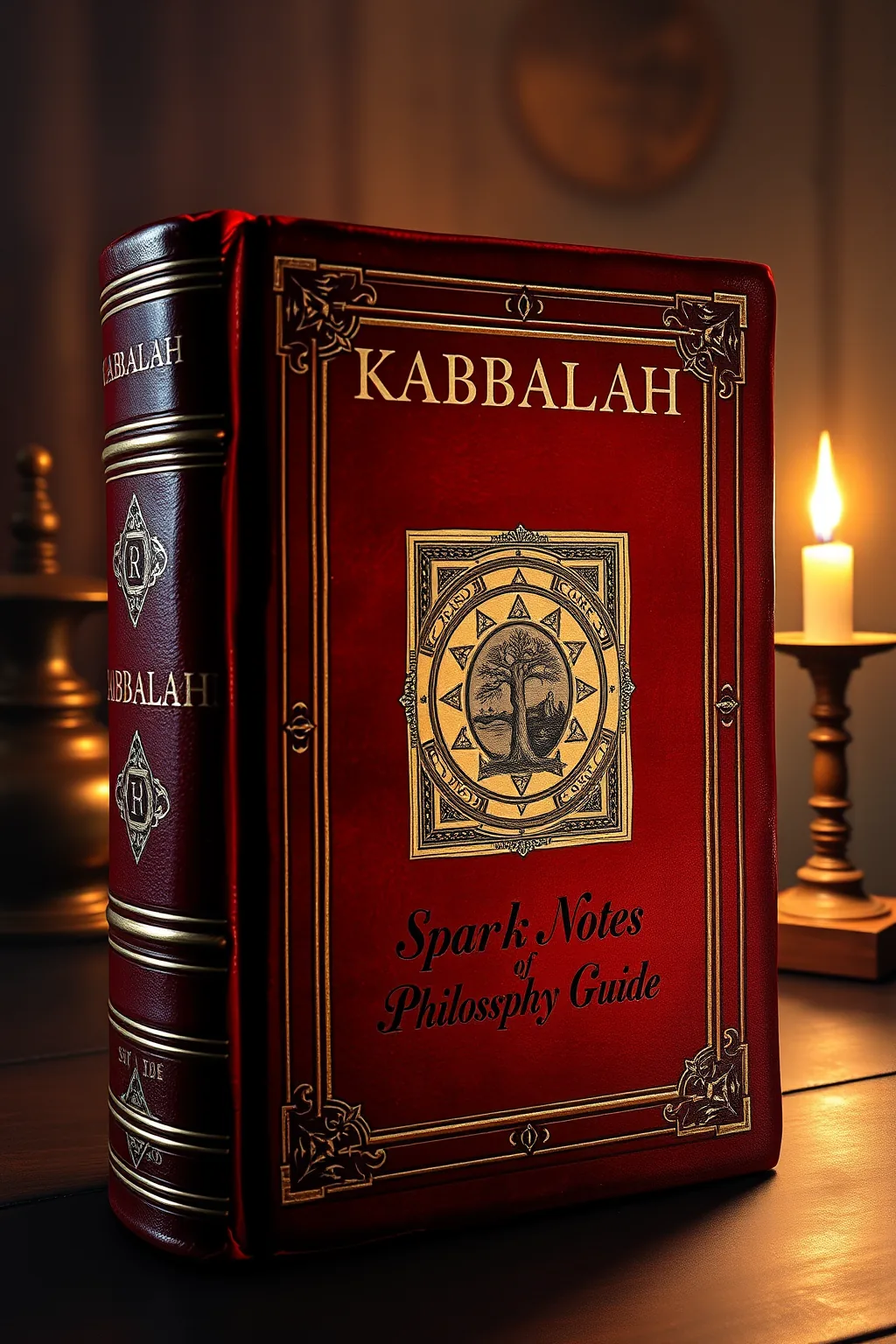
Kabbalah (SparkNotes Philosophy Guide)
 61
61

Kabbalah (SparkNotes Philosophy Guide)

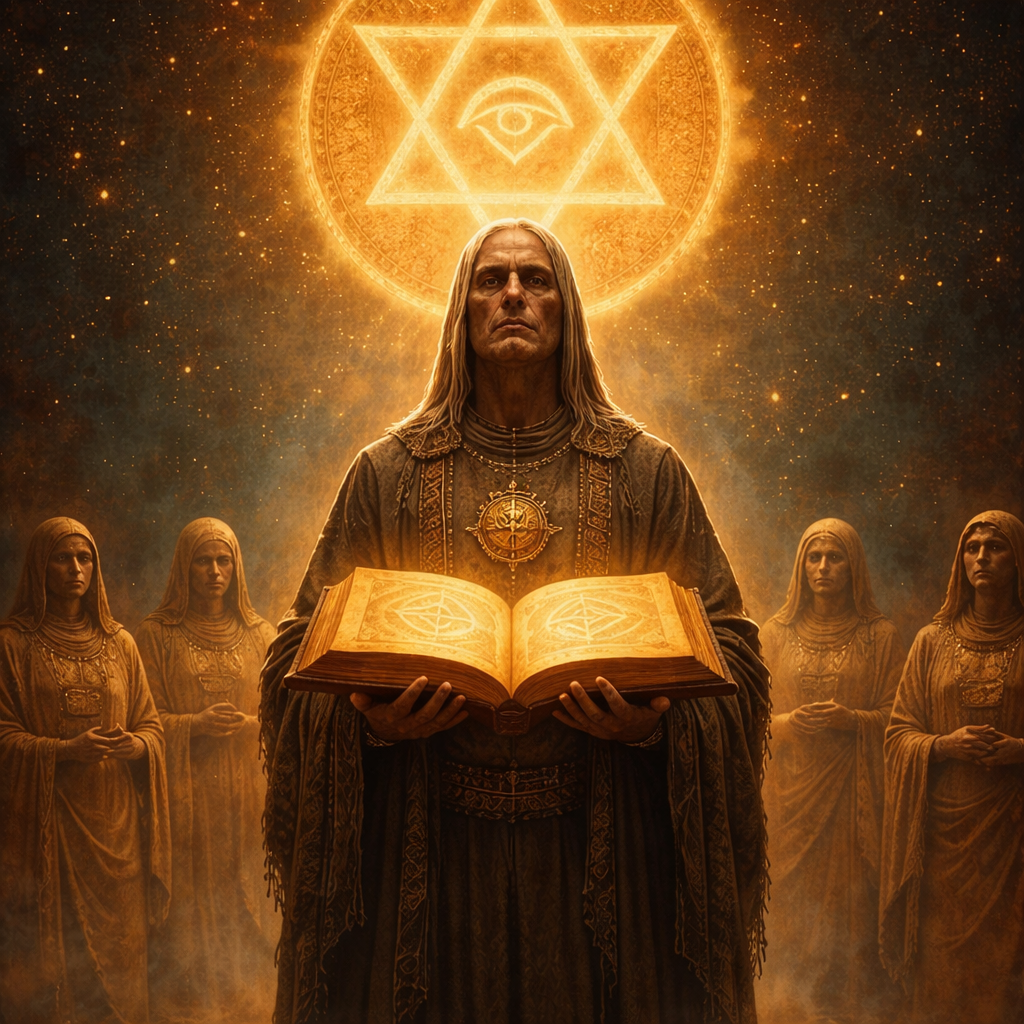

Isolde Whitaker, Sacred Texts Editor, Esoteric Library: 'SparkNotes' concise approach to Kabbalah offers a remarkably lucid entry point into this profoundly complex esoteric tradition. It masterfully distills intricate concepts like the Sefirot and the Tree of Life into digestible insights, making them accessible without sacrificing their mystical potency. While not a replacement for deeper scholarly works, it serves as an invaluable primer for those drawn to the hidden currents of Jewish mysticism. Its strength lies in its clarity and its ability to ignite further exploration for beginners and practitioners seeking a foundational grasp of Kabbalistic principles.
📝 Description
61
This 2002 SparkNotes guide explains Jewish mysticism's core ideas.
This guide from SparkNotes aims to clarify the fundamental concepts of Kabbalah. It breaks down the complex symbolism and philosophical ideas within Jewish mysticism for a general audience. The book covers key elements like the Tree of Life and the Sefirot, explaining how these represent divine emanations in creation. It is written for both those new to the subject and those with some prior knowledge, seeking to make the tradition's ideas accessible.
The text focuses on presenting Kabbalistic thought in a clear manner. It discusses the relationship between the material world and the divine within this tradition. The goal is to offer a structured understanding of the spiritual framework of the cosmos as understood in Kabbalah. The book serves as an introduction to a tradition that has influenced thought for centuries.
Kabbalah is a form of Jewish mysticism that seeks to understand the divine nature and the relationship between God and creation. Its teachings often involve symbolic interpretations of scripture and the use of mystical diagrams like the Tree of Life. The tradition's concepts, such as the Sefirot (divine attributes or emanations), are central to its cosmology. This SparkNotes guide situates itself within this rich historical and spiritual tradition, aiming to provide an entry point for understanding these esoteric elements.
💡 Why Read This Book?
This guide is your compass for navigating the luminous depths of Kabbalah. Ideal for beginners seeking an accessible introduction, scholars desiring a foundational overview, and practitioners yearning to deepen their understanding of its core tenets. It illuminates the path to grasping ancient esoteric wisdom, offering clear explanations of complex symbolism and philosophical concepts, making the mystical accessible.
⭐ Reader Reviews
Honest opinions from readers who have explored this book.
❓ Frequently Asked Questions
What is Kabbalah?
Kabbalah is a mystical and esoteric tradition within Judaism that seeks to understand the nature of God, the universe, and humanity's place within it through divine revelation and spiritual contemplation.
What is the Tree of Life?
The Tree of Life is a central symbol in Kabbalah, representing the divine emanations (Sefirot) and the structure of the cosmos, illustrating the path from the Infinite Divine to the manifest world.
Who are the primary figures in Kabbalah?
Key figures include the prophet Moses, Rabbi Shimon bar Yochai (credited with the Zohar), and later mystics like Isaac Luria and Abraham Abulafia.
Is Kabbalah only for Jewish people?
While rooted in Jewish tradition, the study and practice of Kabbalah have attracted interest from individuals of diverse backgrounds seeking spiritual and philosophical insights.
What is the goal of Kabbalistic study?
The ultimate goal is often described as achieving spiritual enlightenment, understanding the divine mysteries, and fostering a closer connection with God through contemplation and ethical living.
🔮 Key Themes & Symbolism
The Tree of Life and the Sefirot
The central tenet of Kabbalah is the Tree of Life, a symbolic map of creation composed of ten divine emanations known as the Sefirot. This intricate diagram illustrates the flow of divine energy from the Infinite (Ein Sof) to the material world, revealing the interconnectedness of all existence. Each Sefirah represents a unique attribute of God and a stage in the creative process, offering a framework for understanding divine revelation, human consciousness, and the spiritual journey towards unity. Its study unlocks useful insights into the divine plan and the hidden order of the cosmos.
Divine Emanation and Creation
Kabbalah posits that the universe is not created ex nihilo but emanates from the Infinite, Unknowable God (Ein Sof) through a series of divine outflows. This process of emanation, visualized through the Tree of Life, explains the structured unfolding of reality from pure spirit to physical form. Understanding these divine currents allows for a deeper appreciation of the sacredness inherent in all creation and the underlying unity that binds the diverse aspects of existence. It offers a mystical perspective on cosmology and the perpetual dance of divine manifestation.
The Nature of the Soul and Spiritual Ascent
Within Kabbalistic thought, the human soul is seen as a divine spark, possessing multiple levels and a profound connection to its divine source. The esoteric practices and philosophical insights of Kabbalah are often geared towards spiritual ascent, helping individuals to purify their souls, overcome worldly attachments, and achieve a state of divine awareness. This journey involves understanding the interplay between the material and spiritual realms, recognizing the soul's potential for growth, and striving to align oneself with the divine will, ultimately seeking union with the Infinite.
💬 Memorable Quotes
Direct passages from the work, attributed to the author.
“Seek the hidden within the revealed, the infinite within the finite.”
— This highlights the esoteric nature of Kabbalah, urging practitioners to look beyond the superficial to uncover deeper, spiritual truths embedded in everyday existence.
“The Sefirot are the steps to the divine.”
— This succinctly explains the function of the Sefirot as a pathway or ladder for spiritual ascent, enabling a connection between the human and the divine realms.
“Within the silence, the voice of creation speaks.”
— This points to the meditative and contemplative aspects of Kabbalah, suggesting that profound understanding can be attained through inner stillness and receptivity.
“Know thyself, to know the Divine.”
— This emphasizes the introspective journey central to Kabbalah, where self-understanding is seen as a crucial prerequisite for comprehending the nature of God.
💡 Key Ideas
Editorial paraphrase of the work's core concepts — not direct quotes.
The universe is a divine range, woven with threads of light.
This quote evokes the Kabbalistic understanding of creation as a divinely orchestrated and interconnected system, emphasizing the luminous and spiritual nature of reality.
🌙 Esoteric Significance
Tradition
Kabbalah is the primary esoteric tradition within Judaism, offering a mystical interpretation of Jewish scripture and theology. It looks at the hidden meanings of the Torah, the divine names, and the cosmic order. This tradition seeks to unlock profound spiritual truths and provide a framework for direct experience of the divine, distinguishing it from exoteric religious practice by its focus on concealed knowledge and spiritual transformation.
Symbolism
The symbolism of Kabbalah is rich and complex, with the Tree of Life serving as its central icon. Other potent symbols include Hebrew letters, divine names, and the interplay of light and darkness, representing divine emanations and their manifestation. These symbols are not mere representations but are considered living conduits of divine energy, intended to facilitate deeper understanding and spiritual connection through contemplation and meditation.
Modern Relevance
In contemporary times, Kabbalah continues to resonate with seekers across the globe, offering a profound spiritual framework for working through the complexities of modern life. Its emphasis on interconnectedness, personal transformation, and the search for meaning provides a compelling alternative to purely materialistic worldviews. The esoteric principles of Kabbalah offer tools for self-discovery, ethical living, and a deeper appreciation of the divine presence within oneself and the universe.
👥 Who Should Read This Book
This SparkNotes guide is an indispensable resource for a diverse audience. For the **beginner**, it provides a clear and accessible entry into the complex world of Kabbalah, clarifying its core concepts. **Scholars** will find it a useful primer for understanding the foundational elements before examining more advanced texts. **Spiritual seekers** drawn to the mystical dimensions of Judaism will discover a roadmap to exploring divine mysteries and personal transformation. **Practitioners** of meditation or contemplation may find its insights valuable for deepening their understanding of esoteric principles and their application in spiritual practice.
📜 Historical Context
The development of Kabbalah spans centuries, with its roots tracing back to early Jewish mysticism and apocalyptic literature. Its formative period, particularly in the medieval era, saw a flourishing of complex theological and cosmological ideas, most notably in the creation of the Zohar, a foundational text attributed to Rabbi Shimon bar Yochai. This period, marked by intellectual ferment and spiritual yearning, saw Kabbalah emerge as a distinct and influential branch of Jewish thought. Later, the Lurianic Kabbalah in the 16th century introduced new concepts like Tikkun (rectification), profoundly shaping its trajectory. Kabbalah's influence extended beyond Jewish circles, impacting various esoteric and philosophical movements throughout history, demonstrating its enduring appeal as a system of profound spiritual inquiry.
📔 Journal Prompts
Reflect on the concept of divine emanation. How does this idea change your perception of the universe?
Consider the Sefirot. Which Sefirah resonates most with your current life experience, and why?
Explore the symbolism of the Tree of Life. What hidden connections or patterns do you observe?
How can the Kabbalistic understanding of the soul inform your personal spiritual journey?
What does it mean to seek the 'hidden within the revealed' in your daily life?
🗂️ Glossary
Ein Sof
The Kabbalistic term for the Infinite, Unknowable Divine Being, the ultimate source of all existence that transcends all comprehension and description.
Sefirot
The ten divine emanations or attributes of God, forming the structure of the Tree of Life and representing the stages of creation and divine manifestation.
Tree of Life
A central symbol in Kabbalah, a diagram depicting the ten Sefirot and their interrelationships, illustrating the process of creation and divine revelation.
Tikkun
A key concept, particularly in Lurianic Kabbalah, referring to the spiritual rectification or restoration of the world, often achieved through human action and spiritual endeavor.
Zohar
The primary foundational text of Kabbalah, a mystical commentary on the Torah, rich with allegorical narratives, theological discussions, and esoteric interpretations.
This book appears in 1 collection
🔮 Readers Also Liked
Browse all →








From the “Kabbalah” Collection
View all →








More Free Kabbalah & Jewish Mysticism Books
View all →