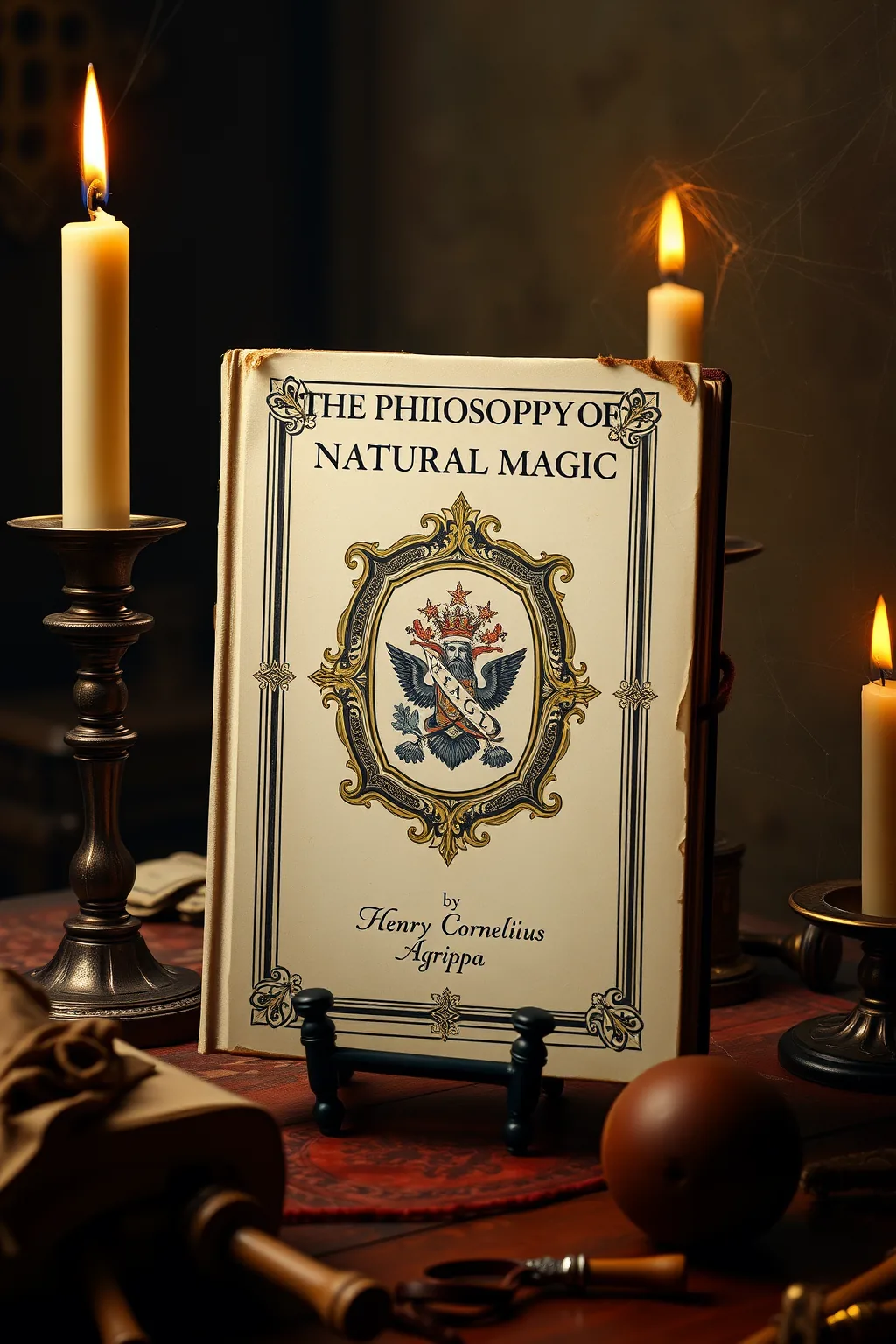
The Philosophy of Natural Magic
 84
84

The Philosophy of Natural Magic


Silas Hawthorne (Hermetic Studies Editor) — Agrippa's 'The Philosophy of Natural Magic' remains an indispensable cornerstone for any serious student of Western esotericism. This 1913 edition thoughtfully contextualizes Agrippa's revolutionary assertion of magic as divine science, dismantling outdated notions of diabolical practice. It offers profound insights into Neoplatonic cosmology, Kabbalistic principles, and theurgical arts, presented with scholarly rigor. The text's strength lies in its comprehensive exploration of correspondences, from the celestial to the terrestrial, providing a framework for understanding the universe as a unified, living organism. Essential reading for those seeking to grasp the intellectual and spiritual foundations of modern occultism.
📝 Description
84
First published in 1531, Agrippa's 'De Occulta Philosophia' argues magic is a divine science, not superstition.
Henry Cornelius Agrippa's 'The Philosophy of Natural Magic,' presented here in its 1913 edition, examines magic as a sacred discipline connected to the cosmos. Agrippa, a key Renaissance occultist, structures his work into three books, detailing the principles of natural, celestial, and spiritual magic. He explains how the forces of the heavens, the elements, and human thought interact. The book discusses the use of symbols, talismans, and divine names to influence the world. Agrippa presents magic not as trickery, but as a way to understand and participate in the universe's underlying order.
This edition includes background information to help readers grasp Agrippa's complex ideas. It is a philosophical examination of existence and humanity's role within the grand design. The text invites readers to consider the fundamental laws governing reality and the potential for human consciousness to interact with them. It is a serious study for those interested in the history of magical thought and its philosophical underpinnings.
Agrippa's work is a cornerstone of Renaissance hermeticism and occult philosophy. It synthesizes Neoplatonic thought, Kabbalah, and ancient magical traditions into a coherent system. Unlike earlier grimoires focused solely on ritual, Agrippa's treatise presents a philosophical framework for understanding the magical arts. He sought to legitimize magic as a form of divine knowledge, accessible through rigorous study and intellectual discipline, placing it within the broader currents of natural philosophy of his time.
✍️ Author
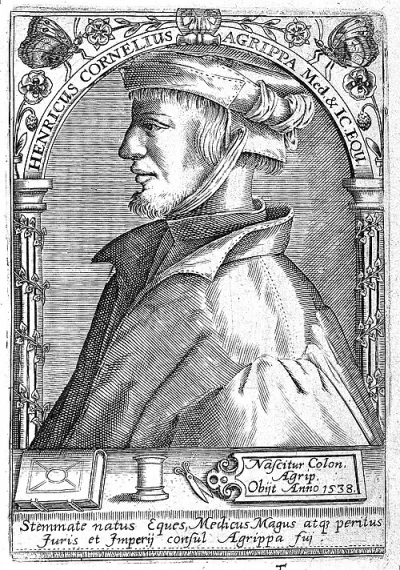
Henry Cornelius Agrippa
Heinrich Cornelius Agrippa was a German Renaissance polymath, physician, and occult writer.
Occultist
💡 Why Read This Book?
Embark on a transformative journey into the heart of Renaissance occult philosophy. 'The Philosophy of Natural Magic' is essential for seekers wishing to understand magic as a divine art, not mere trickery. Scholars will find rich historical context, while practitioners gain access to foundational principles of ritual and cosmic harmony. Rediscover the ancient wisdom that connects mind, matter, and spirit.
⭐ Reader Reviews
Honest opinions from readers who have explored this book.
❓ Frequently Asked Questions
What is 'Natural Magic' according to Agrippa?
Agrippa defines Natural Magic as a divine science, a sacred understanding of the universe's hidden forces and correspondences, granted by God. It involves harmonizing with these forces through knowledge and ritual, rather than demonic pacts.
When was Agrippa's original work first published?
The original work, 'De Occulta Philosophia Libri Tres,' was first published in parts between 1531 and 1533, a pivotal period in the history of occult thought.
Is this book suitable for absolute beginners?
While dense, the 1913 edition's contextual material aids newcomers. However, a foundational interest in philosophy and mysticism is recommended for full appreciation of Agrippa's complex ideas.
What are the primary influences on Agrippa's philosophy?
Agrippa was heavily influenced by Neoplatonism, Hermeticism, Kabbalah, and ancient Greek philosophical traditions, integrating them into a cohesive system of occult understanding.
Does this book provide practical magical instructions?
While it lays the theoretical groundwork for ritual and magical practice by explaining principles, it is primarily a philosophical exploration rather than a step-by-step grimoire.
🔮 Key Themes & Symbolism
The Divine Nature of Magic
Agrippa radically redefines magic, positing it not as a forbidden art but as a God-given science. This theme explores how understanding the divine order of the cosmos grants humanity the ability to participate in creation. It explores the concept of 'virtues' inherent in all things, from celestial bodies to earthly elements, and how their manipulation through knowledge and will aligns one with God's plan, revealing magic as a path to spiritual enlightenment and cosmic harmony.
The Microcosm and Macrocosm
A central tenet of Agrippa's philosophy is the profound interconnectedness between the human being (microcosm) and the universe (macrocosm). This theme investigates how the patterns and forces present in the greater cosmos are mirrored within the human soul and body. Understanding these correspondences allows for a deeper comprehension of one's own nature and the ability to influence external reality by working with sympathetic relationships, highlighting humanity's intrinsic link to all of existence.
The Power of Symbols and Correspondences
Agrippa emphasizes the potent language of symbols, signs, and numbers as keys to unlocking universal secrets. This theme explores the intricate web of correspondences that bind the spiritual and material worlds – from planetary influences and angelic hierarchies to sacred names and talismans. By deciphering and utilizing these symbolic languages, practitioners can engage with higher powers and achieve specific magical aims, demonstrating that the universe communicates through a wide range of hidden meanings.
💬 Memorable Quotes
Direct passages from the work, attributed to the author.
“For there is nothing in the visible world, but is a sign and figure of the invisible world.”
— This highlights the principle of correspondence, suggesting that all earthly phenomena are reflections or symbols of higher, spiritual realities, forming a bridge between the seen and unseen realms.
“The world is a great beast, and the man is a little beast.”
— Illustrates the microcosm-macrocosm relationship, emphasizing that the principles governing the vast universe are present in a smaller, comprehensible form within the human being.
“The true natural magician is a philosopher, and a theologian.”
— Reinforces Agrippa's view that effective natural magic requires deep intellectual and spiritual understanding, integrating philosophical inquiry and theological comprehension.
“There is a certain sacred sympathy, and consent of things in the universe.”
— Points to the underlying unity and interconnectedness of all creation, suggesting that by understanding these sympathetic links, one can influence and harmonize with the natural order.
💡 Key Ideas
Editorial paraphrase of the work's core concepts — not direct quotes.
Magic is the most highest philosophy, and the summary of all the most secret sciences.
This quote captures Agrippa's core argument: magic is not mere sorcery, but the ultimate pursuit of wisdom, integrating all branches of knowledge to understand the divine workings of the universe.
🌙 Esoteric Significance
Tradition
Agrippa's work is a foundational text within the Western Esoteric Tradition, acting as a crucial bridge between ancient philosophies and later occult developments. It synthesizes Neoplatonism, Hermeticism, and Kabbalah, presenting a unified worldview where magic is understood as a natural, divinely ordained science. This tradition seeks to understand and interact with the hidden forces and spiritual hierarchies that govern existence, aiming for spiritual illumination and mastery over the material world through knowledge and ritual.
Symbolism
The text is rich with symbolism, drawing heavily on the Pythagorean emphasis on number, the Hermetic concept of 'as above, so below,' and Kabbalistic diagrams like the Tree of Life. Celestial bodies, elemental forces, angelic names, sacred geometry, and alchemical processes are all imbued with profound symbolic meaning. Agrippa uses these symbols to illustrate the intricate web of correspondences that link the spiritual, celestial, and terrestrial realms, offering keys to understanding and manipulating these connections for magical effect.
Modern Relevance
Despite its Renaissance origins, Agrippa's philosophy remains remarkably relevant. His emphasis on the interconnectedness of all things appeals to modern ecological and systems thinking. The exploration of consciousness, symbolism, and the power of intention continues to inform contemporary psychology and spiritual practices. 'The Philosophy of Natural Magic' provides a profound intellectual and spiritual foundation for modern practitioners and scholars seeking to understand the roots of Western esotericism and its enduring influence on our perception of reality.
👥 Who Should Read This Book
This key work is essential for serious students of Western esotericism, offering a profound understanding of Renaissance occult thought. Scholars of philosophy, history, and religion will find invaluable historical context and intellectual depth. Mystical seekers and spiritual practitioners yearning to explore the divine nature of magic and the interconnectedness of the cosmos will discover a wide range of wisdom. Beginners with a genuine curiosity for the metaphysical and a willingness to engage with complex ideas will find this edition, with its supporting materials, an accessible, albeit challenging, gateway.
📜 Historical Context
Published during the intellectual ferment of the Renaissance, a period marked by a resurgence of interest in classical learning and esoteric traditions, Henry Cornelius Agrippa's 'De Occulta Philosophia Libri Tres' emerged as a monumental work. This era saw scholars grappling with the integration of Christian theology with Hermetic, Neoplatonic, and Kabbalistic thought, seeking to reconcile ancient wisdom with contemporary understanding. Agrippa, a polymath and physician, navigated this complex intellectual landscape, synthesizing diverse streams of occult philosophy into a unified system. His assertion of magic as a divine science, rather than a diabolical practice, was revolutionary, challenging prevailing superstitions and offering a sophisticated framework for understanding the universe's hidden mechanisms. This 1913 edition provides a tangible link to this central moment in Western esoteric history.
📔 Journal Prompts
Reflect on a 'sacred sympathy' you have observed in nature. How might this connect the visible and invisible realms?
Agrippa sees magic as divine science. How does this perspective challenge traditional notions of magic, and what does it imply about the divine?
Consider the concept of the microcosm and macrocosm. In what ways do you see the universe reflected within yourself, and vice versa?
What symbols hold significant personal meaning for you? How might these symbols act as keys to understanding deeper truths or influencing your reality?
How does Agrippa's view of magic as knowledge and harmony differ from common portrayals, and what are the implications for its practice?
🗂️ Glossary
Neoplatonism
A philosophical system originating in the 3rd century AD, heavily influenced by Plato, emphasizing the concept of 'The One' as the ultimate, transcendent source of all reality, from which all existence emanates.
Hermeticism
A religious, philosophical, and esoteric tradition based primarily upon the writings attributed to Hermes Trismegistus, a legendary Hellenistic figure. It emphasizes divine wisdom, magic, alchemy, and astrology.
Kabbalah
A system of Jewish mysticism that explores the relationship between the divine, the universe, and humanity, often represented by the Tree of Life diagram and complex symbolic interpretations of scripture.
Theurgy
A system of ritual magic or spiritual practice aimed at invoking the gods or divine powers to achieve a closer union with the divine or to influence the material world through divine intervention.
Correspondences
The principle in esoteric philosophy that different elements, forces, or entities in the universe share a sympathetic relationship or analogy, such as planets corresponding to metals, colors, or body parts.
This book appears in 2 collections
🔮 Readers Also Liked
Browse all →








More by Henry Cornelius Agrippa
All books →

From the “Low Magic” Collection
View all →







More Free Magic & Ritual Books
View all →