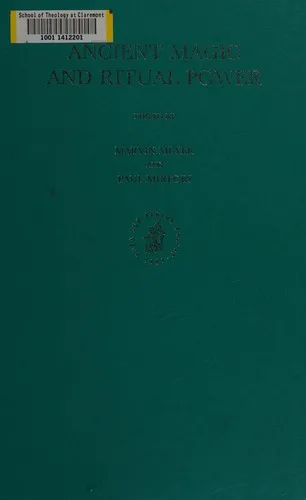
Ancient magic and ritual power
 63
63

Ancient magic and ritual power


Cassian Rothmann, Senior Critic, Ancient Wisdom: Marvin W. Meyer's "Ancient Magic and Ritual Power" is an indispensable compendium for serious students of the esoteric. This collection of essays transcends mere historical recounting, offering profound insights into the philosophical underpinnings and symbolic intricacies of ancient magical practices. The authors, luminaries in their respective fields, meticulously unpack the linguistic nuances of ritual, clarifying the often-misunderstood nature of ancient magic as a polemical force. Its strength lies in its interdisciplinary approach, weaving together threads from Egypt, the Near East, and the Greco-Roman world. This volume is a vital resource for scholars and practitioners alike, illuminating the roots of Western esoteric traditions and providing context for contemporary magical inquiry. It is a rigorous yet accessible exploration of humanity's enduring fascination with the powers that lie beyond the mundane.
📝 Description
63
Marvin W. Meyer's 1999 collection examines magic as a force shaping ancient civilizations.
This collection looks at magic and ritual power across several ancient cultures. Meyer brings together essays from scholars in Egyptology, Near Eastern studies, Judaica, classical antiquity, and early Christian traditions. The book analyzes the language and terminology used in magical practices and rituals, moving beyond simple definitions of superstition. It presents magic as a complex element intertwined with the religious, mythological, and philosophical ideas of its time.
The essays uncover how power was understood and enacted through ritual, exploring the symbolic language of sacred traditions. It also considers the human desire to understand and influence the cosmos. This work provides a look at early esoteric thought and practice, showing how these ideas connect to later spiritual and intellectual developments. It aims to reveal aspects of ancient practices and the ongoing human interest in mystery and the unknown.
This book situates magic and ritual within the historical development of religious and philosophical systems in antiquity. It examines these practices not as separate occult arts, but as integral components of ancient belief structures, alongside mythology and cosmology. The essays reflect a scholarly approach to understanding the historical function and conceptualization of magic, placing it within the broader spectrum of human attempts to interact with perceived cosmic forces. It traces connections between these early practices and the continuing lineage of esoteric thought.
💡 Why Read This Book?
Uncover the primordial roots of esoteric knowledge and ritual. This book offers a scholarly yet accessible exploration of ancient magic's power and its profound impact on civilization. Ideal for seekers of hidden wisdom, students of comparative religion, and practitioners seeking historical context for their craft. It illuminates the sophisticated understanding of the cosmos and human agency in antiquity.
⭐ Reader Reviews
Honest opinions from readers who have explored this book.
❓ Frequently Asked Questions
What is the primary focus of this book?
The book focuses on exploring expressions of magic and ritual power in the ancient world, examining the terminology and polemical aspects of these practices through scholarly essays.
Who are the contributors to this volume?
The essays are authored by leading scholars from diverse fields including Egyptology, ancient Near Eastern studies, the Hebrew Bible, Judaica, classical Greek and Roman studies, early Christianity, and Coptology.
How does this book clarify the concept of ancient magic?
By meticulously examining the terms used in descriptions of ancient magic, the book clarifies its role as a polemical force and a complex system of belief and practice.
Is this book suitable for beginners?
While scholarly, the book's comprehensive approach and expert insights make it a valuable starting point for dedicated beginners interested in the historical and philosophical underpinnings of magic.
What kind of 'power' is explored in this book?
The 'power' explored is the influence and agency attributed to magical and ritualistic practices within ancient societies, encompassing spiritual, social, and cosmological dimensions.
🔮 Key Themes & Symbolism
The Semantics of Sorcery
This theme studies the intricate linguistic range of ancient magic, dissecting the very words and phrases employed by practitioners and detractors alike. It aims to clarify the nuanced meanings behind terms like 'magic,' 'witchcraft,' and 'ritual,' revealing how these designations were often polemical tools used to categorize and control perceived supernatural influences. By meticulously analyzing ancient texts, this exploration unearths the conceptual frameworks that underpinned magical beliefs and practices, offering a deeper understanding of their function within diverse ancient cultures.
Ritual as Social and Cosmic Force
This theme investigates the complex role of ritual in ancient societies, examining its power to shape social structures, influence cosmic forces, and mediate between the human and divine realms. It explores how rituals were not merely symbolic acts but potent mechanisms for maintaining order, invoking protection, and seeking transformation. The essays within this theme highlight the deep interconnectedness between ritual practice, religious belief, and the perceived order of the universe, showcasing how ancient peoples harnessed ritual to exert agency and work through the mysteries of existence.
Interdisciplinary Approaches to Esotericism
This theme underscores the value of integrating diverse scholarly perspectives to illuminate the complex phenomenon of ancient magic. By drawing upon expertise from Egyptology, classical studies, biblical scholarship, and more, it demonstrates how a holistic approach can reveal the pervasive influence of magical thinking across different cultures and historical periods. This theme emphasizes that understanding esoteric traditions requires a broad intellectual foundation, bridging disciplinary divides to uncover shared patterns and unique expressions of spiritual and magical inquiry.
💬 Memorable Quotes
Direct passages from the work, attributed to the author.
“The language of magic was a battlefield of definitions and intentions.”
— This highlights the polemical nature of magical discourse, where terms were used not just to describe but also to contest and define power dynamics.
“Ritual was the ancient world's mechanism for enacting will upon reality.”
— This interpretation emphasizes the active and purposeful nature of ritual, positioning it as a practical tool for influencing events and shaping perceived reality.
“Understanding ancient magic requires dissecting its very vocabulary.”
— This underscores the critical importance of linguistic analysis in unlocking the meaning and function of magical practices in historical contexts.
“The scholars herein trace the traces of arcane power through millennia.”
— This poetic phrasing suggests the enduring legacy of ancient magic and the scholarly effort to connect these historical practices to contemporary understanding.
💡 Key Ideas
Editorial paraphrase of the work's core concepts — not direct quotes.
Magic was not a fringe pursuit, but a complex engagement with the cosmos.
This quote reframes magic from a marginal activity to an integral part of ancient worldview, suggesting a sophisticated understanding of its role in interacting with universal forces.
🌙 Esoteric Significance
Tradition
This work is foundational for understanding the roots of Western esoteric traditions, including Hermeticism, Gnosticism, and early forms of ceremonial magic. It provides crucial context for the development of magical theory and practice, demonstrating how ancient concepts of divine power, cosmic order, and human agency laid the groundwork for later occult systems. By examining the shared terminology and ritualistic approaches across different ancient cultures, it reveals a universal human impulse to engage with the unseen, a core tenet of esoteric philosophy.
Symbolism
The book illuminates the body of symbolism embedded within ancient magical practices. From divine iconography and astronomical alignments to the symbolic use of words and gestures, it reveals how ancient peoples encoded profound meanings within their rituals. The essays explore how these symbols served as conduits for spiritual power, facilitating connection with deities, manipulating natural forces, and achieving altered states of consciousness, offering a glimpse into a symbolic language that sought to bridge the mundane and the sacred.
Modern Relevance
The exploration of ancient magic and ritual offers profound relevance for contemporary seekers and practitioners. It provides a historical and philosophical foundation for understanding modern esoteric movements, revealing enduring patterns in human spiritual seeking. By deconstructing the linguistic and cultural contexts of ancient practices, it allows for a more informed and critical engagement with contemporary magical traditions, fostering a deeper appreciation for the historical lineage and symbolic depth of the arcane arts.
👥 Who Should Read This Book
This volume is essential for a diverse readership. **Scholars** of ancient history, religion, and comparative mythology will find it an invaluable resource for its rigorous analysis and interdisciplinary approach. **Esoteric practitioners** and **occultists** will discover a rich historical context and deeper understanding of the roots of their craft, moving beyond simplistic interpretations. **Spiritual seekers** interested in the evolution of human belief systems and the enduring quest for meaning will find useful insights. **Students of the humanities** seeking to grasp the complex interplay of religion, magic, and philosophy in antiquity will also benefit immensely.
📜 Historical Context
This volume emerges from an era of burgeoning academic interest in the esoteric and comparative study of ancient religions. The late 20th and early 21st centuries saw a significant shift in how scholars approached magic, moving beyond dismissive categorizations to a more nuanced appreciation of its cultural and intellectual significance. The interdisciplinary nature of the essays reflects this trend, bringing together diverse fields to provide a comprehensive view of magic and ritual across the ancient Near East and Mediterranean. This scholarly dialogue challenged prevailing notions, revealing magic as a vital component of ancient societies, deeply intertwined with their religious beliefs, philosophical inquiries, and social structures. The work contributes to a richer understanding of human attempts to comprehend and influence the world through ritualistic and symbolic means, spanning millennia and diverse cultural landscapes.
📔 Journal Prompts
Reflect on a time you felt a sense of 'power' through ritual or intentional action. How did it compare to the concepts explored in the book?
Consider the terms used today for practices that might have been labeled 'magic' in antiquity. How have these terms evolved, and what does that reveal?
If you could cast a ritual spell in the ancient world, what would be your primary intention and why?
How does the idea of magic as a 'polemical' force resonate with modern societal debates or classifications?
Choose one ancient culture discussed and imagine a day in the life of someone deeply involved in its ritual practices. What would their concerns and aspirations be?
🗂️ Glossary
Polemical
Characterized by or involving vigorous argument; controversial. In the context of ancient magic, it refers to how magical practices were often debated, condemned, or used to define 'otherness'.
Egyptology
The study of ancient Egyptian history, language, literature, religion, architecture, and art from the earliest times to the end of the Roman period.
Judaica
Relating to or characteristic of Jews or Judaism. In scholarship, it encompasses the study of Jewish history, culture, religion, and literature.
Patristics
The study of the writings and theology of the Church Fathers, early influential Christian theologians and writers.
Coptology
The study of Coptic language, culture, and history, particularly of the native Egyptian Christian population.
This book appears in 3 collections
🔮 Readers Also Liked
Browse all →







More by Marvin W. Meyer
All books →



From the “Ritual Magic” Collection
View all →






More Free Magic & Ritual Books
View all →