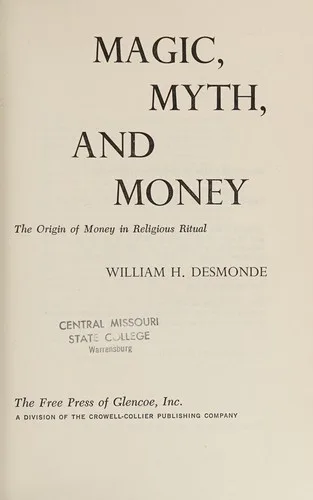
Magic, Myth, and Money
 68
68

Magic, Myth, and Money

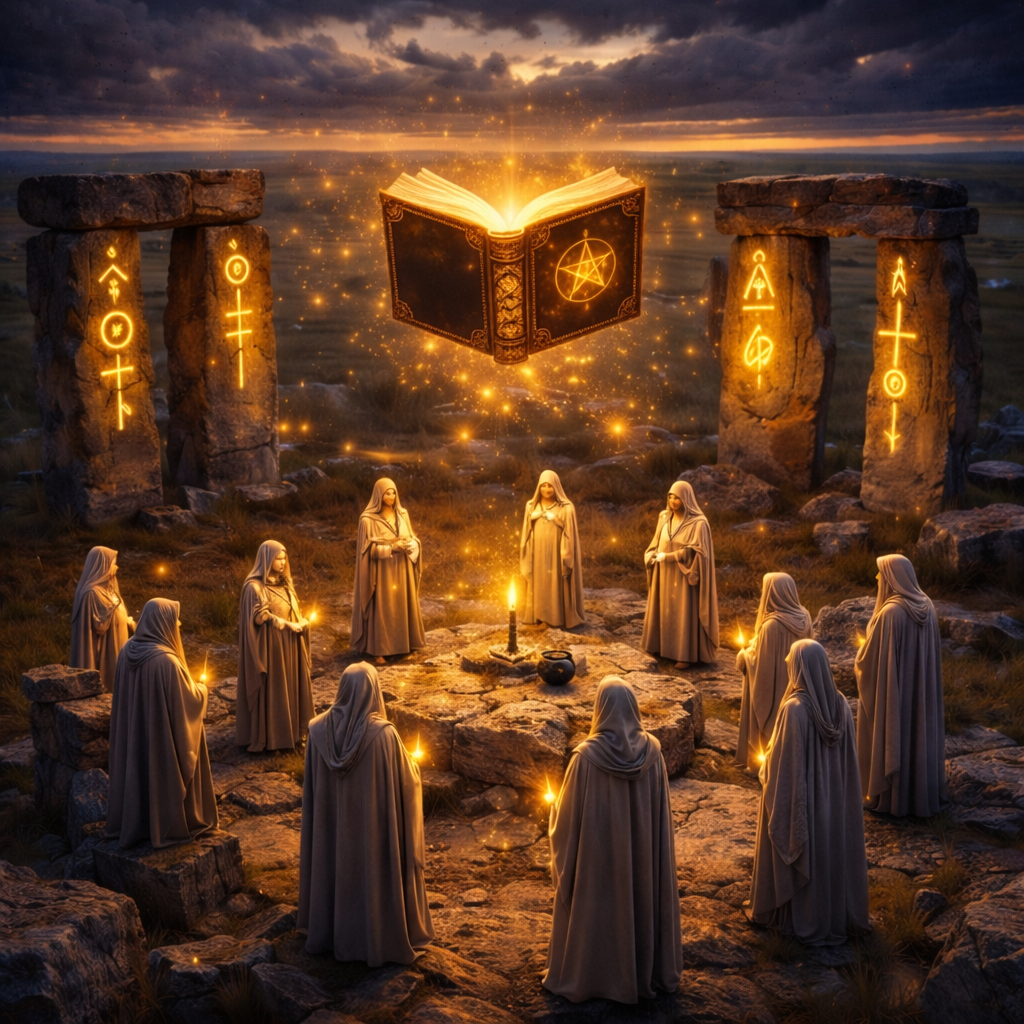

Alaric Kestrel (Metaphysical Studies Reviewer) — William Herbert Desmonde's "Magic, Myth, and Money" is a seminal work that daringly bridges the chasms between anthropology, folklore, and the hidden traditions of wealth magic. Desmonde's meticulous research uncovers the deeply ingrained ritualistic and mythological underpinnings of economic systems, revealing how concepts of value and exchange are inextricably linked to ancient beliefs and sacred narratives. He illuminates the often-overlooked esoteric dimensions of money, demonstrating its potent symbolic charge. This book is a vital resource for anyone seeking to understand the psychological and spiritual forces driving our financial lives, offering profound insights for scholars, practitioners of arcane arts, and spiritual seekers alike.
📝 Description
68
William Herbert Desmonde connects ancient rituals to the origins of commerce in Magic, Myth, and Money.
Magic, Myth, and Money examines how human desire for wealth is tied to ancient rituals, forgotten deities, and mystical beliefs. William Herbert Desmonde wrote this book not as a standard economic text, but as an examination of finance's deeper roots in folklore and religious practice. He combines anthropological observations with esoteric knowledge to show the symbolic force behind currency and financial dealings.
The book reveals how coins and transactions are imbued with mythic significance. It suggests that money is more than just a tool for exchange; it is an artifact carrying the weight of legend. Desmonde's work invites readers to see money not only in its practical application but also as a potent symbol.
This book is intended for those who believe true wealth extends beyond the material. It appeals to scholars seeking to link different areas of study and practitioners aware of the subtle power in everyday life. It sheds light on the intersection of the sacred and the secular, providing a perspective on money's enduring, almost mystical, hold on society.
This work situates itself within traditions that explore the hidden connections between the material and the spiritual. It draws parallels between ancient magical thinking and the development of economic systems, suggesting that concepts of value and exchange are not purely rational. The book looks at how mythic narratives and religious frameworks have shaped human attitudes toward accumulation and wealth, aligning with esoteric interests in the underlying symbolic order of the world.
💡 Why Read This Book?
Uncover the ancient, mystical roots of money and its surprising connection to ritual and folklore. This book offers a unique, esoteric perspective on wealth, revealing hidden symbolism and forgotten beliefs that continue to shape our financial lives. Ideal for seekers of hidden knowledge, scholars of comparative religion and anthropology, and practitioners of ritual magic who wish to understand the energetic and symbolic dimensions of commerce.
⭐ Reader Reviews
Honest opinions from readers who have explored this book.
❓ Frequently Asked Questions
What is the central thesis of 'Magic, Myth, and Money'?
The book posits that the origins of money are deeply intertwined with ancient rituals, myths, and religious practices, suggesting that its perceived value and power are rooted in symbolic and esoteric traditions rather than purely economic rationales.
Who is the intended audience for this book?
This work is ideal for scholars of folklore, anthropology, comparative religion, and economic history, as well as for esoteric practitioners, spiritual seekers, and anyone interested in the hidden cultural and symbolic dimensions of money.
Does the book provide practical advice on wealth magic?
While the book delves into the historical and symbolic magic of money, it primarily focuses on understanding its origins and esoteric significance rather than offering direct, practical spells or financial advice.
What kind of research methods does Desmonde employ?
Desmonde draws upon a wide range of sources, including anthropological studies, historical texts, religious scriptures, and folklore collections, to construct a comprehensive and interdisciplinary argument about the mythical and ritualistic origins of money.
Is 'Magic, Myth, and Money' a difficult read?
While rich in scholarship, Desmonde's prose is engaging and accessible to those with an interest in the subject matter. It requires thoughtful consideration but is rewarding for its unique insights.
🔮 Key Themes & Symbolism
The Sacred Origins of Exchange
This theme explores how early forms of currency and trade were deeply embedded in sacred rituals and religious ceremonies. Desmonde argues that the concept of value was not merely utilitarian but imbued with spiritual significance, often tied to appeasing deities, ensuring prosperity, and maintaining cosmic order. Ancient societies used symbolic objects and communal rites to legitimize transactions, forging a powerful connection between the material world of commerce and the unseen forces that governed existence. This perspective challenges modern, secular views of economics by highlighting its primordial sacred dimensions.
Mythological Archetypes of Wealth
The book explores the body of myths and folklore that surround wealth, abundance, and the acquisition of riches. It examines how archetypal figures – from capricious gods of fortune to cunning tricksters and benevolent providers – have shaped human perceptions and desires related to money. Desmonde illustrates how these narrative patterns, embedded in collective consciousness, continue to influence our subconscious relationship with wealth, often dictating our fears, aspirations, and the very rituals we unconsciously perform in pursuit of financial well-being.
Ritualism and the Manifestation of Value
This theme investigates the pervasive role of ritual in the creation, circulation, and symbolic meaning of money. Desmonde highlights how societal norms, legal frameworks, and even the physical design of currency are forms of ritualistic practice that solidify its perceived value and power. From ancient offerings to modern financial ceremonies, these acts serve to anchor abstract concepts of wealth in tangible reality, demonstrating that the 'magic' of money lies not just in its utility but in the collective belief and ritualistic reinforcement that sustains its authority.
💬 Memorable Quotes
Direct passages from the work, attributed to the author.
“The ancient world understood the sacredness of exchange.”
— Highlighting a lost perspective, this suggests that early economies were not purely transactional but were interwoven with religious rites, imbuing commerce with a spiritual dimension often absent today.
“Mythology provides the framework for our understanding of wealth.”
— This points to the profound influence of storytelling and archetypal figures in shaping our collective and individual attitudes towards money, fortune, and economic pursuit.
“Ritual solidifies belief and gives form to the intangible.”
— Emphasizing the performative aspect of value, this suggests that the consistent, patterned actions surrounding money reinforce its perceived worth and power in the minds of individuals and societies.
“The true value of money lies in its symbolic resonance.”
— This statement shifts focus from monetary figures to the deeper, psychological, and mythological significance that money carries, suggesting its power is derived from collective meaning-making.
💡 Key Ideas
Editorial paraphrase of the work's core concepts — not direct quotes.
Money is a magical object, a symbol of power and desire.
This quote expresses the core esoteric argument: money transcends its utilitarian function, acting as a potent symbol that taps into deep psychological and spiritual currents of human aspiration and control.
🌙 Esoteric Significance
Tradition
This work resonates deeply with traditions that explore the symbolic and energetic underpinnings of material reality, such as Hermeticism, comparative mythology, and certain branches of Gnosticism. It aligns with the Hermetic principle of 'As Above, So Below,' suggesting that the seemingly mundane field of finance reflects deeper spiritual and archetypal patterns. The exploration of ritual and belief also connects to practices focused on manifestation and the understanding of how collective consciousness shapes material outcomes.
Symbolism
Key symbols explored include the coin itself as a microcosm of societal values and divine favor, the act of exchange as a ritualistic transaction with spiritual implications, and various mythological figures representing fortune, scarcity, and abundance. Desmonde treats money not just as a tool but as a potent artifact imbued with the collective will, fear, and desire of humanity, revealing layers of meaning beyond its face value.
Modern Relevance
In our increasingly complex and often alienating financial world, Desmonde's insights offer a vital re-connection to the human and historical forces that shape our relationship with money. Understanding its mythic and ritualistic roots can clarify economic anxieties and reveal deeper patterns of behavior. For practitioners, it provides a framework for understanding the energetic and symbolic dimensions of wealth creation and management, encouraging a more conscious and integrated approach to financial well-being.
👥 Who Should Read This Book
This book is a treasure for a diverse readership. **Scholars** of anthropology, folklore, religious studies, and economic history will find Desmonde's interdisciplinary approach useful for understanding the cultural evolution of commerce. **Spiritual seekers** and those interested in the esoteric will appreciate the revelation of hidden symbolic layers and the connection between the material and the sacred. **Practitioners of arcane arts** seeking to understand the energetic and psychological forces behind wealth and abundance will find fertile ground for their studies. Even the **curious general reader** willing to look beyond conventional economic explanations will be richly rewarded with a profound new perspective on an everyday object.
📜 Historical Context
Published in an era of burgeoning interest in anthropology and the deeper cultural roots of societal structures, William Herbert Desmonde's "Magic, Myth, and Money" emerged during a time when scholars began to question purely rationalistic explanations for human behavior and societal organization. The mid-20th century saw a growing appreciation for the power of myth, symbolism, and ritual in shaping human understanding and interaction. Desmonde’s work tapped into this intellectual current, challenging the prevailing economic theories by tracing the lineage of money back to its more primal, sacred, and often magical origins. It provided a counterpoint to purely materialist interpretations of history and economics, aligning with a broader trend towards psychoanalytic and symbolic analyses of culture.
📔 Journal Prompts
Reflect on a personal ritual you perform related to money or financial goals. What are its symbolic meanings?
How do ancient myths about wealth or poverty influence your current beliefs about money?
Consider the design and imagery on currency. What 'magic' or messages do you perceive?
In what ways do you feel 'money has a life of its own'? Connect this feeling to Desmonde's ideas.
Explore a historical or mythological figure associated with wealth or exchange. What lessons can be drawn?
🗂️ Glossary
Ritualism
The practice of performing actions in a prescribed, often symbolic, order. In the context of money, it refers to the historical and cultural practices that imbue economic transactions with meaning and value beyond mere utility.
Archetype
A universal, inherited pattern of thought or imagery derived from the experiences of the human race, often found in myths and folk tales. Examples include the Great Mother, the Trickster, or the Hero, which can be applied to concepts of wealth and fortune.
Symbolism
The use of symbols to represent ideas and qualities. In 'Magic, Myth, and Money,' money and its associated practices are analyzed for their symbolic resonance, representing power, desire, value, and societal beliefs.
Folklore
The traditional beliefs, customs, and stories of a community, passed through the generations by word of mouth. This book examines how folklore illuminates the origins and cultural significance of money.
Esoteric
Intended for or likely to be understood by only a small number of people with a specialized knowledge or interest. This book explores the esoteric dimensions of money, exploring hidden meanings and beliefs.
This book appears in 3 collections
🔮 Readers Also Liked
Browse all →




From the “Ritual Magic” Collection
View all →





More Free Magic & Ritual Books
View all →