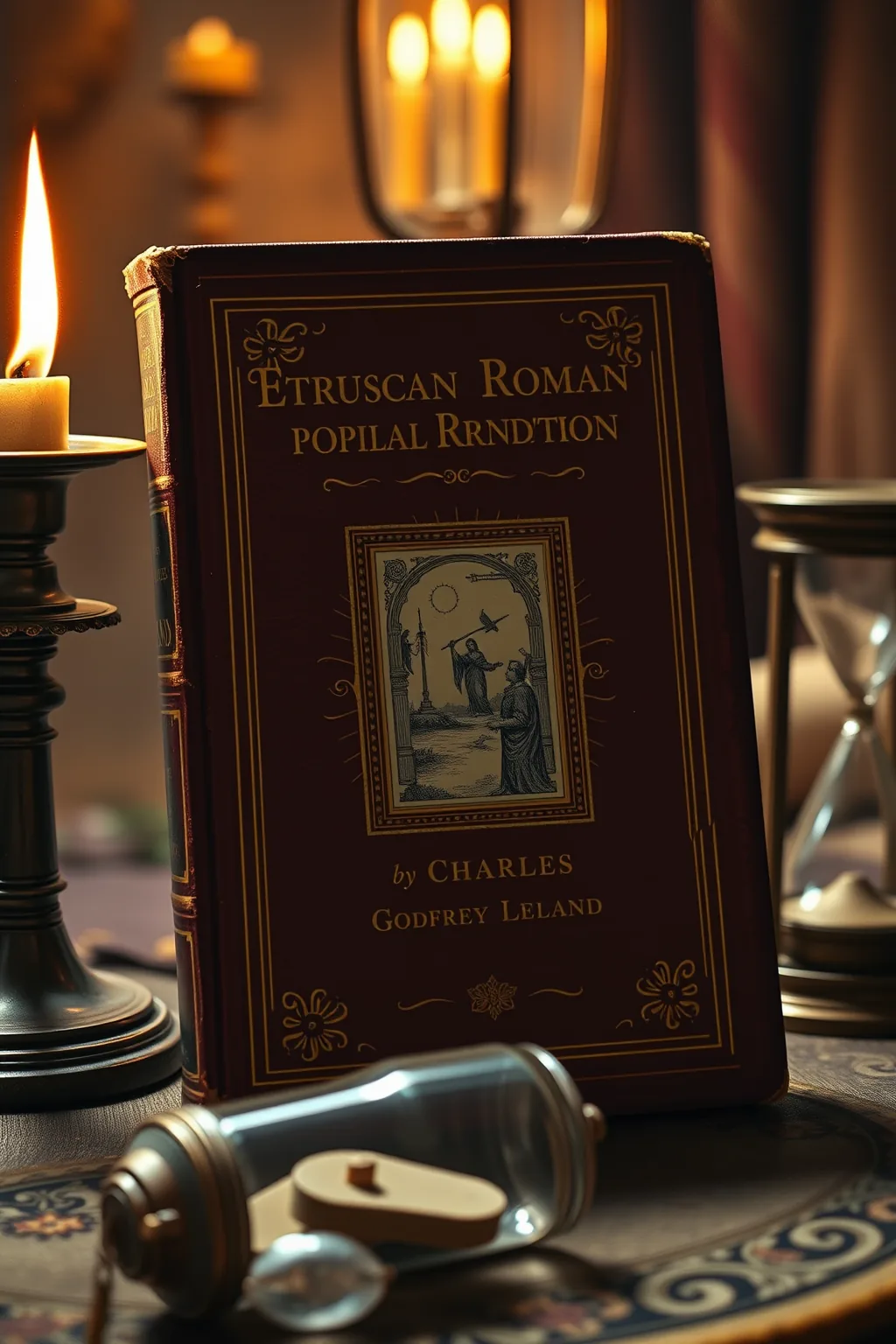
Etruscan Roman Remains in Popular Tradition
 82
82

Etruscan Roman Remains in Popular Tradition



Charles Godfrey Leland's 'Etruscan Roman Remains in Popular Tradition' is an indispensable cornerstone for any serious student of Western esotericism, particularly those drawn to the potent currents of Italian witchcraft. Leland's meticulous ethnographic approach captures the raw, unadulterated essence of a living magical tradition, offering direct access to spells, divinatory practices, and folkloric beliefs often lost to time. His work provides invaluable insights into the familial transmission of magical knowledge, revealing a sophisticated system of nature spirit coercion and chthonic communion. This is not academic speculation but a deeply felt exploration of practical magic. Essential reading for scholars of folklore, pagan revivalists, and practitioners seeking authentic roots.
📝 Description
82
Charles Godfrey Leland published 'Etruscan Roman Remains in Popular Tradition' in 1892, documenting Italian folk magic.
Charles Godfrey Leland's 1892 book, 'Etruscan Roman Remains in Popular Tradition,' is a detailed record of Italian folk magic and witchcraft. It focuses on practices that survived into the 19th century, passed down through families. Leland collected rituals for communicating with nature spirits, divination methods using oil, fire, and lead, and attempts to influence the boundary between life and death.
The text includes lore about specific figures like the Goddess of Truffles and explanations of sympathetic magic. It also features spells and songs in the Tuscan dialect. Leland aimed to show these traditions as a living, continuous magical lineage that influenced both ancient Etruscan and Roman cultures and still held relevance for modern practitioners.
Published in 1892, Leland's work sits within the late 19th-century interest in occultism and folklore. It connects to traditions exploring survivals of pre-Christian beliefs and practices within popular culture. The book documents a form of witchcraft seen not as a historical relic but as a living tradition, influenced by Etruscan and Roman roots. This aligns with esoteric scholarship that sought to find hidden magical systems in folk customs and ancient lore.
💡 Why Read This Book?
Unlock the secrets of ancient Italian folk magic, a vibrant and potent tradition often overlooked. Discover practical spells for nature communion, divination, and spiritual connection. Ideal for seekers of authentic witchcraft, scholars of folklore, and practitioners yearning for ancestral magical wisdom. This book offers a direct conduit to the power and practices of a living, evolving pagan heritage.
⭐ Reader Reviews
Honest opinions from readers who have explored this book.
❓ Frequently Asked Questions
What is the primary focus of this book?
The book's primary focus is on documenting and preserving the living traditions of folk magic and witchcraft practiced in Italy, particularly those with Etruscan and Roman roots, as observed by the author through field research and oral histories.
Does the book contain actual spells and rituals?
Yes, 'Etruscan Roman Remains in Popular Tradition' includes the full text of numerous spells, incantations, and songs, many transcribed directly from practitioners in the Tuscan dialect, offering a rare glimpse into practical magical workings.
Who was Charles Godfrey Leland and why is his work significant?
Charles Godfrey Leland was an American folklorist and scholar who dedicated his life to documenting esoteric traditions. His work is significant for its meticulous fieldwork and its preservation of magical practices that might otherwise have been lost to modern scholarship and societal changes.
Is this book suitable for beginners in witchcraft?
While rich with authentic material, the book's academic and ethnographic style may be more suited for those with some background in folklore or witchcraft. However, dedicated beginners can find profound inspiration and foundational knowledge within its pages.
What makes the Etruscan and Roman influences important here?
The book highlights how ancient Etruscan and Roman beliefs and magical practices survived and were integrated into later Italian folk traditions, revealing a continuous thread of pagan spirituality and earth-based magic that predates and coexists with later religious influences.
🔮 Key Themes & Symbolism
The Living Legacy of Italian Witchcraft
This theme explores how ancient magical practices, deeply rooted in Etruscan and Roman traditions, persisted through centuries, evolving into the vibrant 'family traditions' of Italian folk magic. Leland's work acts as a conduit, revealing the transmission of esoteric knowledge through generations, highlighting the resilience of pagan beliefs and practices within popular culture. It showcases a world where the sacred is interwoven with the mundane, and where nature spirits and ancient deities are actively invoked and appeased.
Divination, Enchantment, and Spirit Communion
Central to this book is the detailed exploration of practical magical techniques. Readers will discover the intricacies of divining through elements like oil, fire, and molten lead, methods that offer useful insights into fate and fortune. The text also studies the art of enchantment, detailing how to influence natural forces and coerce elemental spirits to grant favors, alongside powerful, albeit sometimes unsettling, rituals aimed at communicating with the departed. This theme emphasizes the active, interventionist nature of this folk magic.
The Sacredness of the Earth and Its Deities
Leland's research illuminates a deep reverence for the earth and its inherent spiritual power, personified by figures such as the 'Goddess of Truffles.' This theme underscores the pagan worldview where nature is not merely a resource but a living entity imbued with divine presence. The book reveals how specific deities and spirits were venerated and petitioned for aid, reflecting an animistic understanding of the cosmos and a profound connection to the cycles of nature. It offers a counterpoint to more abstract or hierarchical spiritual systems.
💬 Memorable Quotes
Direct passages from the work, attributed to the author.
“Fairy tales are the fragments of forgotten lore.”
— This highlights the idea that seemingly simple stories often contain hidden, profound magical knowledge and ancient wisdom that have been lost or obscured over time.
“Nature spirits are the servants of those who know how to command them.”
— This emphasizes the active and practical nature of the magic described, where understanding and proper technique allow for the influence and manipulation of elemental and spiritual forces.
“The oil reveals the secrets of the future.”
— This points to the specific practice of oil scrying, a divinatory technique where the patterns and movements within oil are interpreted to gain insight into hidden truths or future events.
“The old ways are the true ways.”
— This sentiment underscores a belief in the efficacy and inherent truth found in ancient magical and spiritual traditions, suggesting they hold a foundational wisdom superior to newer or more conventional practices.
💡 Key Ideas
Editorial paraphrase of the work's core concepts — not direct quotes.
The magic of the people is the religion of the past.
This quote suggests that folk magic represents the enduring, living core of ancient religious beliefs, carried forward in practice even as formal religious structures may have shifted or faded.
🌙 Esoteric Significance
Tradition
This work is fundamentally significant to the study of Western Esotericism, particularly within the branches of witchcraft, paganism, and folk magic. It provides a rare ethnographic account of a living, inherited magical tradition, often referred to as 'family traditions' or Stregheria in Italian contexts. Leland's documentation offers direct insight into the practical application of magic, spirit work, and divinatory arts that have roots stretching back to ancient Etruscan and Roman beliefs, predating and existing alongside organized religious structures.
Symbolism
The book is rich with potent symbolism drawn from the natural world and ancient mythos. Symbols like fire, water, oil, and molten lead are not merely tools but conduits for accessing spiritual energies and divine insights. The figures of nature spirits, local deities (like the Goddess of Truffles), and ancestral spirits represent a complex cosmology where the mundane and the sacred are inextricably linked. These symbols embody the forces of creation, destruction, divination, and protection inherent in this earth-centered magical system.
Modern Relevance
In an era increasingly seeking authentic spiritual connections and a return to nature-based practices, Leland's 'Etruscan Roman Remains' offers invaluable primary source material. Modern pagan and witchcraft communities find in its pages a direct lineage to ancient Italian practices, providing inspiration, practical techniques, and a deeper understanding of historical magical currents. For scholars and practitioners alike, the book remains a vital resource for comprehending the enduring power of folk magic and its persistent influence on contemporary spiritual and esoteric landscapes.
👥 Who Should Read This Book
This profound work is essential for several distinct groups. **Scholars of Folklore and Religious Studies** will find invaluable primary source material for understanding the persistence of pagan beliefs and magical practices. **Witchcraft Practitioners and Neo-Pagans**, particularly those interested in Mediterranean traditions, will discover authentic spells, rituals, and a deep wellspring of inspiration for their Craft. **Seekers of Esoteric Knowledge** curious about the hidden currents of Western magic will gain a unique perspective on a living, ancestral tradition. Even **General Readers** with an interest in history, mythology, and the enduring power of human belief will find 'Etruscan Roman Remains' a captivating and informative read.
📜 Historical Context
Written in the late 19th century, 'Etruscan Roman Remains in Popular Tradition' emerged during a period of burgeoning interest in folklore, anthropology, and the occult sciences. As industrialization rapidly transformed European societies, scholars and enthusiasts alike sought to preserve the vanishing traditions and beliefs of rural communities. Leland, an American expatriate deeply immersed in European cultural studies, was part of a generation that recognized the ethnographic value of documenting oral histories, folk tales, and magical practices before they were lost to modernization. This era saw a confluence of academic curiosity and a romantic fascination with the 'primitive' and the 'esoteric,' making Leland's meticulous recording of Italian folk magic both a scholarly endeavor and a crucial act of cultural preservation, providing a vital link to pre-Christian spiritualities.
📔 Journal Prompts
Reflect on the concept of 'family traditions' in magic. How might such traditions manifest today?
Consider the elements used in divination (oil, fire, lead). How do these elements resonate with your own understanding of symbolic language?
The book mentions coercing nature spirits. What ethical considerations arise when interacting with elemental or spiritual beings?
Explore the idea of 'fairy tales as forgotten lore.' What modern stories or narratives might hold hidden magical wisdom?
How does the reverence for the 'Goddess of Truffles' reflect a pagan worldview compared to modern societal views on nature and resources?
🗂️ Glossary
Stregheria
An Italian term often used to describe the folk witchcraft tradition documented in this book, referring to a system of magic, healing, and divination passed down through generations, with roots in pre-Christian beliefs.
Folk Magic
Magical practices that are part of the traditional beliefs and customs of a community or region, often passed down orally rather than through formal texts, and typically focused on practical results.
Ethnography
The scientific description of the customs of individual peoples and cultures, often involving direct observation and fieldwork, as practiced by Charles Godfrey Leland in this book.
Divination
The practice of seeking knowledge of the future or the unknown by supernatural means. This book details methods like scrying with oil, fire, and molten lead.
Nature Spirits
Supernatural beings believed to inhabit and govern natural elements and phenomena, such as trees, rivers, mountains, and the weather, which were often invoked or appeased in folk magical practices.
This book appears in 2 collections
🔮 Readers Also Liked
Browse all →









From the “Witchcraft” Collection
View all →





More Free Witchcraft & Paganism Books
View all →