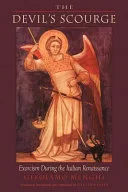
The Devil's Scourge
 76
76

The Devil's Scourge
Girolamo Menghi's "The Devil's Scourge," rendered into English by Paxia, offers a rare, unvarnished look into the practical mechanics of Renaissance exorcism. The strength of this edition lies in its scholarly apparatus; Paxia’s commentary provides crucial historical and theological context, moving beyond mere translation to illuminate the cultural landscape from which Menghi's practices arose. A particularly striking section details Menghi's methodical approach to identifying possession, contrasting it with contemporary understandings of mental illness. However, the original text itself, while historically significant, can feel repetitive in its liturgical descriptions. Despite this, the book stands as an essential primary source for anyone studying the history of demonology and the persistent human engagement with the supernatural.
📝 Description
76
First published in the late 16th century, Girolamo Menghi's The Devil's Scourge is a Renaissance manual for exorcism.
This volume offers a complete English translation of Girolamo Menghi's manual for exorcism, a significant text from the Renaissance period. Menghi's work functions as a historical account of demonology, detailing seven specific exorcism rituals he performed. The translation includes extensive commentary by Paxia, who analyzes the signs of demonic possession and identifies individuals prone to such afflictions.
The book is aimed at scholars of religious history, specialists in comparative demonology, and students of Renaissance occult studies. Readers interested in historical approaches to spiritual warfare, the psychological and social aspects of perceived possession, or the rituals used by figures like Menghi will find valuable content here. It is particularly pertinent for those examining the connections between faith, folklore, and the supernatural in early modern Europe.
Menghi's text appeared during the Counter-Reformation, a time of intense religious feeling and increased attention to spiritual threats. The late 1500s and early 1600s saw many books on witchcraft and demonology, reflecting concerns about heresy and the Church's authority. First published in this environment, Menghi's manual joined a collection of writings intended to counter perceived demonic influence, often engaging with earlier authors like Nicholas Rémy.
The Devil's Scourge belongs to a tradition of Catholic demonological literature that flourished during the Counter-Reformation. This period saw a renewed focus on combating heresy and perceived supernatural threats, leading to detailed manuals on identifying and expelling demonic forces. Menghi's work reflects the theological and practical concerns of the era, grounding its rituals in established Catholic doctrine while addressing anxieties about the vulnerability of individuals to spiritual attack. It stands within a lineage of works that sought to delineate the boundaries between the natural and supernatural, the orthodox and the heretical, within a specific confessional framework.
💡 Why Read This Book?
• Gain insight into the specific rituals and theological justifications employed by Renaissance exorcists, as detailed in Menghi's manual, offering a concrete understanding of historical spiritual warfare techniques. • Understand the criteria used by Girolamo Menghi to identify demonic possession, providing a specific framework for analyzing historical accounts and differentiating them from contemporary psychological diagnoses. • Explore the biographical details of Menghi's life and his methods, as elucidated by Paxia's commentary, offering a tangible connection to a historical figure and his specific practices.
⭐ Reader Reviews
Honest opinions from readers who have explored this book.
❓ Frequently Asked Questions
When was Girolamo Menghi's original exorcism manual first published?
Girolamo Menghi's original work on exorcism was first published in the late 16th century, contributing to the extensive literature on demonology during the Counter-Reformation period.
What is the primary focus of "The Devil's Scourge"?
The book is a complete English translation of a Renaissance exorcist's manual, detailing demonology, accounts of seven exorcisms, and Menghi's practical procedures, accompanied by scholarly commentary.
Who is the author of the original exorcism text?
The original exorcism manual was authored by Girolamo Menghi, an Italian priest and exorcist active in the late 16th century.
What kind of commentary is included in "The Devil's Scourge"?
Paxia's commentary provides historical context, explains signs of demonic possession, identifies vulnerable individuals, and details Menghi's life, methods, and the objects used in ceremonies.
What historical period does the book primarily address?
The book primarily addresses the Renaissance period, specifically the late 16th and early 17th centuries, a time of significant religious and intellectual activity concerning demonology.
Is "The Devil's Scourge" a primary source document?
Yes, "The Devil's Scourge" is a primary source document in its translated form, offering direct access to Girolamo Menghi's 16th-century exorcist's manual and his contemporary practices.
🔮 Key Themes & Symbolism
Rituals of Exorcism
The manual meticulously details the specific prayers, incantations, and actions employed by Girolamo Menghi during exorcism ceremonies. These rituals were not arbitrary but followed a structured theological framework designed to confront and expel demonic forces. The work explores the sacramental nature of these rites, emphasizing the power vested in the exorcist through divine authority. It offers a window into how spiritual warfare was understood and enacted during the late Renaissance, highlighting the blend of faith, psychological pressure, and symbolic action involved.
Discernment of Possession
A significant aspect of Menghi's manual, as explained by Paxia's commentary, is the detailed methodology for discerning true demonic possession from other afflictions. This includes identifying specific behavioral signs, physical manifestations, and spiritual resistances that indicated the presence of an external entity. The text grapples with differentiating these phenomena from natural illnesses or psychological distress, reflecting the era's understanding of the spiritual and material realms and the challenges faced by practitioners in making accurate diagnoses.
The Exorcist's Role
Girolamo Menghi's work implicitly and explicitly defines the role and authority of the exorcist within the religious and social fabric of the late 16th century. The manual outlines not only the technical aspects of exorcism but also the spiritual preparation, theological grounding, and moral fortitude required of the individual performing the rite. It portrays the exorcist as a spiritual combatant, wielding divine power against the forces of evil, and underscores the Church's authority in such matters.
Demonology and Vulnerability
The book provides a concise historical overview of demonology, tracing beliefs about the nature and hierarchy of demons prevalent during the Renaissance. Paxia’s commentary further elaborates on who was considered most vulnerable to demonic influence, often linking susceptibility to factors such as piety, personal sin, or psychological disposition. This exploration studies the contemporary understanding of spiritual warfare and the perceived threats posed by demonic entities to individuals and the community.
💬 Memorable Quotes
Direct passages from the work, attributed to the author.
“Paxia explains what the signs of demonic possession are and who are the most vulnerable.”
— This highlights the practical diagnostic element of the commentary, focusing on identifying the outward manifestations of possession and understanding the susceptibility factors, crucial for historical understanding of the practice.
“Menghi's manual contains accounts of seven exorcisms.”
— This points to the case-study nature of the work, offering concrete examples of Menghi's application of his ritualistic knowledge in real-world scenarios, providing empirical data for historical analysis.
“The work is a complete English translation of a Renaissance exorcist's manual.”
— This emphasizes the book's value as an accessible primary source, bringing a significant historical text from the late 16th century into modern scholarship and wider public engagement.
“Paxia also looks at Menghi's life in detail, including how he exorcised people and what objects he used during the ceremony.”
— This underscores the biographical and methodological insights offered, detailing the personal context of the exorcist and the specific tools and techniques that constituted his practice.
💡 Key Ideas
Editorial paraphrase of the work's core concepts — not direct quotes.
It is a concise history of demonology.
This indicates that the book serves not only as a practical guide but also as an educational resource, summarizing the prevailing understanding of demonic entities and their influence during the Renaissance.
🌙 Esoteric Significance
Tradition
The work belongs to the Western Esoteric tradition, specifically within the lineage of Christian demonology and ceremonial magic, albeit framed within orthodox Catholic doctrine. It doesn't align with Gnostic or Kabbalistic traditions directly but engages with the universal concept of spiritual warfare against malevolent entities, a theme present across many esoteric paths. Its significance lies in its practical application of theological principles to combat spiritual attack, reflecting a period where the lines between theology, folk magic, and esoteric practice were often blurred for practitioners.
Symbolism
While not overtly symbolic in the manner of Hermetic texts, the exorcism rituals themselves are imbued with symbolic meaning. The use of holy water, relics, and sacred gestures (like the sign of the cross) functions symbolically to invoke divine protection and authority, directly confronting the perceived unholy nature of the possessing entity. The concept of 'vulnerability' itself can be seen as symbolic of the soul's susceptibility to spiritual corruption, with the exorcism acting as a symbolic purification and restoration of divine order.
Modern Relevance
Contemporary practitioners of ceremonial magic and demonology, particularly those with a Catholic or Traditionalist bent, may find value in Menghi's structured approach to spiritual warfare. Scholars of comparative religion and occult history continue to draw on such texts to understand the historical evolution of beliefs about possession and the efficacy of ritual. Furthermore, psychological and historical analyses of belief systems surrounding mental illness and spiritual affliction often reference these manuals to understand past societal responses.
👥 Who Should Read This Book
• Students of Western Esotericism and Historical Witchcraft: Those seeking to understand the practical application of demonology within a specific historical and religious context will find Menghi's manual invaluable. • Researchers of Religious History and Folklore: Individuals studying the beliefs and practices surrounding spiritual possession in the Renaissance will gain direct insight into contemporary methodologies and theological underpinnings. • Practitioners of Comparative Ritual Studies: Those interested in the diverse forms of ritual across different belief systems will find this a concrete example of a specific form of historical spiritual intervention.
📜 Historical Context
Girolamo Menghi's "The Devil's Scourge" emerged during the fervent religious climate of the late 16th century, a period deeply influenced by the Counter-Reformation's emphasis on spiritual purity and the combating of heresy. The era saw a proliferation of texts on witchcraft and demonology, reflecting widespread anxieties about the supernatural and the efficacy of Church authority. Menghi's manual, first published around 1590, contributed to this body of work, offering practical guidance for clergy tasked with confronting perceived demonic influence. This was a time when figures like Nicholas Rémy were actively persecuting alleged witches, and treatises like those by Martin Antoine Delrio were dissecting the nature of demonic activity. Menghi's work, therefore, stood within a tradition of spiritual combat, aiming to provide a structured, theological approach to what was understood as a tangible spiritual battle, though its reception and specific impact compared to other contemporary works remains a subject for detailed scholarly analysis.
📔 Journal Prompts
The methods Menghi used to identify demonic possession:
The objects employed during Menghi's seven exorcisms:
Paxia's explanation of who is most vulnerable to possession:
The historical context of demonology in the late 16th century:
The theological underpinnings of Menghi's ritual efficacy:
🗂️ Glossary
Demonology
The study of demons or beliefs about demons. In historical contexts, it often refers to the systematic theological and philosophical examination of the nature, hierarchy, and influence of evil spirits.
Exorcism
The religious or quasi-religious practice of evicting demons or other spiritual entities from a person or place believed to be possessed.
Renaissance
The period in European history, roughly from the 14th to the 17th century, marked by a revival of classical art, architecture, literature, and learning, and a transition from medieval to modern times.
Counter-Reformation
The period of Catholic resurgence initiated in response to the Protestant Reformation, beginning with the Council of Trent (1545–1563) and ending at the close of the Thirty Years' War (1648).
Possession
The state of being controlled or inhabited by a supernatural entity, typically a demon or evil spirit, as understood within various religious and occult traditions.
Manual
A handbook or guide, especially one containing practical instructions or information on a particular subject, such as the procedures for exorcism.
Paxia
The translator and commentator of Girolamo Menghi's work, providing historical context and detailed analysis of the original text on exorcism.