The Origins of Popular Superstitions and Customs
 75
75

The Origins of Popular Superstitions and Customs
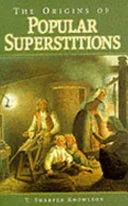
T. Sharper Knowlson's 1994 compilation, 'The Origins of Popular Superstitions and Customs,' offers a surprisingly direct examination of how common practices, from festival celebrations to divination, came to be. The strength lies in its straightforward presentation of diverse origins, avoiding the grand pronouncements often found in similar texts. For instance, its discussion of how certain Christmas traditions might have roots in pre-Christian Saturnalian festivals is presented factually, without excessive embellishment. A limitation, however, is that the 1994 publication date means it doesn't engage with more recent anthropological scholarship that might offer alternative perspectives or deeper analyses of psychological drivers. Nevertheless, Knowlson’s methodical approach to tracing customs provides a solid, if somewhat dated, foundation for understanding the persistence of ritual. It serves as a valuable reference for those interested in the historical layering of cultural practices.
📝 Description
75
T. Sharper Knowlson's 1939 book investigates the historical roots of common superstitions and customs.
Knowlson's work meticulously traces the origins of widespread superstitions and enduring customs, moving beyond simple listing to examine their historical and cultural underpinnings. The book analyzes beliefs and rituals connected to significant life events and communal observances, showing how they developed across human life. It situates these practices within the historical development of Western culture, following their evolution from ancient times up to the early 20th century. A key focus is how Christian festivals absorbed and transformed earlier pagan traditions, demonstrating the lasting power of these layered observances despite societal shifts.
The text emphasizes cultural transmission, the process by which beliefs and practices pass through generations, often losing their original meaning while retaining their form. Knowlson also considers the psychological drivers of superstition, such as the human desire for order and control when facing uncertainty. The book touches upon the blending of religious and folk beliefs, offering insight into how everyday rituals, from marriage ceremonies to fortune-telling, came to be.
This book fits within the broader esoteric interest in understanding the hidden currents and underlying meanings of cultural practices. While not strictly occult, it examines how ancient beliefs and rituals, often carrying symbolic weight, persisted and transformed within mainstream society. Knowlson's study of syncretism and the psychological underpinnings of seemingly irrational beliefs aligns with esoteric traditions that seek to uncover deeper connections and forgotten wisdom embedded in everyday life and historical customs.
💡 Why Read This Book?
• Gain a concrete understanding of the pre-Christian influences on Christian festivals, such as the potential origins of Yuletide customs, allowing you to see the historical palimpsest in modern celebrations. • Learn about the historical development of fortune-telling practices and their cultural significance, providing specific examples of methods and beliefs that have persisted for centuries. • Discover the etymology and historical context behind everyday marriage customs, revealing the ancient roots of rituals that continue to shape modern unions.
⭐ Reader Reviews
Honest opinions from readers who have explored this book.
❓ Frequently Asked Questions
What specific Christian festivals does 'The Origins of Popular Superstitions and Customs' examine?
The book primarily investigates superstitions and customs associated with Christian festivals like Christmas, Easter, and saints' days, exploring how these observances often incorporated or transformed earlier traditions.
Does the book discuss the origins of fortune-telling methods?
Yes, it delves into the historical roots of various fortune-telling practices, examining their evolution and cultural significance across different periods and societies.
What is the author's perspective on the persistence of superstitions?
Knowlson presents a historical and anthropological perspective, suggesting that superstitions and customs often persist due to their deep cultural roots and the human psychological need for order and meaning.
Is the book suitable for beginners in folklore studies?
Absolutely. Its clear prose and focus on widely recognized customs make it accessible for those new to folklore and cultural history, providing foundational knowledge.
When was 'The Origins of Popular Superstitions and Customs' first published?
The work was first published in 1994, offering a compilation of research and observations on the subject up to that point.
Are there discussions on marriage customs and their origins?
Yes, the book dedicates attention to marriage, exploring the historical origins and evolving meanings of various customs and rituals associated with unions.
🔮 Key Themes & Symbolism
Christian Festival Syncretism
The work meticulously details how numerous customs and superstitions associated with major Christian festivals, such as Christmas and Easter, are not solely Christian in origin. Knowlson highlights the absorption and adaptation of pre-Christian pagan rites and beliefs into Christian observances. This process, known as syncretism, is examined through specific examples, demonstrating how ancient fertility rituals, solstice celebrations, and folk traditions were reinterpreted and integrated, creating a layered cultural heritage that persists to this day. The book offers insight into the enduring power of these ancient practices to shape modern religious and secular celebrations.
Divination and Folk Belief
A significant portion of the book is dedicated to the historical development and cultural context of fortune-telling and related folk beliefs. Knowlson investigates the origins of practices such as palmistry, astrology, and various forms of omen-reading. The text explores the underlying human desire to predict or influence the future, a fundamental aspect of many esoteric traditions. It traces how these methods of divination, often rooted in ancient magical or religious systems, became integrated into popular culture, offering a glimpse into the persistent human engagement with the unknown and the search for guidance.
Marriage Rituals and Symbolism
The book analyzes the historical evolution of marriage customs, revealing the often-ancient origins of rituals commonly observed today. Knowlson explores the symbolic meanings embedded within these practices, such as the exchange of rings, the bridal veil, and specific wedding day traditions. The work connects these customs to broader themes of fertility, union, and social contract, demonstrating how deeply ingrained historical beliefs about partnership and lineage continue to influence modern ceremonies. It provides a fascinating look at how deeply ritualistic elements shape significant life transitions.
The Psychology of Superstition
Knowlson touches upon the psychological underpinnings that contribute to the persistence of superstitions and customs. The work implicitly explores the human need for control, order, and meaning in the face of life's uncertainties. By examining why certain beliefs or actions become ingrained, the book offers insights into cognitive biases, the power of suggestion, and the social transmission of ideas. This psychological dimension provides a framework for understanding why these traditions, even when stripped of their original context, continue to hold sway over human behavior.
💬 Memorable Quotes
Direct passages from the work, attributed to the author.
“The persistence of certain customs shows how deeply they are woven into the fabric of human society.”
— This highlights the enduring nature of traditional practices, suggesting they fulfill fundamental social or psychological needs that transcend historical change and rationalization.
“Many festival traditions are composite, blending older rites with newer religious significance.”
— This points to the process of cultural syncretism, where different belief systems and practices merge over time, creating layered traditions that are not purely original.
“The desire to know the future has driven the development of numerous divination techniques.”
— This emphasizes the psychological impetus behind fortune-telling, framing it as a response to human anxiety and the quest for certainty about upcoming events.
“Marriage rituals often carry symbolic weight related to fertility and social continuity.”
— This interpretation suggests that wedding customs are not merely ceremonial but are imbued with ancient meanings tied to procreation and the perpetuation of family lines.
“Superstitions are often remnants of older worldviews, adapted or persisting in altered forms.”
— This frames superstitions as historical artifacts, showing how they survive by shedding their original contexts but retaining a functional role in contemporary society.
🌙 Esoteric Significance
Tradition
While not explicitly aligned with a single esoteric lineage, Knowlson's work touches upon themes relevant to Western Esotericism, particularly concerning the historical layers of belief that inform folk magic and divination. It provides a foundational understanding of the cultural milieu from which many esoteric practices draw, such as the integration of pagan elements into Christianized customs, a process also observed in Hermetic and Gnostic traditions.
Symbolism
The book implicitly explores symbolism within customs like marriage rituals, where the ring symbolizes eternity and the bridal veil can represent purity or the separation from a former life. It also touches on symbols related to festivals, such as evergreens in winter solstice traditions, hinting at themes of rebirth and enduring life force, concepts central to many mystery traditions.
Modern Relevance
Contemporary practitioners of folk magic, ceremonial magicians, and those interested in comparative religion can find value in Knowlson's work. It offers historical context for rituals and beliefs that are still practiced or referenced in modern esoteric circles, providing a grounding in the material culture and historical evolution of these practices.
👥 Who Should Read This Book
• Students of comparative religion and cultural anthropology seeking to understand the historical layering of beliefs and practices across different societies. • Folklorists and cultural historians interested in the etymology and evolution of common superstitions and festival traditions. • Individuals curious about the origins of specific customs related to life events like marriage, and the historical roots of divination practices.
📜 Historical Context
Published in 1994, T. Sharper Knowlson's work emerged during a period of renewed academic interest in folklore and cultural history, following the decline of grand, unified theories of myth and ritual. It built upon the extensive research in comparative mythology and anthropology that characterized the late 19th and early 20th centuries, influenced by figures like James Frazer and his seminal 'The Golden Bough.' Knowlson's approach, however, leans towards a more accessible cataloging of origins rather than deep theoretical engagement. The book's reception was generally that of a useful compendium, though it didn't engage with the burgeoning post-structuralist critiques of cultural narratives that were gaining traction in academic circles by the 1990s. It represents a more traditional, fact-gathering approach to understanding the persistence of popular beliefs.
📔 Journal Prompts
The integration of pre-Christian rites into Christian festivals: What specific pagan customs do you see echoed in modern holiday celebrations?
Fortune-telling methods: How might the historical desire for future knowledge influence contemporary decision-making?
Marriage customs: Reflect on the symbolic meaning behind one wedding tradition and its potential ancient origins.
The persistence of superstition: Consider a common superstition and its possible psychological or social function today.
Cultural transmission: How have the superstitions and customs you grew up with been passed down through your family or community?
🗂️ Glossary
Syncretism
The merging or blending of different religious beliefs, cultures, or schools of thought, often resulting in a hybrid form that retains elements of its origins.
Folkloristics
The academic study of folklore, which encompasses the collection, analysis, and interpretation of traditional beliefs, customs, stories, and practices passed down within a community.
Divination
The practice of seeking knowledge of the future or the unknown by supernatural means, employing methods such as astrology, palmistry, or tarot reading.
Etymology
The study of the origin of words and the way in which their meanings have changed throughout history.
Omen
An event regarded as a portent of good or evil; a sign or warning of a future occurrence.
Vestige
A trace or remnant of something that is disappearing or no longer exists; a mark, indication, or evidence of the former existence of something.
Anthropology
The study of human societies and cultures and their development, often focusing on beliefs, customs, and social structures.
This book appears in 1 collection
🔮 Readers Also Liked
Browse all →









From the “Superstition” Collection
View all →






More Free Occult Philosophy Books
View all →