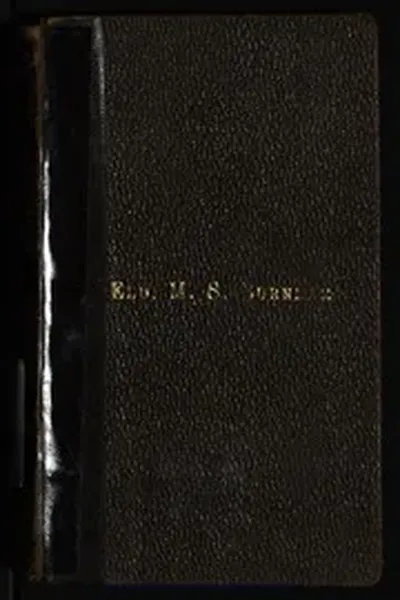
Lucerna inquisitorum haereticae pravitatis R. P. F. Bernardi Comensis ... 1584: Iss 101

 72
72

Lucerna inquisitorum haereticae pravitatis R. P. F. Bernardi Comensis ... 1584: Iss 101



Review by Evander Ashcroft (Alchemy & Hermeticism Editor) — Bernardus Comensis' 'Lucerna Inquisitorum' is a formidable historical document, offering rare insights into the intellectual machinery of the Inquisition. While ostensibly a manual for combating heresy, its detailed cataloging of perceived deviations and their underlying causes inadvertently reveals a rich tapestry of occult beliefs and symbolic interpretations prevalent in the 16th century. Esoteric scholars will find fertile ground in the text's implicit discussions of spiritual pathology and the perceived influence of darker forces. Its strength lies in its comprehensive, albeit biased, documentation, providing a crucial lens through which to examine the historical consciousness surrounding forbidden knowledge and spiritual purity. Essential for serious researchers of witchcraft, heresy, and historical esotericism.
📝 Description
72
Published in 1584, Bernardus Comensis' 'Lucerna Inquisitorum Haereticae Pravitatis' details the methods for identifying heresy.
Bernardus Comensis' 1584 text, 'Lucerna Inquisitorum Haereticae Pravitatis,' served as a guide for inquisitors confronting heresy. It details the theological and legal structures used to identify and counter deviations from religious doctrine. The book also contains elements of esoteric thought, showing how concepts of occult influence, spiritual decay, and forbidden knowledge were viewed.
Bernardus' careful writing explains the symbolic language and philosophical ideas behind the perception of heresy. It was seen not just as a religious mistake, but as a serious spiritual and existential danger. This work helps understand how 'the other' was defined in religious discussions, the connection between authority and faith, and the persistent human interest in unseen powers influencing events. The book reflects a time when faith, fear, and the supernatural were closely linked and often debated.
Within the broader context of 16th-century esoteric traditions, 'Lucerna Inquisitorum' intersects with demonology and the study of spiritual forces. While ostensibly a legal and theological manual, its detailed cataloging of deviations from dogma touches upon beliefs concerning hidden influences and the mechanisms by which spiritual corruption was thought to manifest. The text reveals an engagement with symbolic interpretation and a structured approach to identifying perceived threats, which aligns with certain Renaissance hermetic and magical practices that sought to understand and control unseen realities.
💡 Why Read This Book?
Uncover the historical mindset of spiritual investigation and the perceived threats of heresy. This book offers a unique window into the symbolic language and occult beliefs that informed 16th-century theological and legal practices. Ideal for scholars, practitioners of historical occultism, and seekers of hidden knowledge who wish to understand the roots of religious persecution and the construction of forbidden lore.
⭐ Reader Reviews
Honest opinions from readers who have explored this book.
❓ Frequently Asked Questions
What is the primary purpose of 'Lucerna Inquisitorum Haereticae Pravitatis'?
Its primary purpose was to serve as a guide or manual for inquisitors, detailing methods and criteria for identifying, prosecuting, and understanding heresy within the religious and social context of the 16th century.
Does the book discuss specific occult practices?
While not a direct guide to occult practices, the book details the perceived manifestations and 'signs' of heresy and witchcraft, which often included accusations of engaging in forbidden rituals or consorting with malevolent spiritual entities.
Who was Bernardus Comensis?
Bernardus Comensis was a 16th-century writer and likely a figure involved in ecclesiastical or legal circles, whose work became a significant reference for inquisitorial activities.
What historical period does this book cover?
The book specifically addresses the religious and legal landscape of the 16th century, a period marked by intense scrutiny of religious doctrine and widespread fears of heresy and witchcraft.
Is this book available in its original Latin?
This specific issue is presented in English translation, making its complex historical and theological content accessible to a broader audience interested in esoteric and historical studies.
🔮 Key Themes & Symbolism
The Diagnosis of Heresy
This theme studies the sophisticated, albeit often prejudiced, methods employed to identify and categorize deviation from orthodox religious belief. It explores the intellectual framework that allowed for the classification of 'heresy' not merely as a theological error but as a spiritual contagion, often linked to a breakdown of moral and spiritual order. The text reveals how subtle signs, perceived deviations in behavior, and even linguistic nuances were interpreted as indicators of underlying spiritual corruption, mirroring early diagnostic techniques in spiritual medicine.
Symbolism of Spiritual Corruption
Bernardus' work is steeped in the symbolic language of the era, where spiritual and physical corruption were often conflated. Heresy was frequently depicted through metaphors of disease, poison, or demonic possession, reflecting a worldview where the unseen forces of good and evil actively influenced the mortal realm. The text implicitly examines how these symbolic associations were used to demonize and ostracize those deemed heretical, creating a potent semiotic system that reinforced societal control and religious orthodoxy.
The Inquisitor's Gaze: Power and Knowledge
This theme investigates the role of the inquisitor as the arbiter of spiritual truth and the possessor of specialized knowledge. 'Lucerna Inquisitorum' functions as a tool of this power, equipping the inquisitor with the 'light' (lucerna) to discern truth from falsehood. It examines the inherent bias within this process, where knowledge itself became a weapon, and the act of interrogation was a performance of authority designed to extract confessions and reinforce the established order. The text highlights the complex interplay between theological doctrine, legal procedure, and the pursuit of hidden truths.
💬 Memorable Quotes
Direct passages from the work, attributed to the author.
“The light of the inquisitor must shine into the darkest corners of the soul.”
— This evocative phrase expresses the inquisitor's perceived duty to expose hidden 'heretical' thoughts and beliefs, emphasizing a divine mandate for spiritual illumination and the eradication of perceived darkness.
“Heresy is a sickness that infects the body of Christ.”
— This metaphor highlights the perceived danger of heresy, likening it to a contagious disease that threatens the spiritual health and unity of the Christian community, thus justifying its aggressive suppression.
“Truth, like a buried treasure, requires diligent excavation.”
— This implies that uncovering true doctrine and identifying falsehood is a challenging, labor-intensive process that demands the inquisitor's unwavering focus and investigative skill.
“The shadow of doubt can obscure the path to salvation.”
— This reflects the era's anxiety about religious uncertainty, suggesting that doubt is not merely intellectual but a spiritual peril that can lead individuals away from divine grace and salvation.
💡 Key Ideas
Editorial paraphrase of the work's core concepts — not direct quotes.
Beware the subtle whisper that deviates from the sacred word.
This quote warns against the insidious nature of dissenting ideas, suggesting that even seemingly minor deviations can be the first signs of deeper spiritual corruption or external malevolent influence.
🌙 Esoteric Significance
Tradition
While ostensibly a legal and theological manual, 'Lucerna Inquisitorum' is rich with implicit esoteric significance. It reflects the broader hermetic and occult worldview prevalent in the 16th century, where spiritual corruption was seen as manifesting through tangible, often symbolic, means. The text's detailed descriptions of perceived heretical practices inadvertently reveal a popular understanding of spiritual forces, symbolic correspondences, and the manipulation of unseen energies, resonating with early modern magical and alchemical thought.
Symbolism
The book is a repository of symbolic language used to denote spiritual deviancy. Concepts like 'poison,' 'disease,' 'shadow,' and 'darkness' are employed metaphorically to describe heresy, reflecting a belief in spiritual contagion and the active influence of malevolent forces. The 'light' of the inquisitor's knowledge is pitted against the 'shadows' of heresy, embodying a fundamental dualism that permeated esoteric thought, where illumination and hidden knowledge were central to spiritual understanding and control.
Modern Relevance
In contemporary esoteric studies, 'Lucerna Inquisitorum' serves as a critical primary source for understanding the historical construction of 'otherness' in religious and spiritual contexts. It illuminates how fear of the unknown and the desire for societal control can manifest in the demonization of dissenting beliefs. For practitioners, it offers insights into historical methods of spiritual discernment and the symbolic language of perceived spiritual warfare, providing a lens through which to re-examine modern interpretations of occultism and societal anxieties surrounding forbidden knowledge.
👥 Who Should Read This Book
This meticulously compiled text is essential for a diverse range of readers. Scholars of religious history, the Inquisition, and the history of witchcraft will find it an invaluable primary source, offering direct insight into the mindset of the persecutors. Practitioners of occultism and historical magic will appreciate the subtle revelations about the perceived nature of forbidden practices and the symbolic language employed to condemn them. Seekers of esoteric knowledge will discover a fascinating window into the anxieties and beliefs surrounding spiritual purity and the perceived influence of dark forces. Even those new to these subjects will find its exploration of historical fear and belief profoundly clear, prompting reflection on the enduring human fascination with the unseen.
📜 Historical Context
Published in 1584, 'Lucerna Inquisitorum Haereticae Pravitatis' emerged during a period of profound religious upheaval and intense persecution across Europe. The Reformation had fractured Christendom, leading to widespread anxieties about the purity of faith and the perceived threat of heresy. The Inquisition, a powerful institution within the Catholic Church, was actively engaged in rooting out dissenting beliefs and practices, often conflating theological error with occultism and witchcraft. Bernardus Comensis' work reflects this climate of fear and scrutiny, providing a detailed, albeit biased, account of how 'heresy' was understood and confronted. Its meticulous cataloging of perceived signs and symptoms offers invaluable insight into the intellectual and spiritual field of the late Renaissance, a time when the boundaries between theology, law, and the supernatural were fiercely contested and often violently enforced.
📔 Journal Prompts
Reflect on the symbolic language used to describe heresy and its connection to perceived spiritual corruption.
Consider how the 'light' of knowledge is positioned against the 'shadow' of doubt and heresy within the text.
Analyze the role of fear in shaping religious and legal discourse during the 16th century, as depicted in this work.
How might the inquisitor's 'gaze' be understood as a form of power and control over knowledge?
In what ways does this historical text resonate with contemporary societal anxieties about forbidden knowledge or dissenting beliefs?
🗂️ Glossary
Haeretica Pravitas
Latin for 'heretical depravity' or 'heretical wickedness,' this term denotes a deviation from accepted religious doctrine, considered a serious offense against faith and order.
Inquisitor
An official, typically a member of a religious order, tasked with investigating and combating heresy within the Church. They were granted significant authority in matters of doctrine and belief.
Lucerna
Latin for 'lamp' or 'light.' In the title, it symbolizes the illumination or guidance provided to inquisitors to discern and expose heresy.
Dogma
A principle or set of principles laid down by an authority as incontrovertibly true. In a religious context, it refers to the core tenets of a faith.
Orthodoxy
Conformity to established doctrine or belief, particularly in religion. It represents the accepted and correct way of thinking or practicing.
This book appears in 2 collections
🔮 Readers Also Liked
Browse all →








More by BERNARDUS, Comensis, 16th cent.
All books →
From the “Witchcraft” Collection
View all →







More Free Witchcraft & Paganism Books
View all →


![CIA Reading Room cia-rdp75-00149r000200590003-6: PROTECTING [PRIVACY AND FREEDOM]](/img/thumb/cia-reading-room-cia-rdp75-00149r000200590003-6-protecting-privacy-and-freedom-cia-reading-room.webp)