Lucifer Ascending
 79
79

Lucifer Ascending
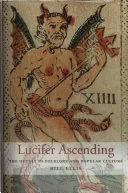
Bill Ellis's "Lucifer Ascending" presents a compelling case for understanding Lucifer as a multifaceted symbol rather than a fixed entity. The book's strength lies in its meticulous tracing of this figure through diverse historical and cultural strata, from ancient myth to modern occultism. Ellis avoids sensationalism, instead offering a scholarly yet accessible analysis. A particular strength is his exploration of Lucifer's role in folklore, often overlooked in theological discussions. However, the sheer breadth of material sometimes leads to a slightly fragmented feel; certain thematic threads could benefit from deeper, more sustained exploration. The section discussing Lucifer's appearance in folk magic traditions, while illuminating, feels somewhat condensed. Despite this, "Lucifer Ascending" offers a valuable scholarly perspective on a potent symbol, challenging conventional interpretations.
📝 Description
79
Bill Ellis's 2004 book examines Lucifer not just as a theological enemy but as a complex symbol in Western esotericism.
Lucifer Ascending moves beyond simple demonology to analyze the evolution of Lucifer as a symbol across Western esotericism and folklore. Bill Ellis traces this figure's presence from Gnosticism and early Christian heresies through medieval demonology and into modern occultism. The book situates Lucifer within a broad sweep of Western thought, considering how the figure has been reinterpreted and employed in different eras. Ellis engages with scholarship on folklore and religious symbolism, offering a perspective on a figure often reduced to simplistic interpretations. The work is analytical, suited for the serious researcher or intellectually curious individual interested in the symbolic, mythological, and historical dimensions of Lucifer. It appeals to those studying comparative religion, occult traditions, and the psychological underpinnings of archetypes.
This work places Lucifer within the broader currents of Western esoteric philosophy, where figures and concepts often carry symbolic weight beyond their literal or theological interpretations. Ellis examines how occult traditions and folk beliefs have adapted and recontextualized the Luciferian archetype, reflecting its adaptability and the diverse ways seekers have engaged with concepts of light, knowledge, and rebellion against established dogma. The book considers Lucifer not as a literal entity but as a potent symbol within this tradition.
💡 Why Read This Book?
• Gain a nuanced understanding of the Lucifer archetype, moving beyond simplistic interpretations by examining its diverse roles in Western esotericism and folklore, as detailed in the book's analysis of 20th-century occultism. • Explore the historical evolution of a potent symbol, understanding how figures like Lucifer have been recontextualized across centuries, particularly through its presence in medieval demonology. • Analyze the symbolic representation of rebellion and forbidden knowledge, recognizing how these themes are embodied in Lucifer and their impact on philosophical and spiritual discourse, as illuminated by the text's examination of Gnostic influences.
⭐ Reader Reviews
Honest opinions from readers who have explored this book.
❓ Frequently Asked Questions
What is the primary focus of Bill Ellis's "Lucifer Ascending"?
The book primarily focuses on the symbolic and historical evolution of Lucifer within Western esotericism and folklore, moving beyond simple theological interpretations to explore its varied cultural representations since antiquity.
When was "Lucifer Ascending" first published?
"Lucifer Ascending" by Bill Ellis was first published in 2004, offering a contemporary scholarly perspective on its subject matter.
Does the book discuss Lucifer in a religious or purely symbolic context?
The book examines Lucifer through both religious and symbolic lenses, analyzing its theological roles while emphasizing its broader significance as an archetype in folklore and occult traditions.
Who would benefit from reading "Lucifer Ascending"?
Readers interested in comparative religion, occult studies, folklore, and the psychological interpretation of archetypes will find "Lucifer Ascending" particularly valuable for its scholarly approach.
What historical periods does the book cover regarding Lucifer?
The book spans a wide historical range, from ancient Gnosticism and early Christian thought through medieval demonology and into modern esoteric movements and folklore.
Is "Lucifer Ascending" an academic text or for a general audience?
While scholarly in its approach, "Lucifer Ascending" is written to be accessible to a curious general audience interested in the esoteric and symbolic dimensions of the Lucifer figure.
🔮 Key Themes & Symbolism
The Adversarial Archetype
Ellis examines Lucifer as a potent archetype representing rebellion against dogma and the pursuit of forbidden knowledge. This theme is explored through its manifestation in various mythologies and esoteric systems. The work traces how this adversarial aspect, often linked to intellectual awakening, has been a recurring motif in Western thought, from early Gnostic sects to later occult traditions, offering a complex view of opposition as a catalyst for change.
Folklore and Demonic Figures
A significant portion of the book is dedicated to analyzing Lucifer's presence and transformation within folk traditions and demonology. Ellis scrutinizes how the figure's attributes and narrative roles have been adapted in popular culture and local legends, often diverging from strict theological portrayals. This section highlights the dynamic nature of folklore and its capacity to absorb and reshape even the most entrenched religious figures over time.
Symbolism of Light and Knowledge
The book explores Lucifer's association with light, illumination, and the bringing of knowledge, particularly in contrast to divine authority. This 'Promethean' aspect is analyzed through its symbolic weight in esoteric philosophy and literature. Ellis investigates how this 'light-bearer' imagery has been reinterpreted by various groups seeking alternative spiritual or intellectual pathways, underscoring the enduring appeal of figures associated with hidden wisdom.
Evolution of Esoteric Symbolism
Ellis charts the shifting interpretations of Lucifer across different esoteric schools and historical periods. The work illustrates how a figure initially defined in theological terms becomes a malleable symbol within magical and mystical frameworks. This demonstrates the fluid nature of esoteric symbolism, where figures are often reappropriated to serve new philosophical or psychological purposes, reflecting ongoing spiritual inquiry.
💬 Memorable Quotes
Direct passages from the work, attributed to the author.
“Lucifer is not a static figure but a shifting symbol.”
— This statement expresses Ellis's central argument, emphasizing that the meaning and representation of Lucifer have varied significantly across different historical eras and cultural contexts, rather than adhering to a single, fixed definition.
“The figure of the 'light-bringer' has been reinterpreted across traditions.”
— This highlights the Promethean aspect of Lucifer, suggesting that the symbolism of bringing illumination or forbidden knowledge has been adopted and adapted by various philosophical and esoteric movements seeking alternative forms of enlightenment.
“Folklore often presents a different Lucifer than theology.”
— This points to the divergence between formal religious doctrine and popular myth. Ellis illustrates how local legends and folk beliefs have shaped the Lucifer figure in ways that diverge from, and often humanize or complicate, its more traditional demonic portrayal.
“Archetypes evolve with societal understanding.”
— This interpretation suggests that figures like Lucifer, as archetypes, are not fixed but change their resonance and meaning in response to shifts in collective consciousness, cultural anxieties, and intellectual currents over time.
“Rebellion can be a symbol of intellectual awakening.”
— This suggests that the adversarial stance often associated with Lucifer can be viewed not merely as defiance, but as a powerful metaphor for the human drive towards critical thinking, questioning authority, and seeking knowledge beyond conventional limits.
🌙 Esoteric Significance
Tradition
While not strictly adhering to a single lineage, "Lucifer Ascending" significantly engages with the symbolic traditions that have influenced Western esotericism, particularly Gnosticism and Hermeticism. It analyzes how the figure of Lucifer, often seen as an antagonist in Abrahamic religions, is reinterpreted as a bearer of divine knowledge or a symbol of intellectual rebellion within these traditions. Ellis explores how esoteric practitioners have utilized this complex symbolism, moving beyond orthodox interpretations to find spiritual or psychological meaning.
Symbolism
Key symbols explored include the Morning Star (Venus), representing illumination, hope, and the dawn of consciousness, and the serpent, often associated with wisdom and forbidden knowledge in Gnostic and other traditions. Ellis also examines the motif of the fallen angel, not just as a theological concept, but as a potent symbol of ostracization and the outsider figure who possesses unique insight, contrasting with mainstream religious narratives.
Modern Relevance
Contemporary esoteric practitioners and scholars continue to draw upon the complex symbolism of Lucifer as a figure of liberation, knowledge, and personal gnosis. Thinkers in fields like depth psychology and comparative mythology find value in Ellis's analysis of archetypal patterns. The work's exploration of the figure’s adaptability makes it relevant to modern occultism and neo-paganism, where figures are often re-contextualized to explore themes of autonomy and challenging established norms.
👥 Who Should Read This Book
• Students of comparative religion and mythology seeking to understand the complex nature of symbolic figures across different belief systems. • Researchers into Western esotericism and occult traditions interested in the historical development and symbolic use of key figures like Lucifer. • Readers of folklore and cultural studies examining how archetypes are adapted and reinterpreted within popular narratives and traditions.
📜 Historical Context
Published in 2004, Bill Ellis's "Lucifer Ascending" emerged within a burgeoning academic interest in the history of Western esotericism and the study of symbolic figures. The late 20th and early 21st centuries saw increased scholarly attention on Gnosticism, Hermeticism, and various occult revival movements. Ellis's work engages with this scholarly milieu, offering a synthesis that moves beyond earlier, often sensationalist, treatments of figures like Lucifer. It follows in the vein of scholars who re-examined demonology and myth, such as Jeffrey Burton Russell, while focusing more specifically on the symbolic and folkloric dimensions. The book's reception was within academic circles interested in folklore, religious studies, and occult history, providing a counterpoint to purely theological condemnations and exploring the figure's adaptability in diverse contexts.
📔 Journal Prompts
Reflect on the concept of the 'light-bringer' as presented in the book's analysis of Lucifer.
Consider the divergence between Lucifer in theology versus Lucifer in folklore as discussed by Ellis.
Analyze how the symbol of rebellion against dogma, as embodied by Lucifer, might manifest in personal intellectual pursuits.
Explore the archetypal significance of the Morning Star symbol in relation to personal aspirations for knowledge.
Examine the idea of the 'outsider' figure possessing unique insight, inspired by Ellis's portrayal of Lucifer.
🗂️ Glossary
Archetype
A recurring symbol, character type, or motif in literature, art, or mythology that represents universal patterns of human nature and experience, often drawn from the collective unconscious.
Esotericism
Systems of thought and practice concerned with hidden knowledge or spiritual illumination, often distinct from mainstream religious or scientific doctrines. Includes traditions like Hermeticism, Gnosticism, and Kabbalah.
Gnosticism
A diverse set of religious movements prominent in the early Christian era, characterized by a belief in a transcendent God and the acquisition of secret knowledge (gnosis) for salvation.
Hermeticism
A philosophical and religious tradition based primarily upon writings attributed to Hermes Trismegistus, emphasizing divine knowledge and the interconnectedness of the cosmos.
Promethean
Relating to or characteristic of Prometheus, the Titan who defied the gods by giving fire to humanity. Symbolizes rebellion, intellectualism, and the bringing of forbidden knowledge or technology.
Demonology
The study of demons or beliefs about demons. In religious contexts, it often involves the classification, description, and theological interpretation of demonic entities.
Folklore
The traditional beliefs, customs, and stories of a community, passed through the generations by word of mouth. Includes legends, myths, and rituals.
This book appears in 1 collection
🔮 Readers Also Liked
Browse all →









From the “Superstition” Collection
View all →





More Free Occult Philosophy Books
View all →