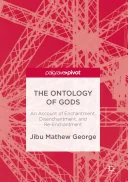
The Ontology of Gods
 72
72

The Ontology of Gods
Jibu Mathew George's "The Ontology of Gods" grapples with the persistent reality of religious belief in a world ostensibly moving towards secular rationalism. The author's central thesis, which proposes a new conceptual vocabulary for discussing supernatural entities, is ambitious and necessary. George skillfully employs Max Weber's "disenchantment of the world" not as an endpoint, but as a starting point for a deeper philosophical investigation into the sources of religious ideation. A particular strength lies in its interdisciplinary approach, drawing from philosophy and psychology to illuminate the foundations of faith. However, the dense philosophical argumentation, while rigorous, occasionally obscures the practical implications for a broader audience. The exploration of religious ideation at fundamental levels of reasoning is a compelling, if challenging, aspect of the work. Ultimately, "The Ontology of Gods" offers a significant, albeit demanding, contribution to the philosophy of religion.
📝 Description
72
Jibu Mathew George's 2017 book questions the very foundations of religious belief and supernatural claims.
Published in 2017, Jibu Mathew George's "The Ontology of Gods" proposes a new philosophical framework for understanding religious ontology. It aims to equip readers with fresh conceptual tools to analyze supernatural religious belief systems. The work examines the fundamental levels of human reasoning that support faith and belief, moving beyond traditional empiricist critiques. George situates his argument within a context of persistent religious belief, even as society undergoes rationalization. He engages directly with Max Weber's concept of the "disenchantment of the world" to re-evaluate supernatural belief.
The book develops a distinct philosophical language for discussing divinity and supernatural claims. It investigates the dynamics of religious ideation and the psychological mechanisms that generate belief. George attempts to connect philosophical inquiry with an understanding of human cognitive processes, offering a rigorous, interdisciplinary approach. This volume is intended for academics in the philosophy of religion, theology, and comparative religious studies. It also speaks to those interested in the sociological and psychological aspects of belief, particularly those familiar with critical theory and the history of ideas.
This work enters a philosophical space concerned with the nature of the divine and the structures of belief, often touching upon traditions that explore consciousness and reality beyond empirical verification. While not strictly occult in the sense of ritual practice, its examination of supernatural ontology and the philosophical underpinnings of faith aligns with broader esoteric inquiries into the unseen or transcendent. It engages with the philosophical implications of religious experience and the conceptualization of non-material realities, a recurring theme in many esoteric traditions that seek to articulate a cosmology beyond the mundane.
💡 Why Read This Book?
• Understand the philosophical underpinnings of religious belief by examining Jibu Mathew George's novel conceptual repertoire for supernatural religion, moving beyond simplistic empiricist objections. • Gain insight into the dynamics of religious ideation through an interdisciplinary lens, specifically how belief is formed at fundamental levels of human reasoning, as discussed in the 2017 publication. • Re-evaluate secularization theories by using Max Weber’s concept of "Disenchantment of the World" as a departure point for a contemporary philosophical analysis of supernaturalism.
⭐ Reader Reviews
Honest opinions from readers who have explored this book.
❓ Frequently Asked Questions
What is the primary philosophical contribution of "The Ontology of Gods"?
The book's primary contribution is its proposal of a novel conceptual repertoire for discussing the ontology of religion and supernatural belief systems, aiming to offer new philosophical tools for analysis.
Which sociological concept serves as a starting point for this book?
The book uses Max Weber's concept of "Disenchantment of the World" as a departure point for its philosophical exploration of religious ideation and belief.
What is the author's interdisciplinary approach in "The Ontology of Gods"?
Jibu Mathew George adopts an interdisciplinary perspective, integrating philosophical inquiry with insights from psychology to examine the source and dynamics of religious ideation.
Who is the author of "The Ontology of Gods"?
The author is Jibu Mathew George, and the book was first published on March 23, 2017.
What fundamental levels of human reasoning does the book address?
The book addresses the fundamental levels of human reasoning upon which belief and faith are based, seeking to explain the mechanisms of religious ideation.
Does the book offer a theological perspective or a philosophical one?
The book offers a philosophical thesis on the ontology of religion, rather than a theological one, aiming for analytical rigor concerning supernatural belief.
🔮 Key Themes & Symbolism
Rethinking Religious Ontology
The work challenges traditional philosophical approaches to religion by proposing a new conceptual language for discussing the nature of gods and supernatural realities. It moves beyond mere phenomenology to address the very being of religious concepts, offering a rigorous framework for understanding claims about the divine that respects their conceptual space without necessarily endorsing their truth claims.
The Dynamics of Ideation
George examines the psychological and cognitive processes that give rise to religious ideas and sustained belief. The book investigates how faith and conviction are formed at foundational levels of human reasoning, analyzing the internal dynamics that make supernatural narratives compelling and enduring across cultures and history.
Disenchantment and Persistence
Leveraging Max Weber's seminal concept of "Disenchantment of the World," the book interrogates why supernatural beliefs continue to hold sway in increasingly rationalized societies. It posits that the mechanisms of ideation and belief formation are not wholly eradicated by secularization, necessitating new philosophical tools to understand this persistence.
Interdisciplinary Philosophical Analysis
This volume stands out for its interdisciplinary nature, synthesizing insights from philosophy of religion, sociology, and psychology. By drawing on diverse fields, George constructs a more comprehensive model for understanding religious phenomena, demonstrating how different analytical perspectives can enrich our comprehension of belief systems.
💬 Memorable Quotes
Direct passages from the work, attributed to the author.
“Proposes a new conceptual repertoire to deal with supernatural religion.”
— This statement highlights the book's core aim: to equip scholars and thinkers with novel terminology and frameworks specifically designed for analyzing religious claims about the supernatural.
“Offers an interdisciplinary perspective on the source and dynamics of religious ideation.”
— This points to the book's method, emphasizing its synthesis of insights from various academic disciplines to understand how religious ideas originate and maintain their influence.
“Uses Max Weber’s concept of “Disenchantment of the World” as a point of departure.”
— This indicates the book's engagement with a foundational sociological theory concerning secularization, using it as a basis to explore contemporary religious phenomena.
“Endeavors to provide a pioneering philosophical and psychol-”
— This unfinished phrase suggests the book's ambition to forge new paths in philosophical inquiry, particularly at the intersection of philosophy and psychology regarding religious belief.
“Focuses on the fundamental levels of human reasoning upon which belief and faith are based.”
— This emphasizes the book's deep dive into the cognitive and psychological underpinnings of religious conviction, exploring the very roots of why humans believe.
🌙 Esoteric Significance
Tradition
While not explicitly aligned with a single esoteric lineage like Hermeticism or Gnosticism, "The Ontology of Gods" shares a philosophical affinity with traditions that explore the nature of consciousness, divinity, and reality beyond materialist frameworks. Its rigorous philosophical inquiry into the ontology of supernatural concepts can be seen as a modern, academic engagement with themes historically explored in esoteric discourse, particularly concerning the conceptual architecture of the divine.
Symbolism
The work primarily engages with conceptual symbolism rather than traditional iconographic symbols. The 'gods' themselves function as potent conceptual symbols representing ultimate concerns, transcendent realities, or fundamental aspects of human psychology and society. The 'supernatural' acts as a symbol for that which lies beyond empirical verification but holds significant power in shaping human belief and behavior.
Modern Relevance
Contemporary thinkers exploring the philosophy of religion, consciousness studies, and the cognitive science of religion can find George's work highly relevant. His proposed conceptual repertoire offers a new language for discussing phenomena often relegated to mere psychology or sociology, providing a philosophical foundation for understanding the enduring power of supernatural belief in modern society.
👥 Who Should Read This Book
• Philosophy of religion scholars seeking to expand their analytical toolkit for engaging with supernatural claims, particularly those interested in ontology and conceptual innovation. • Students of comparative religion and sociology of religion who wish to understand the deeper philosophical underpinnings of belief systems beyond sociological descriptions. • Critical theorists and philosophers of mind interested in the cognitive and psychological foundations of belief, and how abstract concepts like 'gods' are constructed and maintained.
📜 Historical Context
Published in 2017, "The Ontology of Gods" emerges in an era marked by ongoing debates surrounding secularization and the enduring presence of religious belief. Jibu Mathew George's work engages directly with the legacy of thinkers like Max Weber, whose concept of the "Disenchantment of the World" (articulated in lectures from the early 20th century) posited a decline in magical thinking. George's contribution is to re-examine this thesis, suggesting that new philosophical tools are needed to understand how supernatural ideation persists. The book is situated within contemporary philosophy of religion, a field that has seen renewed interest in metaphysics and ontology following critiques from naturalistic and empiricist perspectives. While not directly engaging with specific contemporary figures in a polemical manner, its interdisciplinary approach implicitly responds to broader trends in analytic philosophy and cognitive science of religion, seeking to provide a more nuanced understanding than purely sociological or psychological accounts.
📔 Journal Prompts
The conceptual repertoire for supernatural religion proposed by George.
Religious ideation's source and dynamics.
Max Weber's "Disenchantment of the World" in relation to contemporary belief.
The fundamental levels of human reasoning underpinning faith.
The interdisciplinary perspective on supernatural belief systems.
🗂️ Glossary
Ontology
The branch of metaphysics dealing with the nature of being. In this context, it refers to the philosophical study of the existence and nature of gods or supernatural entities.
Supernatural Religion
Religious beliefs and practices that invoke entities, forces, or realities considered to be beyond the natural world and its laws, often involving divine beings or transcendent powers.
Religious Ideation
The process of forming ideas, concepts, and mental representations related to religion, including beliefs about deities, the afterlife, and the sacred.
Disenchantment of the World
A concept, notably from Max Weber, describing the process in modern society where magic, superstition, and religious explanations are replaced by scientific, rational, and bureaucratic modes of understanding and control.
Conceptual Repertoire
The set of concepts, terms, and analytical tools available for understanding and discussing a particular subject. George proposes a new one for religion.
Interdisciplinary Perspective
An approach that integrates knowledge and methodologies from multiple academic disciplines to gain a more comprehensive understanding of a subject.
Fundamental Levels of Human Reasoning
The basic cognitive processes and structures within the human mind that form the foundation for thought, logic, belief formation, and decision-making.
This book appears in 1 collection
🔮 Readers Also Liked
Browse all →









From the “Enchantment” Collection
View all →






More Free Occult Philosophy Books
View all →