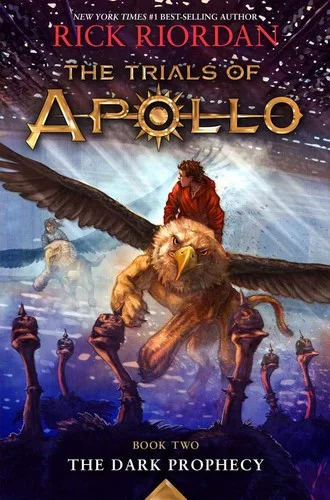
The Dark Prophecy
 80
80

The Dark Prophecy
Rick Riordan’s 2017 publication, The Dark Prophecy, presents a familiar yet energetic take on the modern mythic adventure. The book’s strength lies in its rapid pacing and the author’s knack for imbuing ancient lore with a contemporary, accessible voice. Characters are sketched with a familiar blend of humor and gravitas, making their struggles with prophesied destinies feel immediate. However, the very familiarity of its tropes—the reluctant hero, the ancient evil, the fated quest—can sometimes make the plot feel predictable. A notable element is the depiction of the Oracle of Delphi, reimagined not as a singular entity but as a more complex, perhaps even fractured, source of foresight, which adds a layer of ambiguity to the pronouncements.
Ultimately, The Dark Prophecy delivers a satisfying, if conventional, mythological quest.
📝 Description
80
The Dark Prophecy, published in 2017, dives into the familiar young adult fantasy trope of destiny versus free will.
This 2017 novel centers on protagonists discovering hidden powers and ancestral connections, drawing them into a conflict shaped by ancient secrets and supernatural elements. The story unfolds against a backdrop of mythological structures and archetypal struggles, examining the tension between predetermined fate and individual agency. Readers follow characters grappling with their identities as they confront overwhelming odds. The narrative frequently features a pantheon of deities or ancient beings whose actions impact the mortal world. A core idea is that one's lineage often unlocks their true potential or ultimate purpose.
The book is geared towards readers who enjoy adventure stories grounded in mythology. It will appeal to those interested in themes of self-discovery, the nature of fate, and the classic "chosen one" narrative. While aimed at a younger audience, its engaging fantasy elements also attract adult readers seeking escapism. The novel arrived during a peak period for young adult fantasy, influenced by trends in complex world-building and allegorical storytelling seen in other popular works.
While not strictly an esoteric text, The Dark Prophecy taps into a cultural fascination with mythologies, particularly Greek mythology, which has seen periodic revivals. The concept of prophecy as a fixed destiny versus the power of individuals to shape their future is a recurring theme in many spiritual and philosophical traditions. The notion of hidden lineages and the awakening of latent abilities echoes concepts found in various occult and mystical lore, suggesting that one's ancestry carries a significant, often supernatural, weight.
💡 Why Read This Book?
• Gain a fresh perspective on the interplay between prophecy and free will, as seen through the specific challenges faced by characters grappling with pronouncements from figures like the Oracle of Delphi. • Experience a dynamic reinterpretation of classical mythology, understanding how ancient pantheons and their conflicts are rendered relevant for a modern audience in the context of the 2017 publication. • Explore themes of inherited destiny and self-determination, observing how the narrative structure, reminiscent of the hero's journey, unfolds specific trials for protagonists linked to their lineage.
⭐ Reader Reviews
Honest opinions from readers who have explored this book.
❓ Frequently Asked Questions
When was The Dark Prophecy first published?
The Dark Prophecy was first published in 2017, placing it within a vibrant period for young adult fantasy literature.
What mythological tradition does The Dark Prophecy draw from?
The book heavily draws from Greek mythology, incorporating deities, mythical creatures, and prophetic elements common to that ancient tradition.
Is The Dark Prophecy part of a series?
Yes, The Dark Prophecy is part of Rick Riordan's larger universe of interconnected mythological series, often featuring characters or concepts from previous books.
What are the main themes explored in The Dark Prophecy?
Key themes include fate versus free will, the burden of prophecy, the nature of heroism, and the exploration of identity through ancient lineage.
Who is the author of The Dark Prophecy?
The author is Rick Riordan, known for his popular series based on various mythologies, including the Percy Jackson books.
Does The Dark Prophecy require prior knowledge of Riordan's other books?
While it can be enjoyed independently, prior knowledge of Rick Riordan's other series, particularly those involving Greek mythology, can enhance the reader's understanding of the interconnected world and characters.
🔮 Key Themes & Symbolism
Prophecy and Agency
The work grapples with the weight of predetermined futures, epitomized by the pronouncements of oracles. It questions whether individuals are bound by what is foretold or possess the capacity to forge their own paths. This exploration often manifests through protagonists who resist or actively seek to subvert their prophesied roles, highlighting the tension between external destiny and internal volition. The narrative suggests that understanding a prophecy is the first step toward potentially rewriting it, a concept central to the 2017 publication.
Mythological Resonance
Central to the narrative is the deep integration of classical Greek mythology. Gods, monsters, and ancient legends are not merely background elements but active participants in the characters' lives and conflicts. The book recontextualizes these figures for a contemporary audience, exploring their enduring relevance and the archetypal patterns they represent. This approach makes the ancient world feel immediate and impactful within the story's framework.
The Hero's Inheritance
A recurring motif is the idea that protagonists carry a significant inheritance, often tied to divine or heroic bloodlines. This lineage bestows not only potential power but also a profound responsibility and a destiny to fulfill. The narrative examines the internal struggle this inheritance creates, as characters must reconcile their personal desires with the expectations and duties imposed by their ancestry.
Confronting Ancient Evils
The story frequently involves a struggle against powerful, ancient antagonists or forces that threaten the established order. These adversaries often embody primal chaos or forgotten darkness, requiring the heroes to draw upon their newfound strengths and mythological knowledge. The conflict serves as a crucible, testing the protagonists' resolve and forcing them to grow into the roles they are meant to play.
💬 Memorable Quotes
Direct passages from the work, attributed to the author.
“The gods may decree, but mortals must act.”
— This statement emphasizes human agency in the face of divine influence. It posits that while higher powers might set the stage or issue commands, the actual unfolding of events relies on the choices and actions taken by individuals.
“Every prophecy casts a shadow, and within that shadow lies the truth.”
— This suggests that prophecies are not always straightforward declarations but contain layers of meaning, ambiguity, and potential misinterpretation. The true essence or consequence of a prophecy is often found in its hidden implications or the reactions it provokes.
“To know the path is to begin the journey, but to walk it is to change its course.”
— This highlights the difference between understanding a potential future and actively participating in its creation. Merely being aware of a prophesied event is passive; engaging with it allows for alteration and personal transformation.
“The greatest battles are not against monsters, but against the fears they awaken within us.”
— This interpretation focuses on the internal struggles of the characters. It suggests that the true challenge lies in overcoming psychological barriers and self-doubt, which are often amplified by external threats.
💡 Key Ideas
Editorial paraphrase of the work's core concepts — not direct quotes.
Fate is not a chain, but a current; one can swim with it, or fight against it.
This paraphrased concept suggests that destiny is not an inescapable prison. Instead, it is a powerful force that can be navigated or opposed, implying that individual will has a significant role in shaping outcomes.
🌙 Esoteric Significance
Tradition
While The Dark Prophecy is firmly rooted in popular young adult fiction, its engagement with Greek mythology touches upon themes often explored in Western Esotericism. The concept of oracles, fate, and divine intervention echoes Gnostic and Hermetic ideas about cosmic order and predetermined destinies. The narrative's focus on a chosen hero with a special lineage also aligns with archetypal patterns found in various mystery traditions and initiatory paths, albeit presented in a secularized, adventure-oriented format.
Symbolism
The Oracle of Delphi serves as a potent symbol, representing not just foresight but the often-ambiguous nature of divine communication and the challenge of interpreting veiled truths. Additionally, the concept of 'bloodlines' or inherited powers functions symbolically, representing the deep-seated patterns, karmic influences, or archetypal energies that can shape an individual's life journey and potential.
Modern Relevance
Contemporary fantasy authors and narrative designers continue to draw inspiration from Riordan's method of reinterpreting ancient myths for modern audiences. The book's success demonstrates a sustained interest in exploring themes of destiny, heroism, and the supernatural through accessible, engaging stories. This approach influences how many young readers encounter and engage with classical mythology, potentially sparking further interest in more traditional esoteric studies later in life.
👥 Who Should Read This Book
• Young adult readers seeking fast-paced adventure stories infused with mythological elements. • Fans of Rick Riordan's previous works who enjoy his style of blending ancient lore with contemporary storytelling. • Readers interested in exploring themes of destiny, prophecy, and the hero's journey through a modern fantasy lens.
📜 Historical Context
The Dark Prophecy, published in 2017, arrived in a literary landscape still heavily influenced by the young adult fantasy boom of the early 2000s. Authors like J.K. Rowling and Suzanne Collins had cemented the genre's popularity, paving the way for works that blended mythological elements with contemporary settings and relatable adolescent protagonists. Riordan himself was a dominant figure, having already established a massive readership with his Percy Jackson series, which similarly revitalized interest in Greek mythology. The 2017 publication date places it within a period where readers expected intricate world-building and fast-paced action, often with underlying social or moral commentary. While the book drew heavily on established Greek myths, it operated within a framework that had been popularized by earlier works, distinguishing itself through its specific character voices and narrative arcs rather than by pioneering entirely new thematic territory. Its reception was largely positive among its target demographic, reinforcing the enduring appeal of mythologically-inspired adventure.
📔 Journal Prompts
The Oracle's pronouncements and their impact on character choices.
Characters' reactions to discovering inherited powers or destinies.
The reinterpretation of specific Greek deities within the narrative.
Moments where characters actively defied a perceived prophecy.
The symbolic meaning of ancient monsters or challenges faced.
🗂️ Glossary
Oracle of Delphi
A central figure or concept in the book representing a source of prophecy. Traditionally, the Oracle at Delphi was a priestess who delivered cryptic messages from the god Apollo, often interpreted by priests.
Prophecy
A prediction of future events, often delivered by a divine or supernatural source. In the context of the book, prophecies carry significant weight, influencing characters' actions and motivations.
Lineage
Refers to a person's ancestry or descent. The book often explores characters whose lineage connects them to gods, heroes, or significant mythological figures, granting them special abilities or destinies.
Mythological Pantheon
The collective group of gods and goddesses belonging to a specific mythology, such as the Greek pantheon. These figures often play active roles in the narrative, influencing mortal affairs.
Archetype
A recurring symbol, character type, or pattern of behavior found in mythology and literature across cultures. The book utilizes many classical archetypes, such as the hero, the trickster, and the wise elder.
Hero's Journey
A narrative pattern identified by Joseph Campbell, describing the common stages of a hero's adventure, including a call to adventure, trials, and a return. This structure underpins many fantasy narratives.
Demigod
In Greek mythology, a being who is part human and part divine. Characters in the book often possess such heritage, explaining their extraordinary abilities.
🔮 Readers Also Liked
Browse all →









More by Rick Riordan
All books →




More Free Occult Philosophy Books
View all →