Archetype Revisited
 83
83

Archetype Revisited
Anthony Stevens' "Archetype Revisited" offers a compelling, if occasionally dense, re-examination of his foundational 1982 text. The strength lies in its audacious synthesis of Jungian psychology with evolutionary biology. Stevens doesn't shy away from positing archetypes as biologically inherited structures, a bold claim that challenges purely cultural or learned explanations for human behavior and symbolism. He masterfully connects theoretical Jungian concepts to observable phenomena in the natural world, particularly through the lens of ethology. A passage discussing the 'Great Mother' archetype's connection to imprinting and maternal care in animal species is particularly illuminating. However, the book's ambition sometimes leads to a dense exposition that may test readers less familiar with evolutionary theory or advanced Jungian concepts. Despite this, the core argument remains potent: that our deepest psychological patterns have evolutionary roots. It is a serious scholarly work for those willing to engage with its intellectual rigor.
📝 Description
83
Anthony Stevens' 1982 book argued archetypes are biological, not just constructs.
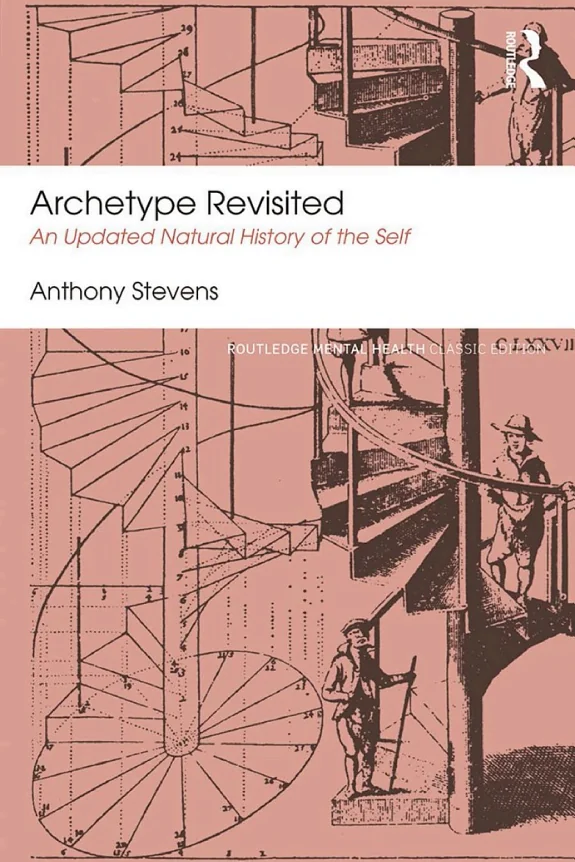
Archetype Revisited updates and expands upon Anthony Stevens' 1982 work, Archetype: A Natural History of the Self. Stevens originally argued that C.G. Jung's concept of archetypes could be understood through evolutionary biology and ethology, rather than being purely psychological ideas. This later edition reaffirms that archetypes are rooted in humanity's biological and evolutionary past, suggesting they represent inherited predispositions and evolved behavioral patterns. The book aims to connect the natural sciences with depth psychology, proposing a framework for understanding recurring myths and symbols across cultures.
Stevens' initial publication in 1982 sought to give Jungian concepts a scientific basis at a time when they were often dismissed. He engaged with emerging fields like ethology to support his thesis that archetypal patterns have an evolutionary and biological foundation. This work predates much of the current interdisciplinary research that links biology to myth and symbol. The book is intended for readers interested in the objective reality of the psyche and those looking for explanations of human behavior and symbolic expression beyond purely materialistic views.
Stevens' work engages with the perennial philosophical question of innate human structures versus learned behavior. By grounding Jungian archetypes in evolutionary biology, he attempts to bridge the gap between empirical science and the study of the psyche, a domain often relegated to mysticism or subjective interpretation. This approach places the book within traditions that seek to find universal, perhaps even objective, patterns in human consciousness and culture, echoing earlier attempts to systematize the understanding of the soul through various lenses, including natural philosophy and comparative mythology.
💡 Why Read This Book?
• Gain an understanding of archetypes as biologically inherited predispositions, a concept Stevens details by linking Jungian theory to evolutionary biology and ethology, offering a perspective rare in psychological texts. • Explore the specific biological underpinnings of archetypal patterns, such as the 'Great Mother' archetype's connection to imprinting and maternal behavior, as presented in Stevens' original 1982 work. • Grasp the interdisciplinary framework Stevens establishes, bridging the gap between analytical psychology and the natural sciences, providing a unique lens for understanding human nature and symbolic expression.
⭐ Reader Reviews
Honest opinions from readers who have explored this book.
❓ Frequently Asked Questions
What is the primary argument of Anthony Stevens' Archetype Revisited?
The book argues that C.G. Jung's archetypes are not merely psychological concepts but are deeply rooted in human evolutionary biology and inherited behavioral predispositions, drawing parallels with ethology and sociobiology.
How does Archetype Revisited connect Jungian psychology with science?
It seeks to ground Jung's archetypes in evolutionary theory, suggesting they are the psychological manifestation of inherited biological patterns that have evolved over millennia, thus bridging psychology and natural sciences.
When was the original book by Anthony Stevens first published?
The original work, 'Archetype: A Natural History of the Self,' was first published in 1982, with 'Archetype Revisited' being a later edition.
What scientific fields does Stevens integrate with Jungian psychology?
Stevens integrates concepts from evolutionary biology, ethology (the study of animal behavior), and sociobiology to provide a naturalistic explanation for archetypal phenomena.
Who is the author Anthony Stevens?
Anthony Stevens was a British Jungian psychiatrist and author known for his interdisciplinary approach, particularly his work synthesizing Jungian psychology with evolutionary biology.
What is the significance of archetypes according to Stevens?
Stevens views archetypes as fundamental, inherited patterns of the psyche, shaped by our evolutionary past, which influence human behavior, perception, and the creation of myths and symbols.
🔮 Key Themes & Symbolism
Archetypes as Biological Inheritance
This work posits that Jung's archetypes are not abstract ideas but are concrete, inherited structures of the psyche, imprinted by our evolutionary past. Stevens argues that these patterns, observable in behaviors across species and in recurring myths, function as innate predispositions. He connects them to evolutionary concepts, suggesting they represent the psychological dimension of our biological heritage, shaping our understanding of the world and our interactions within it.
The Synthesis of Psychology and Ethology
A central theme is the integration of analytical psychology with ethology, the scientific study of animal behavior. Stevens uses observations of animal behavior, such as imprinting or maternal care, as analogues for human archetypal expressions. This comparative approach aims to demonstrate that the patterns Jung identified in the human collective unconscious have roots in the broader animal kingdom, lending them a natural, biological basis.
Evolutionary Roots of the Self
The book explores how the human 'self' is shaped by millions of years of evolution. Archetypes are presented as fundamental blueprints that guide psychic development and behavior, reflecting the adaptive challenges faced by our ancestors. By examining these patterns through an evolutionary lens, Stevens offers a framework for understanding the deep, often unconscious, forces that drive human motivation and cultural expression.
Myth, Symbol, and Biological Imperative
Stevens links the recurrence of universal myths and symbols across cultures to underlying biological imperatives. He suggests that these narratives and images are not arbitrary but are expressions of innate, archetypal patterns that serve vital adaptive functions. This perspective elevates the study of myth from a purely cultural or psychological inquiry to one grounded in the biological realities of human existence.
💬 Memorable Quotes
Direct passages from the work, attributed to the author.
“Archetypes are the psychic correlates of instinctual patterns.”
— This statement expresses Stevens' core thesis, suggesting that the symbolic and psychological patterns identified by Jung have a direct, inheritable link to the behavioral instincts observed in the animal kingdom.
“The original book was the first to explore connections between Jung's archetypes and evolutionary disciplines.”
— This highlights the pioneering nature of Stevens' 1982 work, emphasizing its novel approach in bridging the gap between depth psychology and the burgeoning fields of ethology and sociobiology.
“Human beings are not born as blank slates but with a pre-existing psychological structure.”
— This interpretation underscores the view that our minds are not solely shaped by experience but are endowed with innate patterns, or archetypes, inherited from our evolutionary past.
“Jung's archetypes have often been dismissed as 'mystical' by scientists.”
— This points to the historical reception of Jungian concepts within the scientific community, noting the tendency to categorize them as unscientific or supernatural, a perception Stevens aimed to counter.
💡 Key Ideas
Editorial paraphrase of the work's core concepts — not direct quotes.
The collective unconscious carries the inherited patterns of behaviour that have enabled our species to survive.
This paraphrased concept emphasizes the adaptive and survival-oriented function of the collective unconscious, framing archetypes as essential tools for navigating life's challenges, passed down through generations.
🌙 Esoteric Significance
Tradition
While not strictly adhering to a single esoteric lineage, Stevens' work draws heavily from the analytical psychology of C.G. Jung, which itself incorporated Gnostic, alchemical, and Hermetic influences. 'Archetype Revisited' extends this by grounding Jung's concepts in the natural sciences, offering a modern, almost materialist interpretation of what were once considered purely spiritual or occult phenomena. It fits within a broader esoteric project of finding universal patterns in both the inner and outer worlds.
Symbolism
The book explores archetypal symbols not as arbitrary images but as manifestations of deep biological structures. For example, the 'Great Mother' archetype is linked to evolutionary imprinting and maternal care instincts, while the 'Wise Old Man' might reflect the accumulated knowledge and experience necessary for group survival. These symbols are seen as biological imperatives encoded in the psyche, guiding behavior and perception.
Modern Relevance
Contemporary thinkers in fields like evolutionary psychology, neuropsychoanalysis, and even certain branches of transpersonal psychology engage with Stevens' ideas. His framework provides a robust model for exploring the biological roots of spiritual and symbolic experience, influencing discussions on consciousness, myth, and the inherent structures of the human mind in an increasingly secularized world.
👥 Who Should Read This Book
• Students of Jungian psychology seeking to understand the biological and evolutionary underpinnings of archetypal theory. • Researchers in comparative mythology and anthropology interested in the universal patterns of human narrative and symbolism. • Individuals exploring the intersection of consciousness studies and the natural sciences who question purely materialistic explanations for the human psyche.
📜 Historical Context
Anthony Stevens' original 1982 publication, 'Archetype: A Natural History of the Self,' emerged in a landscape where Jungian psychology often faced skepticism from the scientific establishment. Fields like ethology, championed by figures such as Konrad Lorenz and Niko Tinbergen, were gaining significant academic ground, focusing on the biological and evolutionary basis of behavior. Stevens' work was distinctive for its explicit attempt to integrate Jung's concept of the collective unconscious with these emerging evolutionary and biological sciences. This contrasted with more purely psychological or philosophical interpretations of archetypes prevalent at the time. While not a widely cited contemporary in the way some evolutionary biologists were, Stevens' book offered a unique bridge, attempting to provide a naturalistic framework for what had often been dismissed as 'mystical' elements of Jung's work. The book's reception reflected this interdisciplinary challenge, appealing to those seeking a more scientifically grounded understanding of the psyche.
📔 Journal Prompts
The concept of archetypes as biological inheritance: How might this perspective alter your understanding of instinctual behavior?
Consider the 'Great Mother' archetype. How do its biological correlates in animal behavior manifest in human societal structures or personal relationships?
Reflection on the synthesis of psychology and ethology: What are the limitations and benefits of explaining psychic phenomena through animal behavior?
The 'Self' as an evolutionary construct: How does this view challenge or affirm your personal sense of identity?
Connect the recurring symbols in myths to potential biological imperatives. Identify one symbol and trace its possible adaptive function.
🗂️ Glossary
Archetype
In Jungian psychology, a universal, inherited pattern or predisposition of the human psyche that influences thought, behavior, and imagery. Stevens links these to biological inheritance.
Collective Unconscious
A concept proposed by C.G. Jung, representing a deeper layer of the unconscious mind shared by all humanity, containing archetypes and inherited predispositions.
Ethology
The scientific study of animal behavior, particularly in natural environments. Stevens uses ethological observations to support his theories on archetypes.
Sociobiology
A field that studies the biological basis of social behavior in humans and other animals, focusing on evolutionary principles.
Imprinting
A form of learning in young animals where they develop an attachment to the first moving object they see, often a parent. Stevens uses this as an analogy for archetypal influence.
Evolutionary Psychology
A theoretical approach that explains psychological traits (memory, perception, language) as functional products of natural selection. Stevens' work is a precursor to much of this field.
Natural History of the Self
Refers to understanding the development and nature of the individual self through the lens of evolutionary biology and the inherent patterns of the species.
This book appears in 1 collection
🔮 Readers Also Liked
Browse all →








From the “Collective Unconscious” Collection
View all →







More Free Occult Philosophy Books
View all →