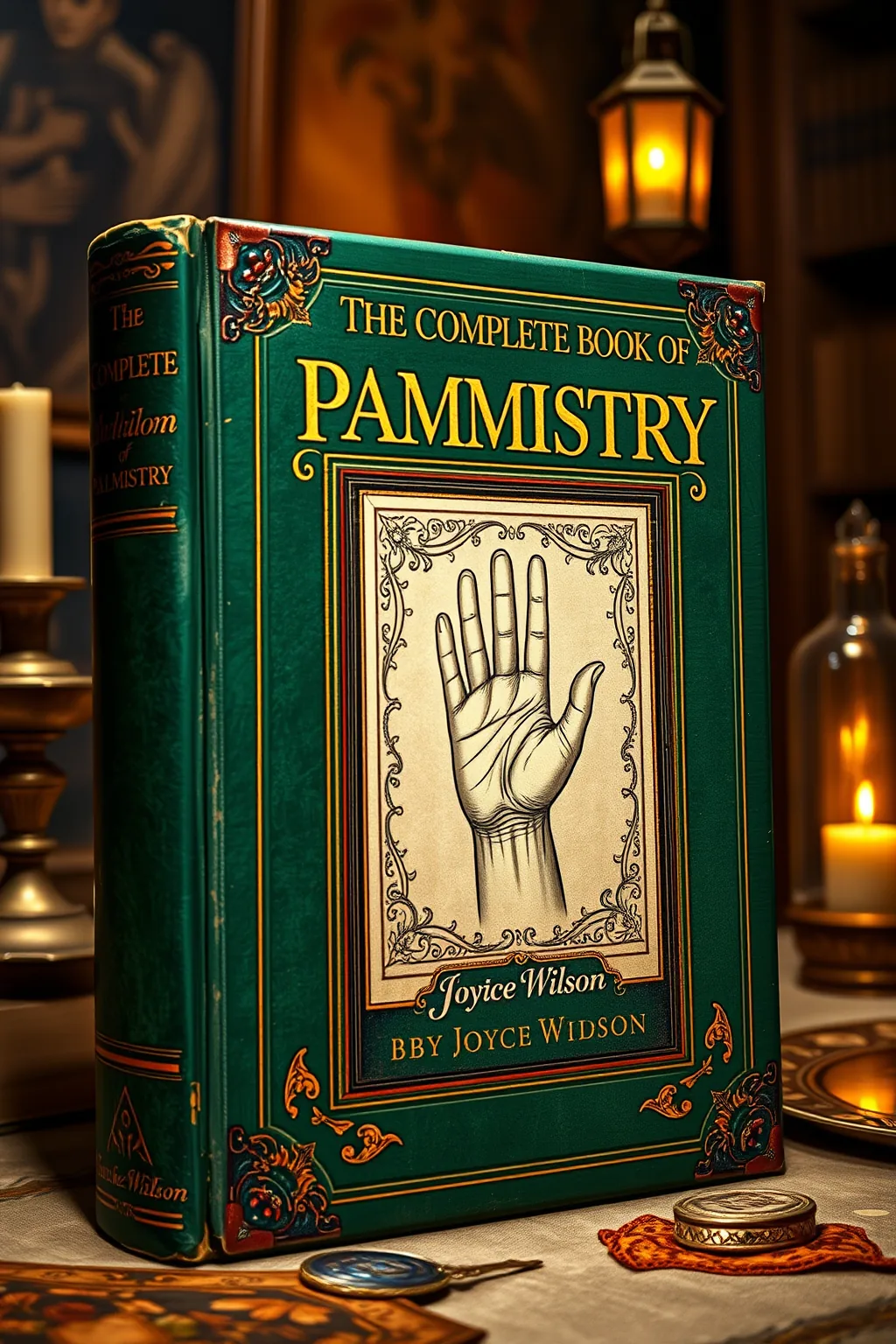
The complete book of palmistry
 84
84

The complete book of palmistry
Joyce Wilson's "The Complete Book of Palmistry" offers a remarkably thorough and systematic approach to a practice often shrouded in vagueness. Unlike many superficial treatments, Wilson dedicates significant attention to the foundational elements, such as the seven major mounts and their corresponding planetary influences, providing a robust framework. Her detailed cataloging of hand shapes and line variations, particularly the nuanced interpretations of the fate line's changes, is a strength that aids in consistent analysis. However, the book occasionally leans towards a descriptive rather than interpretive style, leaving some readers wanting more on the *why* behind certain correlations. The section on finger creases, while present, feels somewhat underdeveloped compared to the extensive coverage of lines. Despite this minor limitation, Wilson's work remains a valuable resource for serious students of chiromancy, offering clarity and depth that is often missing in popular guides. It serves as a solid, albeit sometimes dry, manual for understanding the hand's cryptic language.
📝 Description
84
Joyce Wilson's 1982 book offers a structured approach to palmistry, detailing lines, mounts, and hand shapes.
This 1982 guide presents a thorough examination of palmistry, the practice of interpreting character and future events by studying the hand. It moves past simple readings to establish a systematic method for understanding the hand's various features. The book categorizes different hand types and their corresponding traits, building a framework for consistent analysis. It details the meaning of each major and minor line, including the life, head, and heart lines, and explains their potential interpretations. The work also covers the subtle aspects of finger length, fingertip shape, and the prominence of the palm's mounts, all contributing to a complete reading. This book is for those involved in esoteric arts who wish to improve their knowledge of chiromancy. It is also useful for individuals interested in self understanding through somatic divination or in the historical and cultural background of hand reading. Beginners will find a clear method, while experienced readers might encounter new ways to interpret established meanings. It appeals to anyone interested in the connection between psychology, symbolism, and divination, especially those who value systematic study in esoteric fields.
Published in 1982, Joyce Wilson's "The Complete Book of Palmistry" appeared during a time of renewed interest in occult and esoteric studies, often associated with the New Age movement. This period saw a revival of practices such as astrology, tarot, and palmistry, which had previously been met with skepticism or relegated to folk traditions. Wilson's contribution to this resurgence was her presentation of palmistry in a more structured and accessible format, drawing from established practices while aiming for clarity.
💡 Why Read This Book?
• Learn to identify and interpret the seven major mounts (Venus, Jupiter, Saturn, Apollo, Mercury, Mars, Luna) on the palm, understanding their influence on personality and life path as detailed in the book's mount section. • Gain a structured method for analyzing hand shapes, moving beyond generic types to understand the specific psychological profiles associated with Earth, Air, Fire, and Water hand configurations outlined by Wilson. • Decipher the complex interplay of major and minor palm lines, including the fate line's variations, to gain nuanced insights into personal history and potential future inclinations, a core focus of the book's line analysis.
⭐ Reader Reviews
Honest opinions from readers who have explored this book.
❓ Frequently Asked Questions
When was "The Complete Book of Palmistry" first published?
Joyce Wilson's "The Complete Book of Palmistry" was first published in 1982, placing it within the resurgence of esoteric studies during the late 20th century.
What is the primary focus of Wilson's palmistry book?
The book's primary focus is a systematic and detailed exploration of palmistry, covering hand shapes, palm mounts, finger characteristics, and the interpretation of various palm lines.
Does the book cover different types of hands?
Yes, the book extensively covers different hand types, categorizing them into elemental groups like Earth, Air, Fire, and Water, and detailing the associated personality traits for each.
What are the 'mounts' in palmistry according to this book?
The mounts are fleshy prominences on the palm, named after planets (Venus, Jupiter, Saturn, Apollo, Mercury, Mars, Luna). Wilson's book explains how their size and development indicate specific character traits and life potentials.
Is this book suitable for beginners in palmistry?
Yes, the book is structured to be accessible to beginners, offering a clear methodology and detailed explanations of core concepts, while also providing depth for more experienced practitioners.
What historical period does the book relate to?
While palmistry is ancient, the book's publication in 1982 places it within the context of the New Age movement and a renewed public interest in occult and metaphysical practices.
🔮 Key Themes & Symbolism
Elemental Hand Typology
The work introduces a foundational concept: the categorization of hands into four elemental types—Earth, Air, Fire, and Water. Each type is linked to specific core personality traits, life approaches, and inherent potentials. For instance, 'Earth' hands are often associated with practicality and grounding, while 'Air' hands suggest intellect and communication. This typology serves as the initial lens through which a palmist begins to understand an individual's innate disposition before examining finer details like lines and mounts.
Mounts and Planetary Influences
A significant portion of the book is dedicated to the seven major mounts on the palm: Venus, Jupiter, Saturn, Apollo (Sun), Mercury, Mars, and Luna. These fleshy pads are correlated with specific planets and their associated energies and archetypes. The book meticulously describes how the development and prominence of each mount offer clues to a person's desires, ambitions, intellect, emotional capacity, and even their physical constitution. Understanding these mounts is presented as crucial for a nuanced reading.
The Language of Palm Lines
Wilson provides an exhaustive guide to interpreting the various lines etched onto the palm, focusing on the primary lines—Life, Head, Heart, and Fate—but also studying secondary lines like the Sun and Mercury lines. The book details the meaning of straightness, curvature, breaks, islands, and chains within these lines, offering insights into an individual's vitality, mental processes, emotional landscape, and destiny. The dynamic nature of these lines, suggesting potential for change, is also a key aspect explored.
Finger and Nail Significance
Beyond the palm itself, the book explores the symbolic language of the fingers and nails. The length and shape of each finger, particularly in relation to the thumb, are analyzed for their contribution to personality. Similarly, the shape and condition of the fingernails are discussed as indicators of health, temperament, and subtle character nuances. This comprehensive approach underscores the belief that every part of the hand contributes to a complete chiromantic reading.
💬 Memorable Quotes
Direct passages from the work, attributed to the author.
“The hand is a map of the soul, etched by life's journey.”
— This expresses the core philosophy that the physical characteristics of the hand are not arbitrary but reflect the inner landscape and experiential path of the individual.
“Each line, mount, and finger speaks a unique dialect of destiny.”
— This highlights the intricate and complex nature of palmistry, suggesting that a full understanding requires deciphering the distinct contributions of each hand feature.
“A broken heart line does not always signify tragedy, but often a profound emotional shift.”
— This interpretation challenges common assumptions, emphasizing that symbolic markings in palmistry often represent transformation or adaptation rather than literal negative events.
“The thumb's flexibility reveals the will's capacity for adaptation.”
— This focuses on a specific anatomical feature, linking the physical attribute of the thumb's bend to psychological traits like resilience and openness to change.
“The fate line's journey mirrors the individual's perceived control over their life's direction.”
— This suggests that the presence, absence, or changes in the fate line reflect a person's subjective experience of agency and their relationship with external circumstances.
🌙 Esoteric Significance
Tradition
This work draws heavily from the Western esoteric tradition of chiromancy, which has roots stretching back to ancient Greece and was further developed through medieval and Renaissance European occultism. It aligns with a Hermetic inclination towards understanding the microcosm (the human hand) as reflecting the macrocosm (the universe and its influences). While not explicitly Kabbalistic or Theosophical, its systematic cataloging and interpretation of symbols echo the methodological rigor found in those traditions.
Symbolism
Key symbols include the seven planetary mounts, each representing archetypal energies and desires (e.g., Mount of Venus for love and passion, Mount of Jupiter for ambition and leadership). The lines themselves—Life, Head, Heart, Fate—act as symbolic narratives of vitality, intellect, emotion, and destiny. Furthermore, specific markings like stars, crosses, and islands are treated as symbolic omens or indicators of significant life events or challenges.
Modern Relevance
Contemporary practitioners of somatic divination, those exploring embodied spirituality, and even some psychologists interested in non-verbal communication and personality assessment can find value in Wilson's detailed framework. Modern iterations of palmistry often integrate psychological profiling and self-help aspects, building upon the detailed analyses of hand features that Wilson meticulously documented in 1982.
👥 Who Should Read This Book
["• Aspiring palmists seeking a structured curriculum: Individuals new to chiromancy will benefit from the book's systematic breakdown of hand shapes, mounts, and lines, providing a clear learning path.", '• Esoteric practitioners interested in divination: Those already engaged with tarot, astrology, or other occult arts can integrate palmistry knowledge, enhancing their divinatory toolkit with the insights offered.', '• Students of psychological symbolism: Readers fascinated by how external forms can reflect internal states will appreciate the detailed correlations between hand features and personality traits presented in the text.']
📜 Historical Context
Published in 1982, Joyce Wilson's "The Complete Book of Palmistry" arrived during a vibrant period for esoteric studies, often termed the New Age movement. This era saw a significant public appetite for mystical and divinatory practices, moving them from the fringes into popular culture. Wilson's work contributed to this by offering a structured, detailed manual that explained chiromancy. It stood in contrast to more mystical or occult-focused texts, aiming for a comprehensive, almost instructional, approach. This period also saw the rise of psychological interpretations of esoteric practices, a trend Wilson's systematic analysis aligns with. Contemporaries like psychic author and lecturer Doreen Virtue were also gaining prominence, though their focus often differed. Wilson's book provided a solid foundation for those interested in practical application, distinguishing itself from more purely philosophical or spiritual explorations of divination.
📔 Journal Prompts
The Mount of Venus's prominence and its connection to your capacity for affection.
Interpreting the breaks and islands on your own Fate line.
Comparing your hand's elemental type to your perceived core personality.
The subtle meanings of finger shapes as described in Chapter 4.
Reflecting on how your Head line's slope aligns with your problem-solving approach.
🗂️ Glossary
Chiromancy
The formal term for palmistry, referring to the practice of interpreting character and predicting future events through the examination of the palm.
Mounts
The fleshy, raised pads on the palm, named after planets (Venus, Jupiter, Saturn, Apollo, Mercury, Mars, Luna), each associated with specific personality traits and life potentials.
Life Line
The prominent curved line on the palm, typically starting between the thumb and index finger and extending towards the wrist; interpreted as an indicator of vitality, physical health, and major life events.
Head Line
The line running horizontally across the palm, generally below the heart line; it is interpreted as reflecting a person's mental faculties, intellect, and communication style.
Heart Line
The uppermost horizontal line on the palm, running beneath the fingers; it is associated with a person's emotional nature, romantic relationships, and capacity for love.
Fate Line
A vertical line, not present on all hands, running upwards towards the fingers from the base of the palm; it is interpreted as relating to career, destiny, and the influence of external circumstances.
Elemental Hands
A classification system categorizing hands into four types—Earth, Air, Fire, and Water—based on shape, each representing a fundamental personality archetype and approach to life.
🔮 Readers Also Liked
Browse all →
![ERIC ED051965: The Remedial [Reading] Teacher: Special Training and Professional Responsibilities.](/img/thumb/eric-ed051965-the-remedial-reading-teacher-special-training-and-professional-responsibilities-eric.webp)








More by Joyce Wilson
All books →


More Free Occult Philosophy Books
View all →