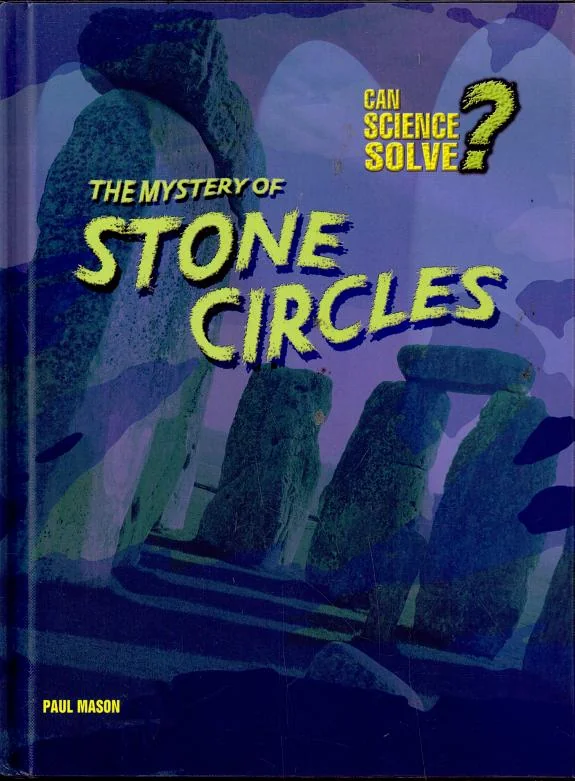
The Mystery of Stone Circles
 77
77

The Mystery of Stone Circles
Paul Mason’s "The Mystery of Stone Circles" presents a commendable effort to demystify prehistoric megaliths without succumbing to overly speculative theories. The book’s strength lies in its methodical approach, dissecting the knowns and unknowns surrounding sites like Stonehenge with a refreshing clarity. Mason adeptly highlights the mathematical precision evident in many stone circle layouts, a fact that continues to astound contemporary researchers. However, the work occasionally struggles to move beyond established archaeological discourse, sometimes leaving the reader wanting a deeper exploration of the more fringe, yet persistent, theories surrounding these sites. A particularly illuminating passage discusses the acoustic properties of some stone circles, suggesting an often-overlooked sensory dimension to their original function. While it offers a solid foundation for understanding the scientific arguments, it might not satisfy those seeking radical new interpretations. Mason’s work is a solid, fact-based primer on a complex subject.
📝 Description
77
Paul Mason's 2008 book examines the construction and astronomical alignments of megalithic sites.
Published in 2008, Paul Mason's "The Mystery of Stone Circles" scrutinizes megalithic structures, focusing on how they were built and their relationship with celestial events. The author seeks to connect folklore with scientific investigation, considering how ancient societies might have conceived and constructed these large monuments. Mason raises questions about the methods and reasons behind their creation, discussing theories that suggest advanced mathematical skills and ritualistic activities.
The book highlights phenomena that challenge standard explanations, encouraging readers to think about the limitations of present scientific understanding when confronted with historical puzzles. Mason's work is for those interested in archaeoastronomy, ancient construction techniques, and the overlap between science and less conventional belief systems. Readers curious about the origins of architecture like Stonehenge, and the possible mathematical or astronomical knowledge of prehistoric peoples, will find it valuable. It also suits students of comparative mythology and those who approach unexplained historical enigmas with a rational yet open mind.
Mason's work enters a tradition of inquiry that views ancient stone circles not merely as archaeological remnants, but as sites imbued with deeper meaning. This perspective often connects such structures to calendrical functions, astronomical observation, and ritualistic purposes that go beyond simple utility. The book engages with the ongoing debate about the capabilities and worldview of prehistoric peoples, considering how their understanding of the cosmos might have informed their monumental building projects. It touches upon themes found in pagan and witchcraft traditions that look to ancient sites for spiritual or historical connection.
💡 Why Read This Book?
• Gain insight into the astronomical alignments of megalithic sites, such as the precise Midsummer Day sunrise alignment at Stonehenge, as explored in Mason's analysis of solar cycles. • Understand the sophisticated engineering and mathematical principles potentially employed by ancient builders, exemplified by the geometric arrangements discussed in relation to stone circle construction. • Develop a framework for analyzing historical enigmas by examining how scientific methods can be applied to phenomena that challenge conventional explanations, as demonstrated throughout Mason's investigation.
⭐ Reader Reviews
Honest opinions from readers who have explored this book.
❓ Frequently Asked Questions
What is the primary focus of Paul Mason's 'The Mystery of Stone Circles'?
The book primarily examines megalithic sites like Stonehenge, investigating their construction, astronomical alignments, and the potential mathematical knowledge of their builders. It seeks to explain mysteries through scientific inquiry.
When was 'The Mystery of Stone Circles' first published?
Paul Mason's 'The Mystery of Stone Circles' was first published in 2008.
Does the book suggest supernatural explanations for stone circles?
No, the book focuses on using science and rational investigation to explain the phenomena associated with stone circles. It explores how natural cycles and ancient knowledge might account for their construction and purpose.
What specific astronomical events are discussed in relation to stone circles?
The book frequently discusses astronomical events like solstices and equinoxes, particularly how stone circles are aligned to observe phenomena such as the Midsummer Day sunrise at Stonehenge.
Who is the author of 'The Mystery of Stone Circles'?
The author is Paul Mason, and the book was first published in 2008.
What kind of audience is this book best suited for?
It is best suited for readers interested in archaeoastronomy, ancient engineering, comparative mythology, and the intersection of science with historical mysteries.
🔮 Key Themes & Symbolism
Archaeoastronomy and Megalithic Sites
The work critically examines how ancient cultures, particularly in Neolithic Britain, utilized astronomical observations in the design and placement of megalithic structures. It examines the precision of alignments with celestial events like solstices and equinoxes, suggesting a sophisticated understanding of cosmic cycles. Mason probes the practical and ritualistic implications of these alignments, considering how they might have structured ancient societies' calendars and spiritual practices. The focus remains on verifiable data and scientific interpretation of archaeological evidence, aiming to explain rather than mystify these ancient monuments.
Ancient Engineering and Mathematics
Mason explores the considerable engineering feats involved in quarrying, transporting, and erecting massive stones for structures like Stonehenge. The book investigates theories suggesting that ancient builders employed advanced geometrical principles and mathematical calculations to achieve precise layouts and alignments. It questions the methods and tools available to prehistoric peoples, assessing the feasibility of complex construction projects without modern technology. The analysis aims to reconstruct a plausible narrative of ancient ingenuity, challenging assumptions about the technological capabilities of early civilizations.
Science and Unexplained Phenomena
A central theme is the application of scientific methodology to phenomena that appear inexplicable through conventional means. Mason presents stone circles as case studies where natural laws and observable phenomena (like solar movements) intersect with human intention and construction. The book advocates for a rational approach to understanding mysteries, using scientific principles to explore possibilities ranging from advanced construction techniques to the symbolic integration of natural cycles into cultural practices. It encourages readers to question assumptions and seek evidence-based explanations for historical enigmas.
Ritual, Belief, and Natural Cycles
The book touches upon the potential ritualistic and spiritual significance of stone circles, linking their construction and arrangement to ancient belief systems and the observation of natural cycles. Mason considers how seasonal changes, celestial events, and the rhythms of the natural world may have informed the purpose and use of these sites. While grounded in scientific inquiry, the work acknowledges the possibility that these monuments served functions beyond mere utility, encompassing aspects of communal gathering, religious observance, and cosmological understanding.
💬 Memorable Quotes
Direct passages from the work, attributed to the author.
“How was Stonehenge created?”
— This question serves as a central inquiry, framing the book's exploration into the practical challenges and potential solutions for constructing ancient megalithic structures.
“Did circle builders use math to arrange the stones?”
— This highlights the book's investigation into the potential mathematical and geometrical sophistication of prehistoric societies in designing monumental architecture.
“What happens on Midsummer Day?”
— This points to the book's focus on astronomical alignments, particularly the significance of solstices and equinoxes in the context of stone circle usage and observation.
“Some things are so strange that they cannot be explained.”
— Mason uses this to introduce phenomena that challenge conventional understanding, setting the stage for a scientific inquiry into seemingly inexplicable historical mysteries.
“This series explains the connection between science and natural phenomena.”
— This statement expresses the book's core mission: to bridge the gap between esoteric or mysterious occurrences and rational, scientific explanation.
🌙 Esoteric Significance
Tradition
While not strictly belonging to a single esoteric lineage, Mason's work appeals to the broader Hermetic and Neoplatonic traditions that seek to understand the cosmos through harmonious principles and mathematical order. It aligns with the Hermetic ideal of "as above, so below," by exploring how celestial phenomena were mirrored and integrated into terrestrial structures. The book departs from purely mystical interpretations by grounding its inquiry in scientific methodology, yet it acknowledges the potential for profound meaning and ritualistic purpose within ancient constructions, a common thread in many esoteric philosophies.
Symbolism
The primary symbols explored are the stone circles themselves, representing ancient attempts to map, understand, and perhaps control cosmic forces and temporal cycles. The Sun, particularly its manifestation during solstices (like Midsummer Day), is a crucial symbol, representing life, power, and the passage of time. The arrangement of stones, often in geometric patterns, symbolizes order, precision, and the application of divine or natural law to the physical world, reflecting an ancient desire for cosmic harmony.
Modern Relevance
Contemporary practitioners of archaeoastronomy, landscape archaeology, and even some pagan or nature-based spiritual paths draw upon the foundational research into stone circle alignments and potential uses. Thinkers interested in indigenous knowledge systems and the cognitive archaeology of prehistoric peoples also engage with Mason's analysis. His work provides a scientific lens through which to view ancient ritual practices and the human impulse to connect with celestial cycles, relevant for modern discussions on environmentalism, cyclical time, and the enduring human search for meaning in natural phenomena.
👥 Who Should Read This Book
• Students of archaeoastronomy and ancient history seeking a scientifically grounded overview of megalithic sites and their astronomical significance. • Readers interested in the practical application of mathematics and engineering in prehistoric societies, particularly concerning large-scale construction projects. • Individuals curious about the intersection of science, natural phenomena, and early human culture, who wish to understand how ancient peoples observed and integrated cosmic cycles into their lives.
📜 Historical Context
Published in 2008, Paul Mason's "The Mystery of Stone Circles" entered a field already rich with speculation and rigorous academic study. The early 21st century saw a resurgence of public interest in archaeoastronomy, partly driven by accessible media like documentaries and popular science books. Mason’s work engages with debates that have spanned decades, building upon earlier theories proposed by figures like Sir Norman Lockyer in the early 20th century, who first extensively linked Stonehenge to solar observations. While figures like Alexander Thom had earlier proposed sophisticated geometric and astronomical knowledge in the 1950s and 60s, Mason's book reflects a contemporary approach, integrating more recent archaeological findings and critical scientific perspectives. The work implicitly responds to a spectrum of interpretations, from purely functional astronomical observatories to sites imbued with deep spiritual significance, navigating between established archaeological consensus and persistent popular fascination.
📔 Journal Prompts
The astronomical alignment of Stonehenge on Midsummer Day.
The mathematical principles potentially used in arranging megalithic stones.
How ancient societies might have integrated natural phenomena into their belief systems.
The engineering challenges of constructing sites like Stonehenge.
The connection between science and unexplained historical mysteries.
🗂️ Glossary
Megalithic Sites
Large prehistoric structures constructed from unworked or roughly worked stones, such as Stonehenge and Avebury, often associated with ritual or astronomical observation.
Archaeoastronomy
The interdisciplinary study of how ancient peoples understood astronomical phenomena and how they incorporated these understandings into their cultures and structures.
Solstice
The time of year when the Sun reaches its highest or lowest point in the sky at noon, resulting in the longest and shortest days. Key events for stone circle alignments.
Equinox
The moment in the year when the Sun is directly above the Earth's equator, resulting in nearly equal amounts of daylight and darkness at all latitudes. Another key alignment point.
Stonehenge
A prehistoric monument in Wiltshire, England, consisting of a ring of standing stones, famous for its astronomical alignments, particularly with the summer solstice sunrise.
Neolithic
The later part of the Stone Age, when ground or polished stone weapons and implements prevailed, and when agricultural communities began to develop.
Engineering
The application of scientific and mathematical principles to design, build, and maintain structures, machines, and systems. In this context, refers to ancient construction methods.
This book appears in 1 collection
🔮 Readers Also Liked
Browse all →









From the “Stone Circles” Collection
View all →








More Free Occult Philosophy Books
View all →