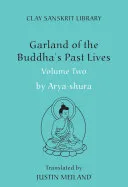
Garland of the Buddha's Past Lives (Volume 2)
 84
84

Garland of the Buddha's Past Lives (Volume 2)
Aryashura's prose, even in translation, retains an elegant simplicity that makes the arduous lives of the Bodhisattva accessible. Volume 2 excels in its sustained focus on forbearance, a virtue often overshadowed by more outwardly active perfections. The narrative of the Bodhisattva enduring severe mutilation for the sake of others, as depicted in one of the fourteen stories, is particularly stark. However, the sheer volume of suffering presented can feel relentless; a greater exploration of the internal psychological shifts accompanying such trials would have provided more nuance beyond the consistent exemplification of patience. Despite this, the work is essential for understanding the practical application of Buddhist ethics in extremis. It serves as a potent reminder of the immense dedication required for spiritual awakening. The book's strength lies in its unflinching portrayal of sacrifice, offering a powerful, if challenging, model of ethical commitment.
📝 Description
84
Garland of the Buddha's Past Lives, Volume 2, presents fourteen narratives of the Bodhisattva's journey toward enlightenment.
Authored by Aryashura, this 2017 volume continues the exploration of Jataka tales, focusing on the perfection of forbearance. The fourteen stories detail the Bodhisattva's prior existences, illustrating extreme hardship and self-sacrifice undertaken on the path to enlightenment.
This work is for students of Buddhist philosophy, scholars of comparative religion, and practitioners of Mahayana Buddhism. Readers interested in the development of compassion, patience, and ethical conduct through narrative will find value. It appeals to those who appreciate classical literature with spiritual underpinnings.
Aryashura was a Buddhist philosopher active around the 4th century CE. His *Jatakamala* is a key text in the Mahayana tradition, composed when Buddhist philosophical schools were solidifying. The text provided literary and devotional examples of the Bodhisattva path, countering more abstract scholastic traditions.
This text belongs to the Mahayana Buddhist tradition, specifically within the genre of Jataka literature. These narratives illustrate the perfection of the Bodhisattva, the being dedicated to achieving enlightenment for the benefit of all sentient beings. The emphasis on *kshanti*, or patience, highlights a core virtue crucial for overcoming obstacles and transforming negative forces through sustained compassion and wisdom. The stories serve as exemplars, making abstract philosophical concepts concrete through relatable, albeit often extreme, life examples.
💡 Why Read This Book?
• Gain a profound understanding of *kshanti* (forbearance) through fourteen specific Jataka tales, as exemplified in Aryashura's depiction of the Bodhisattva enduring mutilation and sacrifice. • Explore the consequences of greed and the transformative power of friendship as presented in the narratives, a key theme highlighted by Aryashura's literary skill. • Appreciate the historical development of Mahayana Buddhist ethics by engaging with Aryashura's *Jatakamala*, a significant text from the 4th century CE.
⭐ Reader Reviews
Honest opinions from readers who have explored this book.
❓ Frequently Asked Questions
What is the primary focus of Garland of the Buddha's Past Lives (Volume 2)?
This volume focuses on fourteen narratives illustrating the Buddha's previous lives, emphasizing the perfection of forbearance (kshanti) through extreme suffering and self-sacrifice.
Who was Aryashura?
Aryashura was a significant Buddhist philosopher, likely active around the 4th century CE, renowned for composing the Jatakamala, a collection of stories about the Bodhisattva's past lives.
What is the significance of the Jataka tales?
Jataka tales are traditional Buddhist stories about the previous lives of the Buddha, serving as moral exemplars and illustrating the development of his perfections on the path to enlightenment.
How does Volume 2 relate to Volume 1?
Volume 2 continues the presentation of Jataka tales from Aryashura's Jatakamala, specifically focusing on narratives where forbearance and sacrifice are dominant themes.
What is the concept of 'perfection of forbearance' (kshanti)?
Kshanti is a key concept in Mahayana Buddhism, representing the perfection of patience, tolerance, and endurance, even in the face of extreme adversity, cruelty, or pain.
Does the book discuss the transformation of enemies into friends?
Yes, the original blurb indicates that the book explores how enemies can be transformed into friends, often as a consequence of the Bodhisattva's actions and the impact of greed.
🔮 Key Themes & Symbolism
The Perfection of Forbearance
This volume deeply explores *kshanti*, the perfection of patience and endurance. Aryashura's narratives present the Bodhisattva undergoing severe physical suffering, including mutilation, and enduring immense psychological distress. These stories serve as powerful exemplars of unwavering resolve in the face of extreme adversity, illustrating that true strength often lies in patient acceptance and resilience, not aggression.
Sacrifice for Salvation
A recurring motif is the Bodhisattva's willingness to sacrifice his own well-being, even his life, for the benefit of others. These acts of supreme altruism are depicted as crucial steps in the journey toward enlightenment. The narratives question conventional notions of self-preservation, positing that ultimate liberation is achieved through selfless giving and a profound disregard for personal comfort or safety.
Greed, Treachery, and Friendship
The interplay between negative emotions like greed and their consequences, such as treachery, is a significant thematic element. The book contrasts these destructive forces with the potential for genuine friendship and reconciliation. Aryashura demonstrates how even those who act as enemies can be transformed through the Bodhisattva's persistent compassion and ethical conduct, highlighting the interconnectedness of all beings.
The Bodhisattva Path
Ultimately, the Garland of the Buddha's Past Lives chronicles the arduous yet noble path of the Bodhisattva. It showcases the gradual cultivation of virtues necessary for Buddhahood across countless lifetimes. The stories are not merely historical accounts but living lessons in ethical development, intended to inspire practitioners to emulate the Bodhisattva's dedication and compassion.
💬 Memorable Quotes
Direct passages from the work, attributed to the author.
“The future Buddha suffers mutilations from the wicked and sacrifices himself for those he seeks to save.”
— This summary highlights the extreme nature of the Bodhisattva's trials in these narratives. It emphasizes his willingness to endure physical harm and self-immolation as integral parts of his spiritual development and compassionate mission.
“Friendship, too, takes on central significance, with greed leading to treachery and enemies transformed into friends.”
— This points to the complex dynamics of relationships explored in the stories. It suggests that negative traits like greed can corrupt bonds, while the Bodhisattva's actions can foster reconciliation and turn adversaries into allies, illustrating the transformative power of ethical conduct.
“Here the perfection of forbearance becomes the dominant theme.”
— This statement underscores the central virtue examined in this volume. It indicates that the narratives primarily serve to illustrate *kshanti*, the Buddhist ideal of patient endurance, even under the most challenging circumstances.
“Aryashura applies his elegant literary skill toward composing fourteen further stories.”
— This acknowledges Aryashura's artistry in presenting these profound tales. It suggests that the narratives are not just didactic but also crafted with aesthetic care, making the spiritual lessons more engaging and memorable.
“The Buddha’s quest for enlightenment in his former lives.”
— This captures the overarching purpose of the Jataka tales. It frames the stories as biographical accounts of the Bodhisattva's cumulative efforts and character development across many existences leading to his final awakening.
🌙 Esoteric Significance
Tradition
This work is deeply rooted in the Mahayana Buddhist tradition, specifically its emphasis on the *bodhisattva* path. While not typically categorized under Western esoteric lineages like Hermeticism or Kabbalah, its focus on cultivating perfections (*paramitas*) through arduous practice and its profound exploration of compassion align with the ethical and transformative goals common across many esoteric paths. It represents a distinct branch of spiritual literature focused on exemplary lives leading to ultimate awakening.
Symbolism
The narratives are rich with symbolism. The Bodhisattva himself symbolizes the potential for enlightenment within all beings. Acts of sacrifice, such as offering one's body parts or life, symbolize the ultimate letting go of ego and attachment, a core tenet for spiritual liberation. The transformation of enemies into friends symbolizes the overcoming of duality and the realization of interconnectedness, a key Mahayana insight.
Modern Relevance
Contemporary Buddhist teachers and practitioners continue to draw inspiration from Aryashura's tales for understanding the depth of commitment required for spiritual growth. Thinkers in secular ethics and positive psychology also find value in the extreme examples of altruism and resilience, exploring the psychological underpinnings of compassion and self-sacrifice. The work remains relevant for comparative religion studies and for anyone seeking to understand the foundational narratives of Buddhist ethical development.
👥 Who Should Read This Book
• Students of Mahayana Buddhism: To gain a deeper, narrative understanding of the *bodhisattva* path and the cultivation of the six perfections, particularly *kshanti*. • Scholars of comparative religion: To analyze the development of ethical exemplars and narrative structures within Asian religious traditions during the classical period. • Seekers of ethical inspiration: For individuals drawn to profound examples of compassion, self-sacrifice, and unwavering patience in the face of immense hardship.
📜 Historical Context
Aryashura's *Jatakamala*, from which this volume is drawn, emerged around the 4th century CE, a key era for Mahayana Buddhism. This period saw the flourishing of sophisticated philosophical inquiry, exemplified by thinkers like Nagarjuna and Asanga, who were developing concepts like emptiness (*sunyata*) and the *bodhisattva* ideal. Aryashura's work, however, offered a more narrative and devotional approach, contrasting with the abstract scholasticism prevalent in some circles. The *Jatakamala* served to popularize the exemplary lives of the Bodhisattva, making complex ethical teachings accessible through engaging stories. While specific reception events like bans or prizes are not widely documented for this particular text, its inclusion in the canon of important Buddhist literature and its continued study by scholars like Edward Conze attest to its enduring influence. It provided a rich source of inspiration for practitioners seeking to understand the gradual cultivation of perfections. The work functioned as a literary counterpoint to the growing philosophical systematization within Buddhism.
📔 Journal Prompts
The Bodhisattva's endurance of mutilation: Reflect on the concept of forbearance in extreme circumstances.
The transformation of enemies into friends: Analyze how actions driven by greed differ from those rooted in compassion.
Sacrificing the self for others: Consider the implications of ultimate altruism as depicted by Aryashura.
The central significance of friendship: Explore how relationships are tested and forged within the narratives.
The quest for enlightenment across former lives: Contemplate the cumulative nature of spiritual development.
🗂️ Glossary
Bodhisattva
An enlightened being who delays their own final nirvana to help all sentient beings achieve enlightenment. The narratives in this book depict the Bodhisattva in his many past lives.
Jataka Tales
Stories recounting the previous lives of the Buddha, used to illustrate his virtues and the path to enlightenment. Aryashura's collection is known as the Jatakamala.
Kshanti
The Sanskrit term for the perfection of patience, forbearance, tolerance, and endurance. It is a central theme in this volume of Aryashura's work.
Paramitas
The 'perfections' or virtues cultivated by a Bodhisattva on the path to Buddhahood. Key examples include generosity, ethics, patience, effort, meditation, and wisdom.
Mahayana Buddhism
A major branch of Buddhism emphasizing the Bodhisattva ideal and the goal of universal enlightenment. Aryashura's work is a significant text within this tradition.
Enlightenment
The ultimate spiritual goal in Buddhism, characterized by wisdom, compassion, and freedom from suffering (nirvana). The stories illustrate the long process of achieving this state.
Greed
An intense and selfish desire for something, especially wealth, power, or food. In the context of the book, it leads to negative consequences like treachery.