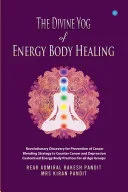
The Divine Yog of Energy Healing.
 84
84

The Divine Yog of Energy Healing.
Rear Admiral Rakesh Pandit's attempt to create a 'Single Point Book of Reference' for energy healing is ambitious, and the comparative analysis of seven distinct modalities is its strongest asset. The clear presentation of concepts like 'Health of Energy Body' and 'Integrated healing' offers a practical framework for understanding the interplay between physical and energetic states. However, the book occasionally leans towards declarative statements without fully exploring counterarguments or potential limitations of each therapy. For instance, while discussing Acupressure, the text asserts its efficacy without deeply engaging with the physiological mechanisms that remain subjects of ongoing scientific inquiry. The author's background as a Rear Admiral lends an air of authority, but a more critical engagement with the scientific validation of these often subtle energies would have elevated its standing further. Ultimately, it serves as a useful primer for those seeking an overview of diverse energy healing practices.
📝 Description
84
In 2021, Rear Admiral Rakesh Pandit published The Divine Yog of Energy Healing, a guide to health systems focused on subtle energies.
The Divine Yog of Energy Healing, written by Rear Admiral Rakesh Pandit (AVSM, NM) (Retd), serves as a reference for well-being through energy systems. The book, published in 2021, aims to unify knowledge of various therapeutic methods, creating a comparison for practitioners and those seeking healing. Pandit suggests that understanding and supporting the body's energetic fields allows for a proactive approach to health. It advocates for combining physical and subtle energetic healing for more complete recovery.
This work is for individuals involved in or investigating holistic health. It will interest practitioners of complementary and alternative medicine who wish to expand their knowledge of energy therapies. It is also suitable for those focused on preventive healthcare, particularly those who believe in treating the energetic body alongside the physical. The comparative analysis makes it a resource for students of comparative health systems.
This book enters a contemporary discussion on integrative medicine and the study of subtle energies. While published in 2021, it draws on traditions with ancient origins. Pandit's comparative look at modalities like Acupuncture and Reiki reflects a current effort to synthesize different healing methods. This approach moves beyond single-discipline viewpoints, aligning with a growing recognition of the mind-body connection and the potential of energy work in both academic and public health spheres.
💡 Why Read This Book?
• Gain a comparative understanding of seven key energy healing modalities, including Acupressure, Pranic Healing, and Reiki, as detailed in the book's comparative analysis section. • Learn to implement a 'Preventive health care' strategy focused on the 'Health of Energy Body,' a concept introduced by Rear Admiral Rakesh Pandit. • Discover the principles of 'Integrated healing' that blend physical and energetic body restoration for accelerated recovery, as advocated in the book's framework.
⭐ Reader Reviews
Honest opinions from readers who have explored this book.
❓ Frequently Asked Questions
What is the primary goal of Rear Admiral Rakesh Pandit's book, 'The Divine Yog of Energy Healing'?
The primary goal is to serve as a 'Single Point Book of Reference' for health and well-being, focusing on the 'Health of Energy Body' and advocating for 'Integrated healing' strategies.
Which seven energy healing therapies are compared in 'The Divine Yog of Energy Healing'?
The book compares Acupressure, Acupuncture, Pranic Healing, Psycho Neurobics, Reiki, Yoga, and Yog Nidra, providing a comparative analysis of their principles and applications.
When was 'The Divine Yog of Energy Healing' first published?
The book was first published on July 7, 2021, making it a contemporary exploration of energy healing modalities.
What is the author's recommended approach to healthcare in this book?
The author advocates for a 'Preventive health care' strategy by focusing on the 'Health of Energy Body' and promoting 'Integrated healing' of both physical and energetic bodies.
Who is the author of 'The Divine Yog of Energy Healing'?
The author is Rear Admiral Rakesh Pandit, AVSM, NM (Retd), whose background informs the structured and analytical approach to the subject matter.
What does the book mean by 'Integrated healing'?
'Integrated healing' refers to the synergistic approach of restoring both the physical body and the subtle energy body simultaneously to achieve accelerated and total wellness.
🔮 Key Themes & Symbolism
Energy Body Health
The core of Pandit's thesis lies in the concept of the 'Health of Energy Body' as a central to proactive well-being. This theme posits that the subtle energetic field surrounding and permeating the physical form is a crucial determinant of overall health. The book explores how imbalances or blockages within this energy body can manifest as physical ailments, and conversely, how nurturing this field can prevent illness and promote vitality. It frames energy work not merely as a treatment for existing conditions but as a fundamental aspect of holistic, preventive healthcare.
Comparative Modalities
A significant contribution of 'The Divine Yog' is its structured comparison of seven prominent energy healing therapies: Acupressure, Acupuncture, Pranic Healing, Psycho Neurobics, Reiki, Yoga, and Yog Nidra. This comparative analysis allows readers to understand the distinct principles, techniques, and applications of each modality. By presenting them side-by-side, the book facilitates a clearer appreciation of their individual strengths and potential synergies, enabling practitioners and individuals to select approaches that best suit their needs or integrate them effectively.
Integrated Healing Approach
The principle of 'Integrated healing' underscores the book's holistic philosophy. It argues that optimal recovery and sustained well-being are achieved by addressing both the physical and the energetic dimensions of the human system concurrently. This approach moves beyond siloed treatments, advocating for a unified strategy where therapies targeting the physical body are complemented by practices that restore balance and flow to the energy body. The aim is accelerated and comprehensive healing, recognizing the interconnectedness of all aspects of a person's health.
Preventive Healthcare Strategy
Shifting the paradigm from reactive treatment to proactive wellness, the book champions a 'Preventive health care' strategy. This involves understanding the energetic blueprint of health and implementing regular practices to maintain its integrity. By focusing on the 'Health of Energy Body,' individuals can identify potential imbalances before they escalate into significant health issues. This theme encourages a long-term commitment to energetic hygiene and balance as a means of fostering robust health and preventing disease, aligning with a more conscious approach to personal well-being.
💬 Memorable Quotes
Direct passages from the work, attributed to the author.
“The Health of Energy Body is the foundation of Preventive health care.”
— This statement captures the book's central thesis: that proactive well-being hinges on maintaining the vitality and balance of our subtle energetic systems, rather than solely addressing physical symptoms after they arise.
“Integrated healing of Physical and Energy bodies towards accelerated and total healing.”
— This highlights the book's core recommendation for a synergistic approach where physical treatments are combined with energy work to achieve faster and more complete recovery from illness or imbalance.
“A comparative analysis of the seven main energy therapies namely Acupressure, Acupuncture, Pranic Healing, Psycho Neurobics, Reiki, Yoga and Yog Nidra.”
— This phrase signifies the book's practical value as a reference tool, offering readers a structured overview and comparison of diverse healing modalities for informed selection and practice.
“Promotes a ‘Preventive health care’ Strategy employing ‘Health of Energy Body’.”
— This points to the book's focus on proactive wellness, suggesting that by understanding and tending to one's energetic field, one can prevent the onset of many physical and mental health issues.
“Accomplishes a ‘First’ in presenting a comparative analysis of the seven main energy therapies.”
— This emphasizes the book's unique contribution to the field, positioning it as an original work that consolidates and contrasts various energy healing practices for the first time in such a comprehensive manner.
🌙 Esoteric Significance
Tradition
While not strictly adhering to a single esoteric lineage, 'The Divine Yog' draws heavily from Eastern philosophies, particularly those related to subtle energy systems found in Yoga and Traditional Chinese Medicine (TCM). Its exploration of Pranic Healing also aligns with concepts present in Theosophy and various New Age traditions that posit a vital life force (prana, chi, qi). The book's emphasis on integrated healing echoes Hermetic principles of correspondence ('As above, so below') and the holistic view of the human being, encompassing physical, mental, emotional, and spiritual aspects.
Symbolism
The book implicitly engages with symbolism through its discussion of energy channels (meridians in Acupuncture) and energy centers (chakras in Yoga and Pranic Healing). These are not merely anatomical concepts but symbolic representations of the flow of vital force and consciousness within the individual. The very act of balancing these energies can be seen as a symbolic act of restoring cosmic order within the microcosm of the human body, reflecting a desire for harmony and integration.
Modern Relevance
Contemporary thinkers and practitioners in fields like integrative medicine, biofield therapy, and energy psychology find resonance with Pandit's work. Modern approaches to stress reduction, pain management, and holistic wellness often incorporate principles similar to those outlined, such as the importance of the mind-body connection and the potential of subtle energy interventions. The book's analytical framework is particularly relevant for those seeking to bridge traditional wisdom with contemporary scientific inquiry, appealing to a generation interested in empirically exploring ancient healing arts.
👥 Who Should Read This Book
• Practitioners of Acupressure and Acupuncture seeking a broader context for their work and an understanding of how their modality integrates with others. • Individuals interested in exploring preventive health strategies who believe in the efficacy of addressing subtle energy systems alongside physical health. • Students and researchers of comparative health systems looking for a structured overview and comparative analysis of diverse energy healing modalities.
📜 Historical Context
Published in 2021, 'The Divine Yog of Energy Healing' emerges within a contemporary landscape increasingly receptive to integrative and complementary medicine. The early 21st century has seen a significant rise in interest in practices like Reiki and Acupuncture, moving them from the fringes to more mainstream acceptance, albeit with ongoing debate regarding their scientific validation. This period is marked by a growing body of research into placebo effects, mindfulness, and the psychoneuroimmunology (PNI), which explore the intricate connections between the mind, brain, and immune system – concepts that resonate with the book's focus on the energy body. While figures like Dr. Herbert Benson had already popularized the 'relaxation response' in the late 20th century, Pandit's work synthesizes a broader array of energy therapies. Unlike purely spiritual texts, Pandit's background as a Rear Admiral suggests a structured, analytical approach that contrasts with the more intuitive or dogmatic presentations found in some esoteric literature, positioning it within a growing trend of evidence-informed or analytically grounded spiritual inquiry.
📔 Journal Prompts
The concept of 'Health of Energy Body' and its implications for your daily routines.
Reflect on the comparative analysis of Acupressure and Reiki presented in the book.
How can the principles of 'Integrated healing' be applied to a specific challenge you are currently facing?
Your personal experience with or curiosity about Psycho Neurobics, as detailed in the text.
The role of 'Preventive health care' in your current wellness practices.
🗂️ Glossary
Energy Body
The subtle, non-physical energetic field that surrounds and permeates the physical body, often believed to influence health and vitality. It is composed of various components like chakras and meridians.
Integrated Healing
A therapeutic approach that simultaneously addresses both the physical body and its associated energy systems to achieve comprehensive and accelerated recovery.
Preventive Health Care
A strategy focused on maintaining health and preventing illness through proactive measures, in this context, by nurturing the energy body.
Acupressure
A traditional Chinese medicine technique involving the application of pressure to specific points on the body to relieve pain and tension.
Pranic Healing
A no-touch healing modality that utilizes life force energy (prana) to cleanse, energize, and balance the body's energy field.
Psycho Neurobics
A discipline that explores the interplay between psychological states, neurological functions, and physiological responses, often involving specific mental exercises.
Yog Nidra
A guided meditation technique designed to induce deep relaxation and a state of conscious sleep, promoting mental and physical rejuvenation.