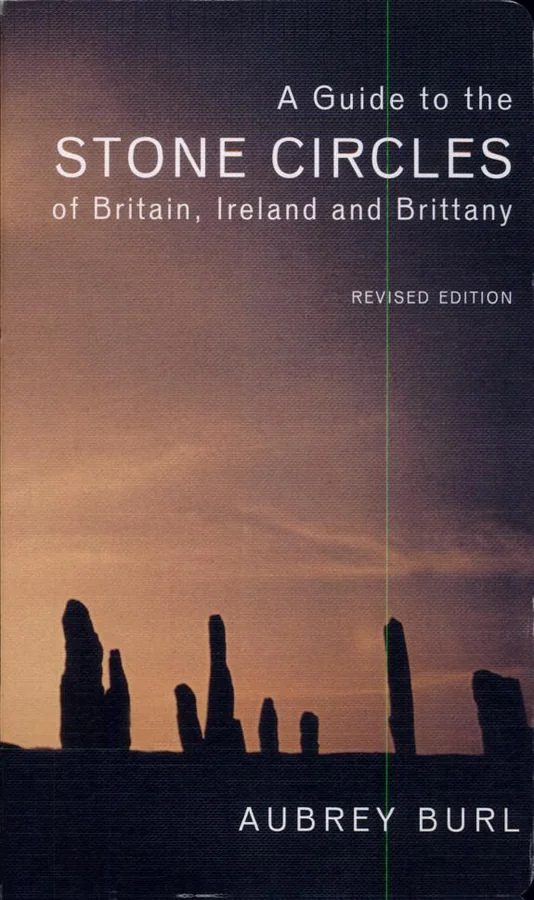
A Guide to the Stone Circles of Britain, Ireland and Brittany
 74
74

A Guide to the Stone Circles of Britain, Ireland and Brittany
Aubrey Burl’s survey of Britain, Ireland, and Brittany’s stone circles is, as the original blurb suggests, a singular achievement for its scope, covering some 500 monuments. Burl’s meticulous cataloging and clear prose illuminate the sheer variety of these ancient sites, moving beyond simple categorization to explore regional nuances and chronological shifts. His inclusion of the 18th and 19th-century "Druidical" circles is particularly astute, revealing a fascinating layer of historical interpretation and romanticism applied to the ancient past. A limitation, however, is that the sheer density of information, while commendable, can occasionally feel overwhelming for the casual reader seeking a more narrative experience. The discussion of sites like the Callanish stones, with their unique radiating structure, exemplifies Burl’s ability to highlight individual monument peculiarities within the larger framework. This book remains an authoritative and indispensable reference for anyone seriously engaging with megalithic Britain and its neighbours.
📝 Description
74
Aubrey Burl's 2005 guide covers over 500 megalithic monuments in Britain, Ireland, and Brittany.
Aubrey Burl's "A Guide to the Stone Circles of Britain, Ireland and Brittany" surveys more than 500 megalithic monuments. First published in 2005, this revised edition considers ancient stone circles and cromlechs alongside "Druidical" circles, which are romantic constructions from the late 18th and early 19th centuries. The book functions as a practical reference for identifying, understanding, and appreciating these enduring stone structures.
This volume is suitable for archaeologists, historians of prehistory, and enthusiasts of ancient landscapes. It will interest those focused on Celtic traditions, Neolithic and Bronze Age cultures, and the persistent mystery of megalithic construction. Readers looking for a scholarly yet accessible guide to the physical remnants of ancient ritual and community sites will find it valuable. The book situates its subject within the broader study of European prehistory, acknowledging how our understanding of these sites has changed. It recognizes the shift from purely Druidic associations to more scientifically grounded theories about their astronomical, calendrical, or social functions. The inclusion of later "Druidical" circles highlights a specific historical engagement with the past.
This book engages with the enduring fascination surrounding prehistoric stone circles, often linked in esoteric traditions to ancient belief systems and ritual practices. While Burl grounds his work in archaeological evidence, he acknowledges the historical interpretations of these sites, including "Druidical" associations and later romantic constructions. The focus on astronomical alignments and potential calendrical functions touches upon themes central to many esoteric understandings of these ancient monuments, viewing them as more than mere structures but as instruments tied to celestial cycles and spiritual observance.
💡 Why Read This Book?
• Learn about the specific architectural variations of over 500 stone circles across Britain, Ireland, and Brittany, distinguishing between Neolithic, Bronze Age, and later "Druidical" constructions. • Understand the historical evolution of interpreting these sites, from early antiquarian speculation to modern archaeological theories concerning their astronomical and social functions. • Gain practical knowledge for visiting these locations, appreciating their scale and the enduring questions surrounding their purpose and construction, as detailed in Burl's regional surveys.
⭐ Reader Reviews
Honest opinions from readers who have explored this book.
❓ Frequently Asked Questions
When was "A Guide to the Stone Circles of Britain, Ireland and Brittany" first published?
The first edition of Aubrey Burl's comprehensive guide was published on January 1, 2005, bringing together extensive research on megalithic monuments.
How many monuments are covered in Aubrey Burl's guide?
The book comprehensively covers approximately 500 different megalithic monuments, including stone circles, cromlechs, and other stone structures across Britain, Ireland, and Brittany.
What is the difference between prehistoric stone circles and "Druidical" circles mentioned in the book?
The book distinguishes between ancient, prehistoric stone circles built by Neolithic and Bronze Age peoples, and the "Druidical" circles, which are later, often romanticized, constructions from the 18th and 19th centuries.
Does the book discuss the purpose of stone circles?
Yes, the guide explores various theories regarding the purpose of stone circles, including their use for astronomical observation, calendrical functions, and as centers for community rituals.
Is this book suitable for someone planning to visit stone circles?
Absolutely. It functions as a practical guidebook, offering detailed information and context that enhances the experience of visiting these ancient sites.
What geographical areas does the book focus on?
The book's focus is on the stone circles and megalithic structures found in Britain (including Scotland and England), Ireland, and the Brittany region of France.
🔮 Key Themes & Symbolism
Megalithic Architecture and Regional Styles
The work meticulously details the architectural forms of over 500 stone circles, cromlechs, and other megalithic arrangements. It highlights the distinct characteristics found in Britain, Ireland, and Brittany, exploring variations in stone types, construction techniques, and site layouts. Burl examines how these structures, dating from the Neolithic and Bronze Ages, differ regionally, offering insights into the diverse cultures that erected them. This focus on physical form provides a foundation for understanding their potential functions and the ingenuity of prehistoric builders.
Interpreting Ancient Ritual and Function
A central theme is the ongoing effort to interpret the purpose of these enigmatic stone circles. Burl surveys scholarly theories, ranging from astronomical observatories and calendrical markers to centers for religious ceremonies, social gatherings, and burial rites. He navigates the historical progression of these interpretations, from early romantic notions to evidence-based archaeological hypotheses, acknowledging the inherent difficulties in definitively understanding the beliefs and practices of distant ancestors.
The 'Druidical' Circle Phenomenon
The book addresses a specific historical layer: the "Druidical" circles. These were often romanticized or deliberately constructed monuments from the late 18th and early 19th centuries, inspired by existing prehistoric sites and a burgeoning interest in Celtic history and mythology. Burl differentiates these later creations from genuine ancient monuments, exploring the cultural context that led to their emergence and the complex relationship between historical reconstruction and imaginative revival.
Continuity and Discontinuity in Sacred Landscapes
Burl implicitly explores the concept of sacred landscapes and how certain locations held significance across millennia. While differentiating between distinct periods of construction and use, the book also touches upon the potential for continuity or re-appropriation of ancient sites. The very existence of "Druidical" circles suggests a persistent human impulse to connect with the past and imbue ancient stones with new layers of meaning and spiritual resonance.
💬 Memorable Quotes
Direct passages from the work, attributed to the author.
“The author acknowledges the romantic creations of the late eighteenth and early nineteenth centuries, termed 'Druidical' circles.”
— This highlights the book's critical approach in distinguishing between authentic ancient monuments and later, often romanticized, imitations inspired by antiquity.
“The work comprehensively deals with the stone circles of Britain and Ireland and with the cromlechs and megalithic 'horseshoes' of Brittany.”
— This statement underlines the book's broad geographical and typological scope, covering various forms of megalithic structures across key Atlantic regions.
“Burl’s comprehensive study embraces 500 monuments from Shetland to Brittany.”
— This fact stresses the sheer scale of the research, indicating a thorough cataloging of numerous sites, providing a rich resource for scholars and enthusiasts alike.
“The guide offers a practical and knowledgeable approach to understanding ancient stone sites.”
— This interpretation points to the book's utility for both academic study and personal exploration, suggesting it provides reliable information for appreciating these historical monuments.
💡 Key Ideas
Editorial paraphrase of the work's core concepts — not direct quotes.
This book is not only an elegant and practical guide, it is also the best single-volume study of this extraordinary phenomenon, embracing 500 monuments from Shetland to Brittany.
This quote emphasizes the book's dual nature as a user-friendly guide and a scholarly overview, highlighting its extensive coverage of megalithic sites across a vast geographical area.
🌙 Esoteric Significance
Tradition
While not strictly adhering to a single esoteric lineage like Hermeticism or Theosophy, Burl's work engages with a tradition of landscape mysticism and archaeoastronomy that often intersects with esoteric thought. Many practitioners of modern Paganism, Druidry, and earth-based spiritualities view stone circles as sacred sites imbued with ancient power and cosmic connection. This book provides the factual and historical grounding for such interpretations, serving as a bridge between empirical study and spiritual reverence for the land and its ancient markers.
Symbolism
The primary symbols are the stones themselves and their arrangement. Circles, universally representing wholeness, eternity, and the cosmos, are paramount. Specific alignments, often with celestial bodies like the sun at solstices or equinoxes, symbolize the connection between earthly ritual and cosmic cycles. The megalithic structures themselves symbolize human aspiration, permanence, and the deep past, acting as focal points for communion with nature, ancestors, and the divine.
Modern Relevance
Contemporary Druids, Pagans, and those involved in landscape archaeology and earth mysteries frequently reference Burl's research. His detailed descriptions and historical context provide essential knowledge for understanding the physical sites that are often central to modern spiritual practices. Thinkers exploring sacred geography, archaeoastronomy, and the enduring legacy of megalithic cultures find his work a foundational text for appreciating the tangible remnants of humanity's ancient relationship with the cosmos.
👥 Who Should Read This Book
• Aspiring archaeologists and historians of prehistory seeking a comprehensive overview of megalithic structures in the British Isles and Brittany. • Modern Pagan practitioners, particularly those identifying with Druidic paths, who wish to understand the historical and physical context of ancient sacred sites. • Enthusiasts of ancient landscapes and mysteries interested in the theories surrounding the purpose and construction of stone circles.
📜 Historical Context
Aubrey Burl's "A Guide to the Stone Circles of Britain, Ireland and Brittany," first published in 2005, emerged within a field already rich with antiquarian fascination and rigorous archaeological inquiry. The study of megalithic monuments has a long history, evolving from the romantic speculations of the 18th century, which often attributed them to Druids, to the systematic excavations and analyses of the 20th century. Burl’s work builds upon the foundations laid by scholars like Glyn Daniel and Alexander Thom, who pioneered systematic surveys and astronomical interpretations. Unlike purely speculative works, Burl’s approach is grounded in meticulous observation and a consideration of archaeological evidence. The book engages with the ongoing scholarly debate about the precise functions of these sites – whether primarily calendrical, ritualistic, or social – reflecting a modern understanding that avoids singular explanations. Its inclusion of the later "Druidical" circles also contextualizes a specific phase of historical engagement with the prehistoric past, differentiating it from contemporary scholarship.
📔 Journal Prompts
The arrangement of stones at Callanish, as detailed in the guide, prompts reflection on intentional design in ancient sites.
Consider the distinction between prehistoric circles and the later "Druidical" circles discussed by Burl. What does this historical layering reveal about human interaction with the past?
Aubrey Burl's survey covers 500 monuments; what commonalities or divergences across these sites suggest about shared or distinct cultural practices?
Reflect on the theories presented regarding the astronomical or calendrical functions of stone circles. How might these have shaped ancient communities' understanding of time and the cosmos?
The book's practical guidance for visiting sites invites contemplation on the experience of standing within these ancient stone enclosures.
🗂️ Glossary
Megalith
A large stone that forms part of a prehistoric monument, either standing alone or part of a group, such as a stone circle or dolmen.
Stone Circle
A prehistoric monument consisting of a ring of standing stones, typically found in Britain and Ireland, with various theories about their function.
Cromlech
A type of megalithic tomb, typically consisting of a large flat stone supported by two or more upright stones. Often used interchangeably with 'dolmen' or 'portal tomb'.
"Druidical" Circles
Romantic constructions from the late 18th and early 19th centuries, often inspired by ancient stone circles, but created with different intentions and materials.
Neolithic
The New Stone Age, a period of human history characterized by the development of agriculture and the use of polished stone tools, roughly from 10,000 BCE to 4,500 BCE.
Bronze Age
A prehistoric period following the Stone Age, characterized by the widespread use of bronze for tools and weapons, roughly from 3,300 BCE to 1,200 BCE.
Archaeoastronomy
The study of how people in the past understood and used astronomical phenomena, and how celestial and terrestrial events were used in the construction and meaning of ancient sites.
This book appears in 1 collection
🔮 Readers Also Liked
Browse all →









From the “Stone Circles” Collection
View all →








More Free Occult Philosophy Books
View all →