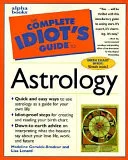
The Complete Idiot's Guide to Astrology
 76
76

The Complete Idiot's Guide to Astrology
Madeline Gerwick-Brodeur and Lisa Lenard's guide attempts to make astrology palatable for absolute beginners, and in large part, it succeeds. The book's strength lies in its systematic breakdown of the zodiac signs, planetary influences, and house meanings, presenting them in a logical, almost curriculum-like fashion. The 1997 publication date means it focuses on the traditional planets plus the outer three known at the time, offering a glimpse into a specific era of astrological popularization. However, its primary limitation is its very accessibility; for the serious student of esoteric traditions, the explanations can feel overly simplified, lacking the deeper symbolic resonance or historical context found in more specialized works. The section on aspects, while present, could benefit from more nuanced examples of interaction. Ultimately, it serves as a functional primer, but not as a text for advanced astrological study.
📝 Description
76
Published in 1997, The Complete Idiot's Guide to Astrology aimed to simplify celestial language for newcomers.
Madeline Gerwick-Brodeur and Lisa Lenard's 1997 guide breaks down astrological principles for those unfamiliar with the subject. It structures the complex world of zodiac signs, planets, houses, and aspects into understandable sections. The book's intent was to make astrology accessible without requiring prior knowledge or delving into dense academic or occult material. It serves as a starting point for learning natal chart interpretation and general astrological forecasting.
At the time of its release, popular interest in esoteric studies was present but often saw astrological information presented in a fragmented way. This guide sought to offer a unified, yet simplified, perspective. It stood apart from both specialized astrological texts and the brief horoscopes found in newspapers. The book covers the core elements of Western astrology, including detailed explanations of the twelve zodiac signs, the traditional and outer planets, the twelve houses, and the relationships between celestial bodies called aspects. It also touches on the Ascendant and Midheaven.
The Complete Idiot's Guide to Astrology emerged in 1997, a period when New Age and esoteric interests saw a resurgence following earlier decades. While astrology was available, its presentation was often scattered. This book aimed to consolidate astrological knowledge into a clear, approachable format. It provided an alternative to highly specialized astrological works and the fleeting nature of daily horoscopes, positioning itself as a comprehensive entry point for the general public interested in celestial interpretation.
💡 Why Read This Book?
• Gain a foundational understanding of the twelve zodiac signs and their core attributes, moving beyond simple sun-sign astrology as presented in the "Zodiac Signs" chapter. • Learn to identify and interpret the basic meanings of the planets (Sun through Pluto) within a natal chart, as detailed in the "Planets" sections. • Grasp the significance of the twelve houses and their relation to life areas, providing a framework for personal chart analysis from the "Houses" chapter.
⭐ Reader Reviews
Honest opinions from readers who have explored this book.
❓ Frequently Asked Questions
When was The Complete Idiot's Guide to Astrology first published?
The Complete Idiot's Guide to Astrology was first published in 1997, reflecting a popular interest in self-help and esoteric subjects during that period.
Who are the authors of The Complete Idiot's Guide to Astrology?
The book is authored by Madeline Gerwick-Brodeur and Lisa Lenard, who collaborated to create this introductory guide to astrological principles.
What core astrological concepts does the book cover?
It covers the twelve zodiac signs, the planets (Sun through Pluto), the twelve houses, and astrological aspects, presenting them in an accessible format for beginners.
Is this book suitable for advanced astrology students?
While comprehensive for beginners, its simplified approach may not satisfy advanced students seeking deeper symbolic or historical astrological analysis.
What is the main goal of The Complete Idiot's Guide to Astrology?
The book aims to demystify astrology and provide readers with a solid, easy-to-understand introduction to its fundamental principles and interpretation methods.
Does the book discuss modern astrological concepts like asteroids or fixed stars?
The 1997 edition primarily focuses on the traditional planets and the outer planets discovered by 1997 (Uranus, Neptune, Pluto), with less emphasis on asteroids or more recent discoveries.
🔮 Key Themes & Symbolism
Zodiac Sign Archetypes
The work thoroughly details the twelve archetypal energies of the zodiac signs, from Aries to Pisces. It presents each sign's core characteristics, ruling planet, element, and modality. This section is crucial for understanding the fundamental building blocks of personality and life expression as mapped by astrology. For example, it contrasts the fiery, initiating energy of Aries with the earthy, grounding nature of Taurus, offering readers a framework to identify these qualities within themselves and others.
Planetary Influences
Central to astrological interpretation are the planets, which represent dynamic forces and functions within the psyche and the cosmos. The book systematically explains the meanings of the Sun, Moon, Mercury, Venus, Mars, Jupiter, Saturn, Uranus, Neptune, and Pluto. It details how each planet manifests its energy based on its sign, house, and aspects, providing a comprehensive overview of these celestial drivers in a natal chart.
The Houses of the Sky
The twelve houses are presented as distinct arenas of life where astrological energies play out. The guide meticulously describes the significations of each house, from the self-oriented first house to the spiritual twelfth house. Understanding the houses is key to applying the zodiac and planetary meanings to specific life circumstances, such as career, relationships, and personal growth, as explored in this section.
Aspects as Cosmic Dialogue
The book introduces the concept of aspects – the angular relationships between planets – as indicators of how different energies interact. It explains major aspects like conjunctions, squares, trines, and oppositions, detailing whether they represent harmonious flow or challenging tension. This allows readers to grasp how planetary combinations contribute to the unique set of an individual's birth chart.
💬 Memorable Quotes
Direct passages from the work, attributed to the author.
“The Ascendant is the sign that was rising on the eastern horizon at the moment of your birth.”
— This highlights the Ascendant's role as a critical point in the natal chart, representing the 'mask' or outward persona one presents to the world and the immediate approach to life.
“Aspects are the angles between planets, and they tell us how the planets in your chart interact.”
— This simple definition underscores the dynamic interplay of celestial bodies, suggesting that the relationships between planets are as vital as their individual placements for a complete astrological reading.
“The Moon represents your emotional nature and your subconscious.”
— This interpretation points to the Moon's deep connection with our inner world, instincts, and emotional responses, distinguishing it from the more conscious or outward-facing planetary significations.
“Saturn is often called the 'taskmaster' of the solar system.”
— This evocative phrase captures Saturn's traditional association with discipline, limitation, lessons, and the structures we must build in life, often through hard work and responsibility.
“The Midheaven is the highest point in your chart, related to your career and public image.”
— This emphasizes the Midheaven's significance in mapping out one's ambitions, professional path, and how one is perceived by society at large.
🌙 Esoteric Significance
Tradition
While not strictly adhering to a single esoteric lineage, this work draws heavily from the Western astrological tradition, which has roots in Hellenistic, Hermetic, and later medieval and Renaissance European practices. It presents a modernized, secularized version of this tradition, focusing on psychological interpretation rather than purely predictive or ceremonial magic. It fits within the broader modern esoteric movement that sought to integrate ancient wisdom with contemporary psychological understanding.
Symbolism
Key symbols include the twelve zodiac signs, each representing archetypal energies and stages of development (e.g., the Ram for Aries signifying new beginnings). The planets (Sun through Pluto) symbolize fundamental life forces and psychological functions. The houses represent the twelve divisions of life experience, from the self (1st House) to the collective unconscious (12th House). The interplay of these symbols forms the basis of astrological interpretation.
Modern Relevance
This book remains relevant for its clear, step-by-step introduction to core astrological concepts. Contemporary practitioners, particularly those focused on psychological astrology or beginners exploring the field, often reference it as a starting point. Its structured approach influences how many modern introductory courses are designed, even as the field evolves with new interpretations and the inclusion of asteroids and other celestial bodies.
👥 Who Should Read This Book
• Absolute beginners curious about astrology who need a clear, non-intimidating entry point to understanding birth charts. • Individuals interested in psychological self-exploration who want to learn how astrological archetypes might map onto personality traits. • Students of comparative esoteric systems seeking a basic understanding of Western astrological principles as a cultural or philosophical framework.
📜 Historical Context
Published in 1997, The Complete Idiot's Guide to Astrology arrived during a period of significant popular engagement with esoteric subjects, a trend that had seen peaks in the 1970s and 1980s. The market was saturated with astrological content, ranging from simplistic daily horoscopes to more detailed books. This guide distinguished itself by offering a structured, comprehensive, yet accessible curriculum. It aimed to educate, contrasting with the often superficial interpretations found in mass media. Unlike academic astrology, which was undergoing its own revival with critical historical and sociological studies, this book catered to a burgeoning self-help and personal growth audience. Its publication predates the widespread accessibility of online astrological resources, positioning it as a key print resource for a generation learning about the stars.
📔 Journal Prompts
The Sun's placement in your natal chart: What sign and house does it occupy, and how does this core identity manifest in your life?
Reflecting on the Moon's meaning: How do the emotional patterns described for your Moon sign align with your inner experience?
Your Ascendant: Consider the first house and its ruling planet; how do these elements shape your initial approach to new situations?
Saturn's lessons: Identify a specific challenge or area of responsibility associated with your Saturn placement and how you've navigated it.
The twelve houses: Choose one house that feels particularly potent in your life and explore its astrological significance.
🗂️ Glossary
Ascendant (Rising Sign)
The zodiac sign that was rising on the eastern horizon at the precise moment and location of birth. It represents the outward personality, the 'mask' one wears, and the immediate approach to life.
Aspect
The angular relationship between two or more planets in an astrological chart. Aspects indicate how the energies of the planets interact, creating harmonious or challenging dynamics.
House
One of the twelve divisions of the astrological chart, each representing a different area or domain of life experience, such as career, relationships, or home.
Midheaven (MC)
The highest point in the astrological chart, representing career, public image, reputation, and ultimate life goals.
Natal Chart
A map of the heavens at the exact moment and location of a person's birth. It is used to interpret personality, potential, and life path.
Planet
In astrology, celestial bodies (Sun, Moon, Mercury, Venus, Mars, Jupiter, Saturn, Uranus, Neptune, Pluto) that represent fundamental energies, drives, and functions within the psyche.
Zodiac Sign
One of the twelve divisions of the ecliptic, each associated with a specific archetypal energy, element, and modality, used to categorize planetary placements.