The Most Intimate Revelations about the Tao of Physics

 84
84

The Most Intimate Revelations about the Tao of Physics
Oliver Cropper's "The Most Intimate Revelations about the Tao of Physics" functions less as an analysis and more as an anthropological survey of responses to Fritjof Capra's 1975 bestseller. The strength lies in its sheer variety; one encounters reviews that are incisive critiques of Capra's analogies, while others veer into poetic, almost mystical, endorsements. The collection is notable for its willingness to include perspectives that might be considered 'crackpot' by conventional standards, a bold move that offers a more complete, if messy, picture of the book's reception. However, this very eclecticism can be a weakness. Without Cropper's own editorial voice guiding the reader through the more outlandish interpretations, the collection risks feeling unfocused. A particularly striking review examines the 'bootstrap paradox' in relation to Eastern concepts of causality, demonstrating the book's capacity to provoke deep, if sometimes speculative, thought. Ultimately, this is a fascinating, if uneven, compilation for those already invested in the discourse surrounding "The Tao of Physics."
📝 Description
84
Oliver Cropper's 2013 collection gathers diverse reactions to Fritjof Capra's 1975 book, 'The Tao of Physics'.
This 2013 compilation, "The Most Intimate Revelations about the Tao of Physics," is not an original treatise but a structured anthology of responses to Fritjof Capra's influential 1975 work. Oliver Cropper gathered a range of commentary, from rigorous academic analysis to imaginative interpretations, illustrating how Capra's attempt to link quantum physics with Eastern mysticism has been debated and understood for decades. The collection shows how Capra's ideas sparked varied reactions, reflecting the intellectual climate of the time and the ongoing interest in the philosophical implications of modern science.
The book is intended for readers already acquainted with Capra's "The Tao of Physics." It offers a look into the reception history of a significant scientific-philosophical text, appealing to those interested in unconventional viewpoints and the study of consciousness or esoteric thought. Those new to Capra's original work might find this collection challenging without prior context.
The book sits within the tradition of synthesizing scientific discovery with spiritual philosophy, a trend that gained momentum in the late 20th century. It documents the reception of a key text that sought to bridge the perceived gap between the rational framework of quantum mechanics and the intuitive insights of Eastern traditions like Vedanta and Buddhism. This effort itself was part of a broader esoteric interest in finding holistic explanations for reality, moving beyond purely materialistic or reductionist scientific paradigms.
💡 Why Read This Book?
• Gain exposure to diverse critical and enthusiastic reactions to Fritjof Capra's "The Tao of Physics," specifically engaging with the 'cosmic dance' metaphor discussed in reviews from 2013. • Understand the varied reception of quantum physics concepts like wave-particle duality when mapped onto Eastern philosophical frameworks, as explored in the book's critiques. • Appreciate the unconventional and intimate perspectives offered by various reviewers on the synthesis of modern science and ancient mysticism, moving beyond standard academic discourse.
⭐ Reader Reviews
Honest opinions from readers who have explored this book.
❓ Frequently Asked Questions
What is the primary focus of "The Most Intimate Revelations about the Tao of Physics"?
This book is a collection of reviews and critiques of Fritjof Capra's 1975 work, "The Tao of Physics." It examines diverse, often unconventional, reactions to Capra's exploration of parallels between quantum physics and Eastern mysticism.
Who is Oliver Cropper and what is his role?
Oliver Cropper is the editor of this compilation. His role involves curating a range of book reviews, from scholarly to highly personal, to provide a multifaceted view of how "The Tao of Physics" has been received.
When was "The Tao of Physics" by Fritjof Capra originally published?
Fritjof Capra's "The Tao of Physics: An Exploration of the Parallels between Modern Physics and Eastern Mysticism" was first published in 1975.
Does this book offer new scientific theories?
No, this book does not present new scientific theories. It is a collection of reviews and interpretations of existing work, specifically Fritjof Capra's book, focusing on the reception and philosophical implications.
What kind of perspectives can I expect in the reviews?
You can expect a wide array of perspectives, including sophisticated analyses, highly personal reflections, and even unconventional or speculative viewpoints, some of which are described as 'crackpot' or 'unbridled flights of fantasy'.
Is "The Most Intimate Revelations about the Tao of Physics" suitable for beginners?
This compilation is best suited for readers already familiar with Fritjof Capra's "The Tao of Physics." It delves into the reception and interpretation of Capra's ideas rather than introducing them.
🔮 Key Themes & Symbolism
Reception of Scientific Parallels
The collection meticulously documents how readers and critics have grappled with Fritjof Capra's 1975 thesis linking quantum physics and Eastern mysticism. It highlights the polarized responses, from outright dismissal to fervent embrace, demonstrating that the interpretation of concepts like the 'bootstrap paradox' or the 'subtle body' in relation to subatomic particles is highly subjective and culturally influenced. These reviews reveal more about the zeitgeist of different eras than about the objective validity of the parallels themselves.
Subjectivity in Esoteric Interpretation
Cropper showcases reviews ranging from the academically rigorous to the wildly imaginative, underscoring the subjective nature of esoteric interpretation. Some reviewers engage directly with Capra's specific analogies, while others use "The Tao of Physics" as a springboard for personal spiritual or philosophical explorations. This diversity of response, including what the blurb calls 'unbridled flights of fantasy,' illustrates how texts at the intersection of science and spirituality can evoke deeply personal and often idiosyncratic meanings.
Critique of Scientific Reductionism
Many reviews implicitly or explicitly engage with the critique of Western science's perceived limitations, particularly its reductionist tendencies. Capra's original work challenged the mechanistic worldview, and these collected reviews often echo that sentiment. They explore how the holistic perspective found in Eastern traditions, when juxtaposed with the findings of quantum mechanics (such as non-locality), offers an alternative framework for understanding reality that moves beyond mere particle interactions and embraces interconnectedness.
The 'Crackpot' Factor
A notable aspect of this collection is its inclusion of reviews that push the boundaries of conventional thought, sometimes bordering on the 'crackpot.' This deliberate inclusion serves to illustrate the full spectrum of reactions to ideas that challenge established paradigms. It suggests that groundbreaking insights often emerge from the fringes, and that the line between unconventional genius and unfounded speculation can be blurry, especially when exploring the wide implications of quantum physics.
💬 Memorable Quotes
Direct passages from the work, attributed to the author.
“Reviews are known to shock with their unconventionality or intimacy.”
— This statement from the blurb highlights the collection's unique selling point: it moves beyond dry academic critique to include deeply personal and often surprising reader responses to "The Tao of Physics."
“Some may be startled by their biting sincerity; others may be spellbound by their unbridled flights of fantasy.”
— This emphasizes the wide range of emotional and intellectual reactions captured within the reviews, suggesting that readers will encounter both sharp critiques and highly imaginative interpretations of the parallels between physics and mysticism.
“Don't buy this book if: 1. You don't...”
— This incomplete sentence from the blurb creates intrigue, hinting at specific reader types or attitudes that the compilation might not be suited for, encouraging potential readers to self-select based on their openness to unconventional ideas.
“The most sophisticated, unanticipated, absorbing... book reviews of 'The Tao of Physics.'”
— This describes the editor's selection criteria, promising reviews that are not only well-crafted but also offer novel perspectives and hold the reader's attention, focusing on the absorbing nature of the content.
“Musing book reviews of 'The Tao of Physics: An Exploration of the Parallels between Modern Physics and Eastern Mysticism.'”
— This phrase suggests that the reviews are not merely critical assessments but also contemplative and thoughtful pieces, inviting readers to ponder the complex relationship between scientific discovery and spiritual philosophy explored in Capra's original work.
🌙 Esoteric Significance
Tradition
This work engages primarily with the modern esoteric interpretation of scientific discovery, particularly the wave of thought popularized in the late 20th century that sought correspondences between quantum physics and Eastern mystical traditions. While not strictly Hermetic or Kabbalistic, it draws on a lineage of thinkers who explore the interconnectedness of the macrocosm and microcosm, a concept central to Hermetic philosophy. It represents a contemporary iteration of the perennial philosophy, attempting to find universal truths expressed through both scientific and spiritual languages.
Symbolism
The core symbolism revolves around the 'cosmic dance,' a metaphor for the dynamic, ever-changing nature of reality as described by quantum field theory and mirrored in concepts like Shiva's dance in Hinduism. Another key motif is the idea of interconnectedness and non-duality, challenging the observer-observed separation prevalent in classical physics. This appeals to esoteric traditions that emphasize unity and the illusory nature of individual separation from the divine or the cosmic whole.
Modern Relevance
Contemporary thinkers in consciousness studies, integral theory, and even some branches of quantum physics continue to explore the philosophical implications raised by Capra's work and its reception. Practices like mindfulness meditation and quantum healing modalities, while not directly derived, often echo the holistic and interconnected worldview that "The Tao of Physics" helped popularize. The ongoing search for a unified theory in physics also keeps alive the dialogue about fundamental reality that this book tapped into.
👥 Who Should Read This Book
• Readers seeking a diverse range of opinions on the intersection of physics and Eastern spirituality, particularly those already familiar with Fritjof Capra's "The Tao of Physics." • Scholars and enthusiasts of intellectual history, interested in how scientific ideas are received, interpreted, and debated across different cultural and philosophical contexts. • Individuals drawn to unconventional analyses and philosophical explorations who appreciate a spectrum of viewpoints, from rigorous critique to highly imaginative speculation.
📜 Historical Context
Published in 2013, Oliver Cropper's "The Most Intimate Revelations about the Tao of Physics" arrived decades after Fritjof Capra's "The Tao of Physics" (1975) ignited a global conversation. Capra's work emerged during a period of burgeoning interest in Eastern philosophies and alternative spiritualities within the West, fueled in part by the counterculture movement and a growing dissatisfaction with purely materialistic scientific paradigms. The intellectual climate of the 1970s was receptive to ideas that bridged seemingly disparate fields, and Capra's book found a wide audience, including academics and lay readers alike. Critiques varied; some physicists lauded its accessibility, while others, like physicist and philosopher Henry Stapp, engaged more critically with the scientific analogies. This collection reflects the enduring, albeit sometimes contentious, legacy of Capra's exploration, showcasing how the discourse surrounding physics and mysticism continued to evolve through various critical lenses well into the 21st century.
📔 Journal Prompts
The 'cosmic dance' as described in reviews: how does this metaphor align with your understanding of existence?
Reflect on the critiques of scientific reductionism presented in the book's reviews.
Consider the 'unbridled flights of fantasy' in the reviews – what makes such interpretations compelling or problematic?
Analyze the 'biting sincerity' found in some reviews: what does it reveal about reader engagement with complex ideas?
Explore the concept of non-duality as interpreted through the lens of quantum physics and Eastern mysticism, as discussed in the compiled reviews.
🗂️ Glossary
The Tao of Physics
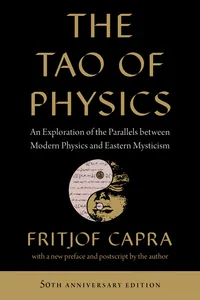
Fritjof Capra's influential 1975 book that explores perceived parallels between the findings of modern physics (particularly quantum mechanics) and the philosophical and mystical traditions of the East.
Quantum Physics
The branch of physics dealing with the smallest units of matter and energy, such as atoms and subatomic particles, exhibiting behavior that defies classical physics.
Eastern Mysticism
A broad term encompassing various spiritual and philosophical traditions originating in Asia, such as Hinduism, Buddhism, and Taoism, often emphasizing inner experience and transcendence.
Cosmic Dance
A metaphor, notably used by physicist Geoffrey Chew and popularized by Capra, likening the subatomic world's dynamic interactions to the concept of divine cosmic creation and destruction found in Hindu traditions (e.g., Shiva's dance).
Non-duality
A philosophical or spiritual concept that regards reality as a unified whole, rejecting the separation between subject and object, mind and matter, or the divine and the mundane.
Reductionism
A philosophical approach that explains complex phenomena by breaking them down into simpler, fundamental components. In science, it often refers to explaining biological or social phenomena entirely in terms of physical or chemical properties.
Bootstrap Paradox
A theoretical paradox in time travel where an object or piece of information sent back in time becomes its own origin, creating a causal loop with no discernible starting point.
This book appears in 1 collection
🔮 Readers Also Liked
Browse all →









From the “Eastern Mysticism” Collection
View all →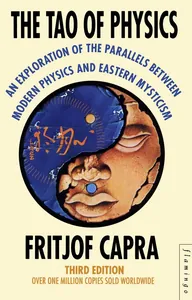







More Free Mysticism & Contemplation Books
View all →