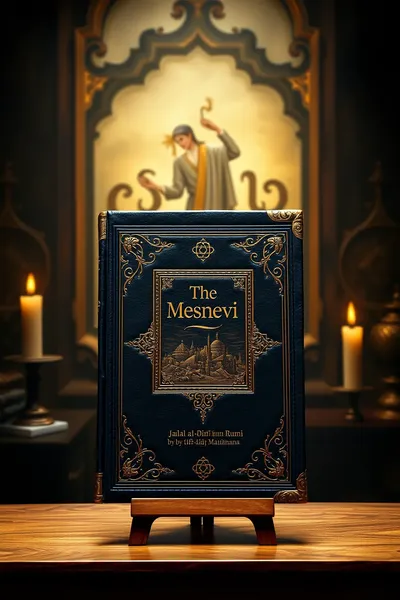
The mystics of the church

 78
78

The mystics of the church
Evelyn Underhill's "The Mystics of the Church" offers a robust survey of Christian contemplative figures, grounded in solid scholarship. The strength lies in its clear, systematic presentation of complex spiritual journeys, particularly how Underhill charts the progression from initial divine encounter to established union. She avoids hagiography, presenting these mystics as disciplined, often ascetical individuals. A minor limitation is the 1988 publication date, meaning some later scholarship on figures like Meister Eckhart or the medieval mystics is naturally absent. Nonetheless, her analysis of Teresa of Ávila's concept of the "Interior Castle" remains a powerful illustration of structured spiritual development. This is a foundational text for understanding the historical landscape of Christian mysticism.
📝 Description
78
Evelyn Underhill's 1988 study examines Christian contemplative traditions and the direct experience of the divine.
Evelyn Underhill's "The Mystics of the Church," published in 1988, investigates Christian contemplative traditions with a scholarly yet accessible approach. The book moves past superficial accounts to analyze the deep inner lives and teachings of individuals who felt a direct connection to the divine. Underhill details the historical growth and theological basis of mysticism across various Christian denominations. She provides a structured overview of how mysticism evolved over centuries.
This work is for students of Christian spirituality, theology, and the history of religious experience. It is for those who want a deeper grasp of the mystical path within a religious framework, steering clear of purely esoteric or occult views. Readers interested in figures like Julian of Norwich, St. John of the Cross, and Teresa of Ávila will find thorough examinations of their lives and writings within its pages.
Underhill's work places Christian mysticism within a historical and theological context, distinguishing it from purely occult pursuits. It addresses concepts like divine darkness and union, tracing a progression from awakening through purification to union. The book grounds these experiences in Christian doctrine and scripture, emphasizing rigorous spiritual discipline. It emerged during a time of renewed interest in religious experience, following mid-20th century secular intellectual trends.
💡 Why Read This Book?
• Gain a structured understanding of the stages of Christian mystical experience, as detailed in the progression from "awakening" to "union," offering a framework for personal spiritual inquiry. • Explore the lives and writings of specific figures like Julian of Norwich, understanding their unique contributions to contemplative theology and their historical context. • Differentiate between historical Christian mysticism and broader esoteric traditions by examining Underhill's focus on doctrine and disciplined practice.
⭐ Reader Reviews
Honest opinions from readers who have explored this book.
❓ Frequently Asked Questions
When was Evelyn Underhill's 'The Mystics of the Church' first published?
Evelyn Underhill's 'The Mystics of the Church' was first published in 1988, making it a significant work for understanding Christian contemplative traditions in the late 20th century.
What are the primary stages of mystical experience discussed in the book?
The book outlines key stages including "awakening," "purification," "illumination," and "union," charting the soul's journey toward direct divine experience within Christianity.
Which historical Christian mystics are prominently featured in Underhill's work?
Prominent figures include Julian of Norwich, St. John of the Cross, Teresa of Ávila, and Meister Eckhart, providing detailed examinations of their lives and theological contributions.
Does 'The Mystics of the Church' focus on Western or Eastern Christian mysticism?
The work primarily focuses on Western Christian mysticism, detailing figures and traditions predominantly within the Catholic and Protestant branches of Christianity.
What is 'apophatic theology' as explained by Evelyn Underhill?
Underhill explains apophatic theology as a path of negation, emphasizing what God is *not*, rather than what God *is*, through silence and stripping away concepts to approach divine mystery.
How does Underhill differentiate Christian mysticism from other spiritual paths?
She distinguishes it through its grounding in Christian doctrine, scripture, and the disciplined practice of prayer and asceticism, emphasizing union with the Christian God.
🔮 Key Themes & Symbolism
The Path of Union
Underhill meticulously traces the progression of the soul towards direct, unitive experience with the divine. This path is not presented as an instantaneous event but as a disciplined journey involving purification of the senses and spirit, followed by illumination and ultimately, a profound sense of union. She emphasizes that this union is not absorption but a loving communion, deeply rooted in Christian theology and the concept of God's immanence and transcendence.
Apophatic vs. Kataphatic Ways
The book differentiates between the apophatic (via negativa) and kataphatic (via positiva) approaches to understanding God. Apophatic mysticism seeks God through negation, emptying the mind of all concepts and images to approach the divine "darkness." Kataphatic approaches, while less emphasized by Underhill as the ultimate goal, involve using images, visions, or concepts derived from scripture and tradition to approach the divine. She highlights how figures often employ both in their spiritual development.
The Role of Asceticism and Discipline
A recurring theme is the necessity of rigorous self-discipline and asceticism in the mystical journey. Underhill presents mystics not as passive recipients of divine grace but as active participants who cultivate spiritual receptivity through prayer, meditation, detachment from worldly desires, and obedience to spiritual guidance. This disciplined approach is crucial for purifying the soul and preparing it for the profound experiences of illumination and union.
Mysticism within Orthodox Christianity
Underhill situates the mystical experience firmly within the framework of orthodox Christian belief. She demonstrates how the lives and teachings of the mystics, despite their extraordinary experiences, remain anchored in Christian dogma, sacraments, and the teachings of the Church Fathers. This grounding distinguishes Christian mysticism from more antinomian or purely subjective spiritual pursuits, emphasizing its communal and doctrinal context.
💬 Memorable Quotes
Direct passages from the work, attributed to the author.
“Union with God is not absorption, but a loving relationship.”
— This interpretation underscores that for Underhill, Christian mystical union preserves the distinctness of the soul while achieving profound communion with the divine, emphasizing love and relationship.
“The 'darkness' of God is the absence of sensible light.”
— This concept explains the apophatic approach, suggesting that God's ineffability means our intellect and senses cannot grasp the divine essence directly, leading to an experience of 'darkness' or unknowing.
“The Interior Castle is a metaphor for the soul's journey inward.”
— This refers to Teresa of Ávila's central metaphor, as analyzed by Underhill, where the soul is depicted as a castle with many mansions, representing stages of spiritual progress towards the innermost dwelling.
💡 Key Ideas
Editorial paraphrase of the work's core concepts — not direct quotes.
The highest spiritual life is not a passive reception, but an active participation.
This paraphrased concept highlights Underhill's view that mystical attainment requires diligent effort, prayer, and spiritual discipline, not just passive waiting for divine intervention.
Mystical experience requires a disciplined life.
This paraphrased idea emphasizes Underhill's consistent theme that spiritual growth and the attainment of mystical union are contingent upon rigorous self-control, prayer, and adherence to spiritual principles.
🌙 Esoteric Significance
Tradition
While grounded in Christian theology, Underhill's work illuminates the 'esoteric' dimension within Christianity – the direct, experiential knowledge of the divine that transcends ordinary religious observance. It aligns with the contemplative and mystical branches of Western esotericism, which seek inner transformation and union with the Absolute. Her focus on the interior life and specific stages of attainment speaks to Hermetic and Neoplatonic philosophical underpinnings that influenced Christian thought.
Symbolism
The "Interior Castle," a central metaphor discussed, symbolizes the soul's inner landscape and the progressive stages of spiritual development. "Divine Darkness" represents the incomprehensible, ineffable nature of God, an experience that transcends rational understanding and sensory perception, often achieved through apophatic practices. The "Fountain" or "Wellspring" frequently symbolizes the source of divine life and grace within the soul, accessible through deep prayer and contemplation.
Modern Relevance
Underhill's meticulous analysis continues to inform contemporary contemplative practitioners, spiritual directors, and scholars of religion. Modern mindfulness and contemplative prayer movements, while sometimes secularized, echo the disciplined practices she describes. Thinkers exploring embodied spirituality and the integration of psychological and spiritual growth often draw upon her foundational work on the structure of mystical experience.
👥 Who Should Read This Book
• Students of Christian theology and history seeking to understand the contemplative dimension of faith, benefiting from detailed analyses of key figures and doctrines. • Individuals interested in the practice of prayer and meditation who wish to explore the historical roots and structured paths of Christian mystical traditions. • Comparative religion scholars looking to understand the specific characteristics and historical development of Western Christian mysticism, distinguishing it from other spiritual paths.
📜 Historical Context
Published in 1988, Evelyn Underhill's "The Mystics of the Church" entered a field of religious studies where the academic understanding of mysticism was evolving. While figures like William James had explored "varieties of religious experience" in the early 20th century, Underhill’s work offered a more focused, systematic study of Christian contemplative traditions. It responded to a growing interest in spirituality that had emerged in the latter half of the century, moving beyond the psychological or sociological analyses that sometimes dominated the study of religion. Her approach engaged with historical theology and devotional literature, providing a counterpoint to purely secular or phenomenological interpretations. While not directly engaging in public debates with specific contemporaries in this particular work, her scholarship implicitly addressed the work of scholars like R.C. Zaehner who explored religious experience from comparative and sometimes critical perspectives. The book provided a foundational text for those seeking a scholarly yet reverent exploration of these profound spiritual lives.
📔 Journal Prompts
The concept of "Divine Darkness" and its implications for understanding the ineffable.
Julian of Norwich's visions and their role in her spiritual progression.
The "Interior Castle" as a map for one's own spiritual development.
The balance between active participation and passive reception in mystical experience.
The role of asceticism in preparing the soul for union.
🗂️ Glossary
Union
In Christian mysticism, the ultimate goal of the spiritual life; a profound, loving communion between the soul and God, distinct from absorption or pantheism.
Apophatic Theology
A theological approach that describes God by negation, emphasizing what God is *not*, rather than what God is, due to God's ineffability and transcendence.
Kataphatic Theology
A theological approach that describes God using positive affirmations, images, and concepts, often drawn from scripture and tradition.
Illumination
A stage in the mystical journey characterized by a clearer perception of divine truths and a deeper understanding of God's presence.
Purification
The process of cleansing the soul from sin, attachments, and imperfections, necessary to prepare for deeper spiritual experience and union with God.
Asceticism
The practice of rigorous self-discipline, including fasting, prayer, and renunciation of worldly pleasures, undertaken to foster spiritual growth.
Contemplation
A form of prayer or meditation involving a direct, loving gaze or resting in God's presence, often leading to deeper spiritual insight and union.
🔮 Readers Also Liked
Browse all →







More by Evelyn Underhill
All books →





More Free Mysticism & Contemplation Books
View all →