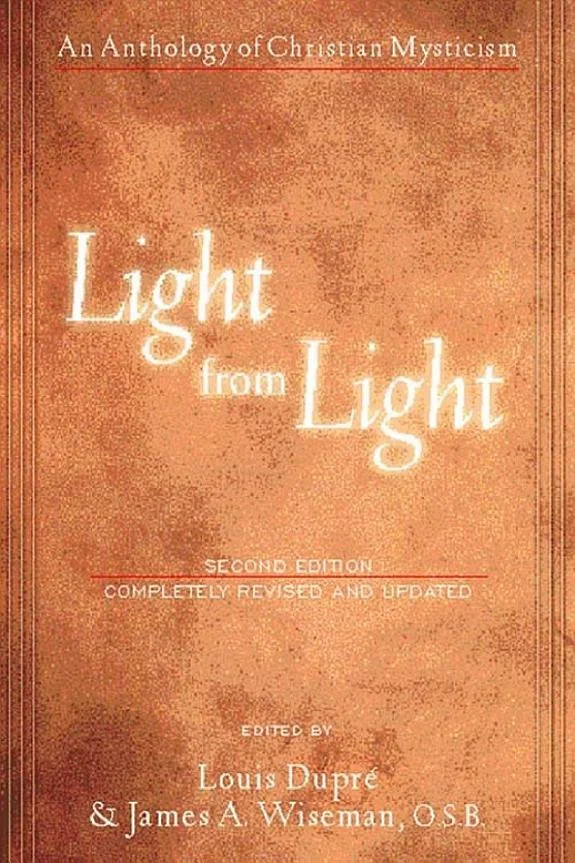
Light from Light
 81
81

Light from Light
The revised edition of 'Light from Light' judiciously updates its canonical selection of Christian mystics. Its strength lies in presenting such a diverse array of voices, from the Alexandrian school to the modern era, allowing readers to trace thematic developments. The inclusion of figures like Hadewijch, a 13th-century Beguine poet whose work is often overlooked in broader anthologies, is particularly welcome. However, the editorial choices, while intended to increase contemporary relevance, sometimes feel like a compromise, potentially sacrificing depth for breadth. The replacement of some earlier, perhaps more foundational, voices with less established figures might leave seasoned scholars wanting. A notable passage is the selection from Gregory of Nyssa, which articulates the soul's journey as an unending ascent, a concept revisited by many later mystics. This collection serves as a solid, if not entirely exhaustive, introduction to the Christian mystical canon.
📝 Description
81
Published in 2001, 'Light from Light' collects writings from twenty-three Christian mystics.
'Light from Light' presents the writings of twenty-three significant figures in Christian mysticism. This 2001 edition updates a long recognized collection, retaining its core selections while making adjustments for contemporary readers. The anthology traces a path through centuries of contemplative thought, beginning with early Christian thinkers and extending to the 20th century. It is intended for serious students of Christian contemplative traditions, scholars of religious history, and those who wish to engage directly with the primary voices that shaped mystical theology. The volume appeals to readers who favor original sources over secondary analysis and seek to understand the development of spiritual thought within a specific Christian lineage. Individuals interested in the connection between philosophy, theology, and personal experience will find substantial value within its pages. The selections span from the 3rd-century theologian Origen of Alexandria to the 20th-century monk Thomas Merton, situating these expressions within a continuous tradition of Christian seeking. Figures such as Meister Eckhart and John of the Cross are included to place the work within the context of medieval and early modern mystical thought, while later writers address the modern revival of contemplative practice.
This anthology sits within the Christian esoteric tradition, which focuses on direct, experiential knowledge of the divine, often through contemplative practices and mystical theology. It highlights a lineage of thought that emphasizes inner experience over purely intellectual assent. The tradition values texts that guide the practitioner toward a deeper union with God, frequently employing paradoxical language and concepts like divine darkness to describe experiences that transcend ordinary rational categories. By gathering these voices across centuries, the book maps a stream of consciousness concerned with spiritual transformation and the direct apprehension of ultimate reality within a Christian framework.
💡 Why Read This Book?
• Gain direct access to the foundational texts of Christian mysticism, from Origen in the 3rd century to Thomas Merton in the 20th, allowing for an unmediated encounter with their spiritual teachings. • Trace the evolution of key contemplative concepts like theosis and apophatic theology across diverse historical periods and theological expressions within the Christian tradition. • Explore the unique contemplative voices of figures like Hadewijch, whose inclusion in this revised edition offers a fresh perspective on the breadth of Christian mystical experience.
⭐ Reader Reviews
Honest opinions from readers who have explored this book.
❓ Frequently Asked Questions
Who are some of the key Christian mystics included in 'Light from Light'?
The anthology features writings from figures such as Origen of Alexandria (3rd century), Gregory of Nyssa, Meister Eckhart, John of the Cross, Teresa of Ávila, and Thomas Merton (20th century), among twenty-three in total.
What is the significance of the revised edition of 'Light from Light'?
Published in 2001, this revised edition updates a long-standing anthology, replacing some original authors with figures considered of greater interest to contemporary readers, while retaining many seminal mystics.
What theological concepts are explored in this book?
The book delves into core mystical concepts like theosis (deification), the divine darkness, apophatic theology (via negativa), the soul's union with God, and the transformative nature of prayer and contemplation.
Does 'Light from Light' focus on a specific period of Christian history?
No, it spans a wide historical range, beginning with early Christian thinkers like Origen in the 3rd century and extending to modern figures such as Thomas Merton in the 20th century.
Is this book suitable for beginners in mysticism?
While comprehensive, its focus on primary texts makes it most suitable for those with some background or a serious academic interest in Christian contemplative traditions and theology.
What makes this anthology different from other collections of mystical writings?
Its specific focus on the Christian tradition, coupled with a deliberate revision to include contemporary relevant voices alongside historical giants, distinguishes it. It offers a curated, evolving perspective.
🔮 Key Themes & Symbolism
Theosis and Divine Union
Central to Christian mysticism is the concept of theosis, or deification, the idea that the human soul can participate in the divine nature. This anthology showcases how mystics across centuries, from the Cappadocian Fathers like Gregory of Nyssa to later figures like John of the Cross, articulate this journey toward union with God. It explores the spiritual disciplines, contemplative practices, and theological understandings that facilitate this transformative process, emphasizing direct, unmediated experience of the divine presence.
Apophatic Theology and Divine Darkness
Many selections grapple with the limits of human language and intellect in describing God, a path known as apophatic theology or the via negativa. The work presents mystics who speak of God in terms of unknowing and divine darkness, suggesting that true encounter happens beyond conceptualization. Figures like Pseudo-Dionysius the Areopagite, whose writings heavily influenced later mystics, and Meister Eckhart exemplify this approach, guiding the reader toward an experience of God that transcends rational comprehension.
The Inner Life and Contemplative Practice
This anthology illuminates the diverse practices and inner landscapes of Christian contemplatives. It moves beyond purely theological discourse to reveal the lived experience of prayer, meditation, and spiritual struggle. Selections from mystics like Teresa of Ávila detail the stages of the interior castle, while others focus on the role of suffering, ecstasy, and the guidance of the Holy Spirit in the soul's journey toward God. The emphasis is on the internal transformation that arises from sustained spiritual engagement.
Evolution of Mystical Thought
By bringing together voices spanning from the 3rd century to the 20th, 'Light from Light' offers a historical perspective on the development of Christian mysticism. It highlights how core themes are reinterpreted and expressed through different cultural and theological contexts. The revised edition's inclusion of figures like Hadewijch alongside earlier masters demonstrates an effort to present a more nuanced and inclusive historical trajectory, showing continuity and innovation within the tradition.
💬 Memorable Quotes
Direct passages from the work, attributed to the author.
“The soul becomes what it loves.”
— This concise statement, reflecting a common mystical sentiment found across traditions, suggests that one's spiritual and emotional focus shapes one's very being. It implies that by loving God, the soul gradually assimilates divine qualities.
“God is closer to me than I am to myself.”
— This highlights the immanence of the divine, suggesting that the ultimate spiritual reality is not remote but intimately present within the individual, often more so than one's own self-awareness.
“The journey to God is an unending ascent.”
— Attributed to Gregory of Nyssa, this emphasizes that spiritual growth is not a destination but a perpetual process of moving toward the divine, with each step revealing new depths and further horizons.
“We pray because we are helpless.”
— This acknowledges human fragility and dependence on a higher power. It reframes prayer not as a means of control, but as a response to our fundamental limitations and a posture of surrender.
“To know God is to suffer for God.”
— This interpretation connects deep spiritual knowledge with sacrifice and struggle. It suggests that true understanding of the divine involves embracing the challenges and transformative pain that accompany such an intimate relationship.
🌙 Esoteric Significance
Tradition
This work functions as a reference for the study of Western Esotericism, specifically within the Christian contemplative lineage. While not explicitly labeling itself as 'esoteric' in the modern sense, it draws from and contributes to a tradition that emphasizes direct, experiential knowledge of the divine, often through practices that transcend ordinary consciousness. It aligns with Gnostic and Neoplatonic influences present in early Christian thought and appeals to Hermetic principles of correspondence and inner transformation.
Symbolism
Key symbols explored include the 'divine darkness,' representing God's transcendence beyond human conception, and the 'interior castle,' a metaphor for the soul's spiritual journey inward toward God, famously detailed by Teresa of Ávila. The concept of 'light' itself, as in the title 'Light from Light,' symbolizes divine illumination, grace, and the ultimate reality that mystics strive to apprehend through direct experience.
Modern Relevance
Contemporary spiritual seekers, comparative religion scholars, and practitioners of contemplative prayer continue to draw heavily on the figures anthologized in 'Light from Light.' Thinkers and movements focused on interfaith dialogue, mindfulness, and the integration of ancient wisdom traditions into modern life find resonance in these texts. The work's emphasis on direct experience over dogma remains relevant for those questioning institutional religion and seeking personal spiritual paths.
👥 Who Should Read This Book
• Students of theology and comparative religion: To gain a foundational understanding of the historical development and diverse expressions of Christian mystical thought across two millennia. • Aspiring contemplatives and spiritual seekers: To engage directly with the teachings and experiences of masters who navigated profound inner journeys, offering guidance for personal spiritual practice. • Scholars of Western Esotericism: To trace the lineage of experiential spirituality within Christianity, identifying key concepts and figures that inform broader esoteric traditions.
📜 Historical Context
When 'Light from Light' was first conceived, the study of Christian mysticism was experiencing a resurgence, moving beyond purely historical or theological analysis into more experiential and comparative religious frameworks. This anthology emerged in a period where scholars and practitioners sought to access primary sources directly, bypassing centuries of commentary. The work situates itself against a backdrop where figures like Evelyn Underhill had already popularized mystical concepts, but a dedicated collection focused on the breadth of Christian mystics, from Origen to Merton, offered a structured pathway. The inclusion of later 20th-century figures alongside medieval masters like Meister Eckhart and John of the Cross reflects a desire to bridge historical gaps. Its reception likely benefited from the growing interest in contemplative practices in the late 20th century, offering a scholarly yet accessible entry point into a rich spiritual lineage.
📔 Journal Prompts
Theosis as an unending ascent: How might this concept reshape your understanding of spiritual progress?
Divine darkness: Reflect on a time when direct experience felt beyond words or concepts.
The soul's love: Explore the idea that one becomes what one loves, using examples from the text.
The interior castle: Map the potential stages of your own spiritual journey using this metaphor.
Origen's approach to scripture: Consider how allegorical interpretation can reveal deeper spiritual truths.
🗂️ Glossary
Theosis
A central concept in Eastern Orthodox theology and Christian mysticism, referring to the process of becoming united with God or achieving divine likeness through grace and spiritual practice.
Apophatic Theology
Also known as the 'via negativa' (negative way), this theological approach describes God by what God is not, emphasizing divine transcendence and the inadequacy of human language to define the divine essence.
Mystical Union
The state of direct, ineffable communion between the soul and God, often described as a loss of self and an experience of unity with the divine presence.
Contemplation
A form of prayer or spiritual practice involving deep reflection and silent attention, aimed at fostering intimacy with the divine and achieving direct spiritual insight.
Via Positiva
The 'positive way,' which complements apophatic theology by describing God through affirmative attributes and concepts, often drawing on scripture and creation.
Pseudo-Dionysius the Areopagite
A 5th or 6th-century Syrian monk whose influential writings blended Neoplatonism with Christian theology, greatly shaping mystical thought, particularly concerning apophatic theology and celestial hierarchies.
Meister Eckhart
A 13th-14th century German theologian and mystic known for his profound, often paradoxical, teachings on the birth of God in the soul and the detachment required for spiritual realization.
This book appears in 1 collection
🔮 Readers Also Liked
Browse all →







From the “Christian Mysticism” Collection
View all →







More Free Mysticism & Contemplation Books
View all →